
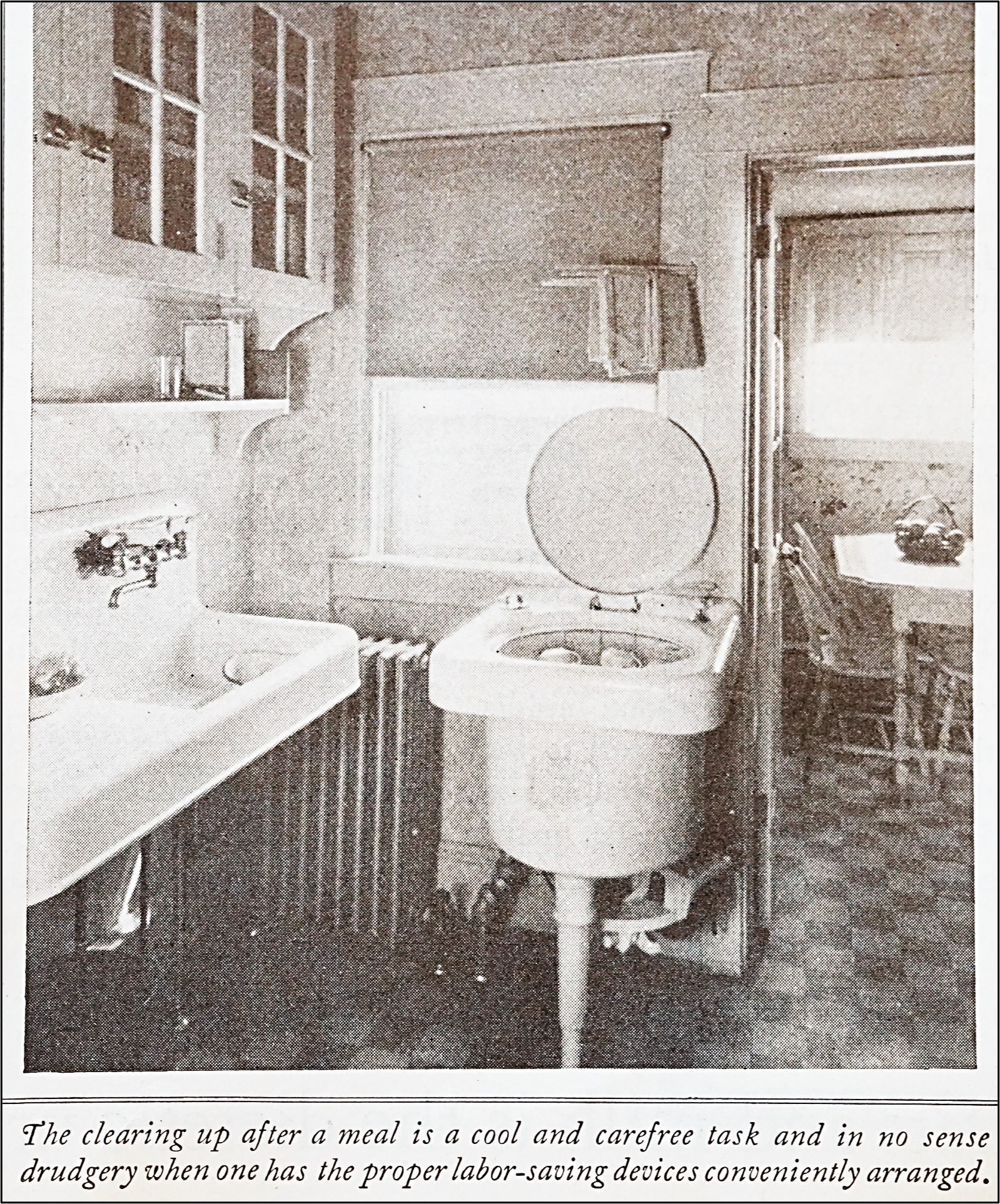
A hundred years ago, as more and more homes got electricity, kitchens were rapidly modernizing. By 1926, many homes, especially in the more urban areas, had an electric (or gas) stove and a refrigerator. Some were also getting an electric dishwasher. This is what a magazine said:
The electric dishwasher has eliminated our dishwashing troubles until that happy millennium comes when we will eat our calories and carbohydrates out of pill boxes. Ours, as the picture shows, is a built-in type, connected to the hot water and drain — to my mind, the only efficient way to use a dishwashing machine.
When we are alone or have only one or two guests, the lunch and dinner dishes are scraped and stacked in the dishwasher and then washed with the next morning’s breakfast dishes. Housekeeping experts are in complete accord with this process, because it really is the logical thing to do, and when you are paying for your hot water, it is a matter of economy.
Many people have a mistaken idea of the electric dishwasher — they think the dishes move. The dishes remain stationary; it is the hot water swirling in and out among them which cleanses them. So you see there is no danger of breakage. By using very hot rinse water the dishes in the machine will be dry by the time you have dried the glasses and silver. Very little hot water is used — about two dish-pansful for the washing and rinsing.
The machine, of course, is automatically cleaned as the dishes are washed, so that it requires no extra care. We feel that a labor saver is a labor saver only when properly applied, so we arrange to wash whatever cooking utensils are not taken care of by the machine as the dishes are being washed. As the dishes stay in the machine five minutes, we have time to wash the pots and pans. Then the dishes are rinsed –and a few minutes later finds us leaving the kitchen shipshape.
Wow! The dishes are washed in just 5 minutes. I want one. My dishwasher runs for about two hours.
That said, I found this article difficult to follow. One place in the article, I think that it says that the dishes in the dishwasher are rinsed; another place it sounds like they may not be. It also was not clear whether the author was recommending that glasses and silverware be washed by hand or if they could be put in the dishwasher.
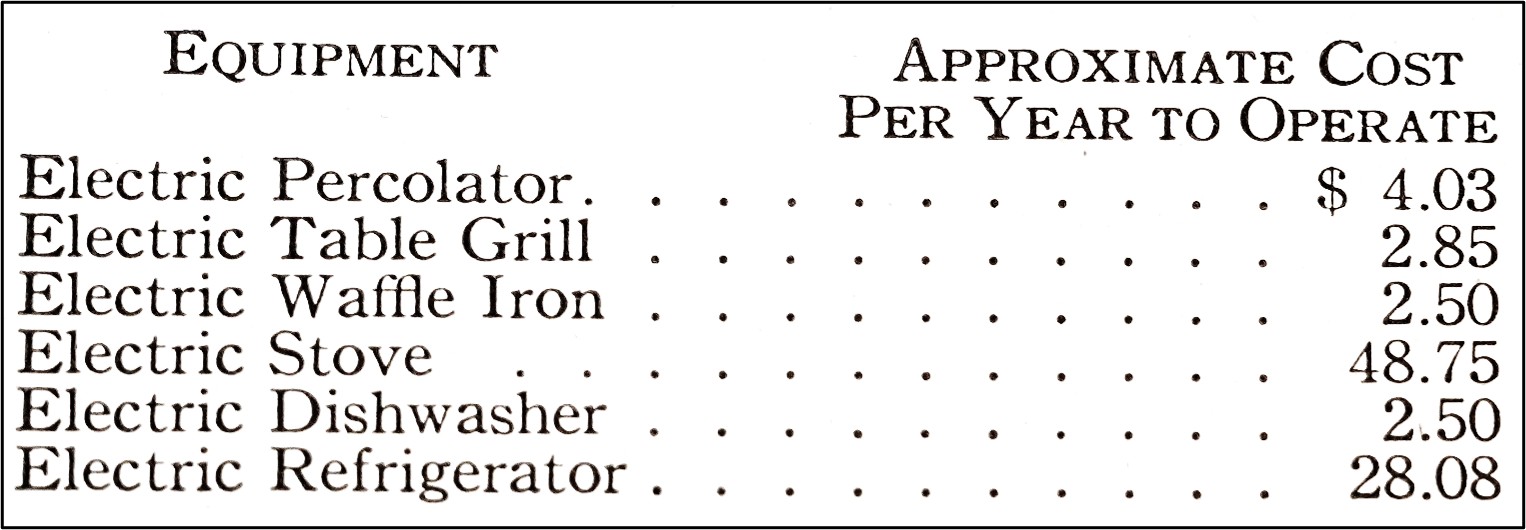
The article also discusses the cost of operating an electric dishwasher. In 1926, it only cost about $2.50 a year to operate it. A dollar in 1926 is worth about $ 18.93 today. So, in today’s dollars, it would cost about $47.33 to operate it for a year. This compared favorably with current dishwasher operating costs.
According to the Appliance Running Cost website, today the cost of operating a dishwasher ranges from $47 to $152 a year depending upon which cycle is used. The use of an eco/air dry cycle is the least expensive and the heavy/heated cycle is the most expensive.

I suspect if the silverware was actual silver it could not be safely washed in the dishwasher. Stainless steel utensils were a relatively new thing a hundred years ago. I remember when my mother got a portable electric dishwasher in the 1960s. It had to be moved over to the sink and attached to the faucet when we wanted to use it, and it drained into the sink. Seems like such a bother now. I’m grateful for my current dishwasher, even if it does take more than 2 hours to do the job.
It makes sense that people used actual silverware (often it may have been silver-plated silverware) a hundred years ago, and that a dishwasher might damage it.
This is a really neat article. I had no idea dishwashers had been around that long.
Similarly to you, I was surprised how long they have been around. I had no clue that there were dishwashers a hundred years ago until I saw the article in a 1926 issue of Ladies Home Journal.
I really like your column and look forward to reading your posts. (I think I may have said that already) lol
It’s always good to hear that you enjoy the posts. I have a lot of fun doing them.
☺️☺️☺️
This is fascinating! I never knew dishwashers were in use so long ago. To me, it sounds like they were definitely rinsed in those few minutes that follow the 5-minute washing. So, perhaps it’s more like 8 minutes altogether. No soap is mentioned, but we probably overdo that nowadays anyway. But what do I know, I’ve never owned a dishwasher!😲 My parents got their first in the ’80s after I moved out and I’ve never felt the need since…🤫paper plates sometimes come in useful. Thanks for sharing!
It’s nice to hear that you enjoyed this post. I have a dishwasher, but often I don’t have very many dirty dishes so just wash the dishes by hand.
This was very interesting, Sheryl. I had no idea there were automatic dishwashers 100 years ago. I love that the ad addresses what many people thought at the time: that the dishes moved! Wonderful nugget you shared here, thank you.
I’m glad you enjoyed this post. I also thought that it was fascinating that there were electric dishwashers a hundred years ago. Can you imagine that some people back then thought that the dishes moved in the dishwashers? That would have been a recipe for disaster (though I guess that dishes move on trays through some commercial dishwashers).
I love my dishwasher and appreciate the fact that it is much more efficient than old ones.
Modern electric dishwashers definitely have lots of advantages over the early ones.
Five minutes seems awfully fast. It does not say anything about drying.
It’s hard to believe that the 5-minute cycles of those old dishwashers would have done a good job of cleaning dishes.
This was both interesting, and curious. The machine looks so small, I cannot picture how it could hold dishes for 3 meals a day. I will probably spend way too much time going down the rabbit hole of research now!
You might find it interesting to google electric dish washers in 1926–there are some great finds out there!
The Kohler Electric Sink which was first marketed in 1926 is fascinating. It’s amazing how it included a dishwashing feature. It’s also also really interesting that it was a product that was ahead of its time, and was discontinued during the Great Depression because people considered it an unnecessary luxury.
I also thought that the electric dishwasher looked very small. A hundred years ago many families were quite large, and it’s hard to imagine that they would have found these dishwashers very useful. On second thought, maybe these dishwashers weren’t designed for large families. Their children could probably hand wash the dishes.
Sheryl, you ask the same question that I do. Why do dishwashers run for so darn long? My dad always wanted to find a way to fit one in my small kitchen. I was never interested. The ones I experienced were noisy, threw off a lot of heat and run for what seems to be an eternity. Maybe the modern ones have addressed those issues. I am happy with rubber gloves and a dishcloth!
Modern dishwashers still run for a very long time. I actually think that new dishwashers run for a longer period of time than ones that were manufactured a few years ago because it makes them operate more efficiently. At least they are much quieter than what they once were. I have a dishwasher, but often just wash the dishes by hand.
Most home dishwashers have different cycles to chose from, with shorter options. It’s worth checking what yours offers.
In any case, commercial dishwashers work way faster, but they require higher water pressure and use more electricity per load, among other factors. They are also much bigger and more expensive…
It’s a good point that there are various cycles that I can choose from. Often my dishes aren’t very dirty and a shorter cycle works just fine. It’s interesting that commercial dishwashers work much faster.
Great historical post. Thank you!
You’re welcome. I’m glad that you enjoyed this post.
how amazing! I had no idea they had such items way back then!!
sherry
Neither did I until I saw the article about them in the 1926 magazine.
Wow – an interesting piece! I didn’t know they were available that early.
I also was surprised how long electric dishwashers have been around.
I remember in the late ’60s a friend’s mother had one. They’d moved on from the one you illustrate, but not by much. She used to wash everthing (lightly) before putting the crockery in the machine. Things came out dirty otherwise!
I know that there’s lots of reasons to rinse dishes before putting them in a dishwasher, but I’ve never quite understood the point of a dishwasher if everything needed to first be lightly washed.
Well, quite!
Five minutes! I hope they pre-washed them well!
I’m really curious about how well those old dishwashers worked.
Home automation is much older than I realized!
People have always wanted “modern” things. For some reason this makes me think of the song titled “Everything’s Up to Date in Kansas City” in the old musical Oklahoma.
Yeah, you’re right 🤗
I had no idea electric dishwashers existed a century agao.
Sorry for the typo on “ago”.
It’s amazing how long electric dishwashers have been around.