
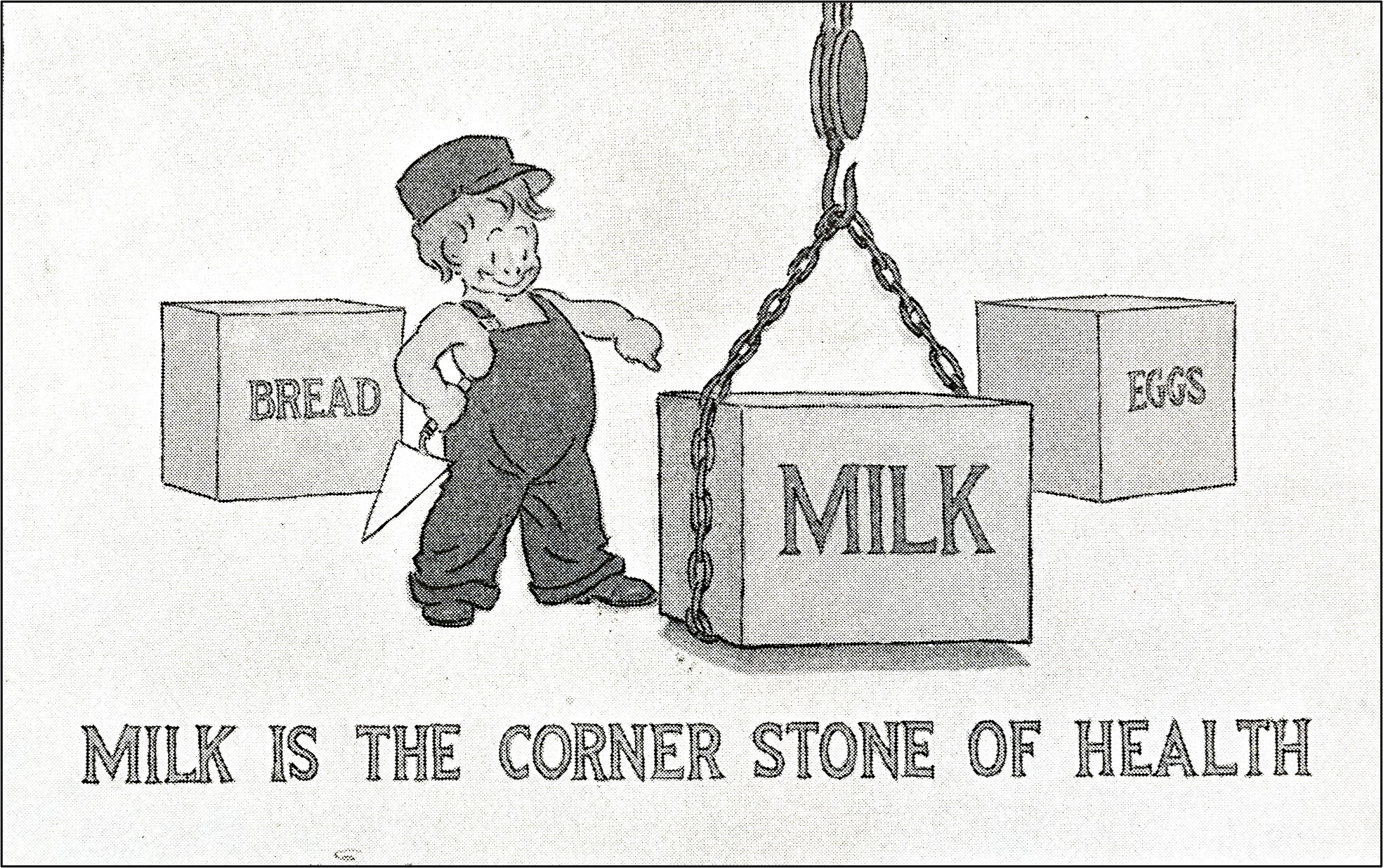
A hundred years ago Ladies Home Journal contained a monthly Food Facts column. The May, 1926 column was about milk. As someone who grew up on a dairy farm, my interest was immediately piqued. Some of the facts in the old magazine are the same as what I commonly hear today; others have changed over the years.
Milk: What Do You Know About It?
DO YOU KNOW that the chief value of milk in the diet is as a supplement to other foods, correcting their deficiencies?
This is Why milk is often called a “protective” food.
DO YOU KNOW that milk, because it meets nearly every food requirement, is the most satisfactory single article of food consumed by man?
This is Why there is no effective substitute for milk.
DO YOU KNOW that milk is not only essential to the growth of children but to the health and vigor of adults?
This is Why a quart of milk a day for a child and not less than a pint for an adult are essential to a proper diet.
DO YOU KNOW that no other food can be taken in sufficient quantity to supply the calcium needs of the body?
This is Why a diet that is short in milk in generally short in the lime which is needed for bone structure.
DO YOU KNOW that the best milk will spoil when it is not kept clean and cold?
This is Why the careless housekeeper frequently ruins milk that has been carefully handled by farmer and distributor.
DO YOU KNOW that heating milk to 140° – 145° F. and keeping at this temperature for twenty to thirty minutes destroys most of the harmful bacteria which it may contains?
This is Why pasteurized milk is generally safer than raw milk for those who must depend on a city milk supply.
DO YOU KNOW that the lactic-acid bacteria which sour milk are not harmful or putrefactive bacteria?
This is Why we should distinguish between sour milk, which is useful, and spoiled milk, which should be thrown away.
DO YOU KNOW that from the standpoint of nutrition skim milk is worth more than the cream which is taken off it?
This is Why more use should be made of skim milk in breadmaking and other cooking processes.
DO YOU KNOW that a low temperature – under 50° F. – is the only preservation needed for clean milk?
This is Why milk that is both clean and cold can be kept sweet for three to four weeks.
DO YOU KNOW that because of its wide use as a food, milk is more closely supervised in the United States than any other article of diet?
This is Why we have the most wholesome milk supply in the world.
Food-Facts Information Service
The Ladies Home Journal
Ladies Home Journal (May, 1926)

I was listening to a podcast on the greatest changes in US health. During the Great Depression, mortality rates went down, and the reason was pasteurized milk. It is scary to think that milk was once very dangerous.
Water was not always a safe bet either
Agree – Germ theory was really developing in the early 20th century, and people realized just how dangerous many of the water supplies were. There was a focus on public health. Water supplies (as well as sewage systems) were developed that were more sanitary.
In the 19th century, there were some large dairy farms that provided milk to some large cities. They often were filthy and fed the cows low-quality foods. In the early 20th century, there were many reforms in how milk was provided with a focus on sanitation.
I didn’t realize you grew up on a dairy farm as well! Anybody I know who grew up on a dairy farm was hard-working, took responsibility, and advanced in corporate life. 🐄
We worked hard on the farm, but I have wonderful memories of those days. I didn’t go the corporate route.
Some of my earliest memories are helping in the family garden. This gave me a life long love of growing things. Later, I helped with calves then milked cows. I have many great memories and some, not so much. I expect that is true of most people.
I always enjoyed working with the calves and cows more than doing field work – though I have really strong memories (that may fall into the “not so much category”) of unloading hay from a wagon on extremely hot days and putting the bales on an elevator that took them up into the hay mow.
Those were interesting facts about milk.
It’s nice to hear that you enjoyed this post.
An ‘udderly’ delicious post!
LOL – I love the play on words.
Now milk is the worst food, they remove all naturals and add artificial. In childhood days fresh from the cows and that was really nourishing.
I have wonderful memories of the fresh milk we drank while growing up on a dairy farm. It’s amazing how milk is often taken apart and then put back together during processing today.