Old-fashioned Treatments for Acne and Pimples

17-year-old Helena Muffly wrote exactly 100 years ago today: 

Sunday, June 9, 1912:  Went to Sunday School this morning. Carrie and I were going away this afternoon, but didn’t go as Pa and Ma went away and I had to take care of the house. Rufus brought Tweet home with her.

Her middle-aged granddaughter’s comments 100 years later:

Grandma referred to her sister Ruth as Rufus in this post. Tweet was the nickname of friend, Helen Wesner. And, Carrie Stout was another friend.

It sounds like Grandma was a little annoyed about being stuck at home—but it also sounds like an afternoon filled with the chatter of teen-aged girls. The probably talked about the same things girls talk about today. Might they are fretted over a few pimples?

Here’s information about pimples abridged from a hundred-year-old book.

Pimples or Blackheads and Acne

These are afflictions of youth, and are generally seen together, the last-named being simply a second stage of the first. It occurs most commonly about the face, on the back between the shoulders, or on the chest.

There exist in the sebaceous glands of the skin an infinite number of vulnerable points for infection. This inflammatory condition of the sebaceous glands is apt to become chronic and may prove an obstinate affliction.

The impaired function of the general system must be corrected. First and foremost comes attending to the bowels. There must be a free daily evacuation. Fruits and vegetables are both laxatives and the very best.

All articles of diet must be easily digested, while at the same time they are nourishing.

Three pints a day of water should be taken because this amount is need to keep the kidneys properly flushed.

Pure air, associated with the proper kinds of exercise, promotes the functions of the skin, assists in keeping the blood in good condition, increases the vigor and keeps the complexion clear.

Steam the face. The increase secretion from the skin which is thus caused is helpful.

Sweating baths are of the highest value as a means of ridding the skin of its accumulated impurities, and in unloading the obstructed sebaceous follicles of their hardening contents.

When there is a tendency to pimples, massage of the skin of the face will do much to improve the circulation.  The massage is most effective when it follows steaming or washing the face in hot water.

Personal Hygiene and Physical Training for Women (1911) by Anna Galbraith

How Should Offensive Language in Diaries be Handled?

17-year-old Helena Muffly wrote exactly 100 years ago today:     

Saturday, June 8, 1912:  The high lady here wanted to make a certain kind of cake, and so I walked to the neighbors to get an ingredient. I truly am the n_____  around here. I am getting that color as I and the sun’s rays often meet and collide.

Recent photo of a neighbor’s house

Her middle-aged granddaughter’s comments 100 years later:

Most days I look forward to writing a post—today is not one of those days. I’ve known that this entry was coming up for several weeks and I’ve dreaded it.

I need help. How should I write about this diary entry?

Grandma probably used language and expressed sentiments that were typical of those in her community. I don’t think any less of Grandma because of what she wrote—yet I’m troubled by this entry.

As family historians, how should controversial text in family documents be handled?  . . . use it verbatim?  . . . edit it?  . .  don’t include it in family histories? . .  . .include additional historic contextual information? . . .

Is it important to accurately report what the original document said?  . . .or do readers of family histories want to feel good about their ancestors and not read upsetting things? . . .

Hundred-Year-Old Tips for Making Skirts

17-year-old Helena Muffly wrote exactly 100 years ago today: 

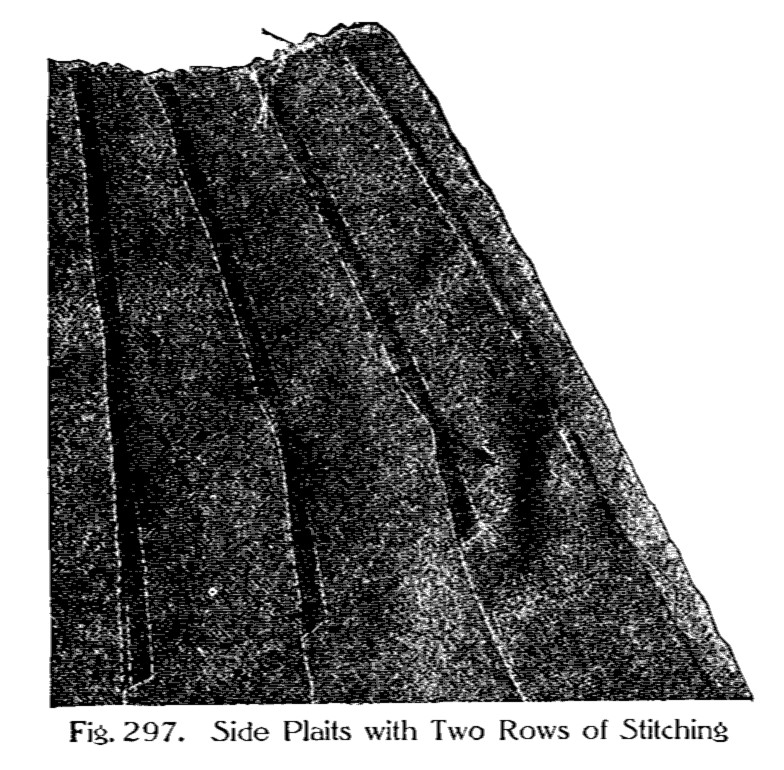
Friday, June 7, 1912:  I’m trying to make a skirt, but the end thereof is rather dubious.

Source: The Dressmaker (1911)

Her middle-aged granddaughter’s comments 100 years later:

On June 3 Grandma mentioned that she was trying to remodel skirt that had been her sister’s. I assume that she was still working on it—and that it wasn’t going well.

I wonder if she had any books or other resources to help her figure out how to alter the skirt.

A hundred-year-old book called The Dressmaker had lots of suggestions for making skirts. Here are a few tips:

  • Tucks and plaits must be evenly arranged and the space between them must be the same.
  • In skirts where few gores are employed, particular attention must be paid to the correct position of the lines, in order to keep the plaits perfectly even.
  • The skirt must be joined to the waistband and the material between the plaits properly disposed, so that the plaits themselves will have a uniform appearance.
  • Before stitching the waistband, the skirt should be tried on, and, if necessary, alterations made. It is then folded over the edge and hemmed down.
  • The hooks and eyes are sewed on securely;  the hooks on the right-hand end of the waistband and the upper fold of the placket, and the eyes on the corresponding position on the opposite side. The hooks should be one-eighth of an inch back from the edge, and the eye on the top touching the seam of the skirt. [Comment–Until I read this, I hadn’t thought about the fact that zippers were not used a hundred years ago.]
  • A hem, two or three inches deep is the usual finish of the lower edge of skirts.

The Dressmaker (1911) by the Butterick Publishing Company

How to Starch Clothes

17-year-old Helena Muffly wrote exactly 100 years ago today: 

Thursday, June 6, 1912:  Utterly forgotten.

Her middle-aged granddaughter’s comments 100 years later:

Must have been a slow day . . .

I’m still reading a booklet that Proctor & Gamble published almost a hundred years ago on how to do laundry. A couple of days ago I told you about how clothes were ironed in the early 1900s. Many clothes needed to be starched before they were ironed.

Here are the abridged directions for starching clothes.

Starching

Aprons, shirtwaists, the trimming of underwear, etc. are starched. Make the starch according to the directions given below.

The amount of starch needed depends upon the number of garments to be starched. Those that should be stiffest must be starched first. Dry or thick materials take up more starch than wet or thin ones, and the starch may need to be thinned with water for some garments.

When only part of a garment is to be starched, gather that part into the hand and dip it into the starch, rub it well, then squeeze out the extra starch. This must be done by hand, the rest of the garment being held out with the rest. The starched pieces are hung out with the rest.

Thick Starch

Mix 1/2 cup starch and

1/2 cup cold water, add

¼ level teaspoonful shave white wax or lard and

4 cups (1 qt.) boiling water

Let it boil up several times to be sure that wax is melted and mixed and starch cooked. Add a little bluing and set dish in a pan of cold water until it is cool enough to handle.

Thin Starch

Mix 1/2 cup starch and

1/2 cup cold water, add

1/4 level teaspoonful lard or twice as much borax, stir smooth with

1/2 cup of cold, then stirring rapidly, add

3 pints of boiling water and continue stirring until it boils thoroughly. Have holder ready to lift it from the fire, or it will boil over. Add

1 pint of cold water to thin it and reduce the heat, and add enough bluing to counteract the yellow color of the starch. Turn starch into a large dish. If carefully made, it need not be strained.

Approved Methods for Home Laundering (1915)

As a reader commented on the post about ironing—thank goodness for spray starch. 🙂

Running an Errand for Sister

17-year-old Helena Muffly wrote exactly 100 years ago today:  

Wednesday, June 5, 1912: Trotted up to McEwensville this morning on an errand for Rufus, the dear little mortal.

Recent photo of the road Grandma would have “trotted” down as she returned home from McEwensville.

Her middle-aged granddaughter’s comments 100 years later:

Throughout the diary Grandma referred to her sister Ruth as Rufus when she was particularly annoyed.

Was the errand to deliver a message to one of Ruth’s friends?  . . . .to buy something at a store?  . . .

These buildings were once part of McEwensville’s small commercial area.

Older sisters can be bossy, but why did Grandma agree to walk the mile or so into McEwensville?  Hmm– maybe running errands was more fun than watching cows.

Ironing a Hundred Years Ago

17-year-old Helena Muffly wrote exactly 100 years ago today: 

Tuesday, June 4, 1912:  Had most of the ironing to do today. Fixed over a hat by taking the ribbon off and putting another kind on. Wonder if I’ll wear it very much.

Source: Approved Methods for Home Laundering (1915)

Her middle-aged granddaughter’s comments 100 years later:

Ironing was much more complex a hundred years ago than it is now.  The Muffly’s did not have electricity, so flat irons would have been heated on the wood or coal stove.

Here are abridged directions for ironing from a booklet called Approved Methods for Home Laundering published almost a hundred years ago by Proctor & Gamble:

Dampening

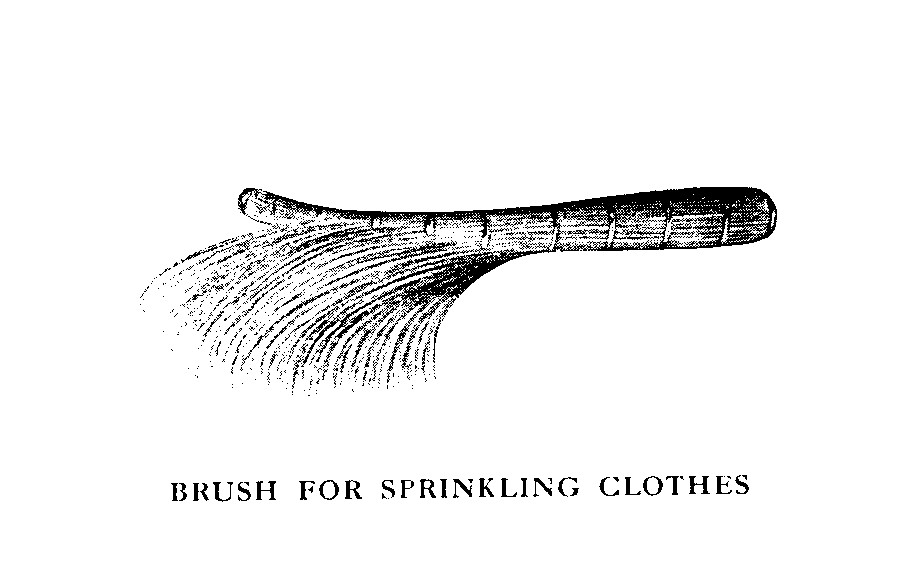
Dampening or sprinkling is usually the last thing done at night.  Cover the table with a clean cloth, fill a basin with warm water, and use a clean whisk broom for sprinkling. Sprinkle each large piece, fold sides and ends into the middle. Lay small pieces together before rolling. Linen should be very damp. Pack all the rolls into the basket and cover tightly.

Ironing

Ironing is the finish of good laundry work and the test of the laundress.

A laundress’s test for a hot iron is to hold it near her cheek for a few seconds. If too hot for this, it is too hot to use.  [Comment—whew, this sounds dangerous. I’m amazed it was considered an “approved method” back then.]

Another test is to touch the bottom of the iron with a wet finger; if it hisses, it is hot—the shorter the hiss, the hotter the iron. [Comment–this also sounds a little dangerous; though I can remember my mother doing it.]

Shake or stretch the article to be ironed into shape and place on board. Iron with the right hand from right to left, using the left hand to arrange the material.

First iron the part that will wrinkle least, leaving the plain, straight parts until the last. Ruffles and trimming should be ironed first.

Best results are attained when the iron follows the long warp thread of the material. The cloth should be left dry, especially bands, hems, and seams, or they will wrinkle.

For heavy materials use heavy irons; for thin materials, lighter irons, and for gathers, a narrow, pointed iron. Iron quickly with an iron hot, yet not hot enough to scorch. If the material becomes dry, dampen it with a soft cloth.

These directions were the most basic ironing directions. For detailed directions about how to starch and iron a collar, click here to see a previous post.

Hat

Was Grandma already remodeling the hat with the brown ribbon that she just got in April or it was it another older hat?

Remodeling a Skirt

17-year-old Helena Muffly wrote exactly 100 years ago today: 

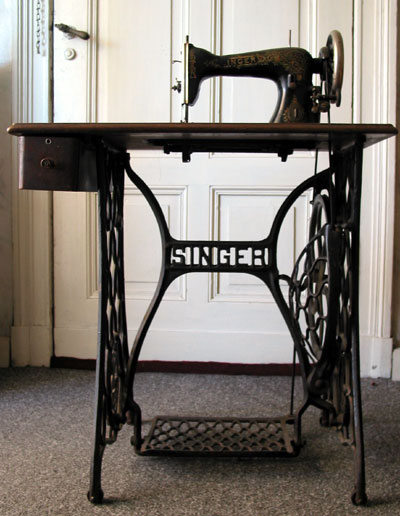
Monday, June 3, 1912: I am trying to remodel a skirt which was once the property of the benevolent Ruthie. I’ll know whether I’ll wear it or not after it’s finished.

treadle sewing machine

Her middle-aged granddaughter’s comments 100 years later:

Sounds like a bit of sarcasm. Grandma seems uncertain whether she appreciates her sister Ruth handing a skirt down to her.

I wonder why the skirt needed to be remodeled. Had styles changed? Was Grandma a different size than her sister?

It’s interesting that Grandma persevered, yet felt uncertain about whether she’d be happy with the remodeled skirt . Was she a pessimist? . . . pragmatic?  . . .

When I was young I often made outfits that I didn’t like after I’d completed them. But every time I started a new outfit I thought that it would turn out better than my previous efforts. If I hadn’t been an optimist, I don’t think that I could have worked on the sewing project.