
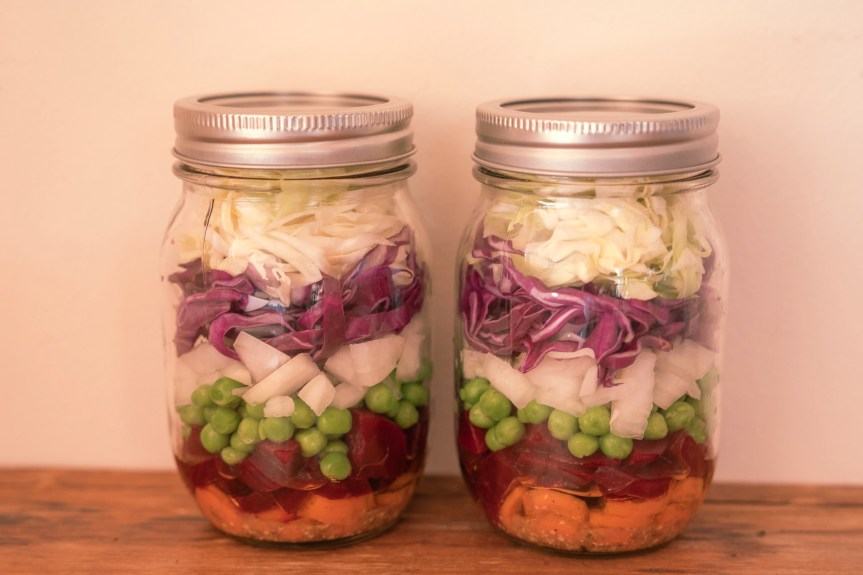
Harlequin Mason Jar Salad – Reimagining a Classic Salad

A hundred years ago, the jazz age was in full swing with flappers dancing the night away and over-the-top parties. F. Scott Fitzgerald in The Great Gatsby listed the many foods on the buffet table at an elegant party. The list included “salads of harlequin designs.”  I did a post on Harlequin Salad in August. This red and green cabbage salad with beets, carrots, peas, and onions in a vinaigrette dressing is delicious and makes a stunning presentation. Since the salad turned out so well, it is currently featured on A Hundred Years Ago’s header.homepage image A Hundred Years Ago
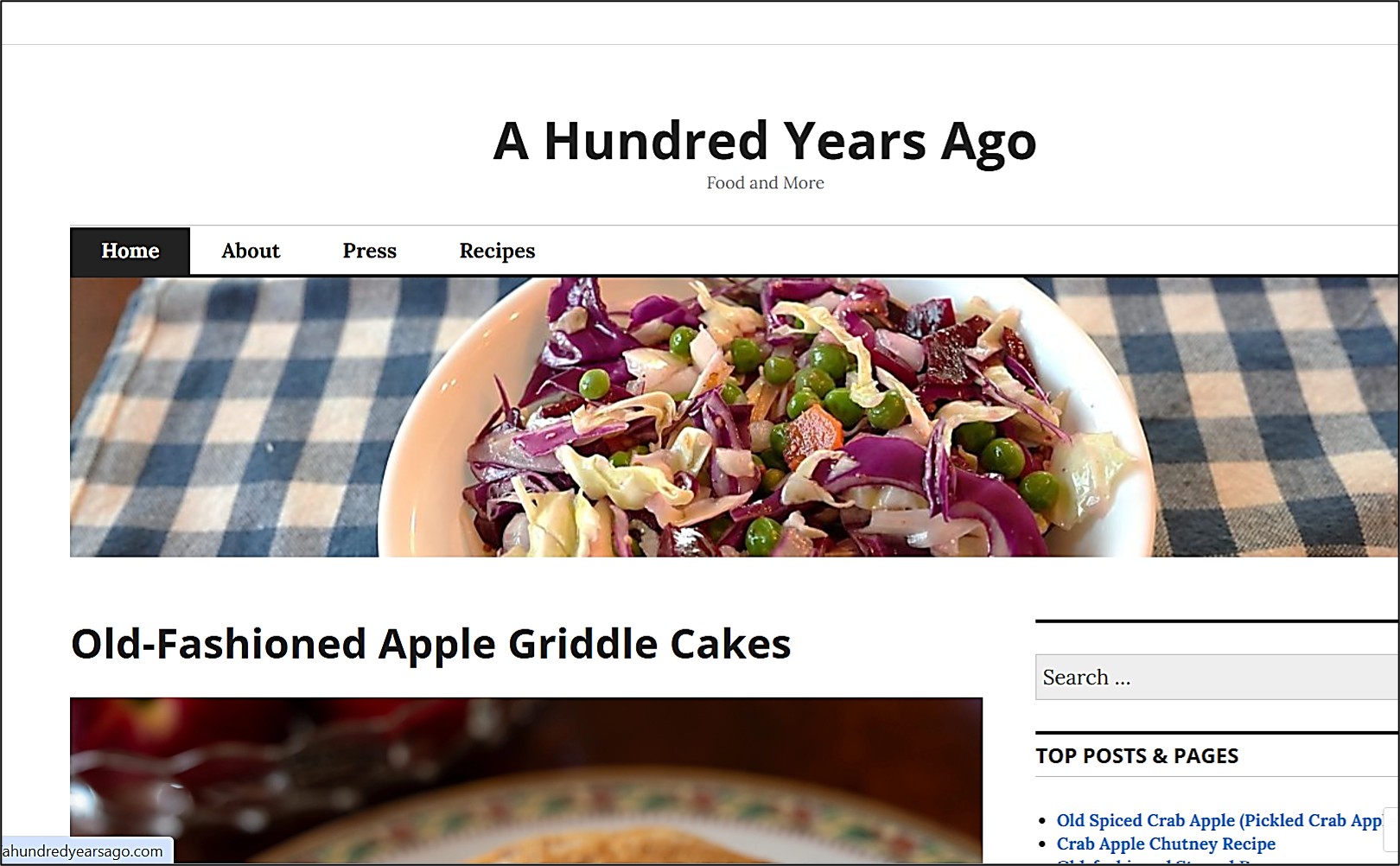
A friend recently looked at A Hundred Years Ago’s homepage with its Harlequin Salad header, and said, “That picture looks nice, but I’d never make that salad. Now, if you’d made it as a mason jar salad, I might give it a try.”

After mulling over her comment, I was intrigued and decided to try making Harlequin Salad as a mason jar salad.

To be totally transparent, I’m into hundred-year-old recipes, not the latest meal prep trends. That said, I’m glad I pushed myself to rethink Harlequin Salad to a much greater extent than I typically do when updating hundred-year-old recipes. Mason Jar Harlequin Salad was easy to make, attractive, and tasty.

Mason jar salads are very popular. The salad is made in layers with the dressing put in the jar first, then the firmest ingredients, with the most fragile ingredients added last. This prevents the salad from getting soggy. They generally stay fresh for 4 – 6 days. People often make several jars of salad at the same time. Mason jar salads are typically dumped into a bowl or plate to eat.

Mason jar salads are a game changer for many.  They allow weekly meal prep, are cost effective, and provide portion control for those concerned about how much they eat.  And, they are good for the environment because the mason jar can be reused.

I made two jars of my rendition of Harlequin Mason Jar Salad, and ate one of the salads two days later, and the other four days after I made it. The salad looked lovely when I dumped it into a bowl and stirred it a little to get everything coated with the dressing.

Harlequin Mason Jar Salad

  • Servings: 2
  • Difficulty: easy
  • Print

Note: This recipe makes enough salad to fill two 16 oz. mason jars.

STEP 1. MAKE THE VINAIGRETTE DRESSING

Dressing Ingredients

1/3 teaspoon salt

1/8 teaspoon pepper

1/8 teaspoon paprika

1 teaspoon prepared mustard

4 tablespoons olive oil

1 1/2 tablespoons vinegar

Put the salt, pepper, paprika, and mustard in a small bowl; stir to combine. Add the olive oil and stir until mixed. Slowly add the vinegar, a little at a time, while stirring continuously with a fork.

Step 2. LAYER THE SALAD IN THE MASON JARS

Salad Ingredients

Dressing (see above)

1/2 cup cooked carrots, coarsely chopped (cool before layering in jar)

1/2 cup cooked beets, coarsely chopped (cool before layering in jar)

1/2 cup cooked green peas (I used frozen peas that had been thawed.)

1/2 cup onions, chopped

1 cup red cabbage, finely shredded

1 cup green cabbage, finely shredded

Layer the ingredients in the following order in two 16-ounce mason jars: dressing, carrots, beets, peas, onions, red cabbage, green cabbage.  Put half of each ingredient in each jar.

Notes: Be sure the chopped beets are well drained before layering. The red color from the beets will run a little, but it can be minimized by carefully draining them.

This salad is very flexible. Feel free to adjust the amounts of the various ingredients based on personal preference.

Step 3. EAT THE SALAD

When ready to eat, the preferred way is to dump the salad into a bowl to mix the ingredients, though the jar with the salad can be shaken and the salad eaten directly from the jar.
http://www.ahundredyearsago.com

Concordia Pineapple Salad

Concordia Pineapple Salad

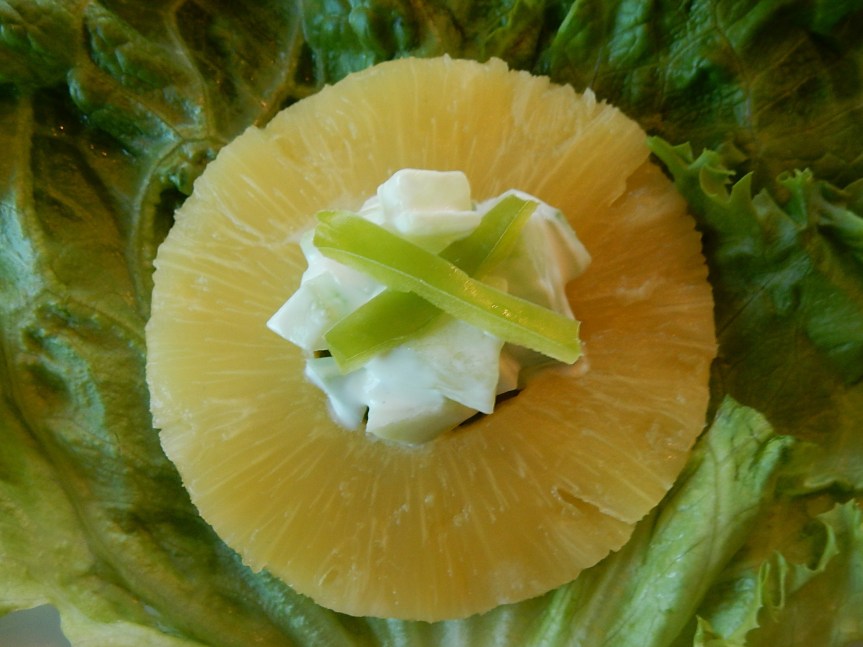
Concordia Pineapple Salad is a lovely old-fashioned individually-served salad that makes a nice presentation. A slice of canned pineapple is put on a bed of lettuce. The center of the pineapple is filled with a mixture of diced cucumber and mayonnaise. The mounded cucumber mixture is then garnished with crossed pieces of green pepper or pimento. The pineapple and cucumber combination is unusual, but surprisingly tasty.

I came across this recipe in a 1922 cookbook. A hundred-years-ago, an attractive presentation was an important aspect of many salads. And, they were often served on individual salad plates on a bed of lettuce.

Here’s the original recipe:

Recipe for Concordia Pineapple Salad
Good Housekeeping’s Book of Menus, Recipes, and Household Discoveries (1922)

Here’s the recipe updated for modern cooks:

Concordia Pineapple Salad

  • Servings: 8
  • Difficulty: easy
  • Print

1 cup diced cucumber (peeled and diced into 1/4 inch pieces)

1/4 cup mayonnaise

8 slices of canned pineapple

16 canned pimento strips  or narrow green pepper strips (each approximately 1 1/2 inches long) (I used green pepper strips.)

lettuce

additional mayonnaise, if desired

Put the diced cucumber and 1/4 cup mayonnaise in a bowl, gently stir to coat the cucumber pieces with the mayonnaise. Set aside.

To assemble salad: Each serving should be put on a separate plate. Arrange a serving of lettuce on plate, then lay a slice of pineapple on top of the lettuce. Fill the cavity in the center of each pineapple slice with a spoonful of the diced cucumber and mayonnaise mixture. Cross two strips of pimento or green pepper on top of the mounded cucumber and mayonnaise mixture.  If desired, may be served with additional mayonnaise.

Daisy Salad

Daisy salad on plateHappy Easter

Extra hard-boiled eggs in the refrigerator? Here’s a fun way to use them.

Here’s the original recipe:

Daisy Salad on Plate
Source: Mrs. Scott’s Seasonal Cook Books (The North American Newspaper, Philadelphia, Winter, 1921)

Here’s the recipe updated for modern cooks:

Daisy Salad

  • Servings: 3-4
  • Difficulty: moderate
  • Print

4 hard-boiled eggs

2 cups shredded lettuce

French salad dressing

Grated onion, if desired

Cut the eggs in half length-wise and remove the yolks. Cut the whites into narrow strips; and, mash the yolks. (I mashed them with a fork. Another way to mash them would be to force them through a strainer.) Put a teaspoon of the yolk in the center of each plate, and arrange the strips of egg white around the mashed yolk to make it look like a daisy. (When I made this recipe, it took a little more than one egg for each daisy. I had left-over yolk.) Put shredded lettuce around the daisy. Serve with French salad dressing. If desired add a little grated onion to the French dressing before serving.

http://www.ahundredyears ago

Old-Time Cucumbers and Onions Recipe

16-year-old Helena Muffly wrote exactly 100 years ago today: 

Tuesday, August 15, 1911: Went to Watsontown this afternoon to get some nick-knacks to take to the picnic. Makes me to mad Carrie isn’t going after all our planning. I have a presentiment that perhaps no one will be there except its originator, but the morrow alone can tell.

Her middle-aged granddaughter’s comments 100 years later:

What could nick-knacks for a picnic have been? . . . Crepe paper? . . . paper nut cups? Neither of these items seems exactly like a nick-knack or right for a picnic, and they may not have even existed a hundred years ago.

Why isn’t Grandma’s friend Carrie Stout going to come? Carrie had been involved in the planning since the very beginning. Did Grandma and Carrie have a disagreement? Was Carrie grounded for some reason?

I wonder if Grandma had begun to makes foods for the picnic. An excellent old-time food for a picnic in August is Cucumbers and Onions.

Cucumbers and Onions

1 cup apple cider vinegar

1 cup sugar

1 cup water

1/2 teaspoon salt (optional)

2 cups cucumbers, peeled and thinly sliced

1 cup onion, sliced

Stir together the vinegar, sugar, and water in a large bowl. Add cucumber and onion; gently stir to coat vegetables with liquid. Cover and refrigerate for 24 hours before serving.

Yield: 4 to 6 servings

This is one of my favorite old recipes. I frequently make Cucumbers and Onions during the late summer and early fall. The vinegar, sugar, and water are in a 1:1:1 proportion—and, depending upon how many cucumbers and onions I have, I will vary the amount of syrup that I mix up. The liquid should almost cover the vegetables. (Many old recipes are based on easy to remember proportions and were never written down.)

It is okay if there is a layer or so of the sliced cucumbers and onions above the liquid because after a few hours the amount of liquid will increase as some of the liquid comes out of the vegetables.