1925 “Charles Dickens” Christmas Menu + Recipe for Apples Stuffed with Prunes and Nuts

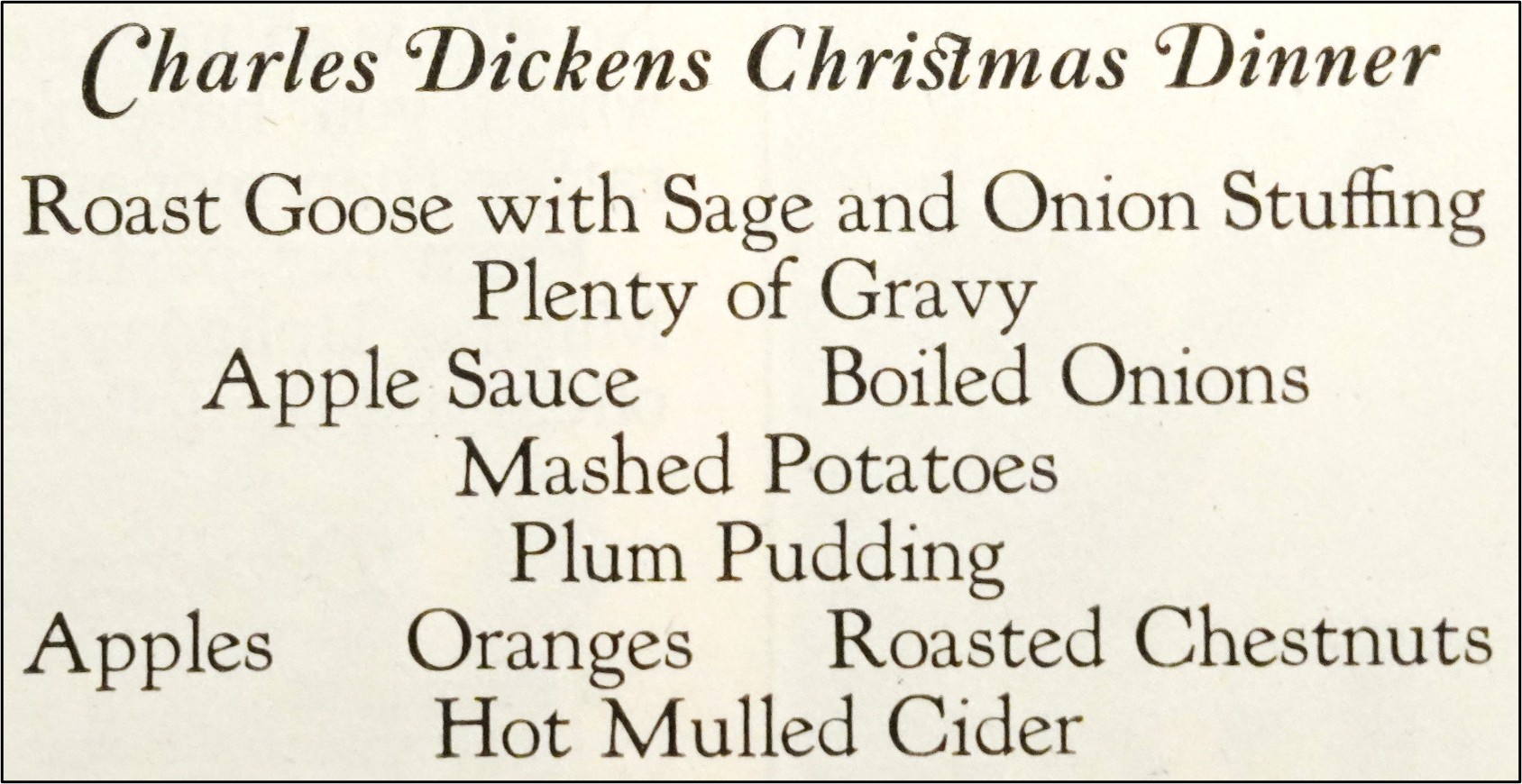
Menu
Source: Ladies Home Journal (December, 1925)

For close to two hundred years, the story of A Christmas Carol by Charles Dickens has been told and repeated. It was published in 1843, and its story of redemption and transformation has resonated ever since. Some people today even host Dickens’ themed dinners with classic foods based on the cuisine in the book. For example, Food and Wine provides guidance on how to serve Scrooge’s menu on Christmas.

Amazingly, people have been hosting dinners with menus based on the foods in A Christmas Carol for at least a hundred years. A menu for a Charles Dickens Christmas Dinner appeared in the December, 1925 issue of Ladies Home Journal. It included roast goose, boiled onions, mashed potatoes, plum pudding, and other foods. A companion article described how to roast and carve a goose.
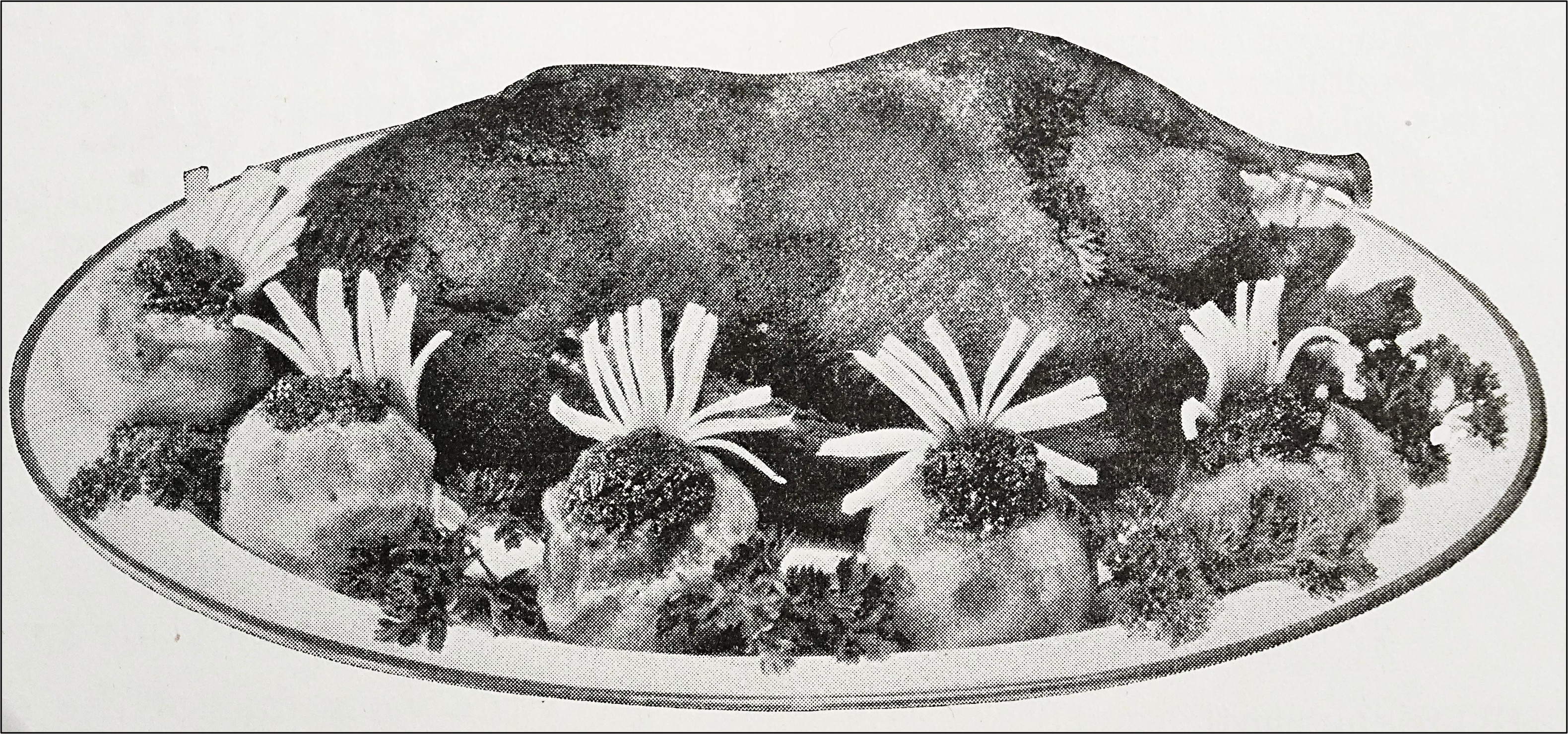
Roast Goose
Source: Ladies Home Journal (December, 1925)

In the old magazine, there were red-tinted apples stuffed with chopped prunes and nuts in the foreground of an image of the roast goose. The articles included directions for making the stuffed apple garnish:

Recipe for Stuffed Apples
Source: Ladies Home Journal (December, 1925)

I had no desire to roast a goose, but I was fascinated by the stuffed apple garnish. The directions called for tinting peeled apples red, poaching them, and then stuffing them with chopped prunes and nuts. I  decided to try making a few stuffed apples.
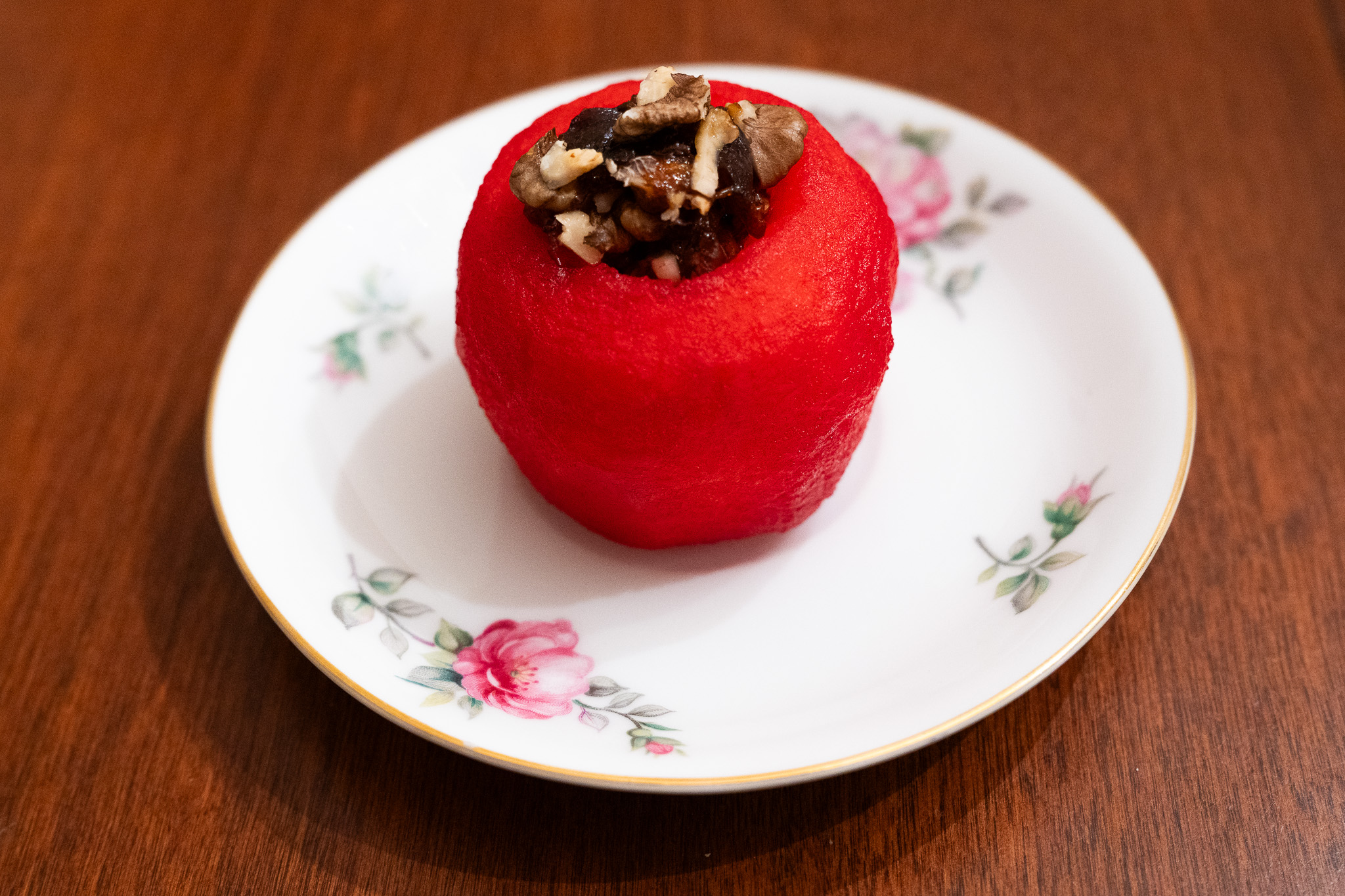
Stuffed Apple

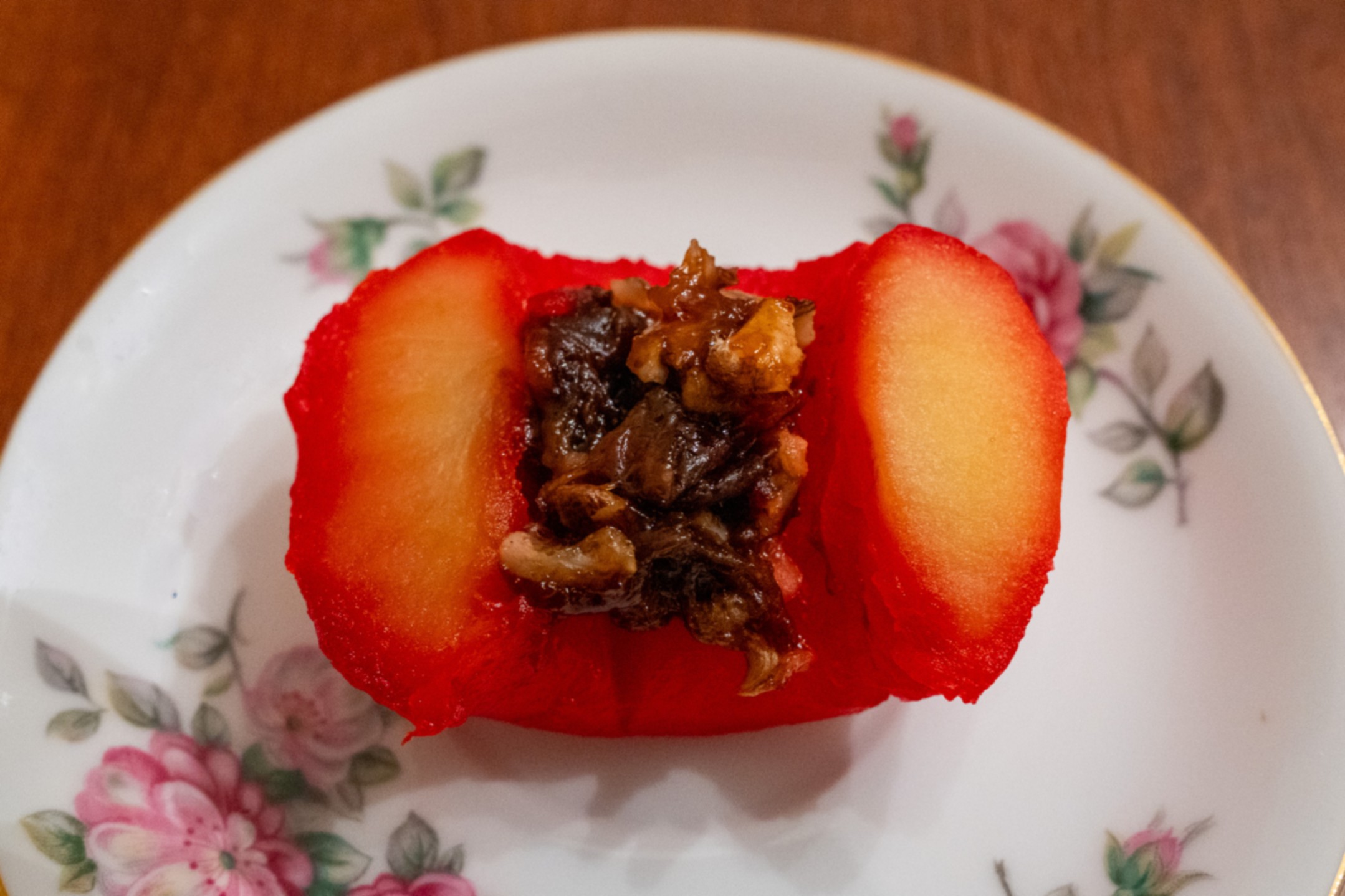
The Stuffed Apples with Chopped Prunes and Nuts were a vibrant red, and would make an impressive garnish or dessert. They were very tasty with a lovely mix of tastes and texture. When I got ready to eat an apple, I cut it in half, and was amazed how beautiful the white interior of the apple looked against the red background of the parts of the apple that had the red coloring. An optional way to present the apples would be to cut them all in half. Stuffed apple half on plate
The old directions were for twelve apples. I didn’t want that many, so when I updated the recipe, I reduced it to 3 apples. For the syrup that the apples are poached in, I divided the amount of sugar by three, but proportionately used more water than in the original recipe. I did this because even though I made fewer apples, I still needed sufficient syrup to successfully poach the apples. I also had some issues with the syrup getting too thick if I didn’t add additional water.

The old recipe doesn’t identify what type of nuts to use. I used walnuts.

Here’s the recipe updated for modern cooks:

Apples Stuffed with Prunes and Nuts

  • Servings: 3 apples
  • Difficulty: moderate
  • Print

3 apples (Use a variety that maintains shape when cooked. I used Honeycrisp.)

6 prunes

1/4 cup chopped walnuts

1 cup sugar + additional sugar to sprinkle on top

1 cup water + additional water to cook prunes

1/2 teaspoon liquid red food coloring (Adjust amount if very light or dark red apples are desired.)

Peel and core the apples. Combine the sugar and water in a pan that is large enough to hold the apples; bring to a boil using medium heat. Stir in the red food coloring, and add the apples. Reduce heat so the syrup very gently boils while the apples poach. Periodically roll the apples to get them evenly colored. Add additional water if the syrup gets too thick. The lid can be put on the pan to help the apples cook more evenly. Cook until the apples are just barely tender (and not so long that they begin to fall apart).

In the meantime, put the prunes in a pan and cover with water. Bring to a boil, then turn off heat. Let sit for a few minutes, then drain and chop the prunes. Combine the chopped prunes and chopped walnuts. Set aside.

Line a dish or pan that can be put under the broiler with foil. Set the cooked apples in the lined dish and stuff with the chopped prune and walnut mixture. Sprinkle sugar on top of the stuffed apples. Put under the broiler and broil until the sugar melts (1 – 2 minutes).

The stuffed apples can be served whole or cut in half before serving. They work well as either a garnish or a dessert.

http://www.ahundredyearsago.com

Old-Fashioned Date and Nut Bread

Date and Nut Bread

Summer is coming to an end, and students are back in school.  I did a post several weeks ago for the back-to-school season on suggestions in a hundred-year-old year old cookbook for packed lunches.  Date and nut sandwiches were one suggestion. A reader commented, “Date/nut bread with creamy cream cheese… um.”

I’d never had Date and Nut Bread, so the next thing I knew, I was searching through my hundred-year-old cookbooks to see if I could find any recipes for Date and Nut Bread. Happily, I found a recipe, and made it yesterday.

The Date and Nut Bread was moist, and chock full of dates and pecans. Now that I’ve eaten Date and Nut Bread, I can state with confidence that I agree with the reader, “Date/nut bread with creamy cream cheese… um.” It would be lovely in a packed lunch.

Date and Nut Bread

Here’s the original recipe:

Recipe for Date and Nut Bread
Source: Cook Book of the Susquehanna Valley Country Club, Sunbury, PA (1924)

I interpreted “hot wheat breakfast cereal” as cream of wheat. I was surprised that it was listed as an ingredient in the recipe, but it worked fine.

When, I made the recipe, I substituted a packet of dry yeast for the yeast cake.

Here’s the recipe updated for modern cooks:

Date and Nut Bread

  • Servings: 2 loaves
  • Difficulty: moderate
  • Print

2 cups of hot cream of wheat cereal (prepare the cereal following package direction)

1/2 cup brown sugar

1 teaspoon salt

1 1/2 cups dates, chopped

1 1/2 cups pecans, chopped

2 tablespoons butter

1 packet active dry yeast

1/2 cup lukewarm milk (105 – 115° F.)

approximately 5 cups bread flour

In a large bowl mix together the hot cream of wheat cereal, brown sugar, salt, dates, and pecans. Allow to partially cool for a few minutes.

In a small bowl, dissolve the yeast in the lukewarm milk. When the cereal mixture is lukewarm (105-115° F.), add the dissolved yeast and stir to combine. Add half of the flour and stir to combine, then gradually add the remaining flour until the dough reaches a consistency where it can be handled. Turn onto a floured surface and knead until the dough is smooth and elastic (about 10 minutes). Put in a large greased bowl, cover and place in a warm spot that is free from drafts until doubled in size (about 1 1/2 hours).

Punch dough down, then divide dough into two equal parts and shape into loaves. Place in two greased loaf pans, and cover. Let rise until doubled in size (about 1 hour).

Bake loaves in 375° F. oven for 35 -45 minutes or until lightly browned.

http://www.ahundredyearsago.com

Old-Fashioned Leeks (and Potatoes) au Gratin

Leeks au Gratin

It’s so much fun to go to the farmers’ market. The variety of produce available is at its peak, and it’s wonderful to support local farmers who sell incredibly fresh vegetables and fruits. When I go to the farmer’s market I always quickly walk through the entire area to see what looks particularly enticing, and then go around a second time to make my purchases. This past week several sellers had lovely leeks, so I decided that it was time to dig out my hundred-year-old cookbooks and find a leek recipe.

I found a lovely recipe for Leeks au Gratin. The title of the old recipe wasn’t totally accurate because it also called for potatoes. Regardless of whether this recipe is called Leeks au Gratin or Leeks and Potatoes au Gratin, it’s a winner. Sliced leeks and potatoes are smothered in a white sauce, and then topped with cheese and bread crumbs. The delicate, slightly sweet, mild onion-flavored leeks well paired with the earthy potatoes to create a rustic side dish.

Here’s the original recipe:

Recipe for Leeks au Gratin
Source: The New Butterick Cook Book (1924)

Twelve leeks and six potatoes seemed like a lot, so I halved the recipe when I made it. The halved recipes fit into a 1-quart baking dish.

I put a little salt and pepper in the white sauce rather than sprinkling it on top of the cheese and bread crumb topping.

The recipe calls for a relatively small amount of white sauce compared to many recipes for “creamed” or “au gratin” vegetables, but it worked fine, and I was pleased with how the recipe turned out.

I layered the leek and potato slices in the baking dish, and put half of the white sauce of top of them after doing the first layers.

Here’s the recipe updated for modern cooks:

Leeks (and Potatoes) au Gratin

  • Servings: 3 - 4
  • Difficulty: moderate
  • Print

6 leeks

3 medium potatoes

1/2 teaspoon salt + 1/2 teaspoon salt + 1/4 teaspoon salt

1 tablespoon butter

1 tablespoon flour

1/8 teaspoon pepper

1/2  cup milk

1/4 cup grated cheese (I used cheddar.)

1/3 cup fine bread crumbs (I grated a slice of bread to get the bread crumbs.)

Preheat oven to 350° F. Clean and trim the leeks. Slice the white and light green parts of the leeks into 1/2-inch pieces.  Place in a saucepan and cover with water; add 1/2 teaspoon salt. Using high heat bring to a boil, then reduce heat and cook until the leeks are tender (about 10 minutes). Remove from heat and drain.

Peel and then slice the potatoes into 1/4-inch slices. (If the slices are large, cut each slice in half.) Place in another saucepan, and cover with water; add 1/2 teaspoon salt. Using high heat bring to a boil, then reduce heat and cook until the sliced potatoes are tender (about 10 minutes). Remove from heat and drain.

In the meantime, in another pan, using medium heat, melt  butter, then stir in the flour,  1/4 teaspoon salt, and pepper. Gradually, add the milk while stirring constantly. Continue stirring until the white sauce begins to thicken.

Put 1/2 of the cooked potatoes in a baking dish. (I used a 1-quart baking dish.). Add 1/2 of the cooked leeks. Spread 1/2 of the white sauce over the vegetables in the dish. Add the remainder of the potatoes, and then the remainder of the leeks. Spread the rest of the white sauce over the vegetables in the dish. Sprinkle the grated cheese, and then the bread crumbs, on top. Bake for 15 minutes or until hot and the bread crumbs are lightly browned.

http://www.ahundredyearsago.com

Old-Fashioned Cucumber Sauté

cucumber saute spears on plateI was intrigued by a recipe in a hundred-year-old cookbook for Cucumber Sauté, so decided to give it a try. Cucumber spears are briefly boiled, then rolled in flour and sautéed.

The Cucumber Sauté spears were slightly crunchy and very tasty.

Here’s the original recipe:

Recipe for Cucumber Sauté
Source: The New Butterick Cook Book (1924)

Except for the number of cucumbers, the amounts are not listed for any of the ingredients. When I updated the recipe, I added amounts for some of the ingredients.

Here’s the recipe updated for modern cooks:

Cucumber Sauté

  • Servings: 3 - 4
  • Difficulty: moderate
  • Print

water

4 small cucumbers (about 4 – 5 inches long)

butter or cooking oil (I used butter.)

1/3 cup flour

1/4 teaspoon salt

1/8 teaspoon pepper

2 tablespoons minced parsley or chives (I used parsley)

Fill a saucepan about 2/3’s full of water; bring to a boil using high heat.

In the meantime, peel the cucumbers, and then quarter them lengthwise. Put the quartered cucumbers into the boiling water, reduce heat so the water simmers and cook the cucumbers 3 minutes. The drain the cucumbers and lay on a paper towel to eliminate any excess moisture.

In the meantime, combine the flour, salt, and pepper. Then roll the cooked cucumbers in the flour mixture.

In a skillet, heat enough butter or cooking oil to cover the bottom of the pan. When hot, add the floured cucumbers. Cook until they begin to lightly brown, then turn and lightly brown the other side. When the cucumbers are turned add the parsley or chives and evenly distribute over the cucumbers. When lightly browned on both slides remove from heat, drain on paper towels, and serve.

http://www.ahundredyearsago.com

Old-Fashioned Chocolate Waffles

Chocolate Waffles

Week-end mornings are the perfect time to make breakfast foods that are just a little special, so when I saw a recipe for Chocolate Waffles in a hundred-year-old cookbook, I decided to give them a try.

The Chocolate Waffles were crispy on the outside and tender in the middle. They contained just the right amount of chocolate. The waffles were not very sweet, but when syrup or other sweet topping is added it was just right.

Here’s the original recipe:

Recipe for Chocolate Waffles
Source: Modern Priscilla Cook Book: One Thousand Home Tested Recipes (1924)

I gradually added the hot water to the cocoa, and stirred until smooth. This resulted in a very thick paste. I could not figure out why the old recipe called for then heating this thick cocoa and water mixture to boiling, so I skipped that step.

Chocolate Waffles probably are lovely when served with chocolate sauce, marshmallow cream, or vanilla ice cream, but I just served them with maple syrup and they were delightful.

Here’s the recipe updated for modern cooks:

Chocolate Waffles

  • Servings: 4-6
  • Difficulty: moderate
  • Print

1/2 cup cocoa

1/2 cup water

1 cup milk

2 eggs

2 cups flour

4 teaspoons baking powder

1/2 teaspoon salt

1/4 cup sugar

2 tablespoons shortening, melted

1/2 teaspoon vanilla

Put the cocoa in a mixing bowl, and gradually add the hot water while stirring constantly. Stir until smooth. Add remaining ingredients. Beat until smooth. Ladle batter onto a hot waffle iron and cook, following the waffle iron directions.

http://www.ahundredyearsago.com

Old-Fashioned Creamed Sweet Potatoes

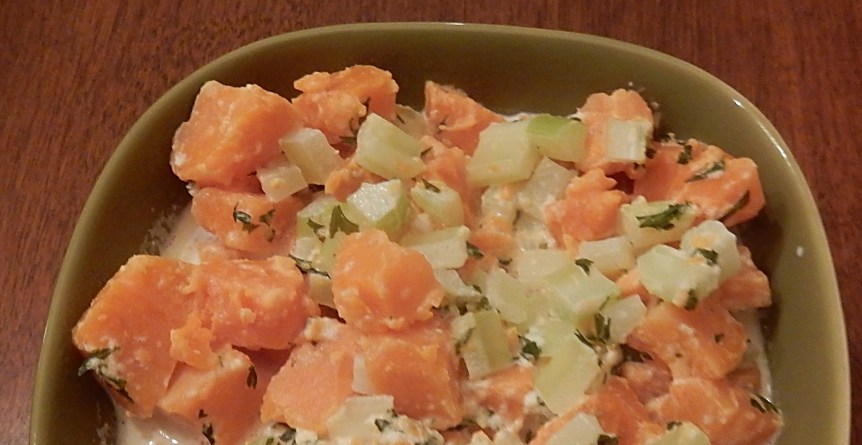
Creamed Sweet Potatoes

I’m always looking for new ways to serve vegetables, so was intrigued by a hundred-year-old recipe for Creamed Sweet Potatoes. The recipe actually called for both diced sweet potatoes and celery. The combination worked well together, and I was pleased with how the recipe turned out.

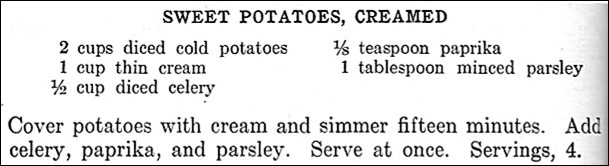
Here’s the original recipe:

Recipe for Creamed Sweet Potatoes
Source: Modern Priscilla Cook Book (1924)

When I made this recipe, I was uncertain whether I was supposed to use left-over cold sweet potatoes that had previously been cooked, or if I was supposed to peel sweet potatoes and cut the uncooked sweet potatoes into cubes. I decided to go with the latter approach. The reason I used uncooked diced sweet potatoes is because they can easily be over-cooked and become very mushy.  I wanted the sweet potatoes pieces to hold their shape.

Here’s the recipe updated for modern cooks:

Creamed Sweet Potatoes

  • Servings: 3 - 4
  • Difficulty: moderate
  • Print

1 cup half and half (light cream)

2 cups sweet potatoes, peeled and diced into 1-inch cubes

1/2 cup celery (about 1 stalk), diced

1/8 teaspoon paprika

1 tablespoon chopped parsley (or 1 tablespoon parsley flakes) – I used parsley flakes.

Put half and half in a saucepan; add diced sweet potatoes. Using medium heat, bring to a boil, then reduce heat and simmer for 15 minutes or until the sweet potatoes are tender. Genty stir occasionally while cooking, being sure to stir all the way to the bottom of the pan since the cream will easily scorch. Once the sweet potatoes are tender, gently stir in the paprika and parsley, then add the celery. Heat for another minute or two (until the mixture is hot and bubbly); remove from the heat and serve.

http://www.ahundredyearsago.com

Old-fashioned Eggs with Asparagus

Eggs with Asparagus

Happy Easter!

Easter is such a special time of year. It’s so much fun coloring eggs with children or grandchildren – but it’s often then a challenge to figure out ways to eat the eggs. So I was pleased to find a recipe for Eggs with Asparagus in a hundred-year-old cookbook.

The Eggs with Asparagus is a classic recipe with the asparagus topped with chopped hard-boiled eggs embedded in a white sauce.

Here’s the original recipe:

Recipe for Eggs with Asparagus
Source: General Welfare Guild Cook Book (The General Welfare Guild, The Beaver Valley General Hospital, New Brighton, Pennsylvania), 1923

Here’s the original recipe:

Here’s the recipe updated for modern cooks:

Eggs with Asparagus

  • Servings: 3 - 4
  • Difficulty: moderate
  • Print

1 bunch asparagus (about 1 pound), cut into 1-inch pieces

1 cup water

1/2  teaspoon salt

2 tablespoons butter

2 tablespoons flour

dash pepper

1/2 cup heavy cream

2 hard-boiled eggs, finely chopped

Put the asparagus, salt, and water in a saucepan, and bring to a boil using high heat; reduce heat and simmer until tender (about 3 minutes). Remove from heat and drain, reserve the water that was used for cooking.

Meanwhile in another saucepan, melt the butter. Stir the flour and pepper into the butter. While stirring constantly, slowly pour in the water that was used for cooking the asparagus and the cream; bring to a boil using medium heat while stiring constantly. Stir in the chopped eggs (reserve a small amount of the yolk for garnish).  Remove from heat and pour over rthe cooked asparagus. Garnish with the chopped egg yolk.

http://www.ahundredyears.com