Old-fashioned Beef Balls with Spaghetti

There are some foods where the recipes were just plain different a century ago than what they are now. Spaghetti is one of those foods. Modern marinara sauce recipes often call for basil and oregano, but those spices are seldom seen in old recipes.

I decided to make a hundred-year-old recipe for Beef Balls with Spaghetti. The recipe for the sauce called only for tomatoes, green pepper, onion, parsley, water, and salt. I had my doubts about the recipe, and worried that it won’t be spicy enough.

I worried needlessly. This recipe was a hit.

My husband said, “This spaghetti is great. It reminds me of the spaghetti they served when I was in elementary school. Mom never made spaghetti, and this was my favorite meal at school.”

Here’s the original recipe:

Source: Cooking for Everyday by Janet McKenzie Hill (1919)

And, here’s the recipe updated for modern cooks. (I made this recipe entirely on top of the stove. I couldn’t figure out why the 1919 recipe calls for doing part of the cooking in the oven.)

Beef Balls with Spaghetti

  • Servings: 8 - 10
  • Difficulty: moderate
  • Print

1 28-ounce can tomatoes (or use a 1 quart jar of tomatoes)

1 green pepper, chopped

1 onion, chopped + 1 teaspoon onion, grated

2 bunches parsley, chopped

2 cups water

1 teaspoon salt + 1/2 teaspoon salt

1 pound ground beef

1 egg

1/4 cup bread crumbs

3 tablespoons shortening or cooking oil

1/2 pound spaghetti

1/2 cup parmesan cheese, grated

Preheat oven to 350° F. To make sauce, put tomatoes, green pepper, 1 chopped onion, parsley, water, and 1 teaspoon salt in a large saucepan; stir to combine. Bring to a boil, then reduce heat and simmer for 1/2 hour. Remove from heat, cool slightly, then puree.

While the vegetables are cooking, combine ground beef, egg, bread crumbs, 1 teaspoon grated onion, and 1/2 teaspoon salt in a mixing bowl, then shape into 12 balls each approximately 1-inch in diameter. Put shortening or oil into a skillet, and heat. Add the beef balls, and cook for 3-5 minutes, then gently roll over. Roll several times until browned on all sides.

Put spaghetti sauce back in sauce pan, add beef balls. Using medium heat bring to a boil; reduce heat and gently simmer for 45 minutes while stirring occasionally.

Beginning about 15 minutes before the sauce will be finished, cook spaghetti according to package instructions.

To serve, remove sauce from heat, and take beef balls out of the sauce.  Add spaghetti and parmasen cheese to the sauce, and lift with a fork until well blended. Add meatballs. Serve immediately

Runkel’s Fudge Roll

People often say to me, “You make all those hundred-year-old recipes . . . Don’t you ever have cooking disasters?”

And, I usually reply, “I seldom have a disaster. Most recipes turn out fine, but I make them only once; some are very good and I make them a couple of times; and, a few I absolutely love and they have become part of my regular cooking repertoire.”

But, I do occasionally have cooking disasters. This is one of those times.

I found a recipe for Runkel’s Fudge Roll in an advertisement for Runkel’s Cocoa in a hundred-year-old issue of Good Housekeeping, and thought to myself, “I bet this will be a good recipe. Usually recipes in advertisements were carefully tested.”

Wrong – The fudge filling hardened very quickly, and was difficult to spread; AND, the cake base broke into pieces when I tried to roll it.

The one good thing about this recipe is that it was very tasty – even though it didn’t look very nice.

Here’s the original recipe:

Source: Good Housekeeping (March, 1919)

Runkel's Fudge Roll

  • Servings: 7 - 9
  • Difficulty: difficult
  • Print

2 tablespoons butter, softened

1 cup sugar

3 eggs

2 tablespoons milk

1 teaspoon vanilla

1 cup flour

1 teaspoon baking powder

1/2 teaspoon salt

Preheat oven to 375° F.  Put butter, sugar, eggs, milk, and vanilla in a mixing bowl, and stir together. Add flour, baking powder and salt; beat until smooth. Put batter on a 15x10x1 -inch baking sheet that is lined with parchment paper. Make sure that the batter goes to the edges and corners of the pan, and that it is spread evenly. Bake 12-15 minutes, or until toothpick comes out clean. Remove from oven and turn upside down on a piece of parchment paper that has been covered with sugar. Peel off the parchment paper that was used when baking. Immediately spread with the fudge filling, and roll as for a jelly roll.

Fudge Filling

1 1/2 tablespoons butter

1/4 cup cocoa

1 1/2 cups sugar

1/4 teaspoon salt

1/4 cup milk

1/2 teaspoon vanilla

Melt butter using medium low heat in a saucepan, add cocoa and stir until smooth. Stir in sugar, salt, and milk. Increase heat to medium, and bring to a boil while stirring occasionally. Immediately remove from heat, and add vanilla. Beat until smooth, and spread on cake base. Note: This icing hardens quickly. Immediately spread as soon as it reaches a spreadable consistency.

Old-fashioned Corned Beef Hash

Happy St. Patrick’s Day!

Some things just go together like St. Patrick’s Day and corned beef – and, of course, for me it was only a small leap until I was asking, “Are there hundred-year-old recipes for corned beef?

I’m happy to report that I found an excellent hundred-year-old Corned Beef Hash recipe that was simple to make and a great way to use any corned beef left over from St. Patrick’s Day.  However, there was one little glitch. I couldn’t bring myself to try the serving suggestion.

Here’s the original recipe:

Source: Recipes for Everyday by Janet McKenzie Hill (1919)

Pour a ring of ketchup around the Corned Beef Hash? It might make a lovely presentation (though I tend to think not), but I’ll never know for sure.

And, I didn’t serve the Corned Beef Hash with baked bananas. Baked bananas may be tasty, but the 1919 cookbook didn’t include a recipe for them, and I don’t know how to make them. I must be lacking a bit of common cooking knowledge that most cooks had back then . . .sigh.

Here’s the recipe updated for modern cooks:

Corned Beef Hash

  • Servings: 2 - 3
  • Difficulty: easy
  • Print

1 cup cold cooked corn beef, chopped

1 cup cold boiled potatoes, chopped

2 1/2 tablespoons shortening

3 tablespoons broth that the corned beef was cooked in or water (I used water.)

paprika

Melt shortening in a skillet that has a lid; add corned beef, potatoes, and broth or water. Sprinkle with paprika. Gently stir to combine. Cover pan and cook using medium low heat until hot and steamy (and until most of the broth has been absorbed or evaporated). Stir occasionally. Do not allow the potatoes to brown. Remove from heat and serve.

Old-fashioned Blueberry Duff

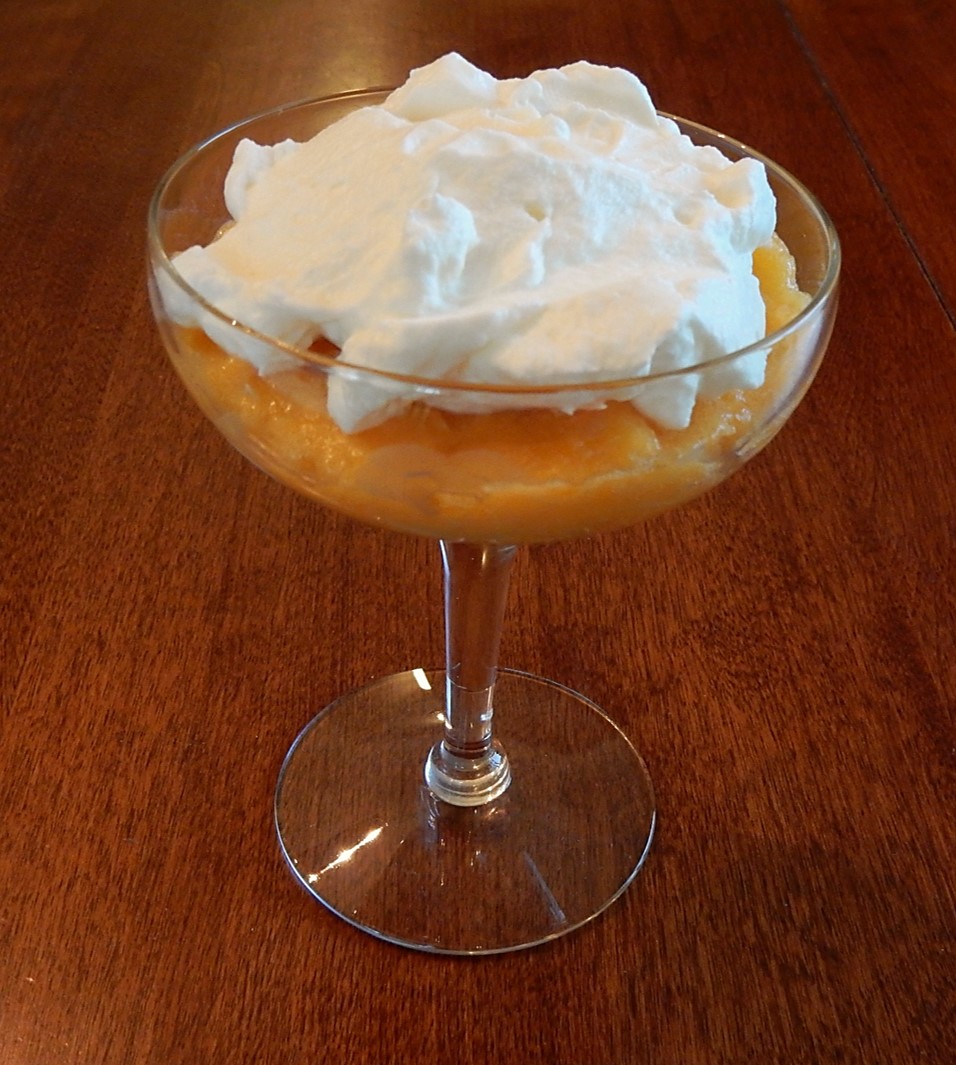
I recently came across a hundred-year-old recipe for Blueberry Duff in the February, 1919 issue of Good Housekeeping. Duffs often are steamed puddings – but this recipe is very easy to make and calls for baking the duff in the oven.

This Blueberry Duff is moist, rich, and spicy. It contains molasses, well as cinnamon, ginger, and cloves.

The recipe calls for canned blueberries. I’m fascinated by what people ate during the winter months in the days before modern transportation allowed produce to be shipped thousands of miles.  In 1919, fresh blueberries, were not available; but people regularly ate canned (either home canned or commercially canned) blueberries.

Here is the original recipe:

Source: Good Housekeeping (February, 1919)

And, here’s the recipe updated for modern cooks:

Blueberry Duff

  • Servings: 6 - 8
  • Difficulty: easy
  • Print

1 15-ounce (1 pint) can of canned blueberries (DO NOT use blueberry pie filling. This recipe calls for canned blueberries.)

2 cups all-purpose flour

1 cup barley flour

1/2 teaspoon ground ginger

1/2 teaspoon ground cloves

1/2 teaspoon cinnamon

1/2 baking soda

1/2 teaspoon salt

1 cup molasses

whipped cream, optional

Drain canned blueberries; reserve both juice and berries.

Preheat oven to 350° F. Put all-purpose flour, barley flour, ginger, cloves, cinnamon, baking soda, salt, molasses, and blueberry juice in a mixing bowl; beat until thoroughly combined. Stir the blueberries into the batter. Pour batter into a well-greased 1 1/2 quart casserole dish; put lid on dish. Bake in oven for 1 hour or until a toothpick inserted in the center comes out clean. Remove from oven, and let sit for 10 minutes, then remove from dish by running a knife around the edge of the dish and inverting on a plate.

Serve either warm or cold. If desired, serve with whipped cream.

Old-fashioned Fig Meringue Pie

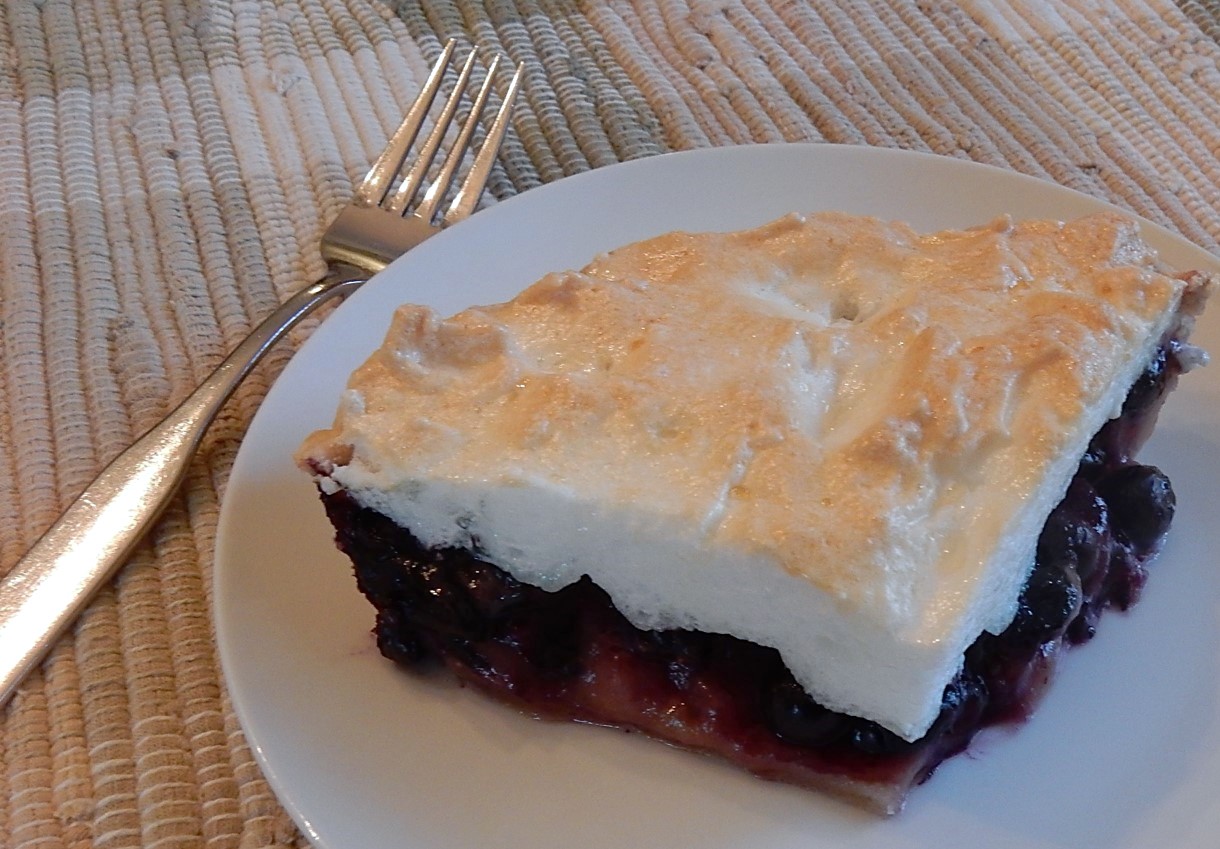
A hundred years ago, fresh fruit was scarce during the long winter months, so pies were often made using dried fruit.  I found a wonderful recipe for a Fig Meringue Pie in a 1919 cookbook. The delectable fig filling is topped with a creamy meringue.

Here’s the original recipe:

Source: Recipes for Everyday by Janet McKenzie Hill (1919)

And, here’s the recipe updated for modern cooks:

Fig Meringue Pie

  • Servings: 5-6
  • Difficulty: moderate
  • Print

12 ounces dried figs

1 1/2 cups water

2 eggs separated

2 tablespoons sugar + 4 tablespoons sugar + a small amount of additional sugar

dash salt

1 8-inch (small) baked pie crust

Remove stems from figs, then chop. (There should be approximately 2 1/2 cups of chopped figs.) Put chopped figs in a saucepan, add water. Bring to a boil using high heat, then reduce heat and simmer for 30 minutes while stirring occasionally. Remove from heat.

In the meantime, preheat oven to 325° F. Place egg yolks, 2 tablespoons sugar, and salt in a bowl; beat together. Place a small amount (approximately 1 – 2 tablespoons) of hot fig mixture into bowl with beaten egg mixture, stir quickly to prevent eggs from coagulating. Then put this mixture in the saucepan with the cooked figs while stirring. Return to heat (medium), and cook until the mixture thickens while stirring continuously.  Pour into a pie shell which had been previously baked.

In a separate bowl make the meringue. Place egg whites in the bowl, and beat the egg whites until they form stiff peaks. Gradually add 4 tablespoons sugar while continuing to beat. Then spoon on top of the pie and swirl; sprinkle with sugar. Bake for 20 minutes or until the meringue is lightly browned.
Old-Fashioned Pastry Hearts

heart-shaped pastries

Are you looking for a tasty, fun-to-make Valentine’s Day treat? Well, I may have found the perfect recipe for you. Pastry Hearts are made by spreading jelly on pastry dough, rolling into a log, slicing, and then shaping into hearts. The process of squeezing and pressing the dough to create the hearts was fun and felt a bit like playing with play dough.

Here’s the original recipe:

recipe for Pastry Hearts
Source: Recipes for Everyday by Janet McKenzie Hill (1919)

Here’s the recipe updated for modern cooks:

Pastry Hearts

  • Servings: approximately 12 hearts
  • Difficulty: moderate
  • Print

pie pastry for a 1-shell pie (or use scraps of pastry dough left-over after making a pie crust)

1 egg white

red-colored jelly – red raspberry, cherry, etc. (I used red current jelly, but if I made this recipe again, I’d select a redder jelly.)

sugar

Preheat oven to 425° F. Roll pie pastry into a rectangle 1/8 inch thick. Thinly spread with jelly. Starting at the narrow end, firmly roll into a log-shape. Cut into 1/4 inch slices.

Place slices on a greased cookie sheet. Shape into hearts by pulling into a point at one end, and pressing in at the other end. Use a paper towel to dab away any excess jelly. Brush with egg white and sprinkle with sugar. Bake for approximately 10 -15 minutes (or until lightly browned).

Old-fashioned Curried Chicken (Recipe 1)

I recently made a hundred-year-old recipe for Curried Chicken. The recipe turned out wonderfully. The crispy chicken is served with rice and a delightful mild curry sauce that has just a hint of sweetness. This recipe is a keeper, and I’m sure that I’ll make it again.

Here’s the original recipe:

Source: Recipes for Everyday by Janet McKenzie Hill (1919)

This recipe is from a  1919 cookbook titled Recipes for Everyday that was published by Proctor and Gamble. Many of the recipes, including this recipe, call for Crisco shortening which was produced by Proctor and Gamble. At the time, it was considered a new and modern fat. Crisco was first sold in 1911. It was the first shortening made completely from vegetable oil, and was originally made from cottonseed oil. According to the  cookbook’s author:

The careful housewife fully understands that her success in cooking absolutely depends upon the quality of the ingredients she chooses. A variable cooking fat like lard, often having unpleasant odor and flavor, cannot give the pleasing, appetizing results insured by a clean, pure, tasteless , odorless, uniform fat like Crisco.

And, here is the recipe updated for modern cooks:

Curried Chicken

  • Servings: 4 - 5
  • Difficulty: moderate
  • Print

1 chicken, cut into pieces

cold water

1/2 cup flour + 3 tablespoons flour

1/2 cup shortening (Lard could be substituted for the shortening.)

1/2 teaspoon salt + 1/2 teaspoon salt

1/2 large onion, sliced

1 tablespoon curry powder

1/4 teaspoon paprika

1 cup milk

1/2 cup light cream

2 tablespoons currant jelly

1 teaspoon lemon juice

cooked rice

Dip chicken pieces in water, then roll in 1/2 cup of flour to coat. Heat shortening in a frying pan using medium heat. Stir 1/2 teaspoon salt to the melted shortening. Place the coated chicken pieces in frying pan and cook until lightly browned. Turn the chicken to brown all sides.

In the meantime, preheat oven to 400° F. Line a baking sheet with foil, then put the pieces of browned chicken on baking sheet and place in oven. Bake until the chicken is completely cooked.

After the chicken is removed from the frying pan, strain the shortening. Return 3 tablespoons of shortening to the frying pan; then reheat using medium heat. (The remainder of the shortening can be discarded or used for another purpose.)  Add sliced onions and stir occasionally; cook until lightly browned. Stir in 3 tablespoons flour, curry powder, paprika, and 1/2 teaspoon of salt. Continue stirring until hot and bubbly, then gradually add milk and cream while stirring constantly. Continue stirring until the mixture comes to a boil. Add currant jelly and lemon juice; stir until the jelly is dissolved. Removed from heat and strain. Serve the sauce with the chicken pieces and rice.