Went Shopping: Bought Toothbrush and Stockings

16-year-old Helena Muffly wrote exactly 100 years ago today: 

Saturday, September 30, 1911: Went to Watsontown this morning. Had to get a toothbrush and some stockings. Had to husk some corn this afternoon. It was my first attempt, so you see the piles of corn wouldn’t span out so rapidly. In addition to this I got stung by a bumble bee. How it did swell my thumb. Gee whiz!
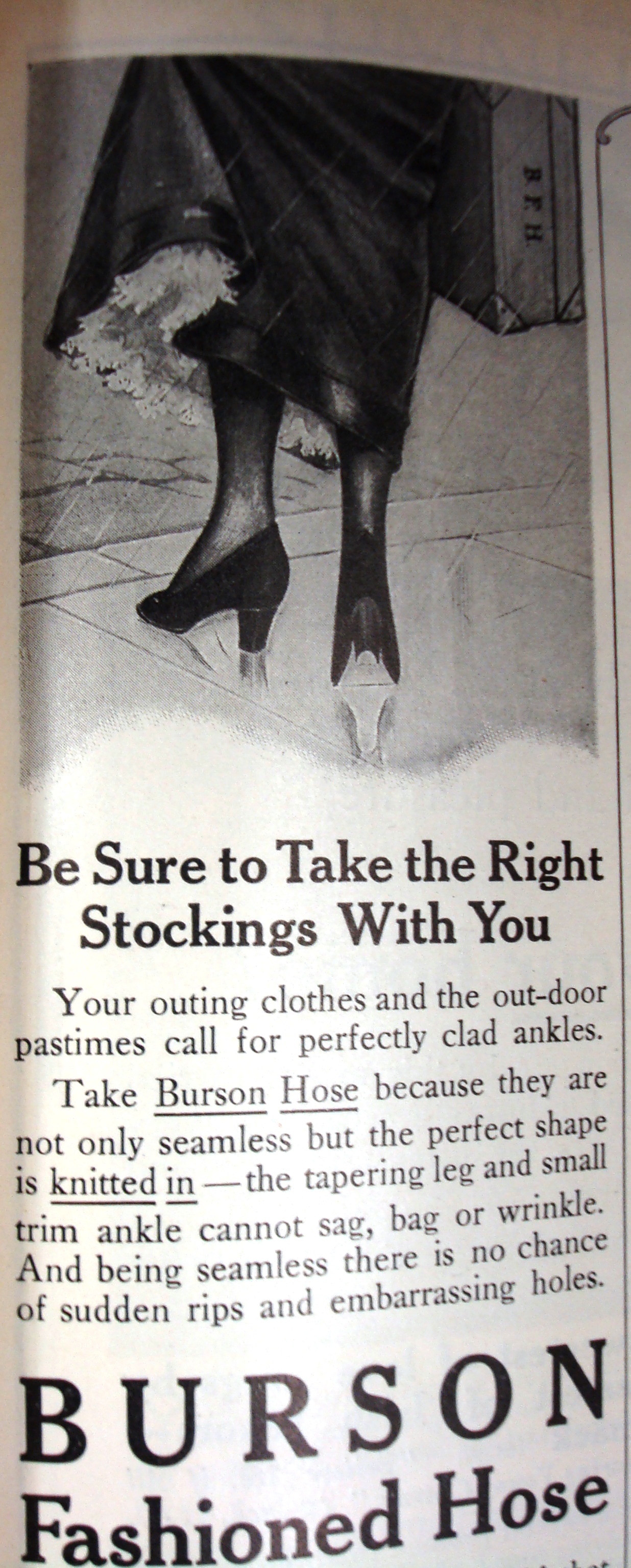
Source: Ladies Home Journal (August 1911)

Her middle-aged granddaughter’s comments 100 years later:

A hundred years ago people in rural areas generally did not have electricity; many did not have telephones, and there were outhouses instead of bathrooms. Cars were a rarity; and it was a huge process to do laundry.

Yet, surprisingly—at least to me—you could go into a store and buy a toothbrush and stockings in 1911.  Until I read this entry, I never thought about whether people had toothbrushes a hundred years ago, but I don’t think that I would have guessed that these consumer goods were commercially available.

Miscellaneous Thoughts

It’s only late September. I’m surprised that the corn was dry enough to husk.

There must have been more insects a hundred years ago. This is the third time since June that Grandma has mentioned a bee sting (see June 21 and July 8).

Holding Schools Accountable a Hundred Years Ago

16-year-old Helena Muffly wrote exactly 100 years ago today: 

Friday, September 29, 1911: Papa took us to school this morning. It was so rainy at noon it came down as if it meant business. Teacher has rearranged our classes, and now we’ll have the program every now and then to see where our class comes.

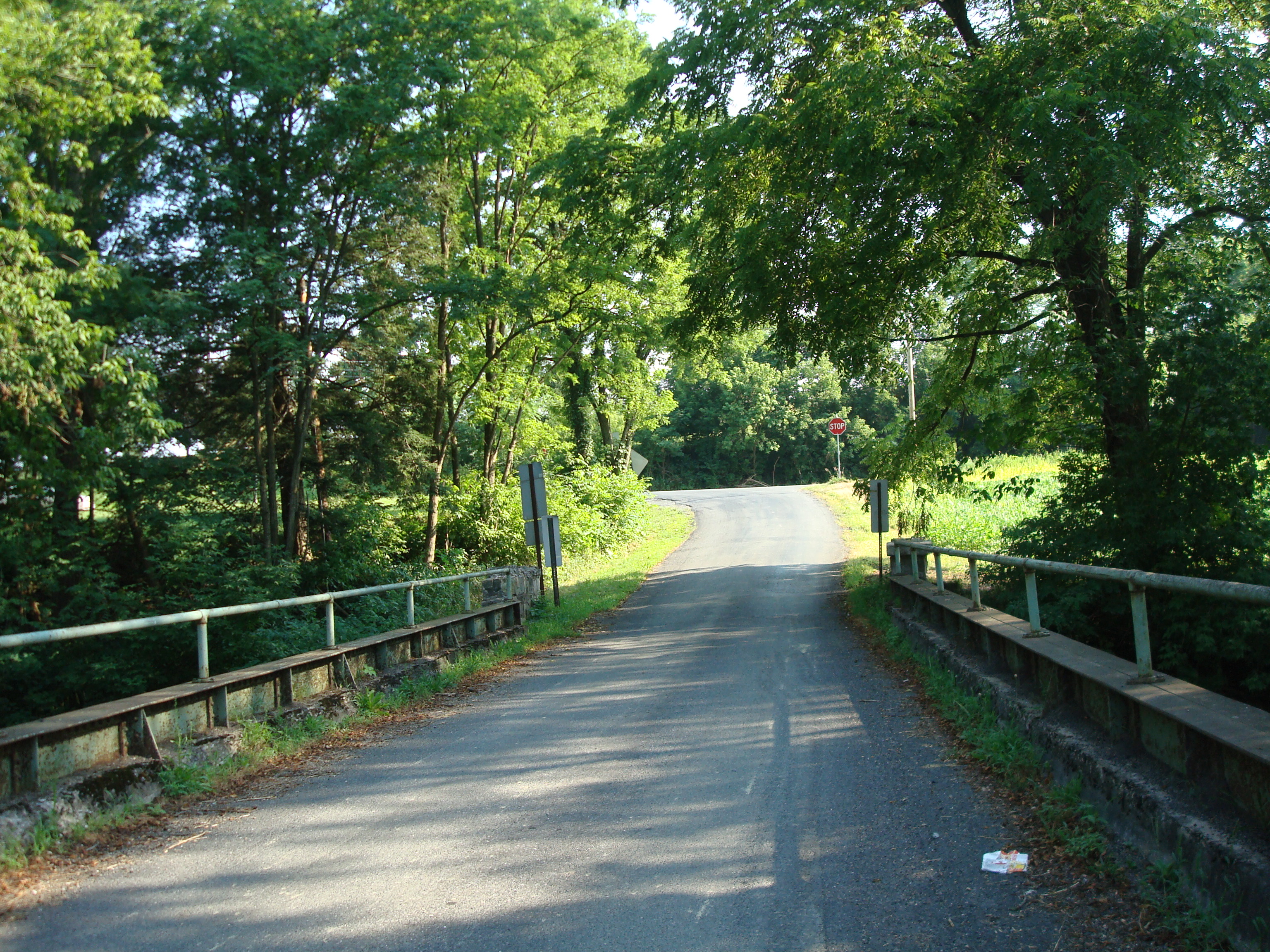
Recent rainy day at the school that once housed the McEwensville School.

Her middle-aged granddaughter’s comments 100 years later:

How can you measure school quality? Is the school providing students with an adequate education? How does it stack up when compared to other schools?

These questions have been around for a long time. A hundred years ago people also wanted to know if students were learning what they were supposed to know.

This diary entry suggests that the teacher at McEwensville High School changed what he was teaching in response to some outside pressure. Maybe he used different books—or at least put more emphasis on different content– than he had previously.  It also suggests that the students were going to occasionally be assessed to see how they did compared to students in other schools.

Sound familiar–

Today we have No Child Left Behind—and students take statewide tests. Schools are held accountable if students don’t make adequate yearly progress.

Some issues and concerns never seem to change—though it sounds much  lower key a hundred years ago.

Grandma’s Personality: Unbroken, Feisty . . .

16-year-old Helena Muffly wrote exactly 100 years ago today: 

Wednesday, September 27, 1911: All my fears, my doubts are over. Mollie and I are just in clover. She stands to perfection. She is entirely broken, hers indeed is a gentle nature, almost the opposite of her owner.

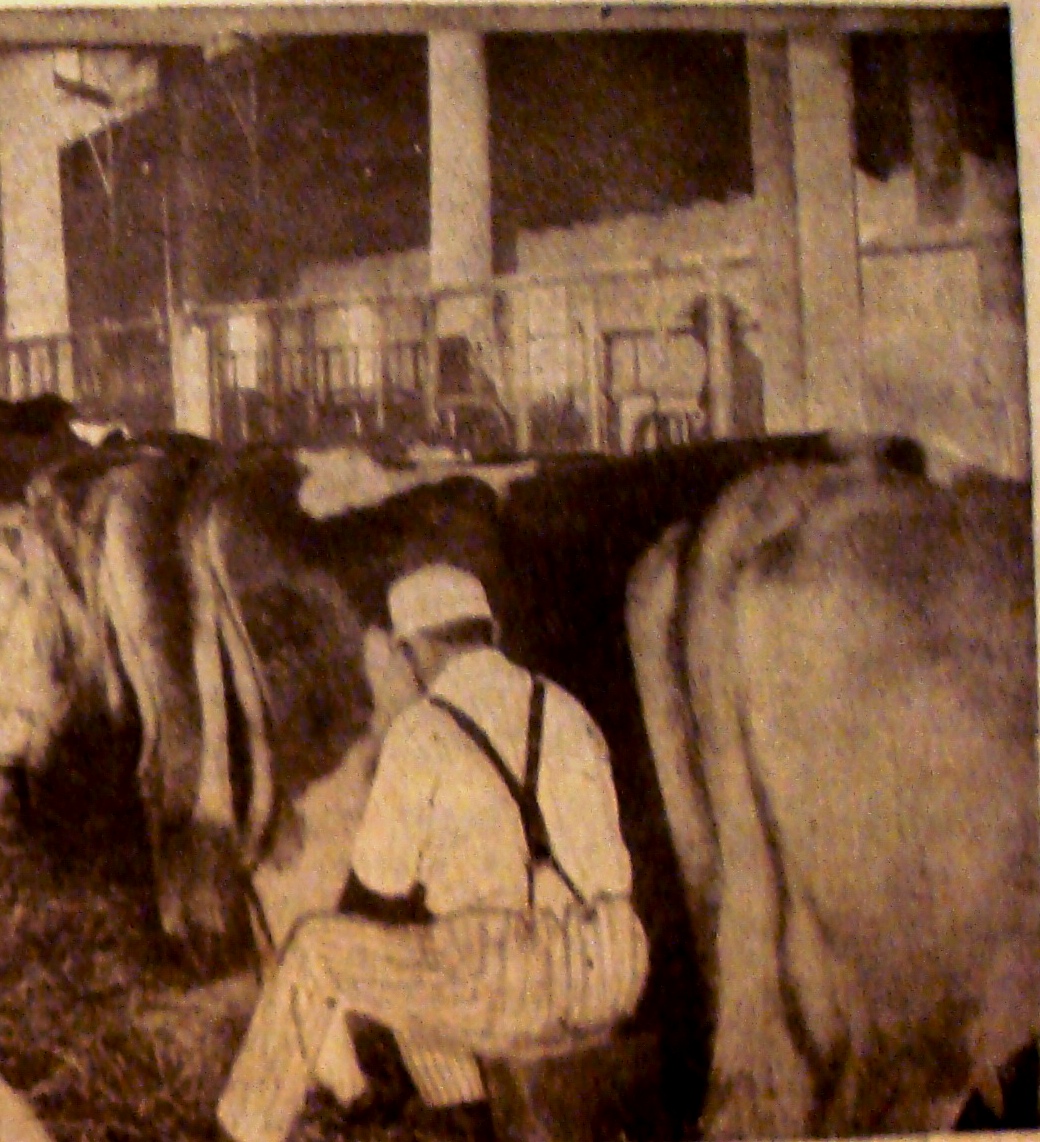
"Broken" cow standing still while being milked. (Photo source: Kimball's Diary Farmer Magazine, December 15, 1911)

Her middle-aged granddaughter’s comments 100 years later:

Mollie was Grandma’s cow. She had her first calf in August and it was sold two days prior to this diary entry. Grandma worried that the young cow would not take kindly to being milked—but Mollie apparently stood still and didn’t kick.

It’s interesting how Grandma compared herself to the cow. She said that the cow had been broken and had a gentle nature—but that she’s the opposite

This implies that Grandma considered herself to be feisty, energetic, a firebrand, a rabble-rouser.  . . .

I’d also argue that she was self-reflective.

I’m not sure whether Grandma saw these attributes as good or bad. Women a hundred years ago were generally encouraged to be obedient and to subsume personal desires. However, the suffragettes were active in urban areas —so maybe Grandma was able to see her spirited personality in a positive way.

But my gut feeling is that Grandma didn’t appreciate the value of these traits. Grandma was probably constantly told  by her parents and others that she was stubborn—and, reading between the lines– I sense that she was trying to change herself so that she was better behaved like the cow.

I know that I can’t change the past so I shouldn’t even go there, but I really, really hope that Grandma wasn’t too hard on herself.  A little feistiness is much better than a broken spirit.

Pull the Blinds–There’s a Burial in the Cemetery

16-year-old Helena Muffly wrote exactly 100 years ago today: 

Tuesday, September 26, 1911:  Was in doubts and fears as to how Mollie would act when I commenced to milk her. Pop milked her last night, but I had to do it after that, so I got up early this morning, resolving to come off conquering and I did. Hurrah. She didn’t kick.

Her middle-aged granddaughter’s comments 100 years later:

The calf of Grandma’s cow Mollie was sold the previous day. It sounds like Mollie is adjusting to the change.

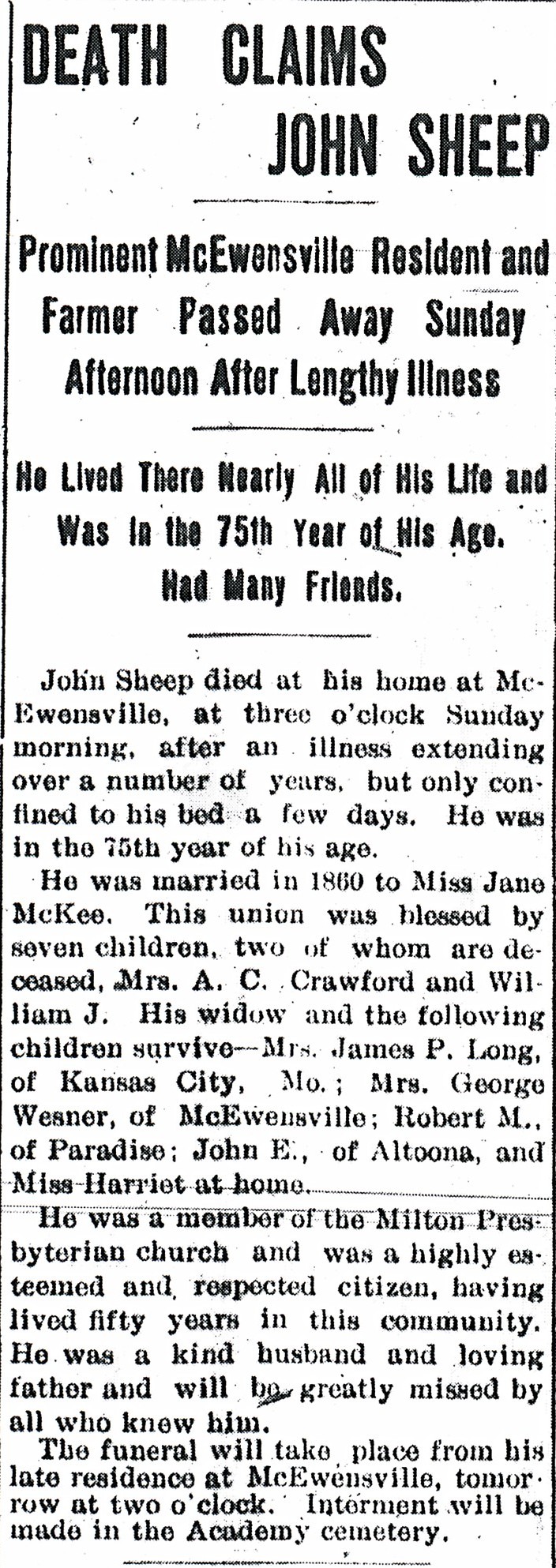
The previous day’s issue of the Milton Evening Standard had a front page article about the death of John Sheep, the grandfather of Grandma’s friend Helen  “Tweet” Wesner.  It says that Mr. Sheep died at his home after a long illness.

Milton Evening Standard (September 25, 1911)

I wonder if Tweet was upset—though I suppose that she probably was expecting it.

The article indicates that Mr. Sheep was buried on this date in the cemetery next to the McEwensville school.

My father says that when he was a child attending this same school that the classroom blinds were always drawn whenever there was an interment to keep the children from getting upset. It probably was the same a generation earlier when Grandma was a student.

The brick building in the background once housed McEwensville School.

It seems like it would be equally upsetting to know why the blinds had been drawn but not be allowed to see it—but I guess that people handled death differently back then.

In many ways death was closer to people a hundred years ago. Most people died at home —yet the community apparently tried to protect children from death by doing things like pulling the blinds.

Teaching Farm Kids the Value of Money

16-year-old Helena Muffly wrote exactly 100 years ago today: 

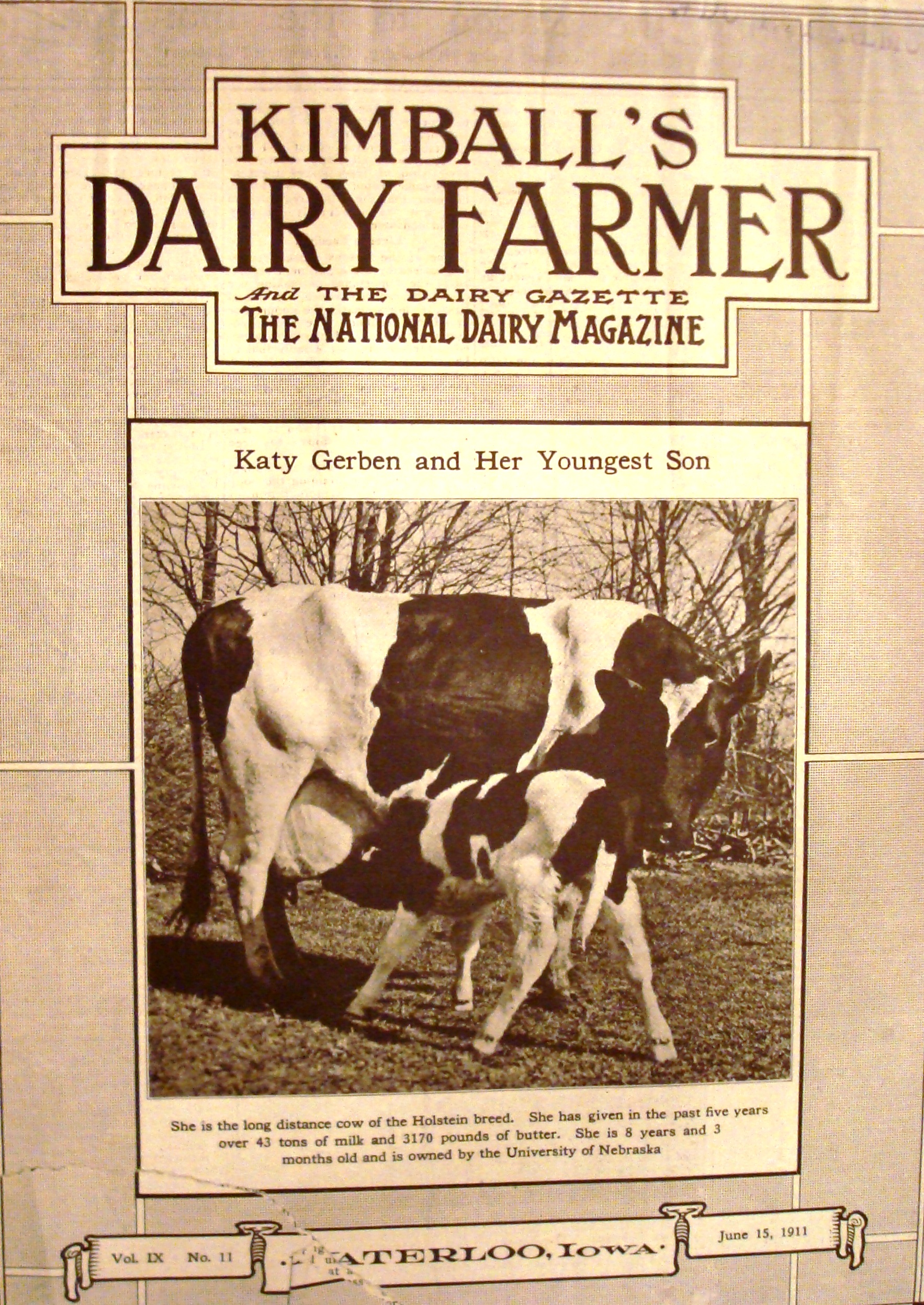
Monday, September 25, 1911:  Our old teacher Mr. Northrop came back to teach school today. I like him better than the substitute we had. Sold Mollie’s calf today. Weighed 145 lbs. Came to $10.87. Quite a vast sum to get all at once. Guess I’ll save it and get a watch or something as useful.

Kimball's Dairy Farmer Magazine (June 15, 1911)

Her middle-aged granddaughter’s comments 100 years later:

Mollie was a cow that Grandma owned. The calf was a little over a month old. (It was born on August 19.)

It’s uncanny—but this diary entry brings back strong memories of my own childhood.  It’s amazing how some child rearing practices go forward from one generation to the next.  . . .

My parents taught me about money by enabling me to become the owner of a cow. I’m now guessing that my father was taught the value of money by becoming the owner of a cow—just as his mother (Grandma) had before him.

When I was 9 or 10 I joined a 4-H club—and wanted to show a calf. My father said that I could buy a calf from him for $25. I only received a dollar a week allowance—and did not have anything close to $25. So he got an envelope out, labeled it “Sheryl’s calf”, and said that I should put half of my allowance into it each week. He then stuck the envelope in a cubby hole of his large roll-top desk.

Every week, I’d pull the envelope out and put two quarters into it. Occasionally I’d count the money to see how close I was to $25. Sometimes I’d ask my parents if I could exchange some of the quarters in the envelope for dollar bills. And then later I exchanged dollars for five- or ten-dollar bills.

The money accumulated and in less than a year I owned my own calf named Dolly. After Dolly grew into a cow, she had calves of her own. If it was a male calf, the calf was sold and I received the money. If it was a female calf it was mine—and the size of my personal herd grew.

Sometimes Little Brothers Get Even

16-year-old Helena Muffly wrote exactly 100 years ago today: 

Sunday, September 24, 1911: Went to Sunday School this afternoon. Only learned seven verses for today usually have twenty-seven. Was fooling with Jimmie tonight sprinkling him with water, but pretty soon he gave me a regular dunking (almost a whole tin cup full I judge) when I least expected it. Had to hang my dress up to dry.

Her middle-aged granddaughter’s comments 100 years later:

Jimmie was Grandma’s six-year-old brother. Sometimes when you tease little brothers they get even.

Memorizing Bible Verses

Whew, I can’t even imagine having a goal of memorizing 27 Bible verses a week. In fact, I can’t even imagine memorizing 7 Bible verses per week. Grandma was trying to memorize 700+ Bible verses for Sunday School so that she’d get a free Bible.  The diary entry from the previous Sunday said:

One reason for my regular attendance is that if you learn a number of verses from the Bible (over 700 it is) you will in the course of time receive a Bible.

Awful Morning: Needed Some Peace

16-year-old Helena Muffly wrote exactly 100 years ago today: 

Friday, September 22, 1911: Had such an awful time this morning. Everything seemed to have something wrong about it. Decided to clear out this afternoon and have some peace, so I walked over to Ruthie’s school and made her a visit.

Sometimes a walk just makes you feel better!

Her middle-aged granddaughter’s comments 100 years later:

Grandma didn’t have school on this day. McEwensville High School was closed on both Thursday and Friday so students could attend the Milton Fair. She’d gone to the fair on Thursday—so she was at home on this Friday morning.

Did Grandma and her mother had a disagreement over what she should be doing? . . maybe washing the dishes vs. reading? . . . or doing the laundry vs. relaxing? . . . or . . .

I’m not sure exactly which school her sister Ruth taught at—but it probably was one of the one-room school houses near McEwensville. It seems odd that it was in session when the McEwensville School gave students the day off.