100-Year-Old Advice on How to Avoid Saying Things in Anger That You’ll Regret

16-year-old Helena Muffly wrote exactly 100 years ago today: 

Saturday, January 13, 1912: It was so cold today. About all I did was to sit around and for fancy work but not without a rasping lecture from my mother. I guess she thinks I am a terrible lazy girl, part of which is true, oh well. I guess we lack something in some way or other.
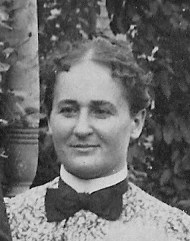
Mother: Phoebe Muffly

Her middle-aged granddaughter’s comments 100 years later:

Was Grandma lazy for doing embroidery, crocheting, or other “fancy work or was her mother having a bad day?

The March 1912 issue of National Foods Magazine offered the following advice for women who had trouble “holding their tongues.”

How the Nervous Woman Can Hold Her Tongue

There are a great many woman who come dangerously near to being common scolds. The reason  for this is that they are living under pressure and have  become bundles of nerves. When such a woman reaches the point where she feels “as though she should fly” let her stop at all hazards, go to her room, open the windows, lie down on the bed, and put on enough clothing to be comfortably warm.

Then relax every muscle in the body, close the eyes, let her get as nearly passive as she can. As one woman says, “Let the bed hold you—don’t try to hold the bed.” Breath in a deep, full breath and while exhaling count to ten slowly. Keep your mind on the numbers. Repeat at least ten times. Lie still for a few moments.

This relaxing and passive condition will be hard at first, but it will quiet the nerves wonderfully. You many feel frowsy. If you have time, sleep a few minutes. A few moments like this will save many a day from failure, will keep back words which may make heartaches, and prevent the home from becoming a place of railing and back-biting in scores of cases. A fine thing for the nervous woman is to take a five-minute walk in the open air every morning if she cannot take a longer one.
1912 Books That Have Stood the Test of Time

16-year-old Helena Muffly wrote exactly 100 years ago today: 

Friday, January 12, 1912: At least our examinations are over. Took two today and made about ninety in each. We spelt on sides this afternoon. The side I was on was beat. I was the last one to be spelt down. The word was ‘nihilism’. I guess that’s the way you spell it. If Jake would have pronounced it the way it’s spelt, I would have perhaps staid up longer.

Was invited to the book club up at Oakes’ this evening, but didn’t go as I didn’t think I would enjoy it. I would be urged to play cards and that I scarcely know how.

Had my first sleigh ride today.

Her middle-aged granddaughter’s comments 100 years later:

What were they reading at book club? Goodreads lists two hundred books published in 1912 that are still in widely read. They probably were not the most popular books at the time, but rather they are the books that have endured –and whose message apparently continues to resonate a hundred years later.

Ten books on the list that I recognized the title or author are listed below:

1.         Tarzan of the Apes by Edgar Rice Burroughs

2.         The Reef by Edith Wharton

3.         The Problems of Philosophy by Bertrand Russell

4.         The Financier by Theodore Dreiser

5.         The Yosemite by John Muir

6.         The Theory of Money and Credit by Ludwig von Mises

7.         The Judgment by Franz Kafka

8.         Sinking of the Titanic: Eyewitness Accounts by Jay Henry Mowbray

9.         Pygmalion by George Bernard Shaw

10.       Son of the Sun: The Adventures of Captain David Grief by Jack London

Small Mistakes Can Make You Feel Bad

16-year-old Helena Muffly wrote exactly 100 years ago today: 

Thursday, January 11, 1912:Was so disappointed today in arithmetic. I was almost positive I would make a hundred, but instead, I only made ninety due to a small mistake in adding up, but big enough to make you feel bad.

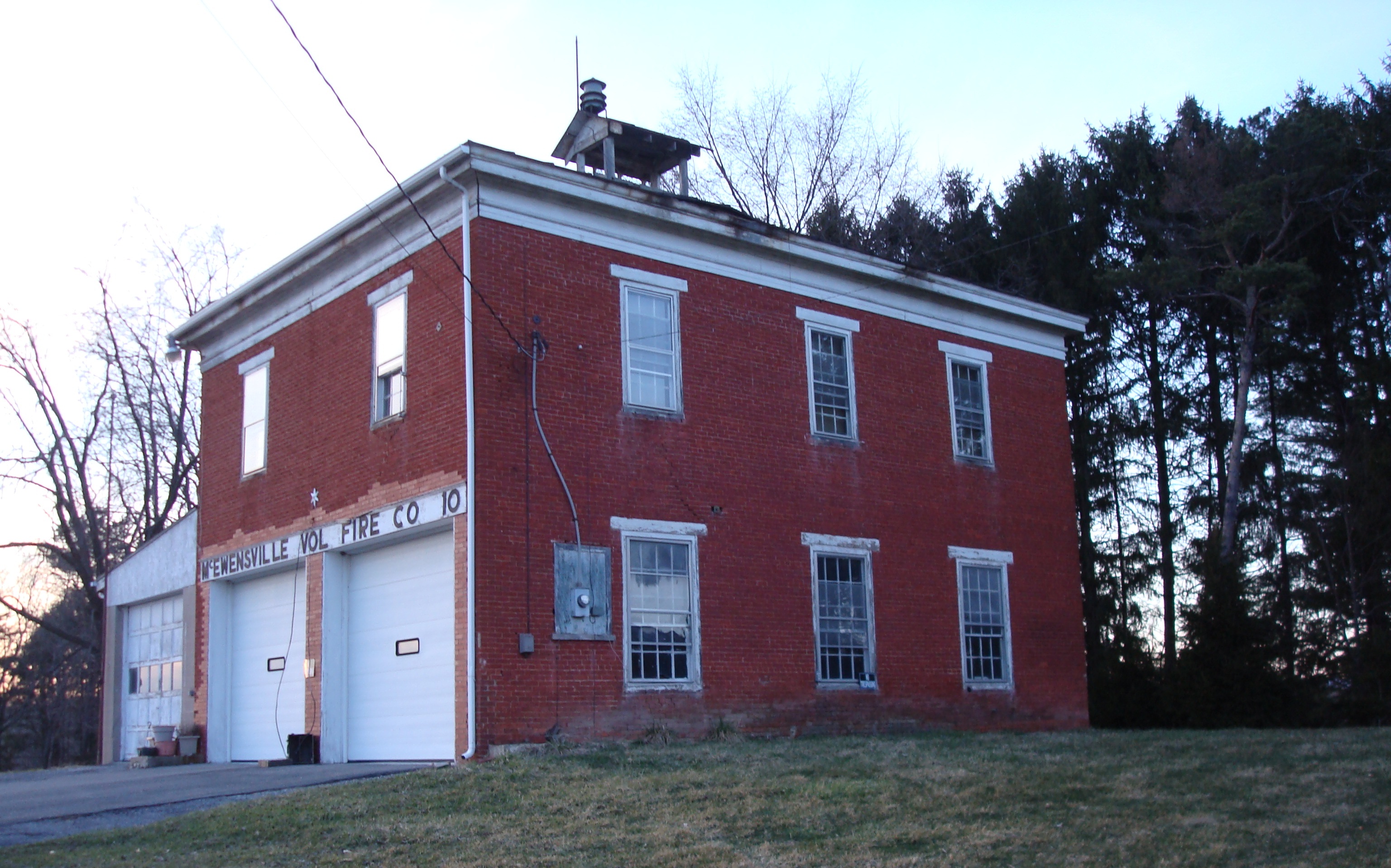
Building that once housed the McEwensville schools. The high school was on the second floor.

Her middle-aged granddaughter’s comments 100 years later:

The test would have been on cube roots. On January 5 and January 8 Grandma wrote about struggling to learn how to do them.

Even though Grandma was frustrated with herself, it’s better than some of her previous grades in math. For example, on October 31,1911 she wrote:

Feel rather doleful over the mark I made in Algebra: 68. 68, you I hate.

What Does Declension Mean?

16-year-old Helena Muffly wrote exactly 100 years ago today: 

Wednesday, January 10, 1912: There is sleighing now, but all the same, I haven’t got a ride yet. Began with our monthly exams today. I had a hard declension down pat in Latin, but it happened to be excluded in the number of questions.

Rachel and Al were down this evening. I wish I knew all about the questions tomorrow.

Her middle-aged granddaughter’s comments 100 years later:

I learned a new word today. Declension means the change of form in some languages that nouns, pronouns, and adjectives undergo to indicate distinctions such as gender, number, person, and tense.

Rachel Oakes was a friend of Grandma and her sister Ruth. Al was Rachel’s brother. They lived on a nearby farm.

How to Find the Temperature on Any Date in Any City in US

16-year-old Helena Muffly wrote exactly 100 years ago today: 

Tuesday, January 9, 1912: I believe a fellow could freeze his ears off on a day like this. You certainly don’t have to use paint on your cheeks on such a morning as we had today. Pa took me to school. Jimmie didn’t go. Got my face blackened at school today and burnt in the bargain.

Weather data sheet for Williamsport PA (January, 1912).

For the complete January 1912 data sheet, click on Williamsport.

Her middle-aged granddaughter’s comments 100 years later:

In nearby Williamsport the low on January 9, 1912 was 7 degrees and the high was 32 degrees. It was a cold morning, but not as cold as the previous day. On January 8 the low was –1 and the high was 16.

I found the weather data on the National Climatic Data Center website. Several people have asked me how to find old data on that site.

Here are the directions for finding weather data for a city on a certain date:

On the page that the link goes to, scroll down to “Global Historical Climatology Network-Daily” and click.

Then scroll down to “Individual Station Original” and click

Select the state that you are interested in. The names of lots of weather stations in the state will appear. Scroll down to the city you are interested in. Some cities are listed several times because there are different weather data series for that city.

For example, Williamsport PA is listed three times. I wanted the series that included 1912, so I selected the one that said, “Williamsport 1895-02 -1977-09.” This means that there is weather data from February (02), 1895 through September (09), 1977.  Williamsport had two data series for this time period–one with river levels on the West Branch of the Susquehanna River; the other temperatures.


Cube Root Word Problems

16-year-old Helena Muffly wrote exactly 100 years ago today: 

Monday, January 8, 1912: A regular snow storm set in this afternoon. How beautiful the snowflakes looked as they descended to ground. Am now able to extract the cube root without difficulty. Pa came for Jimmie and me this evening.

Her middle-aged granddaughter’s comments 100 years later:

The teacher must have clarified how to do cube roots. Grandma was struggling with cube roots the previous Friday.

As a parent who had strong opinions during the “math wars” of the 1990’s about what should be included in (and, perhaps more importantly, what should be excluded from) the math curriculum, I’m fascinated by early 20th century math text books.

In textbooks from a hundred years ago, there was more focus on calculation than there is today but they also contained some cool word problems. Cube roots are a great example of this.

Here are some cube root word problems from a 1911 textbook called Kimball’s Commercial Arithmetic:

1. If a cubical block contains 21,952 cubic inches, how many square feet of paper will be required to cover the entire surface?

2. The entire surface of a cubic block is 384 square feet. How many 1-foot cubes can be cut from the block, allowing nothing for waste?

3. A cubical cistern holds 400 bbl. of water. How deep is it?

4. What are the dimensions of a cube that has the same volume as a box 2 ft. 8 in. long, 2 ft. 3 in. wide, and 1 ft. 4 in. deep?

The texts also contained lots of “tricks” and principles.

Principles

1. The cube of a number cannot have more than three times as many figures as its root, nor but two less.

2. If a number is separated into periods of three figures each beginning at the units’ place, the number of figures in the cube root will be the same as the number of periods.

I thought of several easy cube roots (100 is the cube root of 1,000,000. and 5 is the cube root of 125.), and decided that the principles are correct. (Of course they were correct—but somehow I felt better after I thought of a few problems to confirm it.)

If you’re a math geek, here are some previous posts that explored the math curriculum and problems from a hundred years ago.

Odd, Unusual, and Strange Math Problems

More Odd, Unusual, and Strange Math Problems

1911 Algebra Problems: The Lusitania and Molasses

Old Math Problems

An Old Mental Math Trick

Lowest Common Multiples and Highest Common Factors

Fractions in 1911 Algebra Book

1912 Dresses That Could be Made for One Dollar

16-year-old Helena Muffly wrote exactly 100 years ago today: 

Thursday, January 4, 1912: Such a time as we had this morning. Ma was going to Milton and oh she had to make her train. Thought I might possibly be late to school with all her flying around, but I got there in plenty of time. I must be one of these early birds that you don’t like to hear so much about. I thought maybe she’d get me a nice surprise, but she didn’t.

Her middle-aged granddaughter’s comments 100 years later:

What was Grandma was hoping that her mother would bring her? Might it have been a dress pattern and fabric to make it?

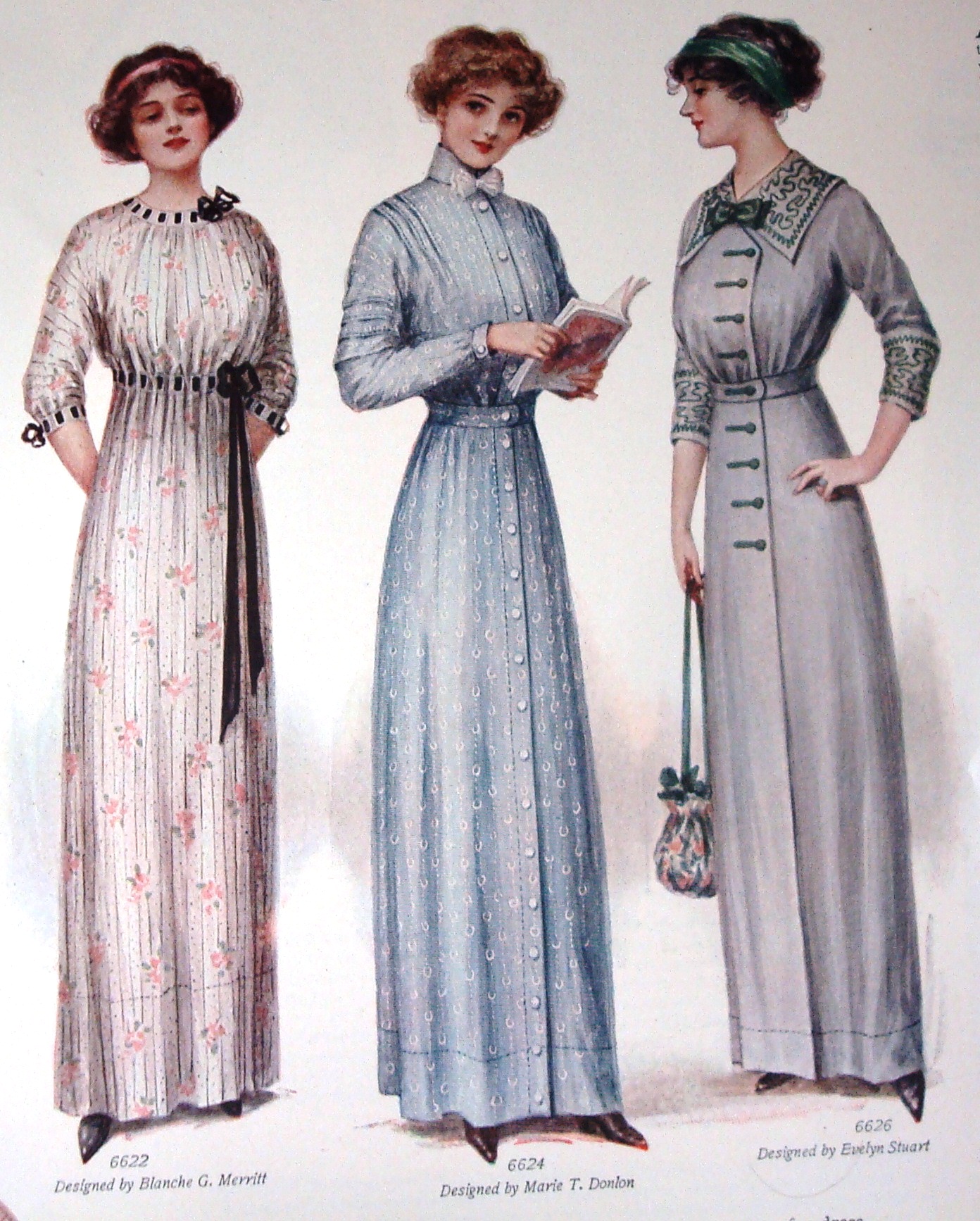
A 1912 Ladies Home Journal article showed examples of dresses that could be made for one dollar. (Yes, you read that right! $1. Money was worth a lot more a hundred years ago.)

Well-chosen material, neat sewing, and the careful adjustment of a dress are more to be desired than expensive material badly made up and carelessly adjusted.

This is easily demonstrated in the simple dress of blue dimity above, and you can readily duplicate it for one dollar. Pattern No. 6624, which is ten cents, requires in size 16 years five yards of 36-inch material at fifteen cents a yard, and buttons at fifteen cents. The lawn bow at the neck is not included in the cost, as every girl usually has such an accessory or can make one from fine lawn or net or from scraps of lace or embroidery in her scrap-bag. . .

“Would You Believe These Cost Only One Dollar?” (Ladies Home Journal, February 1912)