We’ve been expecting company for the last several days, but it seems to be as if they aren’t coming. It seems to be the luck around here.
The guest(s) must have come from a great distance. . . Did they come by train?
I suppose that all of the plans had been made by exchanging letters—and that when there was a delay the guests had been unable to inform the Muffly’s of the change in plans.
The visitors could have been anyone. (Grandma—How could you possibly have forgotten to write in your diary the names of visitors who apparently came from afar?)
I do know that Grandma’s mother’s (Phoebe Derr Muffly) had a brother, Homer Munro Derr, who lived in South Dakota in 1910. He was the family adventurer and academic. Homer was ten years younger than Phoebe.
According to information posted on the Rootsweb site:
In the 1910 Census, Homer Munro Derr, was a college professor at Brookings, South Dakota. The Rootweb site also indicates that:
February 5, 1872—Born in Pennsylvania
1900—School teacher, Manhattan, New York
1904—Physics professor, Epworth College, Oklahoma
1910—College professor, Brookings, South Dakota
1920—Engineer for the state, Minneapolis, Minnesota
1930—Mathematics Professor, Montgomery (Fayette County), West Virginia
May 31, 1958—Died in Los Angeles, California
Homer was married to Anna and in 1910 had one daughter, Coralie. They later had a second child, Steven.
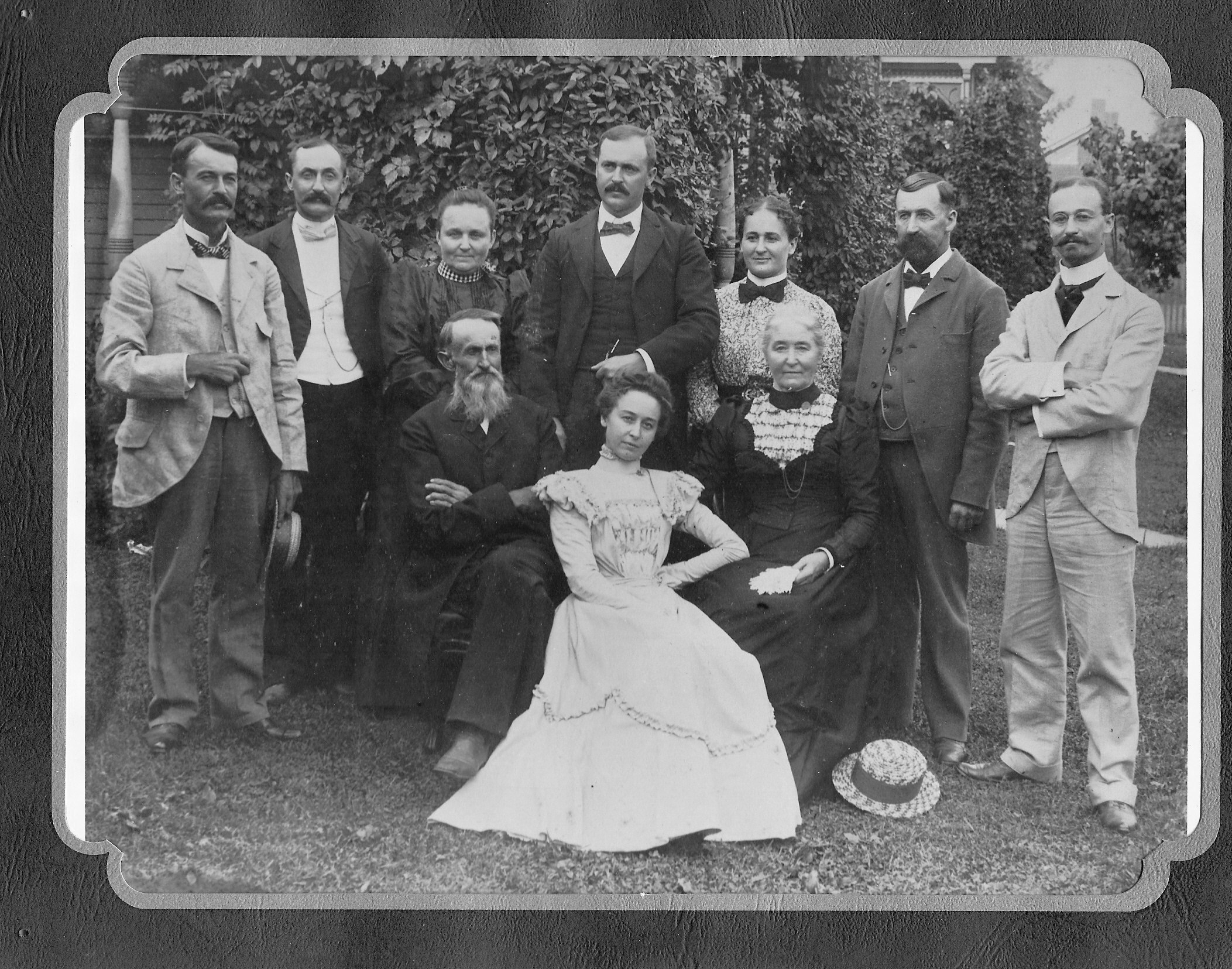
And, here is the picture I “clipped” Homer out of. It also shows Grandma’s mother Phoebe, their parents, and other siblings.
John and Sarah Derr Family. Taken about 1900. L to R. Front Row: John, Annie (Derr) Van Sant, Sarah. Back Row: Miles, Fuller, Alice (Derr) Krumm, Elmer, Phoebe (Derr) Muffly, Judson, Homer
An aside—If I’d cleaned and cooked for guests on Saturday, I won’t still be prepared the following Wednesday. I guess people were just more flexible back then.
17-year-old Helena Muffly wrote exactly 100 years ago today:
Monday, August 26, 1912: At last the day has dawned and back again to our studies we go. Have four new studies this year, so that may mean some energy expended upon them.
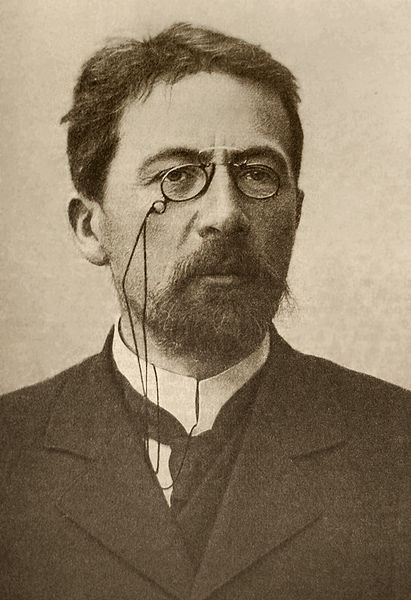
He is rather wide, wears a pair of pinchers, and has yellow hair. Not so very cross, but I believe he could be.
Her middle-aged granddaughter’s comments 100 years later:
Yeah! The first day of school finally arrived. Grandma’s been waiting so long for it to start again. I hope that she likes her new teacher.
According to The History of McEwensville Schools by Thomas Kramm, the teacher of McEwensville High School for the 1912-13 school year was Bruce Bloom.
Pinchers (pince-nez) refer to glasses that pinch the wearer’s nose.
According to Wikipedia pinchers were popular from 1880 to 1900, so Grandma probably thought that they were out-of style and old-fashioned when her teacher wore them.
17-year-old Helena Muffly wrote exactly 100 years ago today:
Friday, August 23, 1912: Didn’t do so very much today and didn’t go any place either.
Me walking down a road in McEwenville.
Her middle-aged granddaughter’s comments 100 years later:
Sounds like a boring day. Maybe Grandma should have taken a walk. I know that I always feel better after a brisk walk—and she probably would have felt better, too.
Today we constantly hear in the media that we aren’t active enough. Amazingly there were similar concerns a hundred years ago:
Walking is one of the most healthful forms of exercise. It may seem unnecessary to devote much space to a subject that everyone thinks they know all about, but the fact is that, with trolley cars, automobiles, and horses, a great many persons have lost the ability to walk any distance.
It is very easy to cultivate the street car habit. An excellent rule to follow if you are going anywhere is this: If you have time, and the distance is not too great, walk.
In walking for pleasure, avoid a rambling, purposeless style. Decide where you are going and go.
Walk out in the country if possible and on roads where the automobiles will not endanger your life or blow clouds of dust in your face.
Never mind the weather. One rarely takes cold while in motion.
To walk comfortably you should wear loose clothing and old shoes.
Walking just for the sake of exercise can easily become a tiresome occupation, but the active mind can always see something of interest, such as wild flowers, gardens, and all the various sides of nature study in the country, and people, houses, and life in the city.
17-year-old Helena Muffly wrote exactly 100 years ago today:
Tuesday, August 20, 1912: Oh I don’t know as it is worth the while to write anything about what I did today. It wasn’t very much anyway.
Her middle-aged granddaughter’s comments 100 years later:
Sounds like Grandma had a boring (but maybe somewhat frustrating) day. Did Grandma think positive thoughts on such days?
Here’s some a gem that I found in a hundred-year-old magazine:
They Can Who Think They Can
Learn to look at the bright side, the good things in life. Do not let the shadow of discouragement and despondency fall on your path. Never doubt for a moment that everything is not for the best in the end. If you believe firmly in yourself you will be given the strength to do some day what may now seem to be impossible.
Don’t get frightened and give up in despair if you do not arrive as soon as you would like. All conquerors of the best kind are slow, but to him who works faithfully and in the right spirit will be given the reward in good time.
Hold up your head and look the world in the face. Hold your ground and march bravely forward over all obstacles and the world will make way for you.
17-year-old Helena Muffly wrote exactly 100 years ago today:
Saturday, August 10, 1912: It didn’t rain this afternoon; it poured. Our front porch was a sight, sod covered it tonight. Ruth went up to Bryson’s on the train. Had to help her get ready. And now we’re here all alone, just we three. Seems so quiet and rather lonesome.
Her middle-aged granddaughter’s comments 100 years later:
With a drought over much of the country this year, rain sounds wonderful (even if Grandma was less than enthusiastic about it). Did the wind somehow blow grass or weeds up on the porch?
The tracks for the Susquehanna, Bloomsburg, and Berwick Railroad went along the edge of the Muffly farm. Ruth probably got on the train at a nearby feed mill. There was a whistle stop there.
It’s funny how Grandma gets so frustrated with Ruth—yet almost immediately misses her when she goes somewhere. I guess that’s just the way things go with sisters.
Why does the diary entry refer to three people being at home? It seems like there should have been four: Grandma, her mother, her father, and her little brother Jimmie.
17-year-old Helena Muffly wrote exactly 100 years ago today:
Saturday, August 3, 1912: Let me see, what did I do today? Not very much, anyway. Twas it easy this afternoon.
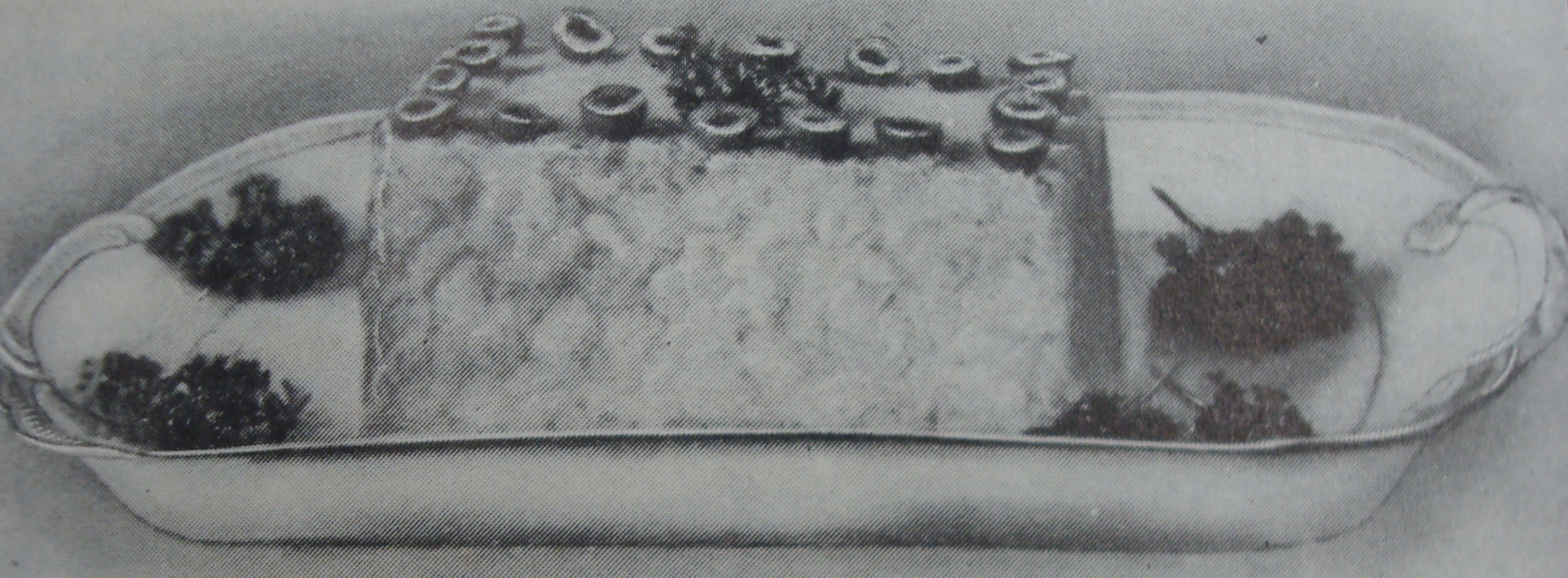
Mold of Rice Filled with Chopped Meat (Source: The Butterick Cook Book,1911)
Her middle-aged granddaughter’s comments 100 years later:
Since Grandma again didn’t write much a hundred years ago today, I’m going to go off on a tangent. It’s kind of amazing, but sometimes I find a hundred year old advice really useful and it sticks in my mind.
Here’s some advice about how much to eat:
Temperate people with good digestion never feel their stomachs, forget that they have stomachs, while big eaters are always hungry or faint, or bloated or troubled with heart burn, derangement of the bowels or some other conditions showing a morbid state of the digestive apparatus.
National Food Magazine ((June, 1912)
I saw this quote a month or so ago—and since then when I’m tempted to overeat, I often think that I’d better stop before I feel my stomach. (And, sometimes I forget the advice and feel my stomach—and only then do I remember that I should have followed the advice in that old magazine.)