17-year-old Helena Muffly wrote exactly 100 years ago today:
Thursday, August 29, 1912:Was real nice going to school this morning. You see it rained last night. Had our first visitors at school today. They were Miss Cakes and Miss Bryson. We had our last class, while they were there.
Recent photo of building that once housed McEwensville High School.
Her middle-aged granddaughter’s comments 100 years later:
It sounds like the rain the previous night broke a hot spell.
Here’s what the weather report in the New York Times for August 29, 1912 said.
The Weather
. . . Temperatures remain below the seasonal average in the Northeastern States, the region of the Great Lakes, and the Upper Mississippi Valley, and continue high in the Lower Ohio and Middle Mississippi Valleys and throughout the South. . . . .
Steamships departing Thursday for European ports will have moderate variable winds and overcast showery weather to the Grand Banks.
Cool—It’s amazing that there was a steamship forecast. How many steamships left the port of New York on a typical day? . . . How many people were on those ships? There must have been a lot or the New York Times probably wouldn’t have included the steamship forecast.
Visitors
I’m not sure who the two visitors were. Miss Bryson might possibly refer to Blanche Bryson, She was a friend of Grandma and her sister Ruth.
We’ve been expecting company for the last several days, but it seems to be as if they aren’t coming. It seems to be the luck around here.
The guest(s) must have come from a great distance. . . Did they come by train?
I suppose that all of the plans had been made by exchanging letters—and that when there was a delay the guests had been unable to inform the Muffly’s of the change in plans.
The visitors could have been anyone. (Grandma—How could you possibly have forgotten to write in your diary the names of visitors who apparently came from afar?)
I do know that Grandma’s mother’s (Phoebe Derr Muffly) had a brother, Homer Munro Derr, who lived in South Dakota in 1910. He was the family adventurer and academic. Homer was ten years younger than Phoebe.
According to information posted on the Rootsweb site:
In the 1910 Census, Homer Munro Derr, was a college professor at Brookings, South Dakota. The Rootweb site also indicates that:
February 5, 1872—Born in Pennsylvania
1900—School teacher, Manhattan, New York
1904—Physics professor, Epworth College, Oklahoma
1910—College professor, Brookings, South Dakota
1920—Engineer for the state, Minneapolis, Minnesota
1930—Mathematics Professor, Montgomery (Fayette County), West Virginia
May 31, 1958—Died in Los Angeles, California
Homer was married to Anna and in 1910 had one daughter, Coralie. They later had a second child, Steven.
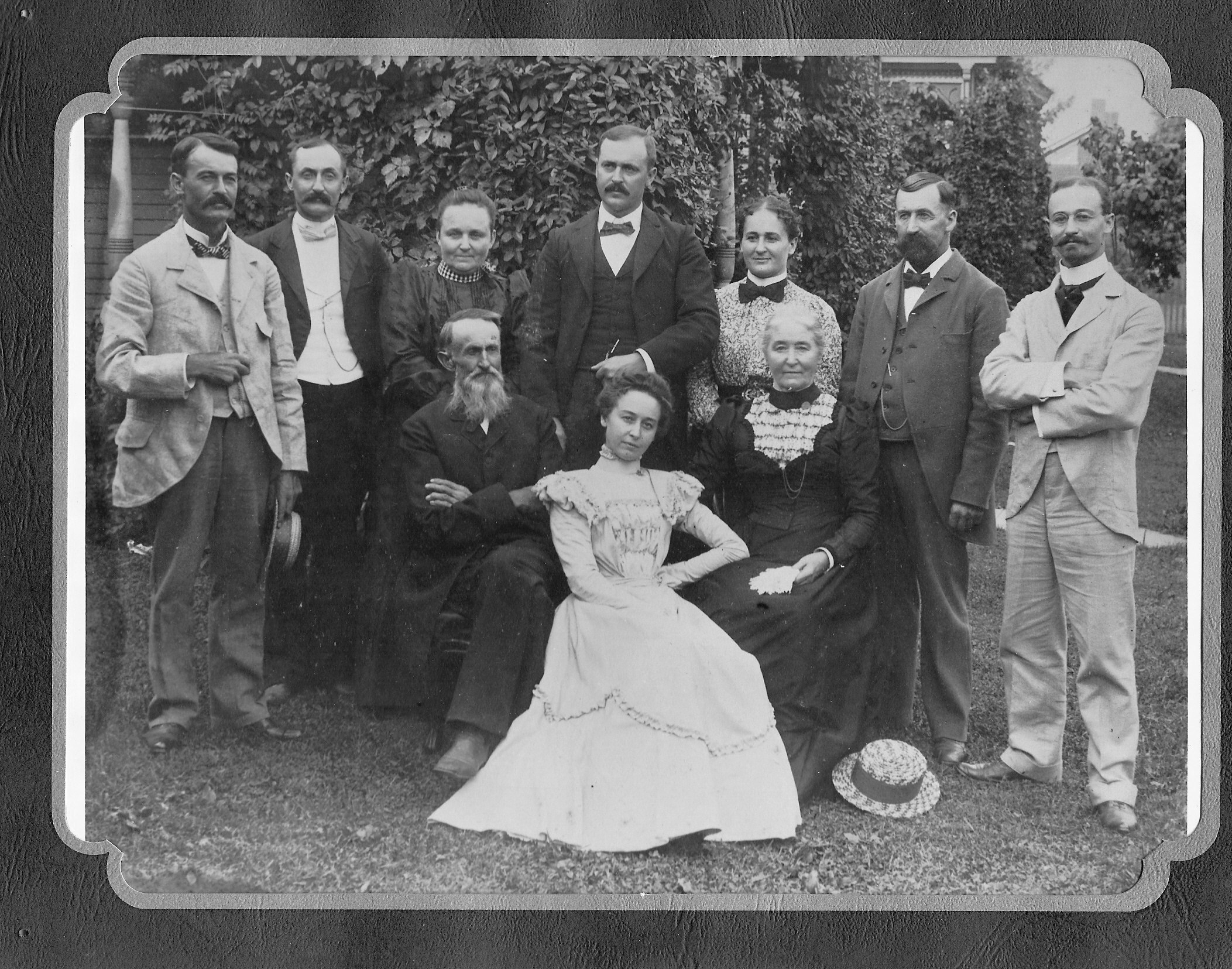
And, here is the picture I “clipped” Homer out of. It also shows Grandma’s mother Phoebe, their parents, and other siblings.
John and Sarah Derr Family. Taken about 1900. L to R. Front Row: John, Annie (Derr) Van Sant, Sarah. Back Row: Miles, Fuller, Alice (Derr) Krumm, Elmer, Phoebe (Derr) Muffly, Judson, Homer
An aside—If I’d cleaned and cooked for guests on Saturday, I won’t still be prepared the following Wednesday. I guess people were just more flexible back then.
17-year-old Helena Muffly wrote exactly 100 years ago today:
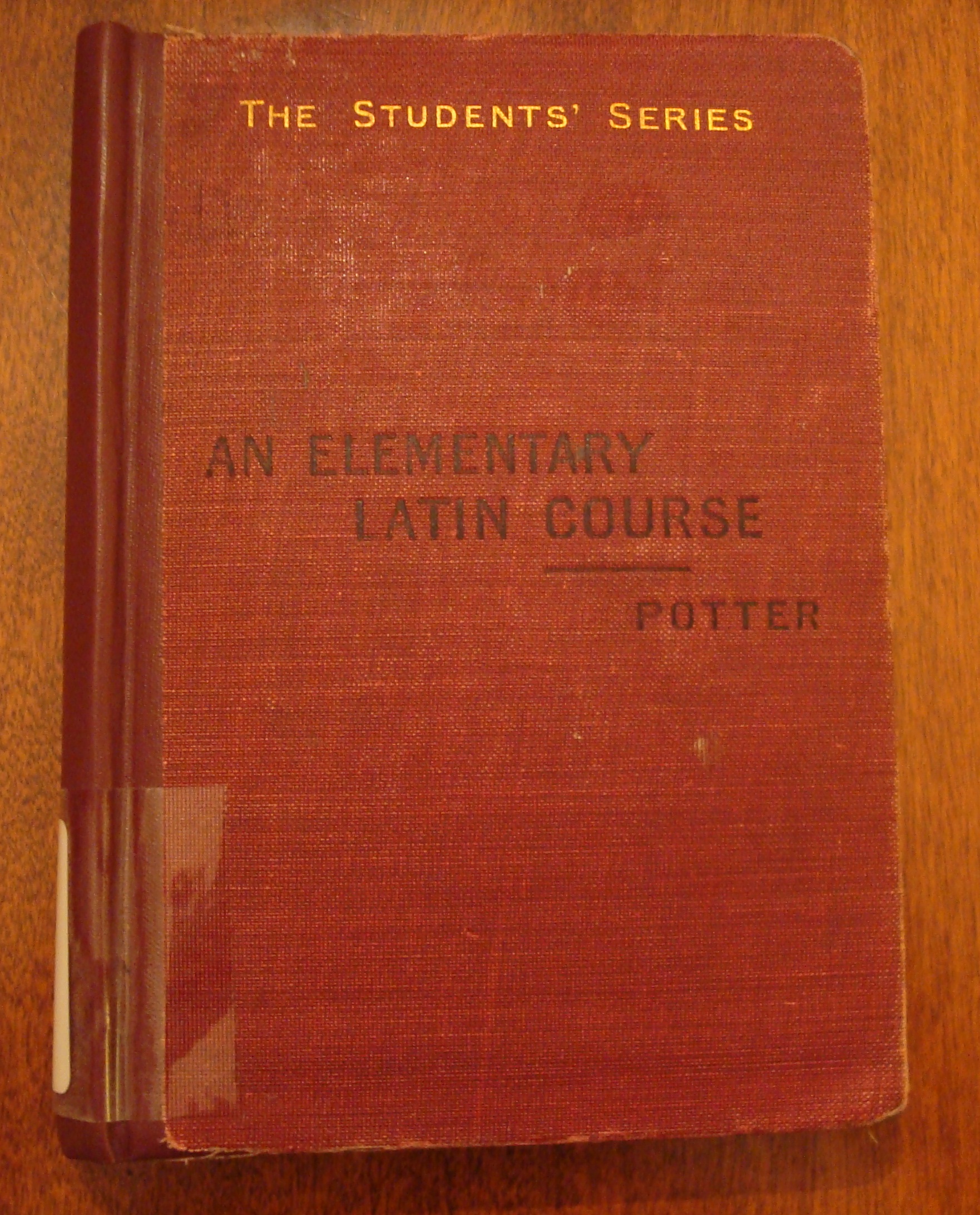
Tuesday, August 27, 1912: Brought home my Latin Grammar, all the time thinking I had my Caesar. Didn’t want the former at all. Must study some now, so I’ll soon be in the midst of my studies this evening.
Guess I will like Mr. Teacher.
Her middle-aged granddaughter’s comments 100 years later:
Hmm. . . This is the first time that Grandma’s mentioned Latin during the year and a half that I’ve been posting her diary entries. . . . though she apparently had taken some Latin in previous years because she used the Latin term puella bona (good girl) in a diary entry that I posted a few days ago.
I was amazed to discover that a hundred years ago, most females who went high school learned Latin. According to the August, 1912 issue of Ladies Home Journal, here’s what females were studying in high school:
Latin, French, or German: 82 out of every hundred
Algebra and Geometry: 87 out of every hundred
English Literature: 57 out of every hundred
Rhetoric: 57 out of every hundred
History: 55 out of every hundred
Domestic Economy (sewing, cooking, and household economics): 3 out of every hundred
The article was making the point that few females took domestic economy classes—and that maybe more should.
17-year-old Helena Muffly wrote exactly 100 years ago today:
Monday, August 26, 1912: At last the day has dawned and back again to our studies we go. Have four new studies this year, so that may mean some energy expended upon them.
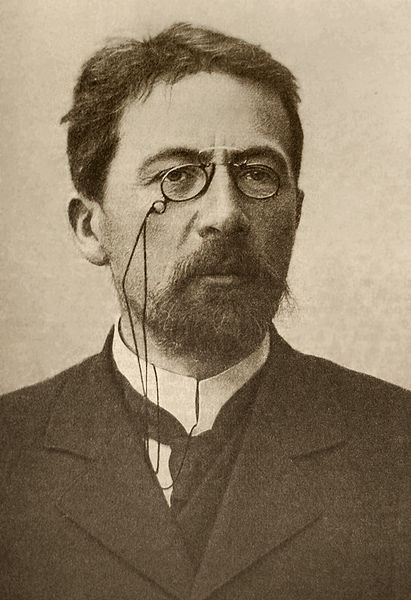
He is rather wide, wears a pair of pinchers, and has yellow hair. Not so very cross, but I believe he could be.
Her middle-aged granddaughter’s comments 100 years later:
Yeah! The first day of school finally arrived. Grandma’s been waiting so long for it to start again. I hope that she likes her new teacher.
According to The History of McEwensville Schools by Thomas Kramm, the teacher of McEwensville High School for the 1912-13 school year was Bruce Bloom.
Pinchers (pince-nez) refer to glasses that pinch the wearer’s nose.
According to Wikipedia pinchers were popular from 1880 to 1900, so Grandma probably thought that they were out-of style and old-fashioned when her teacher wore them.
17-year-old Helena Muffly wrote exactly 100 years ago today:
Sunday, August 25, 1912: Won’t I be glad when tomorrow morn is here and this day is passed. Went to Sunday School this afternoon. Besse and Curt were here today.
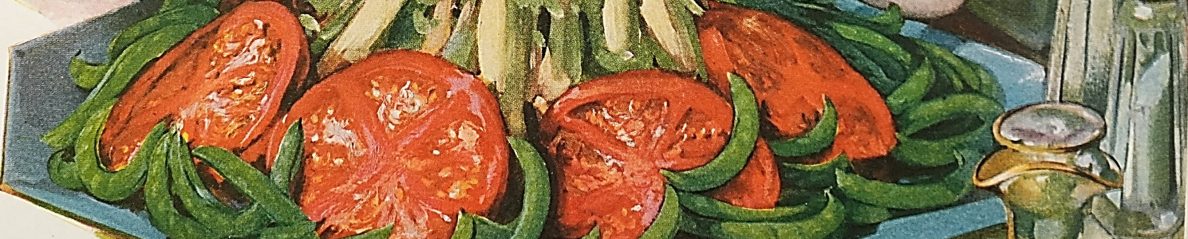
Basket of cookies (Source: Ladies Home Journal, August, 1912)
Her middle-aged granddaughter’s comments 100 years later:
With entries like this, I always create stories in my mind–even if the diary text doesn’t really provide enough information to tell whether my imagination is right or way off base.
For example, for this diary entry I picture Grandma, and her sister and brother-in-law, Besse and Curt Hester, sitting on the porch on a beautiful summer afternoon nibbling cookies. There’s a bit of a breeze–just enough to make the day seem really pleasant.
The zinnias and hollyhocks are blooming in a nearly flower garden. And, the young folks are catching up on all the gossip–who just got engaged, the runaway horse in downtown Watsontown, . . . and that school was going to start for Grandma the next day.
. . . or maybe there were thunderheads in the sky so Grandma, Besse, and Curt . . . .
17-year-old Helena Muffly wrote exactly 100 years ago today:
Friday, August 23, 1912: Didn’t do so very much today and didn’t go any place either.
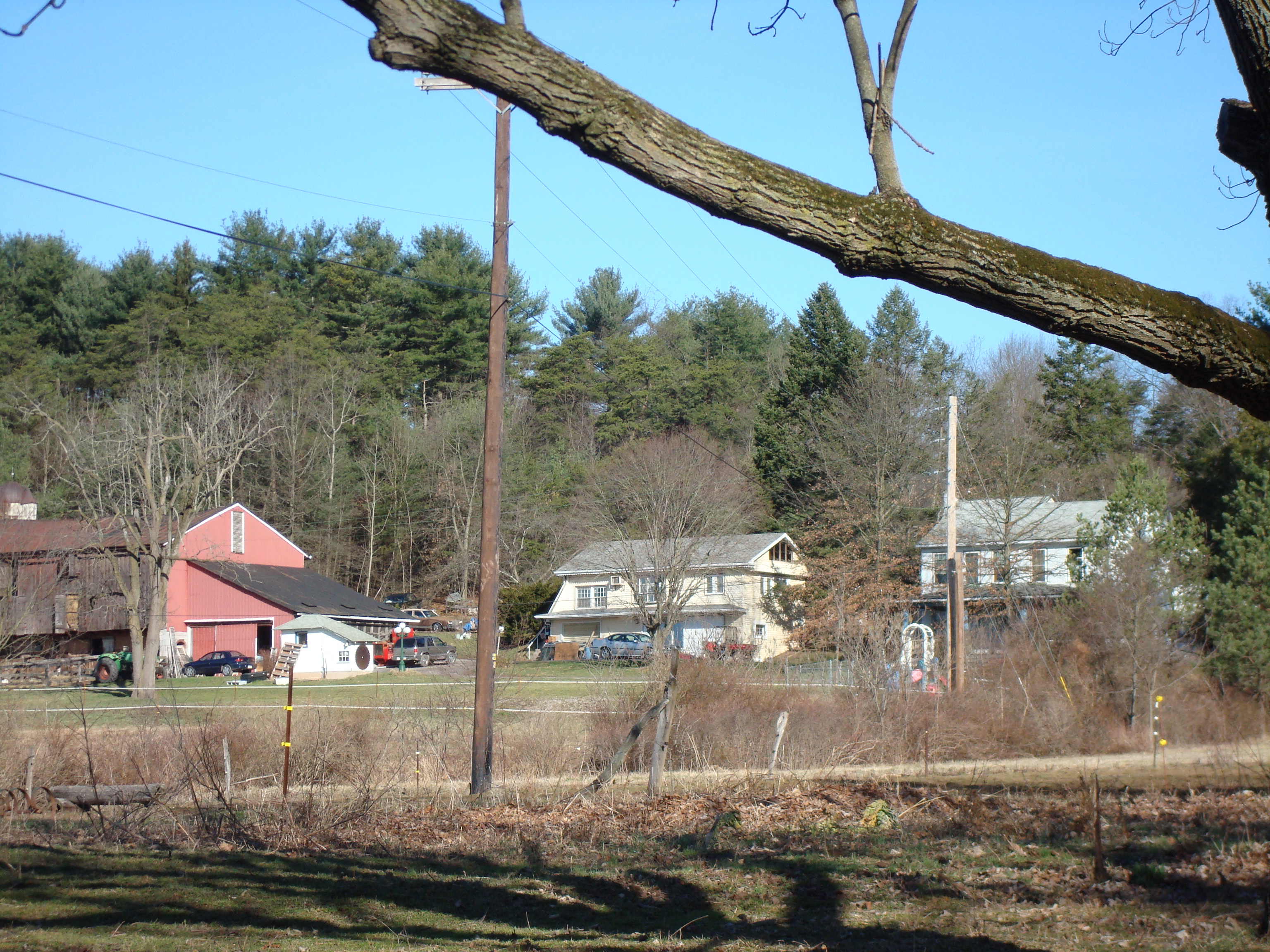
Me walking down a road in McEwenville.
Her middle-aged granddaughter’s comments 100 years later:
Sounds like a boring day. Maybe Grandma should have taken a walk. I know that I always feel better after a brisk walk—and she probably would have felt better, too.
Today we constantly hear in the media that we aren’t active enough. Amazingly there were similar concerns a hundred years ago:
Walking is one of the most healthful forms of exercise. It may seem unnecessary to devote much space to a subject that everyone thinks they know all about, but the fact is that, with trolley cars, automobiles, and horses, a great many persons have lost the ability to walk any distance.
It is very easy to cultivate the street car habit. An excellent rule to follow if you are going anywhere is this: If you have time, and the distance is not too great, walk.
In walking for pleasure, avoid a rambling, purposeless style. Decide where you are going and go.
Walk out in the country if possible and on roads where the automobiles will not endanger your life or blow clouds of dust in your face.
Never mind the weather. One rarely takes cold while in motion.
To walk comfortably you should wear loose clothing and old shoes.
Walking just for the sake of exercise can easily become a tiresome occupation, but the active mind can always see something of interest, such as wild flowers, gardens, and all the various sides of nature study in the country, and people, houses, and life in the city.