17-year-old Helena Muffly wrote exactly 100 years ago today:
Wednesday, January 22, 1913: We had a surprise party tonight. Had quite a good time. It was a surprise for Ruth, and she didn’t know the least of it.
Ruth Muffly
Her middle-aged granddaughter’s comments 100 years later:
It probably was a birthday party for Grandma’s sister Ruth. I bet it was a really big surprise since Ruth turned 21 three days earlier on January 19.
What was a 21st birthday party like a hundred years ago?
Did Grandma pull Ruth’s ears 21 times on her birthday? People used to pull the birthday person’s ear lobes one time for each year. On January 19, 1911 Grandma wrote:
Pulled Miss Muffly’s ears first thing this morning, whether she liked it or not. . .
17-year-old Helena Muffly wrote exactly 100 years ago today:
Friday, January 17, 1913: We had patrons’ day at school this afternoon. Everything went off pretty good. We had quite a few visitors.
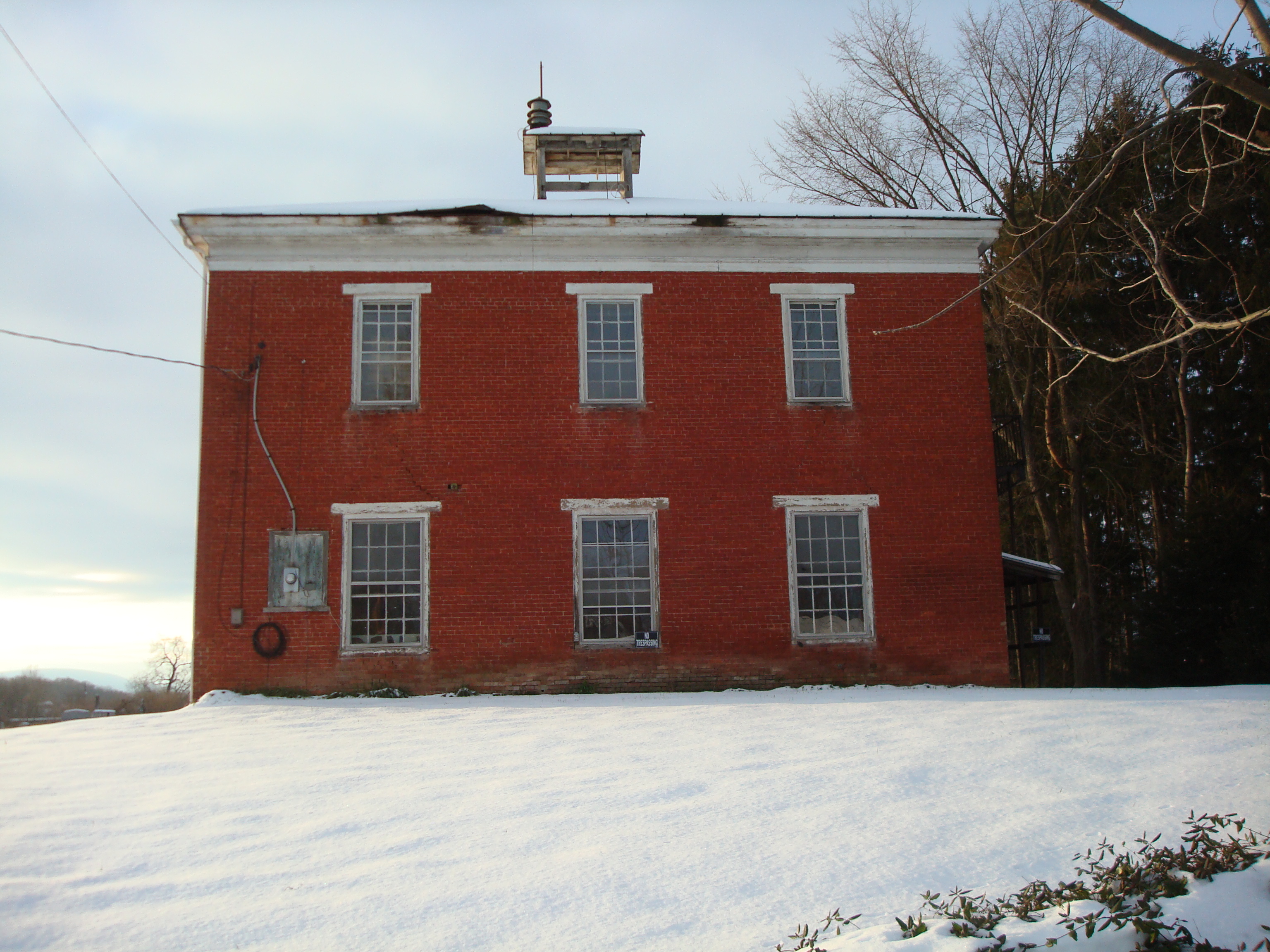
Recent photo of building that once housed McEwensville Schools.
Her middle-aged granddaughter’s comments 100 years later:
A patron is someone who provides financial support. In 1912, the McEwensville Schools were public schools, so I’m not exactly sure who attended Patron’s Day.
The school often had financial difficulty, so perhaps community members made donations to help ensure that the students got an adequate education.
Thomas Kramm in The History of the McEwensville Schools included highlights from the school board minutes. The 1913 highlight was:
04-13: The Board borrowed money from the Watsontown Bank.
Hopefully, the school’s patrons were very generous. . .
Related previous posts that you might enjoy include:
17-year-old Helena Muffly wrote exactly 100 years ago today:
Saturday, January 15, 1913: Don’t know hardly what to write today.
Source: Good Housekeeping (December, 1912)
Her middle-aged granddaughter’s comments 100 years later:
Since Grandma didn’t write much a hundred years ago today, I’m going to go off on a tangent.
Sometimes I read a magazine article from a hundred years ago—and I’m absolutely floored by how it could have been written in 2013 instead of so long ago
For example, I recently came across an article in the December 1912 issue of Good Housekeeping titled “The Food Value of a Peanut.” <<Yawn>>.
Then I read,
As a result of the growing popularity of vegetarianism, the demand for nuts is increasing.
Really? . . . There were vegetarians a hundred years ago?
And, I continued reading:
Another reason for the increasing demand for nuts, and more especially for peanuts, is their relative cheapness as sources of nourishment and energy. Even compared with such staple foods as bread and beans, peanuts supply protein and energy very cheaply.
Sounds about like today. Both then and now people worry about the high cost of food–though I don’t think that peanuts are particularly inexpensive now.
17-year-old Helena Muffly wrote exactly 100 years ago today:
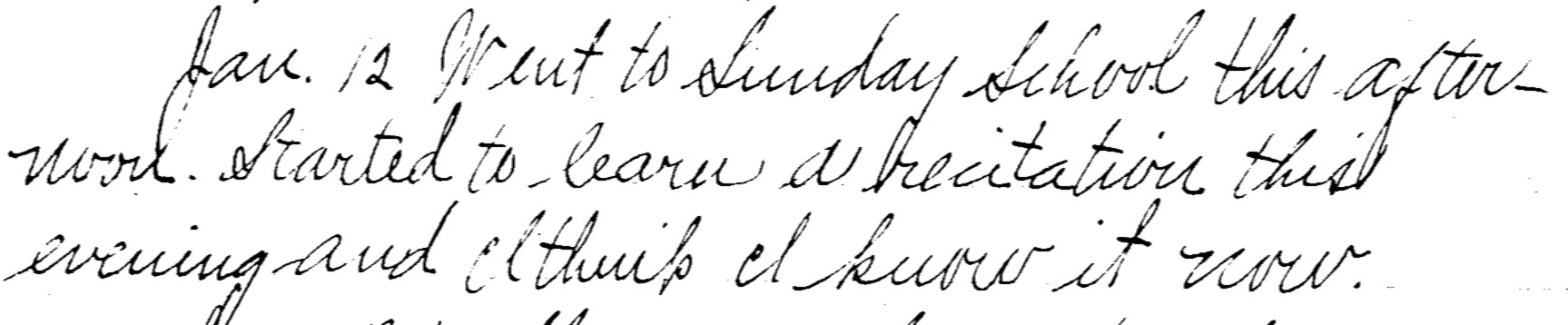
Sunday, January 11, 1913: Went to Sunday School this afternoon. Started to learn a recitation this evening and I think I know it now.
Click on diary entry to enlarge.
Her middle-aged granddaughter’s comments 100 years later:
When I read this diary entry, I realized that I didn’t know the difference between dialogue and recitation.
Few words mean exactly the same thing. Most synonyms have nuanced differences in meaning.
Previous diary entries mentioned pieces Grandma memorized for Literary Society presentations at her high school. For example, on January 6, she wrote that she copied off part of a dialogue to memorize. My post that day included a poem called The Old Clock on the Stairs by Longfellow as an example of a dialogue.
I now realize that the poem may not have been an example of a dialogue, but rather an example of a recitation. A dialogue requires more than one presenter.
Here are the definitions for recitation and dialogue in the Free Dictionary:
Recitation—1(a). The act of reciting memorized materials in a public performance. (b) The material so presented. 2. (a) Oral delivery of prepared lessons by a pupil. (b) The class period within which this delivery occurs.
Dialogue—1. A conversation between two or more people. 2(a) Conversation between characters in a drama or narrative. (b) The lines or passages in a scrip that are intended to be spoken. 3. A literary work written in the form of a conversation. 4. Music A composition or passage for two or more parts, suggestive of conversational interplay. 5. An exchange of ideas or opinions.
Based on these definitions I now think a dialogue is a type of recitation—but a recitation is not always a dialogue.
17-year-old Helena Muffly wrote exactly 100 years ago today:
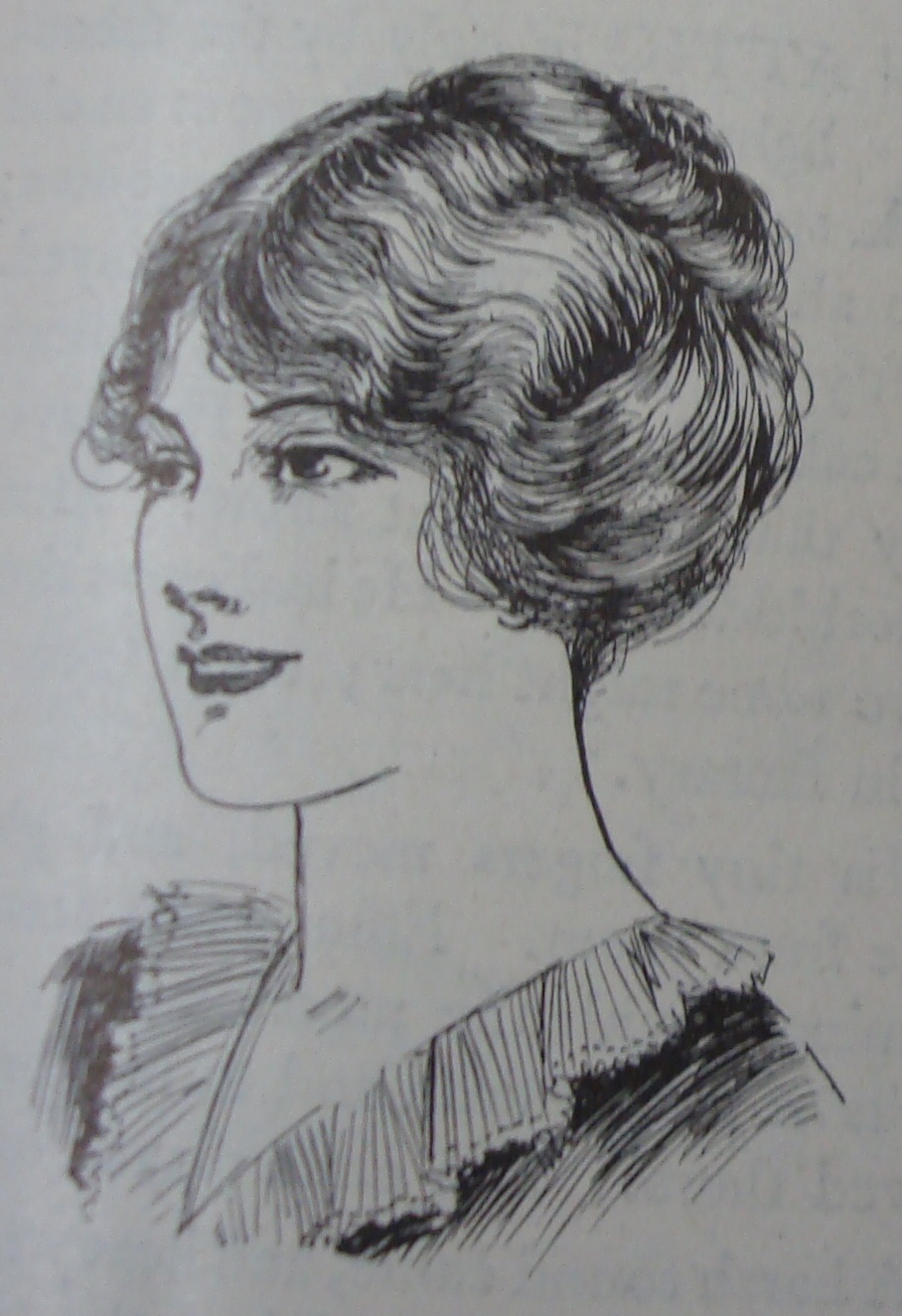
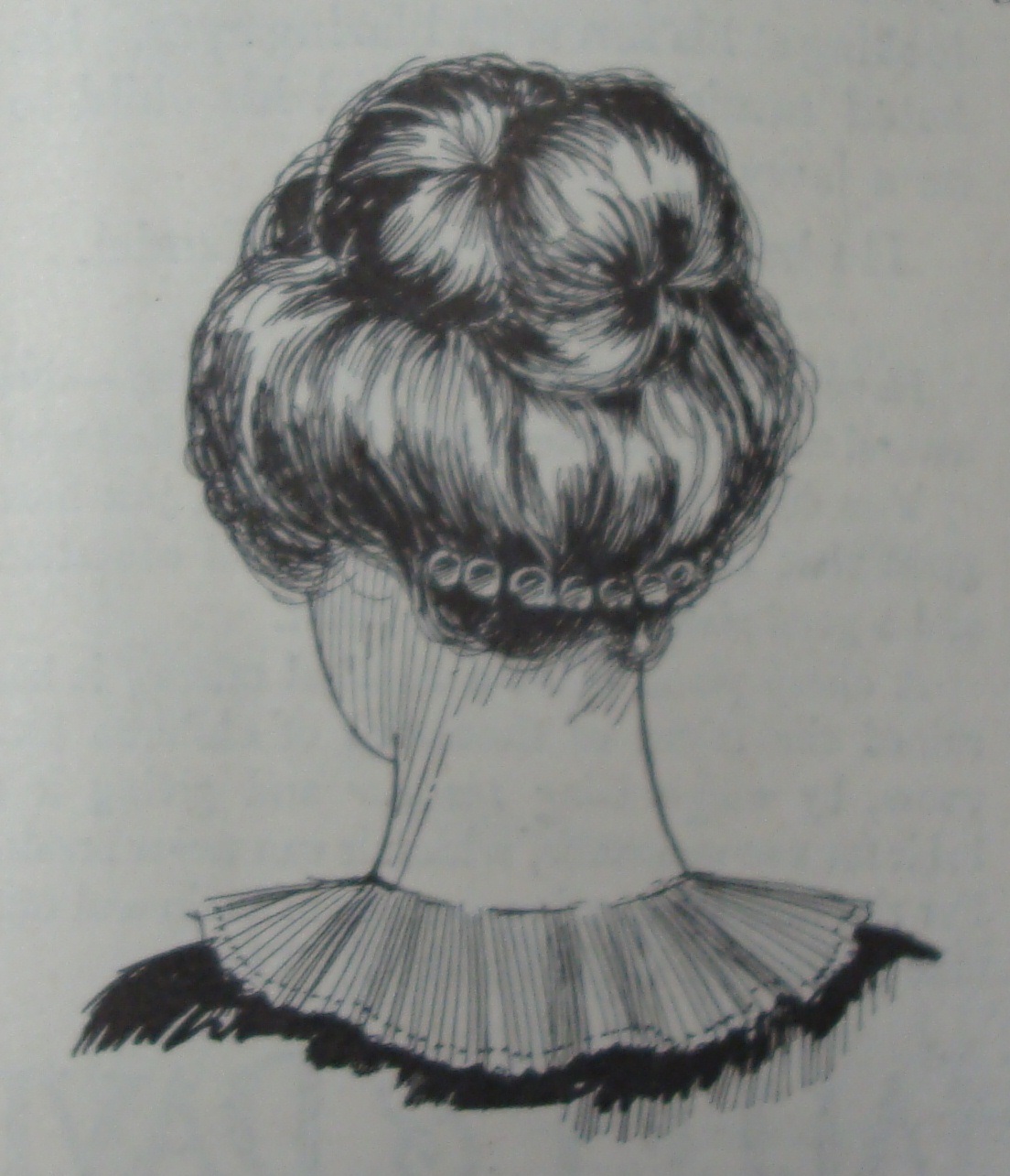
Sunday, January 5, 1913:Went to Sunday School this morning. Would like to go every Sunday of this year. Was over to see Carrie this afternoon. Went along with her to church this evening.
Source; Ladies Home Journal (November, 1913)
Her middle-aged granddaughter’s comments 100 years later:
Carrie Stout was a friend of Grandma’s who lived on a nearby farm. What did the two teens talk about? . . . do?
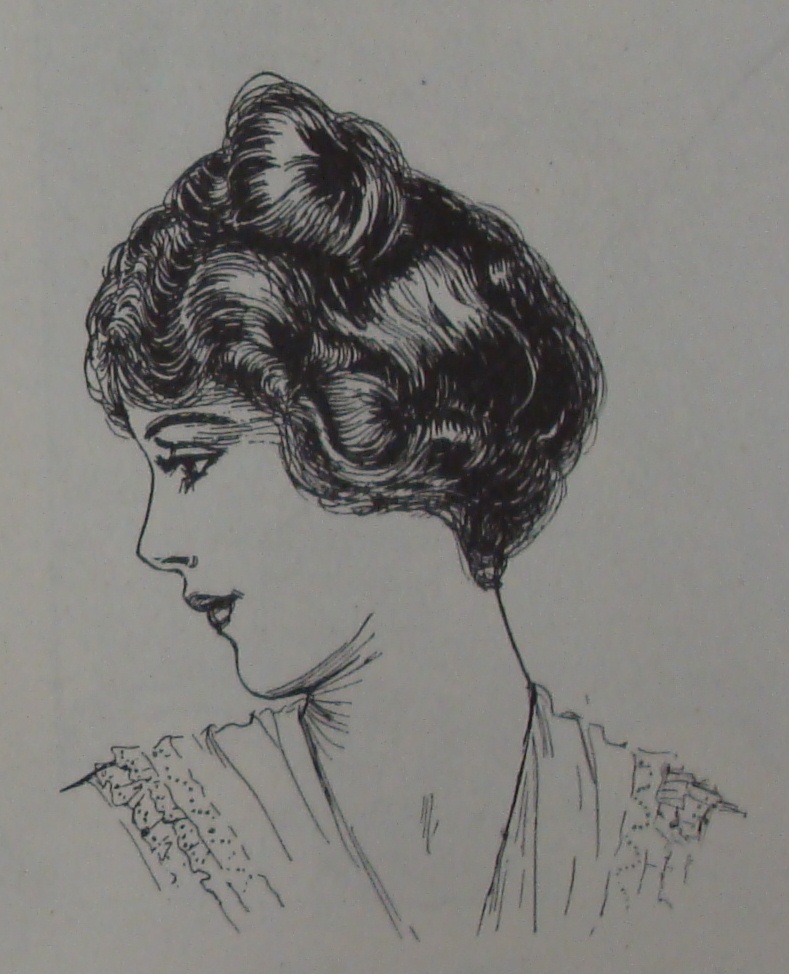
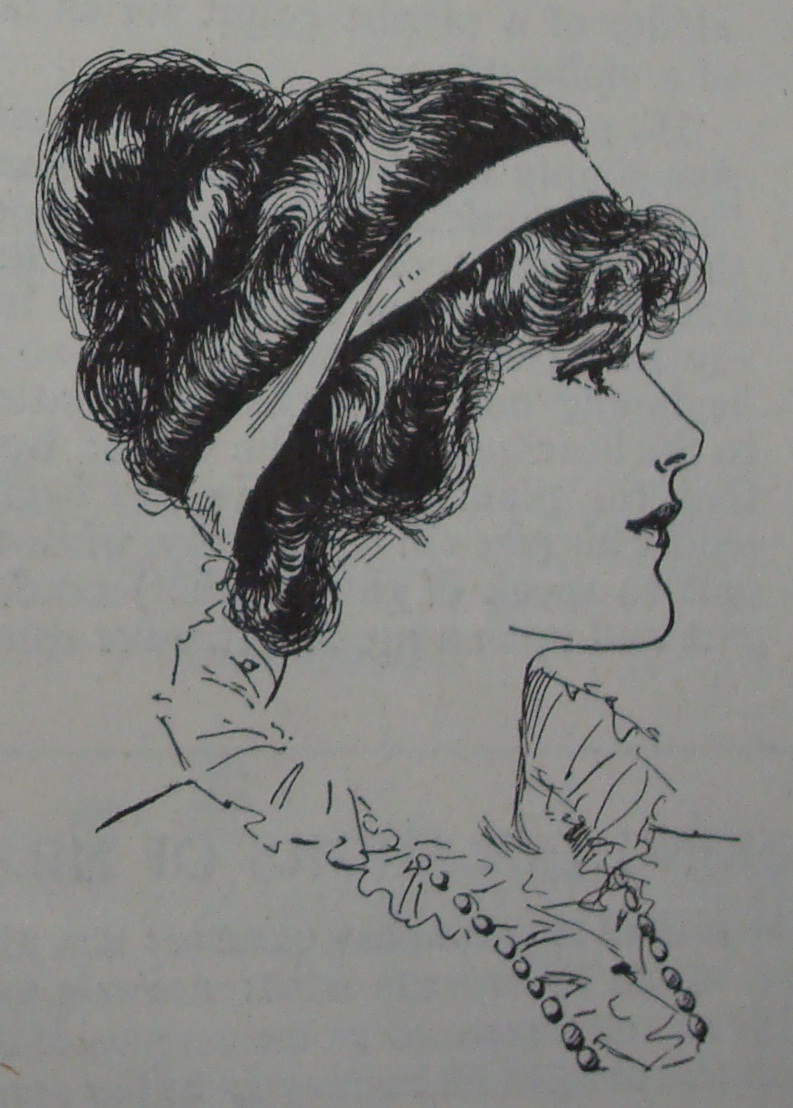
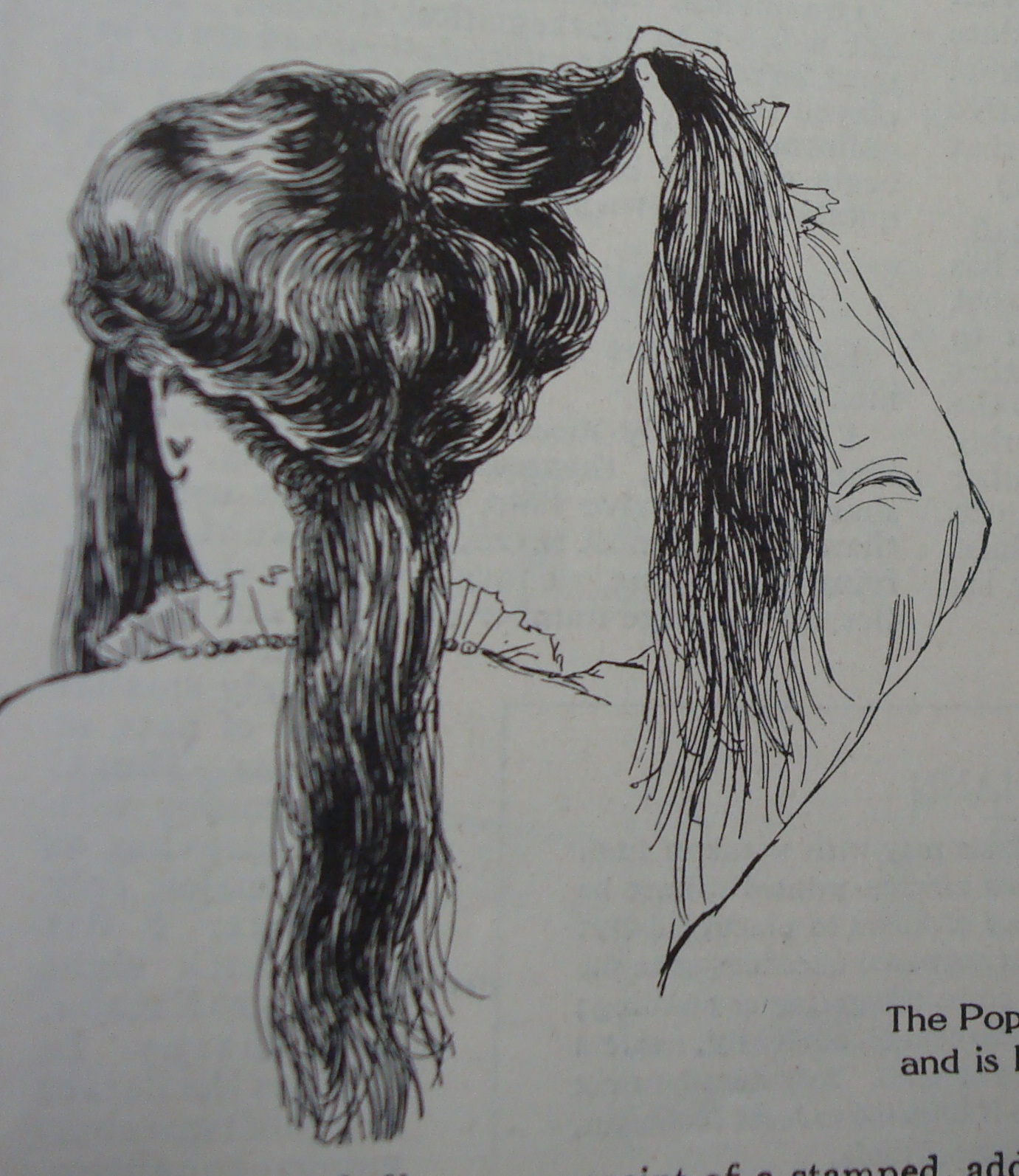
When I was young my friends and I enjoyed fixing each other’s hair. Maybe Grandma and Carrie also enjoyed fixing each other’s hair.
There’s a fun YouTube video that shows how to do an early 1900s updo.
17-year-old Helena Muffly wrote exactly 100 years ago today:
Saturday, January 4, 1913: Took down the Christmas tree this morning. It made such an awful mess. Ran an errand to McEwensville after dinner, and was home in three shakes of a lamb’s tail.
Photo source: Wikimedia Commons
Her middle-aged granddaughter’s comments 100 years later:
Grandma’s right—it makes an awful mess when the Christmas tree is taken down.
My Christmas decorations are still up—they will come down tomorrow. I’m trying to delay taking them down for as long as possible, but it’s starting to feel like I’m ready for my house to return to normal.
17-year-old Helena Muffly wrote exactly 100 years ago today:
Thursday, January 2, 1913:I’m so sleepy for I’m keeping later hours with my books Perhaps the thing will work all right after all. Hope it does.
Her middle-aged granddaughter’s comments 100 years later:
Grandma’s New Year’s resolution was to study more in 1913. I can picture a teen-aged Grandma sitting by a gas lamp huddled over her books long after everyone else went to bed. In my mind, the wind was howling and there was a chill in the room, but Grandma persevered–at least for this one day.
I’m still trying to keep my Yew Year’s resolutions. I hope they work out all right, too.