18-year-old Helena Muffly wrote exactly 100 years ago today:
Monday, April 14, 1913: Nothing very much a doing.
Her middle-aged granddaughter’s comments 100 years later:
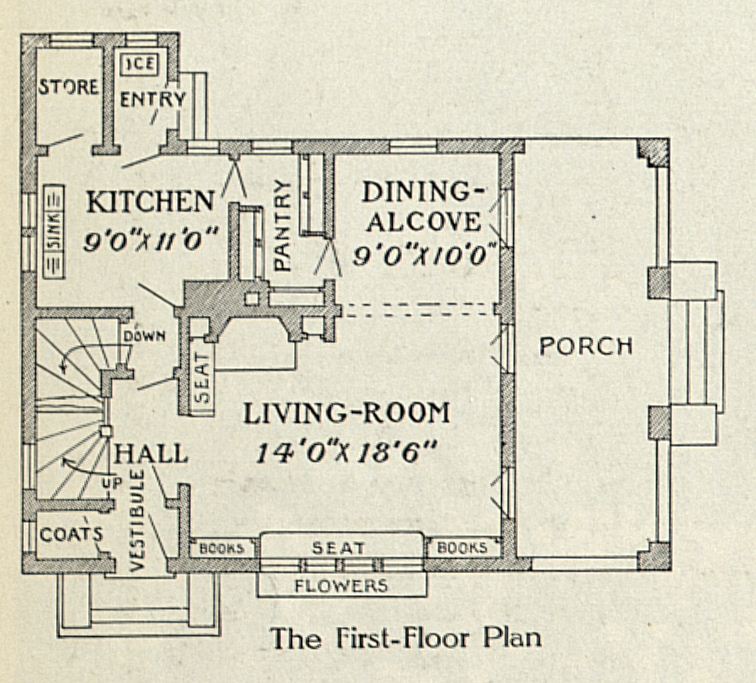
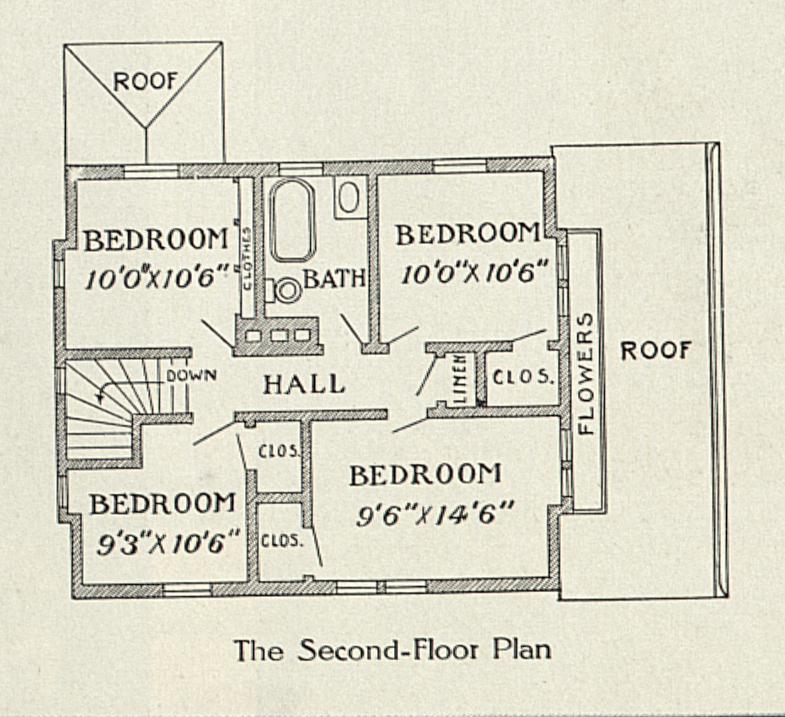
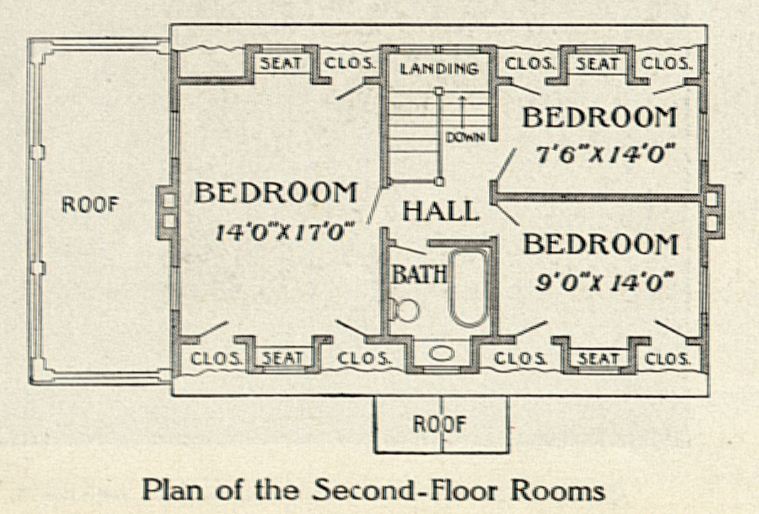
Since Grandma didn’t write much a hundred years ago today, I’ll share two charming house plans that I found in the April, 1913 issue of Ladies Home Journal.
18-year-old Helena Muffly wrote exactly 100 years ago today:
Sunday, April 13, 1913: Went to Sunday School this morning. Took dinner with Carrie.
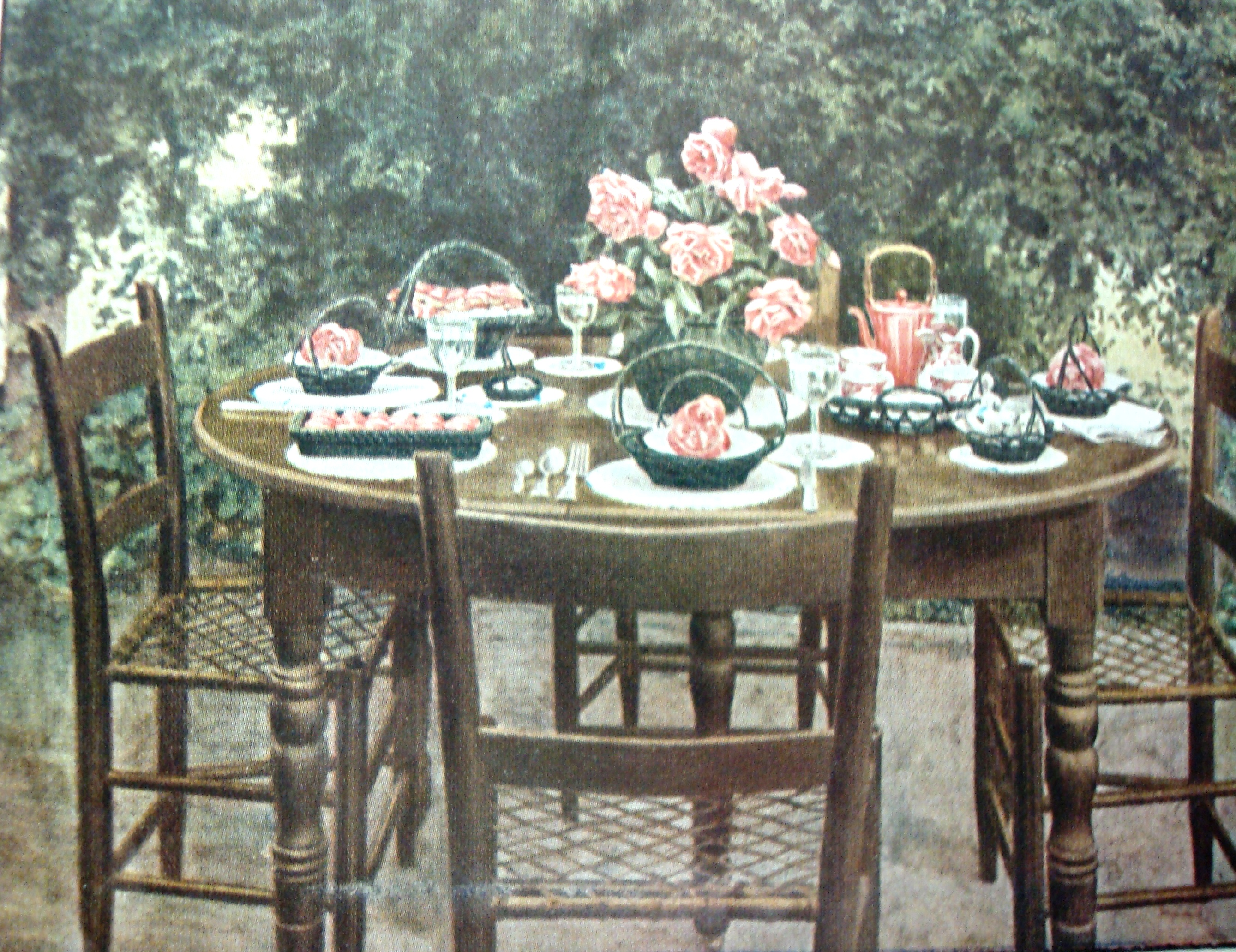
Source: Ladies Home Journal (July, 1911)
Her middle-aged granddaughter’s comments 100 years later:
Which meal did Grandma eat with her friend, Carrie Stout?
I’m almost sure that it was the noon meal—but today it seems like most people are refer to the evening meal as dinner.
When I was a child growing up we always called the mid-day meal dinner. But, I’m never sure if other people understand what I mean when I say dinner–so my family eats breakfast, lunch and supper.
18-year-old Helena Muffly wrote exactly 100 years ago today:
Saturday, April 12, 1913: Did some house-cleaning this morning.
Ice Box
Her middle-aged granddaughter’s comments 100 years later:
Maybe Grandma cleaned the ice box.
Here are the directions in a 1913 book for cleaning the ice box:
Care of the Ice-Chest (Ice Box)
Once a week wash the walls, sides, shelves, and every corner with cold water, borax, and any sweet pure soap, rinse with clear water and wipe dry. The shelves may be taken out and scalded, but must be chilled and wiped dry before they are returned. If anything is spilled, wipe it up at once, and be sure each day that there is no refuse bits of food or berries lying about.
A good scalding is not necessary very often if the chest is kept clean.
It is best to keep everything covered; it is imperative that milk and butter should always be covered, and, if possible, kept in a separate apartment.
Do not keep food too long, to spoil and sour, and thus scent up the ice-box.
A neglected ice-chest is a menace to the life and health of the whole family. A well-ordered household should always mean a sanitary refrigerator. Keep the box full of ice, as refrigeration checks the germs.
One should be as particular in caring for an ice-chest during the winter months as in the summer-time. Keep a saucer of powdered charcoal standing in the ice-box. It will absorb all odors and keep the air pure. When opening a refrigerator that has been closed for a long time, burn for an hour a small-sized sulphur candle, then cleanse thoroughly with warm soapy water and dry perfectly, exposing to air and sun if possible. It is most important to keep the ice-chest wholesome and sweet.
Remember that ice is apt to be dirty, and it is wise to watch the receptacle for the ice, that there be no leaves or anything collected there to decay or to clog the pipe. This pipe or the pan beneath should never be allowed to get slimy, as slime is a danger signal.
It is also important that the door be kept closed; otherwise the temperature will rise and the ice will melt rapidly.
Housekeeper’s Handy Book (1913) by Lucia Millet Baxter
18-year-old Helena Muffly wrote exactly 100 years ago today:
Friday, April 11, 1913: I got a regular call down at school today. Made me rather mad to think I did such a thing as to deserve such a raking. Am busy making out an outline.
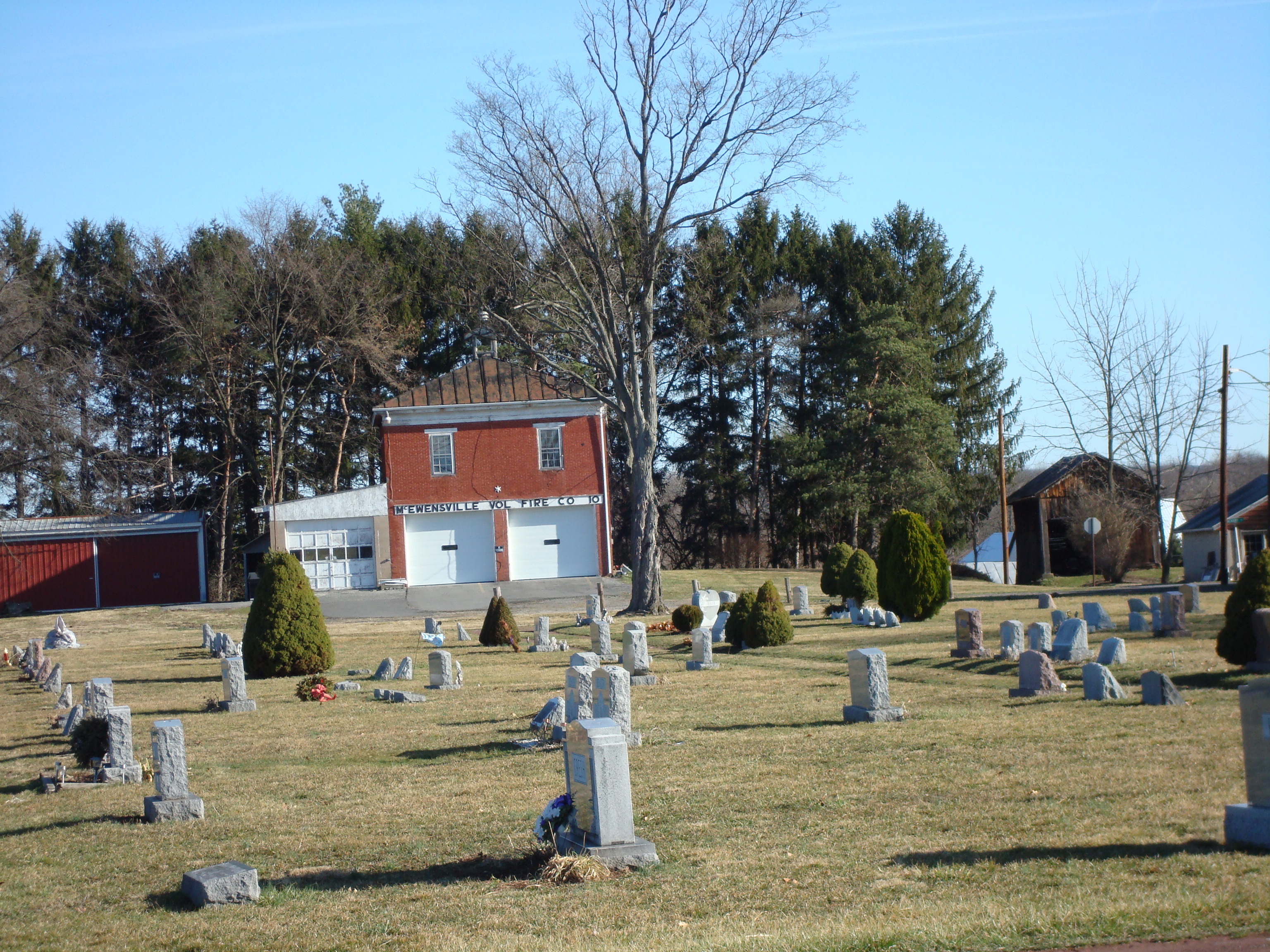
This is a recent view of the second floor of the building that once housed the McEwesnville School. A hundred years ago today, Grandma probably looked in anger out this window and wished she was not sitting in this classroom–
Her middle-aged granddaughter’s comments 100 years later:
Good grief—What did Grandma do now?
Behavior (or to use the old-fashioned term—deportment) still seemed to be an issue. Grandma was having a difficult last few weeks of school. She wrote several diary entries about her struggles with behavior, but provided few clues to exactly what she did.
Here’s a recap of Grandma’s diary entries over the past 16 days which address her behavior at school:
Teacher gave the school a lecture, but it was really meant for me. I don’t think what I did was so bad, but I guess I won’t do it again. I might catch it right there. . .
Of course, the class play was held on April 5, and Grandma was very busy with it—so maybe she had an excuse for not doing homework and other behavior issues.
Hmm. . . If a student today did the same things Grandma did, what would the teacher do? Have standards for student behavior changed over the past one hundred years?
18-year-old Helena Muffly wrote exactly 100 years ago today:
Thursday, April 10, 1913: Have ‘em all addressed by this time unless make up my mind to send some more. Have three left over. Wonder if I’ll get any presents. Just think I can soon call myself a sweet girl graduate.
Her middle-aged granddaughter’s comments 100 years later:
The previous day Grandma began addressing the invitations to her graduation—and apparently completed them on the 10th.
The tiniest pieces of paper sometimes are so special. I don’t have an invitation for Grandma’s graduation—they probably didn’t survive a hundred years— but I think that I have Grandma’s name card that was designed to be inserted into the invitations.
I have a thin file folder of mementoes that were found in Grandma’s house after she died. One item in the folder is the commencement program that I shared two days ago. Another is this name card.
In the past one hundred years, how many times did someone look at the name card,—first Grandma herself, and then later her descendants—consider tossing it out, and then decide that it was worth saving?
I’m in awe that this tiny piece of card stock with Grandma’s name on it still exists. And, I am very thankful that each person whose hands touched it over the years made the decision to keep it.
18-year-old Helena Muffly wrote exactly 100 years ago today:
Wednesday, April 9, 1913: Got my report card today. Had quite a fall in deportment. I must be really very bad. Began to address my invitations this evening.
Building that once housed the McEwensville Schools. The high school was on the second floor.
Her middle-aged granddaughter’s comments 100 years later:
Grandma seemed to have a bad case of senioritis—so I guess it isn’t a surprise that her grade for deportment fell. For example, on March 26 she wrote:
Teacher gave the school a lecture, but it was really meant for me. I don’t think what I did was so bad, but I guess I won’t do it again . . .
Does anyone use the term deportment any more? It almost seems like an archaic word.
18-year-old Helena Muffly wrote exactly 100 years ago today:
Tuesday, April 8, 1913: Am trying to learn my essay. I know about half of it.
Her middle-aged granddaughter’s comments 100 years later:
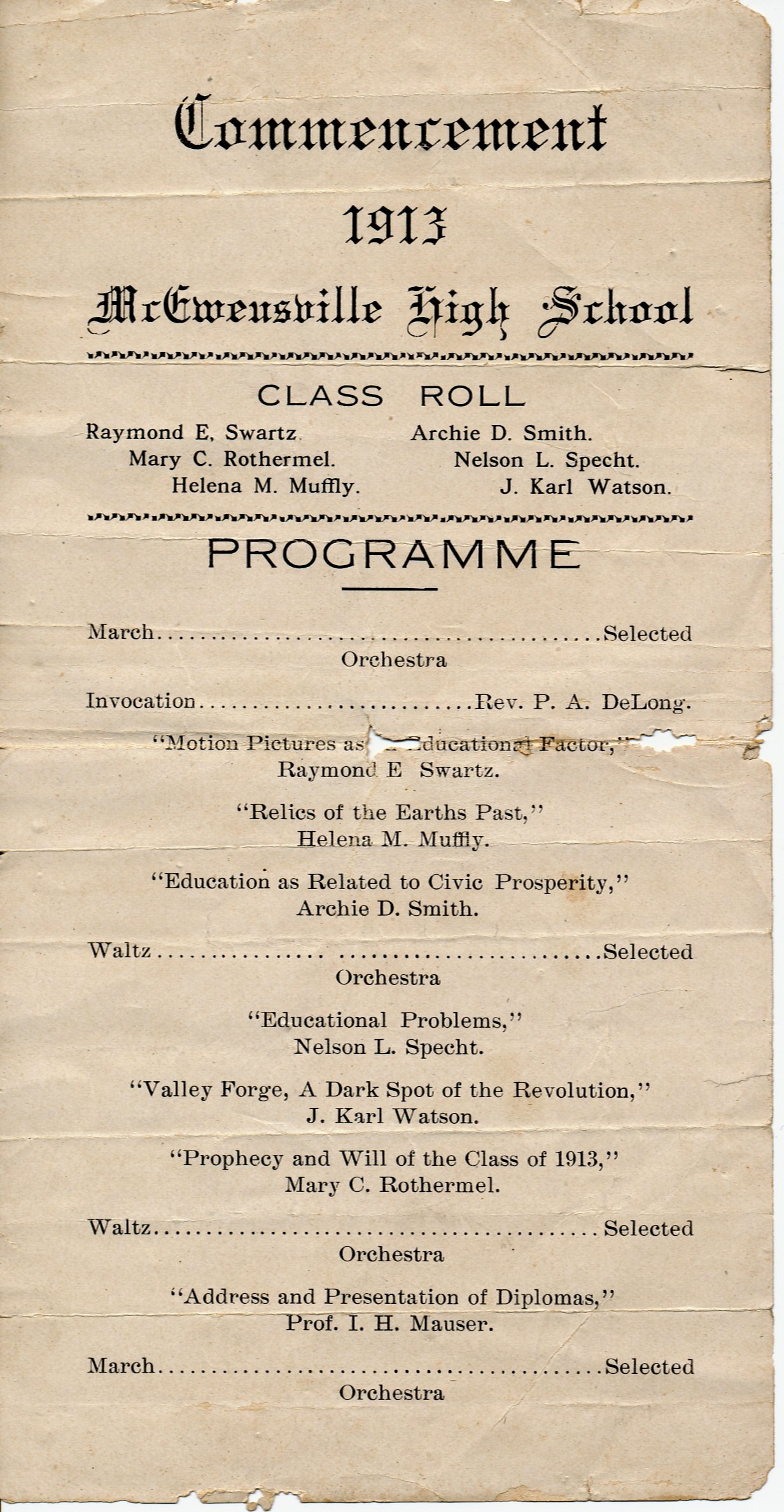
Even though Grandma won’t graduate for another several weeks, I’m going to share her commencement program today since I think that she probably was trying to memorize an essay that she wrote for her graduation speech.
(The graduation program contains lots of interesting tidbits—and I plan to explore different facets of if in several upcoming posts. Today I’m just going to focus on Grandma’s speech.)
Grandma was probably trying to memorize the essay that she mentioned on March 21, 1913:
. . . Am tugging away at my old essay it is almost finished.
Her graduation essay was titled Relics of the Earth’s Past. I wonder how the topics were selected. Maybe it was a really interesting speech, but the topic sounds kind of boring to me.
Earlier in the year, Grandma had written about writing an essay on the Revolutionary War. The teacher told the class that the person who wrote the best essay would win a 2 1/2 dollar gold piece. Based on the program, it appears Grandma didn’t win the gold piece—since J. Karl Watson did a graduation presentation titled, Valley Forge, A Dark Spot of the American Revolution.