18-year-old Helena Muffly wrote exactly 100 years ago today:
Went to Sunday School this morning. Dear old Margaret came along home with me to spend the day. Tweetie came home with Ruth. Got Ruth to take a picture of Margaret and me. The first one she spoiled and in the next one Peggy moved, so I don’t know yet how my pictures are going to pan out.
I just want to add that I was so fortunate this morning as to get an automobile ride.
1913 Ford Model T Runabout (Photo source: Wikimedia Commons)
Her middle-aged granddaughter’s comments 100 years later:
What an awesome day! Today our roads are so jam-packed with cars that it almost boggles my mind that riding in an automobile was super-special a hundred years ago.
—
If I squint a little, I can almost see three giggling teens trying to stand still while Grandma’s sister Ruth took the pictures.
And, I can almost see Grandma trying not to show her frustration when Ruth ruined the first picture. (I bet she didn’t hide her annoyance very well).
18-year-old Helena Muffly wrote exactly 100 years ago today:
Saturday, August 30, 1913:The Lutherans had a Sunday School picnic down at the park today. Of course, I went. Had a pretty good time, but I guess I ate too much from the way I feel now.
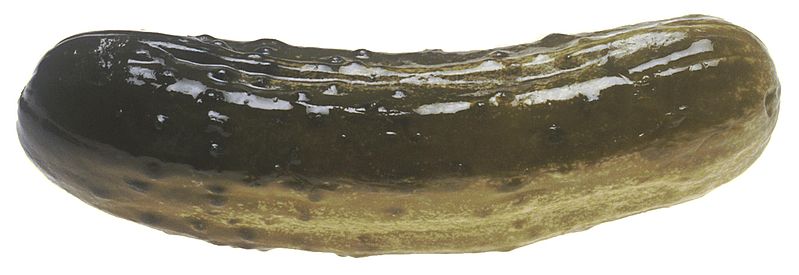
A sweet foodA sour food
Picture Source: Wikipedia
Her middle-aged granddaughter’s comments 100 years later:
The food must have been really good. There is an old Pennsylvania saying that meals should have “seven sweets and seven sours.”
The idea was to balance sweets and sours. In other words, eat some cake—but eat some pickles, too.
The phrase is often associated with the Amish, but traditionally it was often used throughout the state in German American communities.
There probably was a plethora of both sweets and sours at the picnic. I bet that Grandma had a sweet tooth and overdid the sweets. 🙂
18-year-old Helena Muffly wrote exactly 100 years ago today:
Friday, August 29, 1913:Five of my pictures are finished. They are most too pale to be good but better than what I expected.
Here’s an illustration from a hundred-year-old book called Practical Suggestions Regarding the Selection and Use of a Photographic Equipment. It shows how F stops on a camera should be set for different magnification levels. Pictures are of the Tower at Madison School Garden (New York City).
Her middle-aged granddaughter’s comments 100 years later:
Yeah! Grandma got some more pictures finished. She got the camera earlier in the summer, took a roll of pictures, and was now developing them.
Grandma began developing the pictures on August 26 when she and her sister Ruth made a negative. On the 27th she printed three of them, and made another negative. . . now she had five finished.
I’m sure that Grandma was having lots of fun using “modern technology,” but by today’s standards it sure seems like a long drawn-out process.
Why were the pictures too pale? . . Were they overexposed?
Here’s what a 1910 book said about how to get the correct exposure:
We cannot impress upon you the all-importance of exposing for the shadow or dense portions. For general all-round out-of-door work, in the open, street scenes, etc., with very good light between 10:30 A.M. and 2 P.M. from 1/100 to 1/200 second at F. 8. Reasonably earlier or later in the day than the time specified, full aperture, F. 6.3, 1/50 to 1/100 second. As a general rule, 1/100 second is sufficient speed, but there are occasions when it is necessary to give 1/150 to 1/200 seconds, but these highest speeds should only be given when required.
On gray or clouded days or during November, December and January, when the actinic quality of the light is at its weakest, then invariably use full open lens (F. 6.3) and from 1/25 to 1/100 sec. exposure . . .
The telephoto attachment is neither difficult to use or to compute the correct exposure. To make an exposure with the telephoto we first calculate or rather determine the correct exposure for the subject at hand, with the positive lens along at a given stop, and then simply multiply that exposure by the magnification which we desire, using the same stop in the positive lens. . .
Practical Suggestions Regarding the Selection and Use of a Photographic Equipment by by Austin K. Hanks
(I’m a “point and shoot” photographer. . .and am clueless what half of the recommendations in the book mean. )
18-year-old Helena Muffly wrote exactly 100 years ago today:
Thursday, August 28, 1913: Nothing doing.
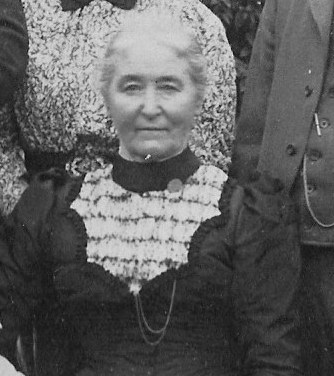
Grandma’s grandfather, John Derr (circa, 1900)Grandma’s Grandmother, Sarah Derr (circa, 1900)
Her middle-aged granddaughter’s comments 100 years later:
Since Grandma didn’t write much a hundred years ago today, I’m going to share a 1913 poem that resonated with me. I noticed it in the August, 1913 issue of Farm Journal when I was working on yesterday’s post.
Homely Wrinkles
Don’t neglect the old folks,
Love them more and more,
As they turn their weary eyes
Toward the other shore;
Let your words be tender,
Loving, soft and low;
Let their last days be the best
They have ever known.
This poem made me wonder about Grandma’s relationship with her elderly grandparents. Her maternal grandparents, John and Sarah Derr, lived in Turbotville which was about 5 miles from the Muffly farm. Her grandfather (John Derr) was 90 years old and her grandmother (Sarah Derr) was 79. Were they healthy? . . . ill? . . .fun to be around? . . . crochety? . . .
I may have forgotten, but I can’t remember her grandparents ever being specifically mentioned in the diary —though there were a few general references to events that they may have attended. For example, on January 19, 1913 Grandma wrote:
A bright and beautiful dawn welcomed the approach of day. Ruth and I walked to Turbotville this morning to attend a family reunion. All of ‘em weren’t there. Had quite a pleasant time, but it would have been nicer if some more of the cousins had been there. We had our pictures taken out on the lawn. . . .
Whew, taking and developing pictures sure was a long-drawn out process a hundred years ago.
Grandma got a camera earlier in the summer— and she was now developing her first roll of film. The previous day she and her sister Ruth made some negatives, and now she was printing them. . . .though it sounds like the process was so time-consuming that the task was not yet completed.
18-year-old Helena Muffly wrote exactly 100 years ago today:
Tuesday, August 26, 1913: Ruthie and I commenced on this pictures this afternoon. We made a negative. This evening we went to a party up at Bryson’s. There were so many there and lots that I didn’t know.
THE KODAK GIRL AT HOME
Every step in film development becomes simple, easy, understandable with a
KODAK FILM TANK
No dark-room, no tediously acquired skill—and better results than were possible by the old methods. It’s an important link the the Kodak system of “Photography with the bother left out.”
The Experience is in the Tank.
In our little booklet, “Tank Development,” free at your dealer or in the mail.
EASTMAN KODAK CO., 365 State Street, Rochester, N.Y.
Source: Farm Journal (August, 1913)
Her middle-aged granddaughter’s comments 100 years later:
Wow, Grandma and her sister Ruth apparently developed their own pictures. Grandma brought a camera earlier in the summer and took her first pictures on August 13:
Today we had our S.S. picnic up at the creek. Not all that were invited came, but still I guess we had a good time. I initiated by camera by taking two pictures.
In this era of digital photography—when it’s easy to take and then view hundreds (or thousands) of photos it’s hard to image how much knowledge and skill was required to get a few pictures back then.
—
Blanche and Margaret Bryson were friends of Grandma and Ruth. The Bryson’s lived on a farm north of McEwensville. And, I think that Grandma visited Margaret the previous Sunday—on August 24. I wonder if Grandma helped plan the party.
What does “many” mean? How many people were at the party—15? . . .25? . . . 50?
Who was at the party? Any “interesting” guys?
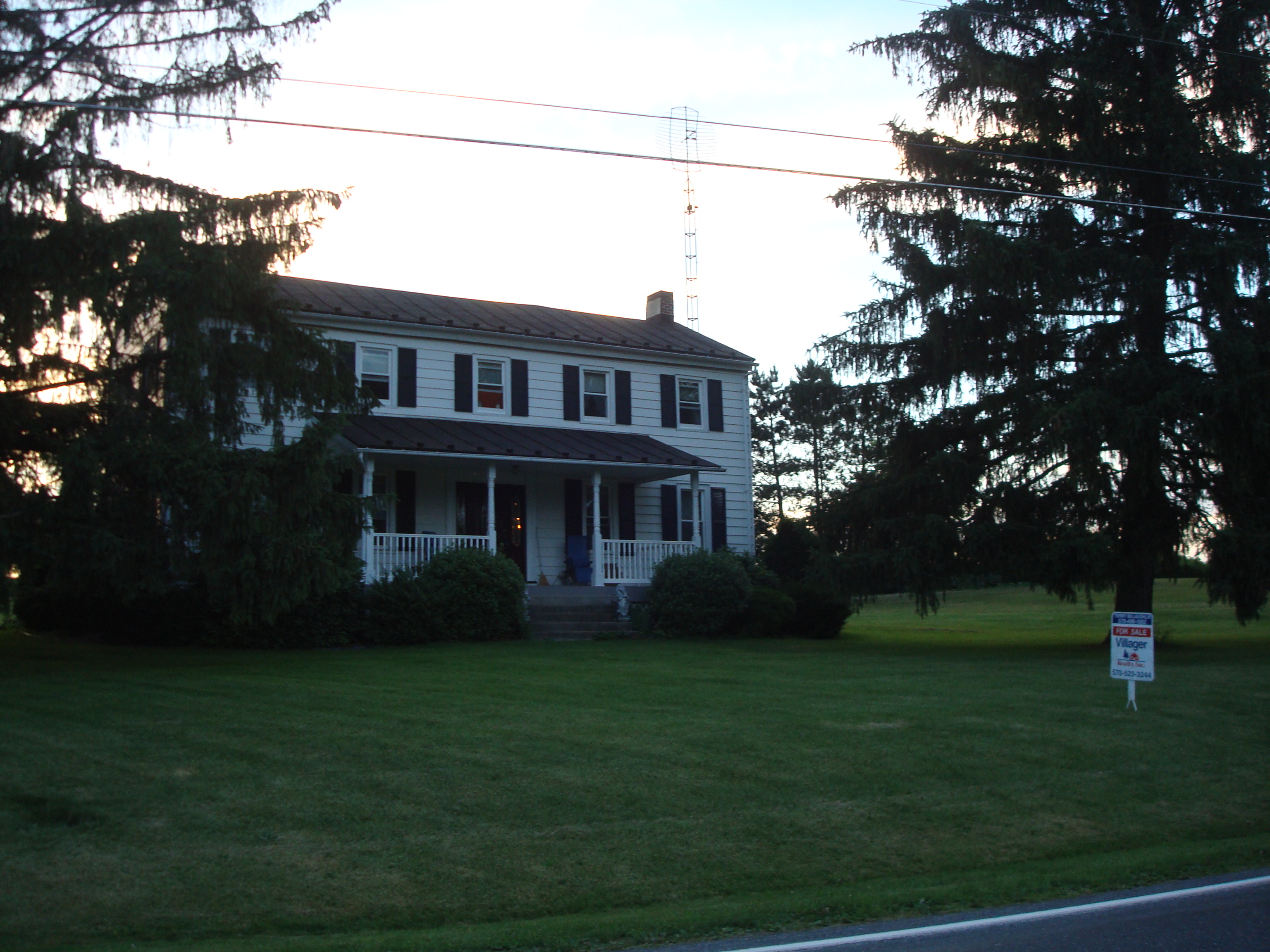
Recent photo of the home where the Bryson family lived a hundred years ago. In my imagination, I picture young men and women playing croquet in the yard, and drinking lemonade on the porch (and maybe flirting just a little bit).
18-year-old Helena Muffly wrote exactly 100 years ago today:
Monday, August 25, 1913:Nothing much doing.
Her middle-aged granddaughter’s comments 100 years later:
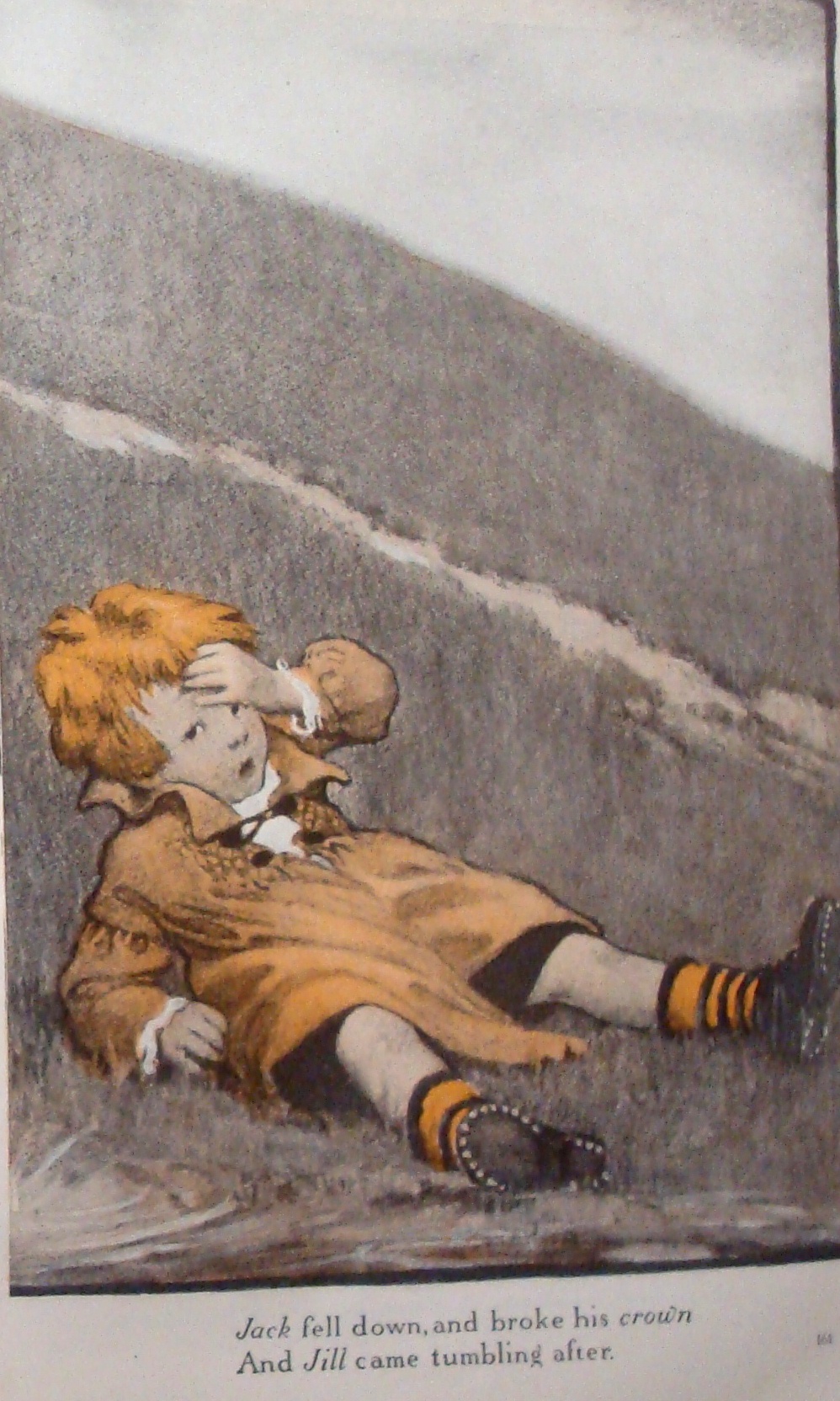
Since Grandma didn’t write much a hundred years ago today, I decided to share this illustrated version of Jack and Jill that appeared in the August, 1913 issue of Good Housekeeping.
Today most middle class family have oodles of picture books, and can easily access lots more at a nearby library (and kids with tech savvy parents may be reading electronic versions of books rather than hard copies—but I’m not going there).
A hundred years ago, children’s books were relatively expensive, kids often had few books, and many people did not have access to libraries.
Women’s magazines back then often had features aimed at children like this one. Many parents probably saved them so that their children could read it again and again.