18-year-old Helena Muffly wrote exactly 100 years ago today:
Thursday, September 19, 1913:
September 16 – 17 – 18 – 19: Nothing much of importance happened during these days. I have to help Pa some and get put at rolling for one thing. Of course I had my mishaps even to going off of the roller. That work is all done by this time.
The Book of Wheat (1908) by Peter Tracy Dondlinger
Her middle-aged granddaughter’s comments 100 years later:
This was the third of four days where Grandma wrote a single diary entry. Two days ago I described how Grandma rolled the fields in preparation for planting fall wheat. And, yesterday I shared pictures that showed the huge “modern” equipment used to harvest wheat on immense farms in the Midwest a hundred years ago.
The machinery used to plant and harvest wheat was very different on small farms in Pennsylvania like the one Grandma lived on. Today I’m sharing several additional pictures from the same book—but this group of pictures shows how wheat was raised on small farms a hundred years ago.
18-year-old Helena Muffly wrote exactly 100 years ago today:
Wednesday, September 17, 1913:
September 16 – 17 – 18 – 19: Nothing much of importance happened during these days. I have to help Pa some and get put at rolling for one thing. Of course I had my mishaps even to going off of the roller. That work is all done by this time.
The Book of Wheat (1908) by Peter Tracy Dondlinger
Her middle-aged granddaughter’s comments 100 years later:
This was the second of four days where Grandma wrote a single diary entry. Yesterday I described how Grandma rolled the fields in preparation for planting winter wheat. Since Grandma didn’t write anything specific for this date, I’m going to share something I learned when I was doing research for this series of posts that surprised me.
Did you know that there were some huge, highly-mechanized, wheat farms in the United States in the late 1800s and early 1900s?
There were 91 large “Bonanza Farms” ranging in size from 3,000 to more than 30,000 acres in North Dakota and Minnesota.
In 1864 the US government gave a group of investors millions of acres of land to finance the building of the Northern Pacific Railroad from Minnesota to the west coast. During the Panic of 1873, the investors got into financial difficulty and needed to raise funds to complete building the railroad so they let stockholders buy large tracts of land in the Red River Valley at low rates.
The farms had professional managers and migrant labor did much of the work. (During the winter months many of the farm laborers worked in logging camps in Michigan, Minnesota, and Wisconsin.)
By the early 1900s wheat prices were low, labor costs were rising, and the Bonanza Farms weren’t very profitable.
There also was a lot of concern that the Bonanza Farms weren’t good stewards of the land. For example, the opening paragraph in a bulletin published by the US Government in 1908 said:
Experience has shown that when excessively large companies farm great tracts of land the tendency is to exploit the land for the greatest immediate profit at the expense of the permanent value of the soil. Proper soil-cultural methods are not observed: rotations for the preservation of soil fertility are neglected; the main crop, wheat, is grown continuously, and the seed is allowed to degenerate through careless methods. Undoubtedly there are exceptions to this rule. It is not the writer’s wish to intimate that rational dry farming is impossible when carried on by large companies, but the general rule has been as stated here. It is evident that the homesteader, having in mind the value of his home and the welfare of his posterity, is more likely to perpetuate and increase the value of his land.
Dry-land Grains (U.S. Department of Agriculture, Bureau of Plant Industry, Circular No. 12, 1908)
These concerns led, in part, to changes in tax codes that discriminated against Bonanza Farms which made them even less profitable.
At the same time more people wanted to farm in the upper Midwest and the land was becoming more valuable, so many of the Bonanza Farms were divided into smaller plots and sold to family farmers.
—
Here’s links to several sites that have additional information about Bonanza Farms:
18-year-old Helena Muffly wrote exactly 100 years ago today:
Tuesday, September 16, 1913:
September 16 – 17 – 18 – 19: Nothing much of importance happened during these days. I have to help Pa some and get put at rolling for one thing. Of course I had my mishaps even to going off of the roller. That work is all done by this time.
Her middle-aged granddaughter’s comments 100 years later:
Whew, I bet that Grandma was exhausted. It’s rare that she didn’t write a diary entry every day—but I can understand why she was too tired to write anything a hundred years ago today.
Grandma was using a roller in a plowed field to level the ground and break up clumps of soil in preparation for planting wheat seeds. In Pennsylvania wheat is planted in the fall and harvested the following summer.
Horses were hitched to the roller, and Grandma would have needed to tighten one rein or the other to make the horses go in a straight line. Unlike the roller in the picture, the diary entry makes it sound like the roller that she used may have had a seat. The mishap sounds embarrassing (and perhaps painful).
18-year-old Helena Muffly wrote exactly 100 years ago today:
Monday, September 15, 1913:For one thing I’ve had a splitting headache this afternoon and it still continues.
Her middle-aged granddaughter’s comments 100 years later:
Ouch. . . headaches are no fun! I wonder what caused Grandma’s headache.
Here is what a hundred-year-old book said about headaches causes:
Headache is a symptom rather than a disease, but there is no symptom which requires more careful investigation of its cause than that of headache. It occurs at all ages, but is most common from ten to twenty-five years and from thirty-five to forty-five years. Women suffer from headache more than men, in the proportion of about three to one. Headaches are most common in the spring and fall of the year and in the temperate climates.
Causes of headache—These may be classified into those in which the blood is at fault; reflex causes; various nervous disorders; and organic diseases.
The blood may be impoverished, as in the case of anemia, where there is a deficiency in hemoglobin; but by far the most frequent cause of headache is where the blood is disordered, as in gout, rheumatism, kidney diseases, diabetes, and the infectious fevers and malaria.
Among the more common reflex causes are eye-strain, especially errors of refraction; disorders of digestion, particularly constipation; and pelvic disorders, as in inflammation of the pelvic viscera.
Functional diseases of the nervous system causing headache are overwork, neurasthenia, hysteria, epilepsy, and neuritis.
Among the most common of the organic diseases is arteriosclerosis; other diseases are meningitis and brain tumors.
Personal Hygiene and Physical Training for Women (1911) by Anna M. Galbraith
A hundred years ago many families–including the Muffly’s–didn’t have phones, so if people wanted to let someone know that they were coming to visit, they needed to send a post card or letter.
Back then it was considered much more acceptable to just drop in than what it is now. . . and Sunday was considered one of the best times to go “visiting.”
Harvest Home
Harvest home Sunday was an annual event that churches held in the fall to celebrate, and to thank the Lord for, the bountiful harvest.
Often people decorated the church for the service with fruits and vegetables from their farms and gardens. After the service the food would be given to a needy family. Did Grandma and her sister Ruth take any produce to the service?
18-year-old Helena Muffly wrote exactly 100 years ago today:
Wednesday, September 10, 1913: Didn’t feel the best the morning. Commenced reading a book.
Her middle-aged granddaughter’s comments 100 years later:
What book was Grandma reading?
Goodreads lists two hundred books published in 1913 that are still in widely read. They probably were not the most popular books at the time, but rather they are the books that have endured –and whose message apparently continues to resonate a hundred years later.
Fifteen books on the list that I recognized the title or author are listed below:
1. O Pioneers by Willa Cather
2. Sons and Lovers by D.H. Lawrence
3. The Custom of the Country by Edith Wharton
4. Theodore Roosevelt: An Autobiography by Theodore Roosevelt
5. The Tale of Pigling Bland by Beatrix Potter
6. The Bobbsey Twins’ Mystery at School (Bobbsey Twins #4) by Laure Lee Hope
7. Chance by Joseph Conrad
8. Desert Gold by Zane Grey
9. The Adventure of the Dying Detective by Arthur Conan Doyle
10. The Inland Voyage and Travels with a Donkey by Robert Louis Stevenson
11. The Story of My Boyhood and Youth by John Muir
12. Little Wars by H. G. Wells
13. The Night Born by Jack London
14. The War Correspondence of Leon Trotsky: The Balkan Wars 1912-1913 by Leon Trotsky
15. La Follette’s Autobiography: A Personal Narrative of Political Experiences by Robert M. La Follette
You may also enjoy similar posts that I did for books published in 1911 and 1912:
18-year-old Helena Muffly wrote exactly 100 years ago today:
Tuesday, September 9, 1913:Went to Watsontown this afternoon to get some things.
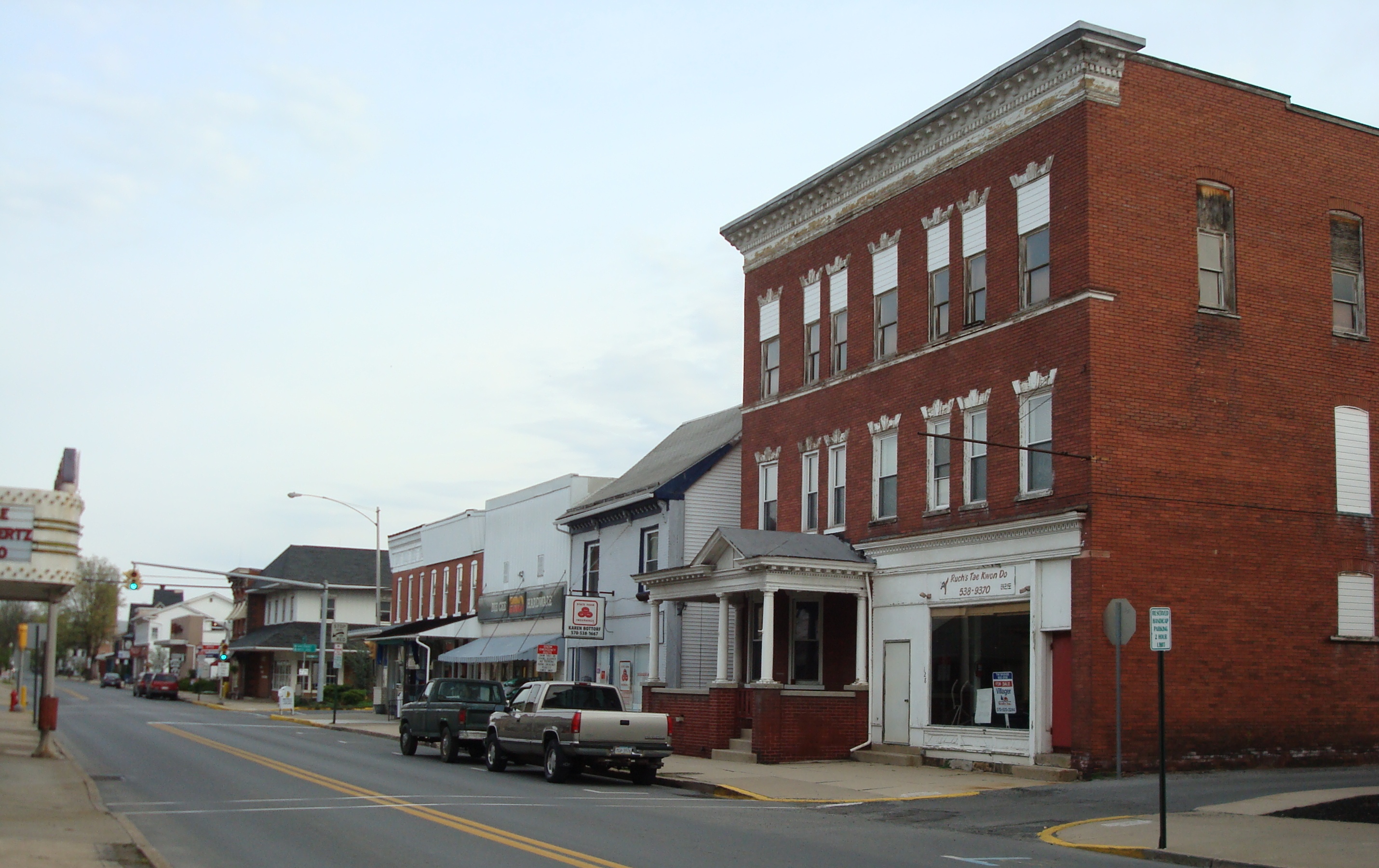
A recent photo of downtown Watsontown
Her middle-aged granddaughter’s comments 100 years later:
When I go shopping, the items that I want to buy determine where I go. If I just need a gallon of milk I walk to the local convenience store, but if I need to buy a week’s worth of groceries I drive to the nearest strip mall. And, if I want to buy some new clothes I head to a more distant large mall.
It was the same in Grandma’s day. She often shopped in three towns–McEwensville, Watsontown, and Milton.
McEwensville had a general store and pharmacy—and sometimes Grandma could buy what she needed there. Watsontown was a somewhat larger town and had a small shopping district. And, Milton was a little further away, but had more stores.
Grandma could have easily walked to McEwensville or Watsontown; a trip to Milton would have required to train or buggy ride.
A hundred years ago today Grandma must have needed some things that were relatively common—but not so common that the McEwensville stores would have had them; so she had to visit the medium-sized town.
An aside–Maybe the title of this post isn’t really right, since by most standards McEwensville, Watsontown, and Milton are all small towns–but in Grandma’s world she definitely would have differentiated between them and considered one small, the other medium, and the third large.