One-Hundred-Year Trips for Removing Mud Stains

16-year-old Helena Muffly wrote exactly 100 years ago today: 

Sunday, February 25, 1912:  Went to Sunday School this afternoon. It was exceedingly mean walking though, but managed to get through it by going the railroad.

Her middle-aged granddaughter’s comments 100 years later:

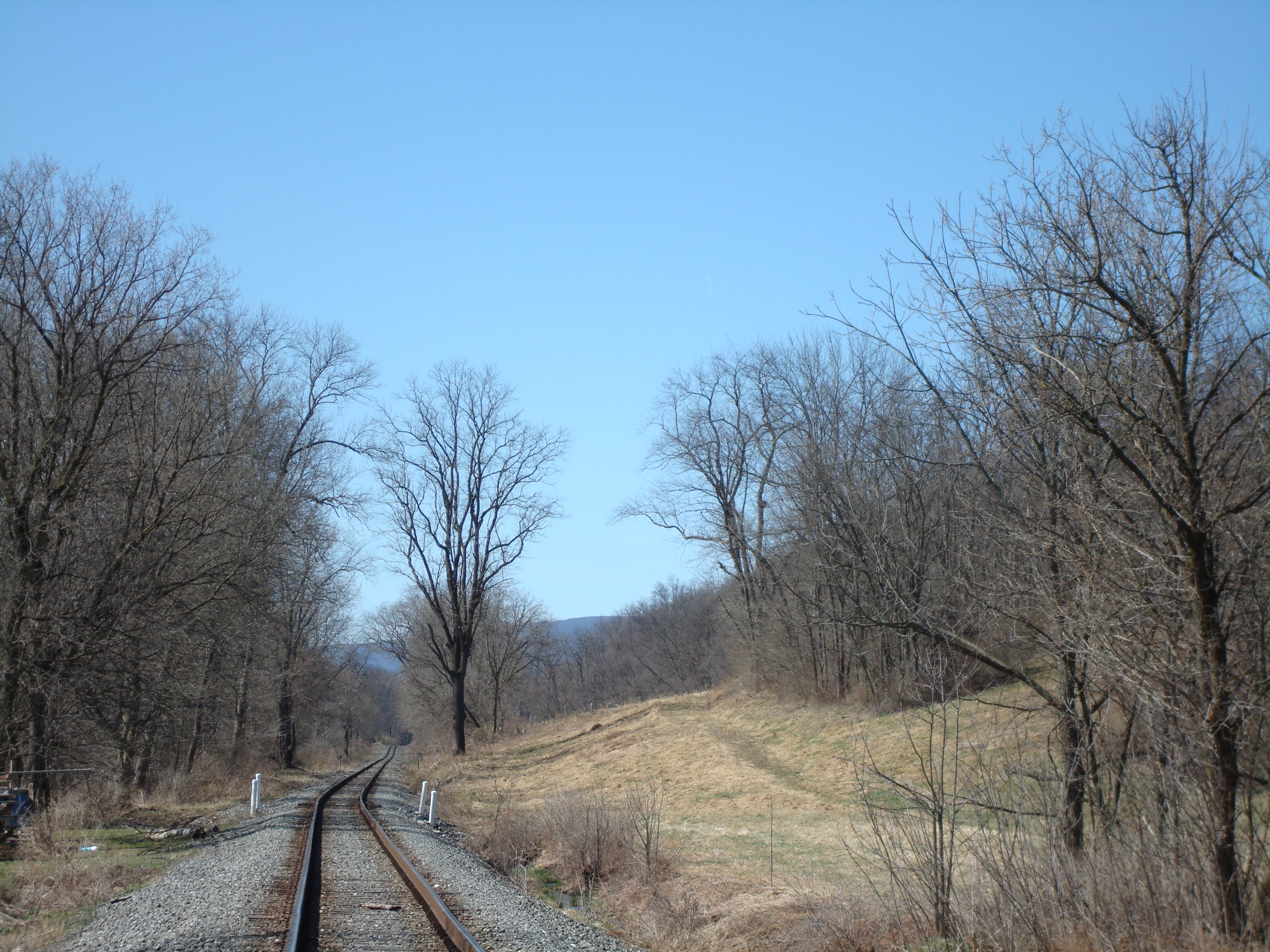
The Susquehanna, Bloomsburg, and Berwick railroad tracks crossed the Muffly farm, so Grandma could walk the tracks to get to McEwensville when the roads were very muddy.

Did Grandma get any mud on her clothes?

A hundred years ago cookbooks often contained a hints and helps section. Here are tips in a 1912 cookbook for removing mud from clothes:

Mud Stains (Colored Goods)—Let the mud dry thoroughly, and then remove as much as possible by brushing. When fully dry, cover with a mixture of salt and flour and place in a dry place.

If the stains are extensive place the garment in a large paper flour sack with a quantity of salt and flour well mixed, shake vigorously, tie up the sack, and allow it to hang behind for a few days. Afterwards shake out the dust and press.

Mud Stains (White Goods)—Dip the mud stains in kerosene before putting them in boiler. Add kerosene to the boiling water.

Calumet Raking Powder Reliable Recipes (1912)

Whew, can you imagine using kerosene to remove stains? . . . and I don’t have a wood or coal stove that I can hang the bag of stained clothes behind.

The methods for removing mud have really changed over the years. I’d just put some Shout stain remover on the spot and throw it into the laundry.

Remodeling Aunt’s Cast-off Dress

16-year-old Helena Muffly wrote exactly 100 years ago today: 

Saturday, February 24, 1912:  I fixed over a dress for myself this afternoon. It was one of my Aunt Annie’s cast-offs. I had one trying time a getting the waist and skirt together. I have it fixed now and tried it on to see the result. I’m not so much pleased with my sewing. It seems rather short in the back.

Click on photo to make larger.

Annie Van Sant is the woman in white in the center of the photo.

John and Sarah Derr Family. Taken about 1900. L to R. Front Row: John, Annie Van Sant, Sarah. Back Row: Miles, Fuller, Alice Krumm, Elmer, Phoebe Muffly, Judson, Homer. Phoebe (Derr) Muffly was the mother of Helen (Muffly) Swartz.

Her middle-aged granddaughter’s comments 100 years later:

Thirty-five year-old Annie Van Sant was Grandma’s mother’s youngest sister. She was married to Benjamin Van Sant who was a physician in nearby Turbotville. The Van Sant’s visited the Muffly’s the previous week.

I suppose that Annie was relatively well-to –do since she was a doctor’s wife—and had some relatively nice cast-offs to give her niece.

It’s amazing how people often remodeled clothes a hundred years ago. Clothing was much more expensive back then—and people often remodeled outfits instead of buying new items.

A hundred years ago, women’s shirts were called waists. Based upon the wording of this diary entry the top part of a dress apparently was also called waists.

An aside–I apologize for using this photo several times over the past year or so. I wish that I had more photos of my ancestors–but I have very few so sometimes need to use the same photo a couple times to illustrate entries.

Could Hardly Get Through the Mud

16-year-old Helena Muffly wrote exactly 100 years ago today: 

Friday, February 23, 1912:  It was so awful muddy this afternoon. Didn’t hardly know how I would get through mud and everything else coming home from school.

Her middle-aged granddaughter’s comments 100 years later:

Mud was a huge problem a  hundred years ago. Neither the streets in McEwensville nor the rural roads that Grandma needed to walk to get home from school were paved.

A muddy Main street in McEwensville in the early 1900s. Photo from Watsontown, McEwensville, and Delaware Township: A real Photo Postcard History by Robert Swope, Jr. (Photo used with permission)
Recent photo showing the same section of Main Street. The paved road is a definite improvement on muddy late winter days.

Went Visiting: Only One Uncle at Home

16-year-old Helena Muffly wrote exactly 100 years ago today: 

Sunday, January 21, 1912: Pa and I went over to Ottawa today. I suppose if I had expected yesterday to do today I would have been disappointed. It’s my luck. But the unlucky thing about it was that Uncle George was the only one at home. I made the coffee. I would have liked to have known what it tasted like, but you see I don’t drink any.

Her middle-aged granddaughter’s comments 100 years later:

Ottawa is a tiny village in Limestone Township, Montour County—and is located about 12 miles east of the Muffly farm.

George Muffly was a brother of Grandma’s father (Albert Muffly). He lived with is brother Samuel and his widowed sister Mary and her two two children (20 year-old Kathryn and 15 year-old John). Grandma probably hoped that her cousin Kathryn would be there.

Grandma’s father was one of eleven children of Samuel K. and Charlotte Muffly. He was born in 1857 and was the fourth oldest child in the family. George was the youngest. He was born in 1874 and would have been 35 years old when this diary entry was written.

According to the 1910 census George was single and lived with his 43-year-old single brother Samuel and his widowed sister Mary Feinour and her two children. Mary was two year older than Grandma’s father.

An aside–According the 1920 census, Samuel was still single, but lived alone. George apparently had married. Mary died in 1912. She is buried in the Watsontown Cemetery next to her parents. Somehow I sense that Mary had a difficult life. I wish I knew more about her—though she was a very distant relative and is really tangential to the family members that my research focuses on.

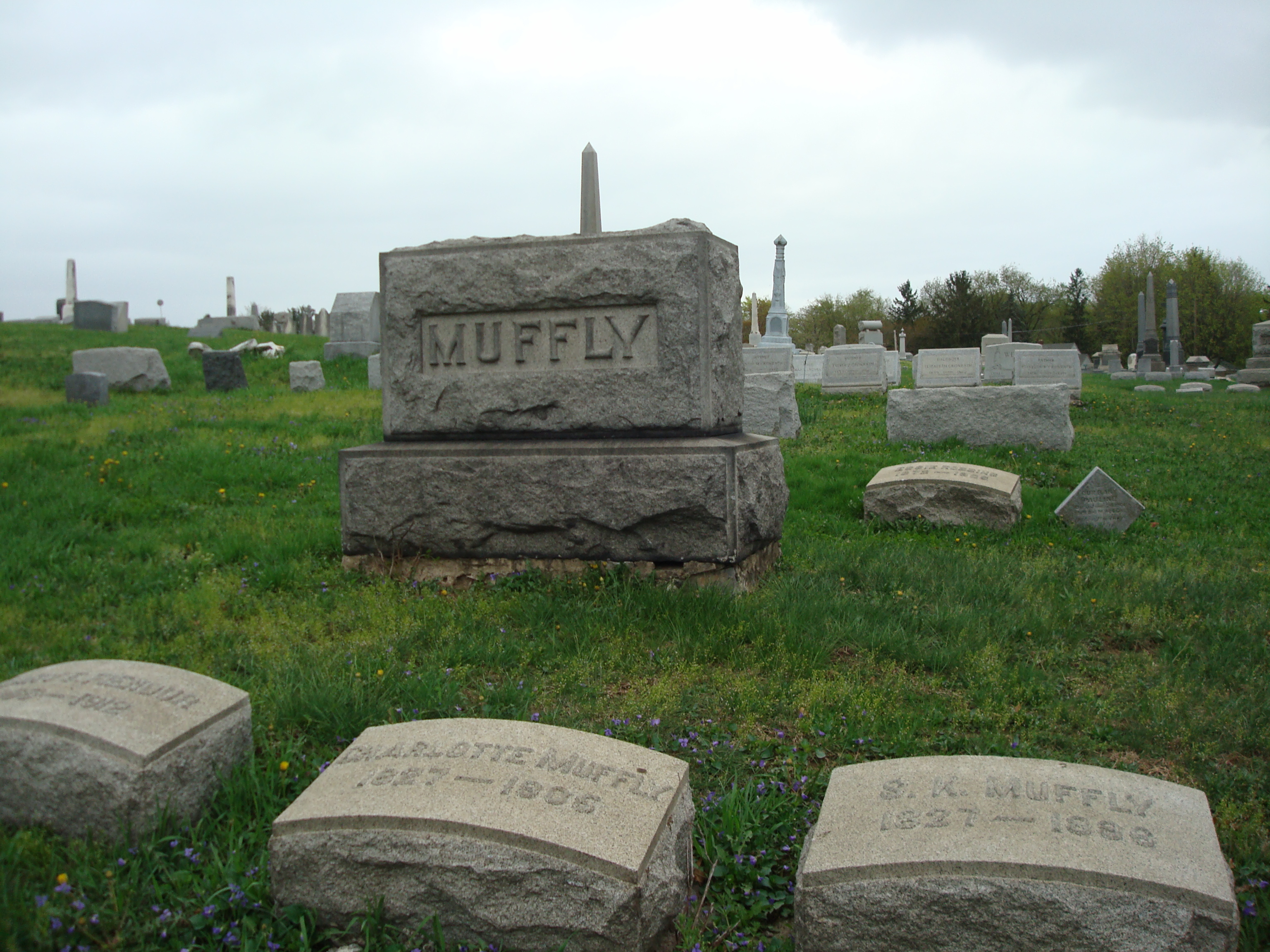
Mary's tombstone is on the left. Her mother's is in the middle and her father's is on the right.

For more about the genealogy of the Muffly family, click here.

The Sisters Had a Fight

16-year-old Helena Muffly wrote exactly 100 years ago today: 

Monday, November 26, 1911:Had exams today. Wonder what some of my marks are. Rufus and I had a squabble tonight over such a trifle. She pummeled me so hard on the head that I had a headache for a while. I guess school marms can lay it on sometimes.

Ruth Muffly

Her middle-aged granddaughter’s comments 100 years later:

Whew . . . it sounds the two sisters had a terrible fight. In the diary Grandma sometimes–—especially when she was annoyed or angry– referred to her sister Ruth as Rufus.

In November 1911, Grandma was 16 years old and Ruth as 19. Ruth was a teacher (i.e., school marm) at one of the one-room schools near McEwensville. What could have possibly angered them so much?

I’m at Least 0.4% Swiss!!

Wednesday, April 19, 1911: Missing entry (Diary resumes on April 28.)

Her middle-aged granddaughter’s comments 100 years later:

I believe that there are only two spots during the entire four-year diary where  Grandma failed to write a daily entry—one place was in January 1911 near the very beginning of the diary; the other spot is here.

I will use these days to provide additional background information about Grandma. Today, I’d like to share some genealogical information about the Muffly family.

It looks like the Muffly family originally came over from Switzerland. I recently contacted Rootsweb—Northumberland County to try to find out more about the Muffly family. Bill Dietrich responded. He had traced the Muffly paternal line back to Bern Switzerland. Bill-thank you!

I organized the information by generation.

My cousin Stu Kurtz provided some additional details based upon census data  that  he found on the Church of Latter Day Saints’ FamilySearch site.

The Muffly Family in the United States

Generation 1

Nickolas Muffly (1707-1786). Immigrated from Bern Switzerland to Northampton County Pennsylvania; later moved to Centre County, Pennsylvania and eventually died in Centre County (At that time Centre County was part of Northumberland County.)

Generation 2

Peter Muffly (1739-1816) and Catherine Regina Wannemacher (1744-1831). Peter was born in Northampton County, Pennsylvania; later moved to Centre County, Pennsylvania (which was part of Northumberland County)

Generation 3

Heinrick Muffly (February 15, 1772 – February 4, 1853) and Julia Marie Walker (1774-1861).  Heinrick moved from Centre County, Pennsylvania to Montour County Pennsylvania (which was also part of Northumberland County at that time).

Generation 4

Samual Muffly (April 21, 1797-July 1, 1873) and Anna Maria Kleppinger (1795-1868). Samual lived in Montour County Pennsylvania.

Children:

Samuel K. (December 14, 1827-1896)

Catherine, born circa 1830 (20 years old in 1850 census)

Maria, born circa 1832 (18 years old in 1850 census)

George, born circa 1835 (15 years old in 1850 census)

Stephen, born circa 1837 (13 years old in 1850 census)

James W. (1842-1860)

Generation 5

Samuel K. Muffly (December 14, 1827-1896) and Charlette Treon (1827-1905). Samuel K. was born and died in Montour County, Pennsylvania.

Children:

Anna Maria (1852- )

Mentures (1854- )

Mary Eve (1855- 1912)

Albert James (1857-1949)

Oscar L (1860-1919)

Emma (1862- )

Elizabeth (1864- )

Samuel (1865- )

Asher (1869- )

Essie (1872- )

George (1874- )

Note: Stu looked at census data and found many of the names in this generation in  the 1870 census—but he did not find Mentures. Mentures apparently died young.  Stu says that according to an online dictionary menture means “intellect” or “mind” in Latin. In the 1800s Latin was commonly taught in schools, so maybe a version of  the word was used as a name.

Generation 6

Albert James Muffly (November 23, 1857- 1949) and Phoebe Jane Derr (1862-1941). Albert was born in Montour County; As an adult lived in Northumberland County.

Children: Bessie F. (1888-1981),

Ruth E. (1892-1977)

Helen(a) Mae (March 21, 1895-November 26, 1980)

James A. (August 30, 1905 – July 14, 1988)

Please note that this list may be revised. We’re still double checking some of the information—but I wanted to share what I had.

My son asked what proportion of my ancestry was Swiss. Well, nine generations ago I had 256 great-great-great-great-great-great grandparents. At least 1 of them came from Switzerland, so I’m at least 1 / 256th Swiss—in other words, I’m at least 0.4% Swiss.

Making Sense of the Diary

January 11, 1911: Missing entry (Diary resumes on January 12)

Her middle-aged granddaughter’s comments 100 years later: 

The diary entries resume tomorrow. Yeah!!

Since a diary author doesn’t really write the diary for others to read many years later, sometimes it is difficult to understand the context of diary entries.

Also, Grandma was about 40 years younger than me when she began this diary. How might the age differences frame how I interpret what she wrote? Grandma’s diary entries and my reflections and comments are not parallel.  Grandma was a teen jotting down her thoughts—I’m a mother with adult children reflecting on what a 15-year-old said a hundred years previously.   

To help me make sense of the diary I have several questions that I hope to answer as I work my way through the entries—one day at a time.

  • Who are the main people in the diary (“the characters”) and what are their stories? 
  • How does the diary author portray events, relationships, and herself?
  •  Does anything in the diary help me better understand myself? 
  • Can I learn anything about the slower lifestyle of 100 years ago that is still relevant today?