17-year-old Helena Muffly wrote exactly 100 years ago today:
Wednesday, July 31, 1912:Made a trip to Watsontown this afternoon. Had to get some things for tomorrow. Hope it doesn’t rain anyway.
Her middle-aged granddaughter’s comments 100 years later:
The Muffly farm was located mid-way between McEwensville and Watsontown. Grandma would have had to walk about one and a half miles to get to either town.
McEwensville was (and still is) the smaller of the two towns, but the diary has focused more on McEwensville because it was where Grandma went to school and church.
Today, I’d like to share some recent pictures that provide a sense of what Grandma would have seen on a trip to Watsontown.
(Unfortunately the photos weren’t all taken during the same season. Three are spring photos and one is a summer photo, but hopefully you’ll still be able to get a sense of what it was like to walk to Watsontown.)
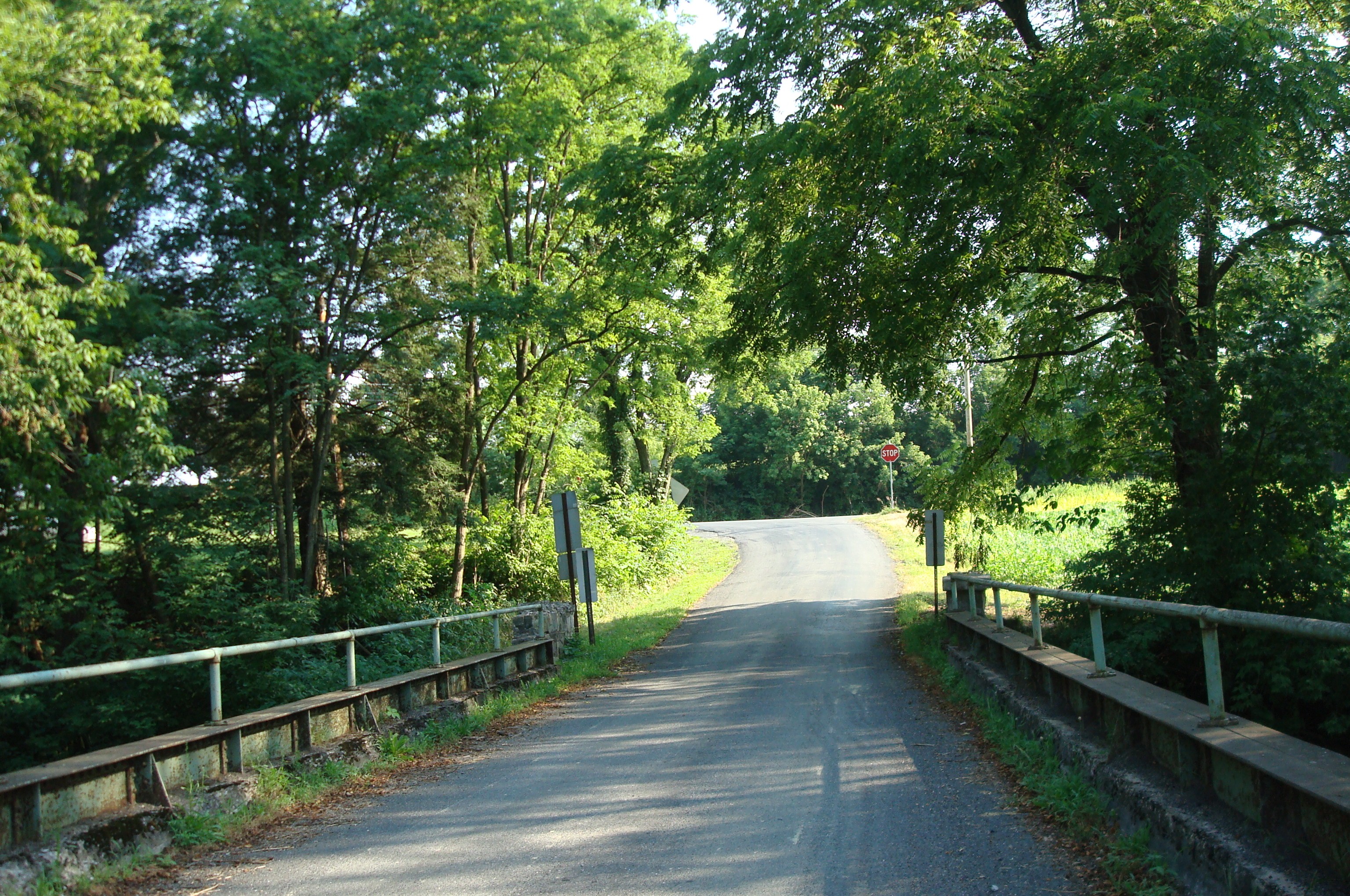
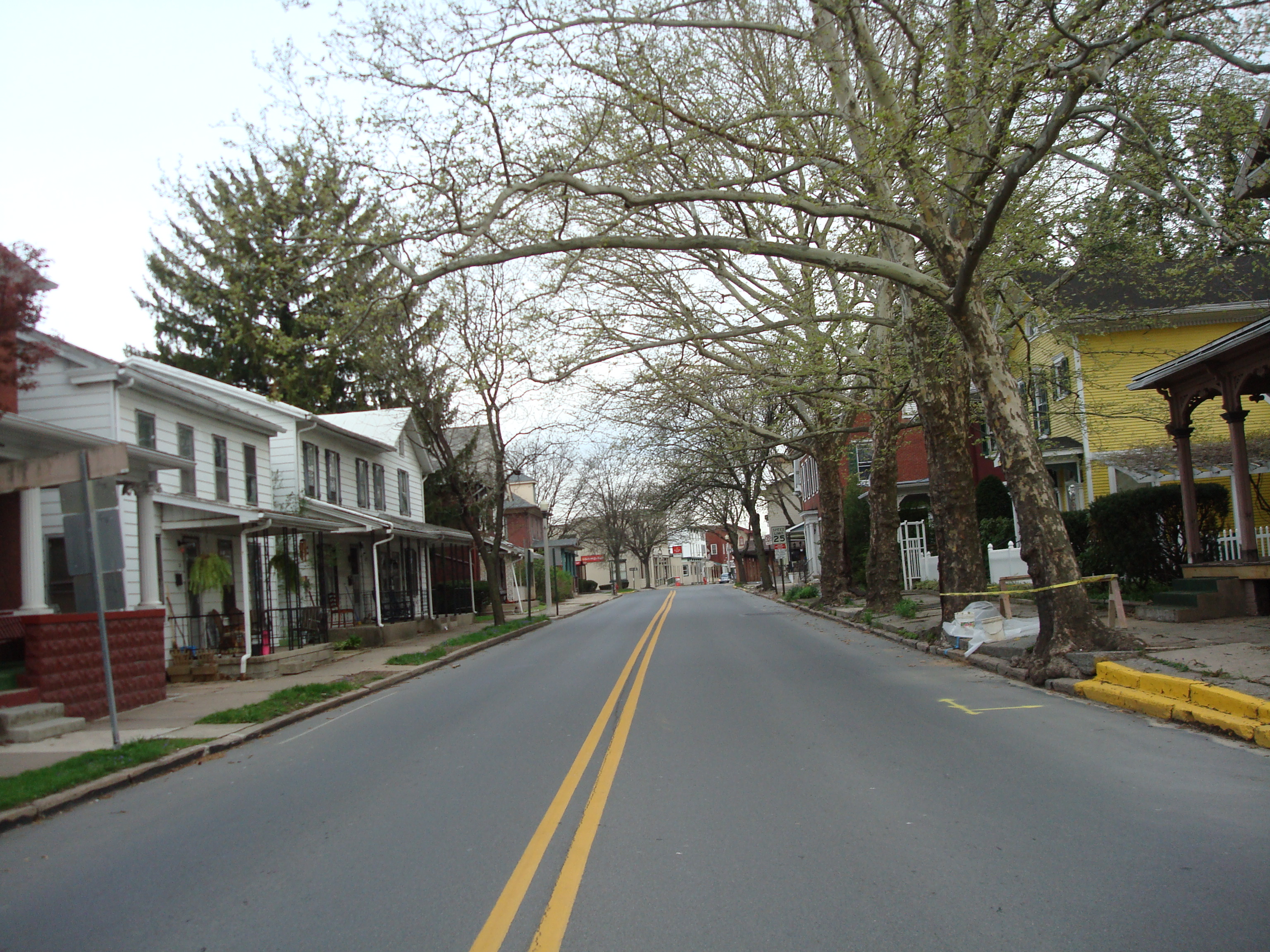
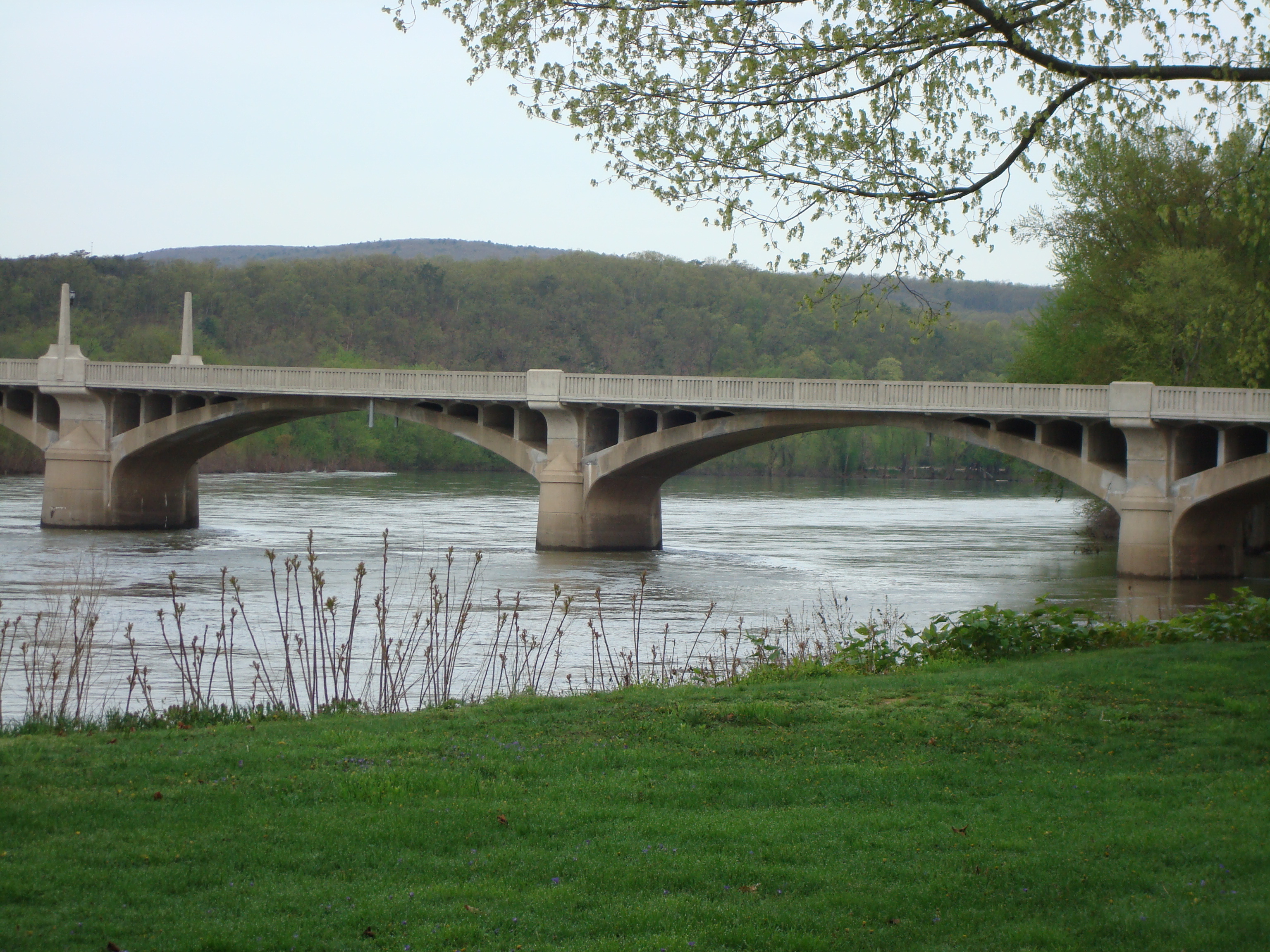
Grandma would have walked up the road that went past her house. At the intersection she would have turned right to go to Watsontown (instead of left which would have taken her to McEwensville).The view Grandma would have had as she walked into Watsontown. (Well, the view isn’t exactly the same because 100 years ago there would have been a bustling railroad station where the vacant lot is today.)The homes that Grandma would have walked by as she entered Watsontown.A hundred years ago today Grandma probably shopped in some of these buildings in downtown Watsontown.After Grandma finished shopping maybe she took a walk by the Susquehanna River. (There wouldn’t have been a bridge across the river a hundred years ago.)
17-year-old Helena Muffly wrote exactly 100 years ago today:
Tuesday, July 30, 1912:Nothing doing at all.
Her middle-aged granddaughter’s comments 100 years later:
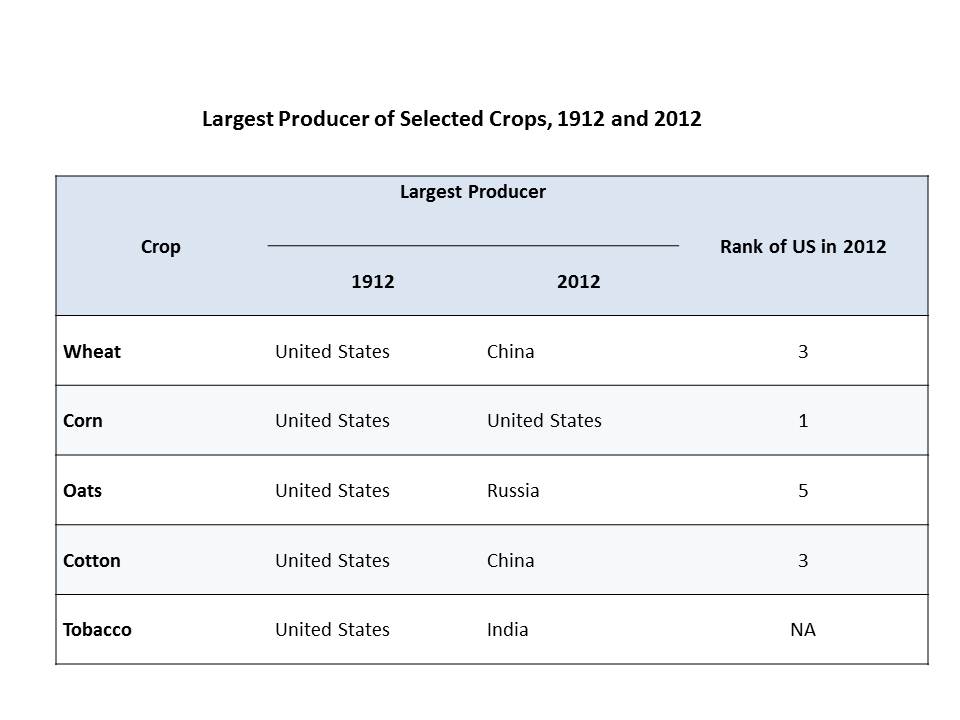
Since Grandma didn’t write much a hundred years ago today, I’d like to share some interesting statistics about world crop production in 1912 and 2012.
According to the July 30, 1912 issue of the New York Times:
We Lead in Crops
The Bureau of Statistics of the Department of Agriculture concluded today a resume of the production of staple crops throughout the world which presents the latest information in such line of inquiry.
It shows that the United States stands first in the production of corn, wheat, oats, cotton, tobacco, and hops. The relative rank of the United States in the world’s exports is first in wheat, flour, cotton, cottonseed oil, tobacco, oilcake and oilcake meal, rosin, and turpentine.
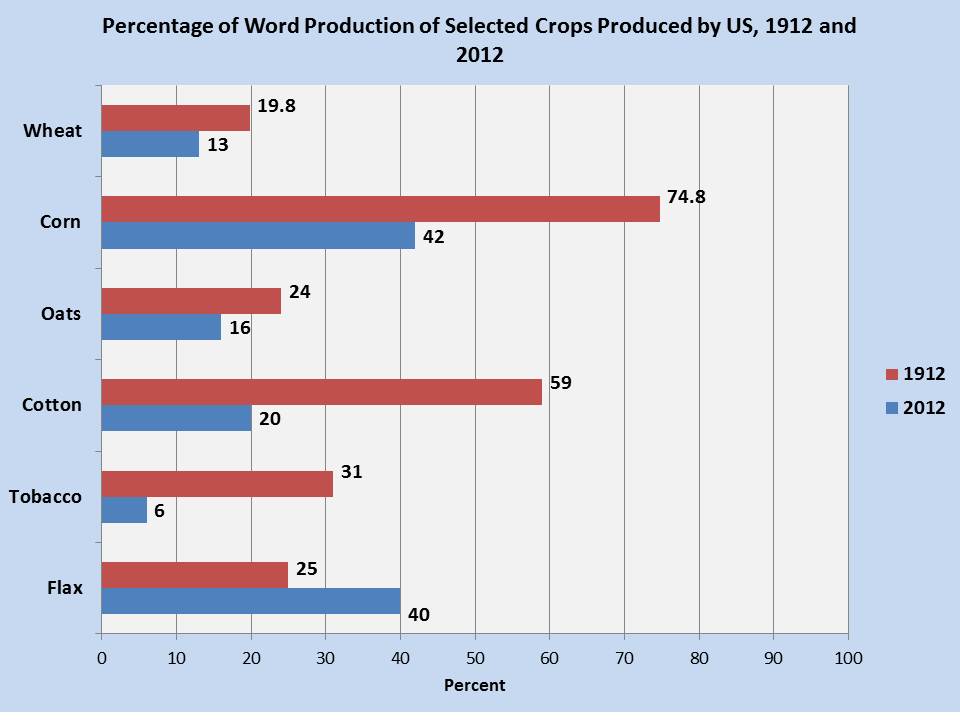
The United States produces 19.8 per cent of the world’s wheat crop, 74.8 per cent of the world’s corn crop, 24 per cent of the oat crop of the world, 59 per cent of its cotton, 31 per cent of its tobacco, and 25 per cent of its flaxseed.
Click on figure to enlarge.
The US produces a lower percentage of the world’s total production of wheat, corn, oats, cotton, and tobacco now than in 1912—though of course the actual amount produced would be higher. (A previous post provides data about actual crop yields a hundred years ago and now.)
Click on table to enlarge.
In both 1912 and 2012, the US was the largest producer in the world of corn.
If you care about the details about how I compiled the data in the figures–
If 2012 data wasn’t available for a crop, I used data from the most recent year available and assumed that it was the same in 2012.
If you’d like to dig deeper into crop current crop production data here are some useful resources:
17-year-old Helena Muffly wrote exactly 100 years ago today:
Monday, July 29, 1912:There is really nothing worth writing for today.
Her middle-aged granddaughter’s comments 100 years later:
Since Grandma didn’t have anything worth writing a hundred years ago today, I’ll share a fun tidbit about watermelons that I found in the June 1911 issue of Pure Food Magazine.
Watermelons furnish a delicious and most healthful luxury for the hot season. They keep the system cool, and help to ward off fever. That is why nature has supplied them so bountifully to us during the warm season. The name “watermelon” is most appropriate for it is nearly all water—91.9 percent. Hence, it is also an excellent thirst quencher. Its other nutriments add wonderfully to its healthfulness. . . The water you get in the watermelon ripened on the vine contains no impurities.
I’m always learning new things from doing this blog. Today I learned that when people worried about water quality a hundred years ago, that one alternative to drinking the water was to eat watermelon.
Next time I’m somewhere with questionable water I’ll just have to hope that watermelons are available.
17-year-old Helena Muffly wrote exactly 100 years ago today:
Sunday, July 28, 1912: Pa and Ma went away to spend the day. Went to Sunday School this afternoon. Had company this afternoon.
Recent picture of the house and yard where Grandma lived when she wrote the diary.
Her middle-aged granddaughter’s comments 100 years later:
Where did Grandma’s parents go? Her father’s sister Mary’s funeral was on July 20. Mary had lived with two other brothers. Maybe Grandma’s parents went to the brothers’ home in Ottawa (Pennsylvania). Families often gather soon after a funeral to write thank you notes, sort things and reminisce.
Since their parents were gone, I suppose that Grandma and her sister Ruth invited friends over for a fun afternoon.
17-year-old Helena Muffly wrote exactly 100 years ago today:
Saturday, July 27, 1912:Ruth and I went to a festival this evening up at McEwensville. I didn’t have a very good time, and Ruth said she didn’t either.
Recent photo of the McEwensville Community Hall and picnic grove. The festival probably was held in this small park.
Her middle-aged granddaughter’s comments 100 years later:
I wonder why neither Grandma nor her sister Ruth had a good time. Weren’t their friends there? . . . Did the cute guys ignore them . . .
When I was a child there was an old-fashioned carnival at McEwensville each summer.. I imagine it being similar to the festival a hundred years ago. .
There was lots of great food– barbequed chicken, chicken corn soup, cakes, pies. . .
There’s no longer a festival or carnival in McEwensville, but the sign is still stored in the rafters of the picnic shelter.
And, music, good times with friends . . .
There was a dunk tank. They were always looking for kids willing to be dunked. Sometimes my cousin sat in the dunking chair. I never was brave enough to do it.
17-year-old Helena Muffly wrote exactly 100 years ago today:
Friday, July 26, 1912:Just a month from today and study hours will be resumed. How glad I will be when they arrive. Carrie came over this afternoon and evening.
Her middle-aged granddaughter’s comments 100 years later:
Just as Grandma felt a hundred years ago, I sense that fall will be here soon. The days are getting shorter . . . and, as my father says, “The wind is blowing over the wheat stubble.”
Carrie refers to Grandma’s friend Carrie Stout.
17-year-old Helena Muffly wrote exactly 100 years ago today:
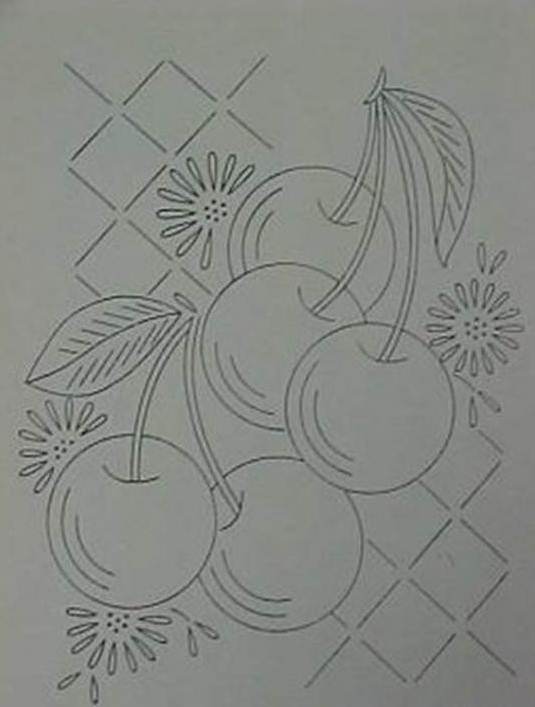
Thursday, July 25, 1912:Spent nearly all afternoon in getting an embroidery pattern reversed so as to have the whole design. It’s finished now and stamped on the material.
For several evenings I’ve seen a balloon go up, but tonight I saw only the gas.
Her middle-aged granddaughter’s comments 100 years later:
Help!! I don’t understand this diary entry—and am hoping that some of you can help me make sense of it.
Embroidery Pattern
How do you reverse an embroidery pattern and then stamp it on cloth? I can remember using an iron to transfer the patterns to cloth when I was child—but I have no idea how Grandma reversed the pattern and then stamped it.
Balloons
Was Grandma referring to a hot air balloon?
Hot air balloons were popular attractions at fairs and festivals in the early 20th century. Steve Shook has a wonderful picture of hot air balloons at a festival in Valparaiso, Indiana that was taken around 1910.
But what did she mean when she said that she only saw the gas?