Capacity (Volume) Word Problems

17-year-old Helena Muffly wrote exactly 100 years ago today: 

Thursday, January 16, 1913:  We had an examination in Geometry this morning. I think I will make a better mark than what I did the other time.

Source: Kimball's Commercial Arithmetic (1911)
Source: Kimball’s Commercial Arithmetic (1911)

Her middle-aged granddaughter’s comments 100 years later:

What was the Geometry test about—proofs? . . . angles? . . . shapes? . . . capacities?

The directions for doing capacity problems in a hundred-year-old textbook (I think it was called volume by the time I was in school. Is capacity the same thing as volume?) seem very different from what I remember doing when I was a student:

The method of finding the contents of any regular vessel in gallons, bushels, barrels, etc. is called gauging.

The capacity of tanks, cisterns, etc. is usually expressed in gallons or barrels. In every liquid gallon there are 231 cu. in.

To find the exact number of gallons in any vessel, divide the number of cubic inches in the vessel by 231.

To find the number of gallons in a cylindrical vessel, multiply the square of the diameter by the height, and this product by 5 7/8.

To find the approximate number of gallons in a cistern, multiply the number of cubic feet by 7 1/2 and from the product, subtract 1/400 of the product.

The capacity of bins, etc. is usually expressed in bushels. The standard bushel in the United States is a measure 8 inches deep, 18 1/2 inches in diameter, and contains 2150.42 cubic inches.  Hence, to find the number of bushels in any bin, divide the number of cubic inches in the bin by 2140.42.

Kimball’s Commercial Arithmetic (1911)

Got that?  Want to try some problems?

  1. Find the contents in gallons of a tank 4 ft. square and 5 ft. deep.

  2. The water in a cistern 8 ft. square is 2 ft. deep, how many gallons does it contain?

  3. A bin 8 ft. by 4 ft. by (?) contains 90 bushels of grain. Find the missing dimension.

  4. How many tons of water will fill a tank 11 ft. 8 in. by 3 ft. 6 in. by 2 ft. 3 in., if the weight of a cubic foot of water is 1,000 ounces?

The Food Value of Peanuts

17-year-old Helena Muffly wrote exactly 100 years ago today: 

Saturday, January 15, 1913: Don’t know hardly what to write today. 

Source: Good Housekeeping (December, 1912)

Her middle-aged granddaughter’s comments 100 years later:

Since Grandma didn’t write much a hundred years ago today, I’m going to go off on a tangent.

Sometimes I read a magazine article from a hundred years ago—and I’m absolutely floored by how it could have been written in 2013 instead of so long ago

For example, I recently came across an article in the December 1912 issue of Good Housekeeping titled “The Food Value of a Peanut.”  <<Yawn>>.

Then I read,

As a result of the growing popularity of vegetarianism, the demand for nuts is increasing.

Really? . . .  There were vegetarians a hundred years ago?

And, I continued reading:

Another reason for the increasing demand for nuts, and more especially for peanuts, is their relative cheapness as sources of nourishment and energy. Even compared with such staple foods as bread and beans, peanuts supply protein and energy very cheaply.

Sounds about like today. Both then and now people worry about the high cost of food–though I don’t think that peanuts are particularly inexpensive now.

Hemophiliac Czarevitch Alexei Sick Again

17-year-old Helena Muffly wrote exactly 100 years ago today: 

Tuesday, January 14, 1913:  Haven’t spent much time on my studies this evening. At present I am waiting for Ruth to get through with a paper so I can read it.

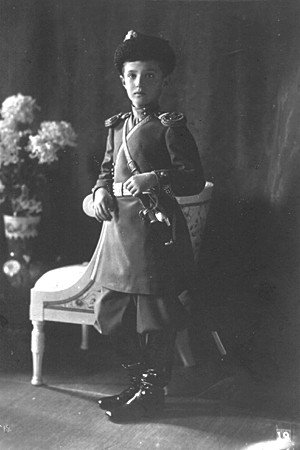
Alexei Nikolaevich, Heir to the Russain Throne (Source: Wikipedia)
Alexei Nikolaevich, Heir to the Russian Throne (Source: Wikipedia)

Her middle-aged granddaughter’s comments 100 years later:

What was in the headlines a hundred years ago today? I’m not sure what was in the newspaper that Grandma and her sister Ruth were reading, but I was surprised to discover that the New York Times had an article about the son of Russian Tsar Nicholas II.

Whew, a hundred years ago Russia was still ruled by a Tsar! Grandma was writing before the beginning of the Soviet Union . . . and before the Russian Revolution.

CZAREVITCH IS ILL AGAIN

Heir to the Throne is Again Confined to His Bed

London, Tuesday, Jan. 14—The correspondent in St. Petersburg  telegraphs:

After being present at the Christmas festivities of the garrison at the palace of Tsarskoe Selo, the Czarevitch, who was mysteriously ill in the autumn is again confined to his bed.

The Dowager Empress, who has been suffering from lumbago, is obliged to keep to her bed.

Owing to the unfavorable impression caused by the cancellation of the New Year’s reception, which was to have been held at the Winter Palace today, the Czar with receive the Diplomatic Corps at the palace of Tsarskoe Selo.

New York Times (January 14, 1913)

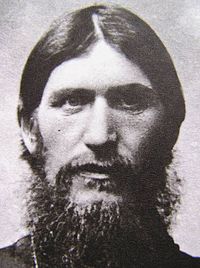
Alexei, the oldest son of the Tsar had hemophilia –and that’s probably why he was ill a hundred years ago today. His mother Alexandra believed that a monk named Rasputin was the only person who knew how to cure him. As a result Rasputin became extremely powerful. This was seen as scandalous by many in Russia, and helped bring about the Russian Revolution and the end of the Tsars.

Rasputin (Source: Wikipedia)

What’s the Difference Between a Recitation and a Dialogue?

17-year-old Helena Muffly wrote exactly 100 years ago today: 

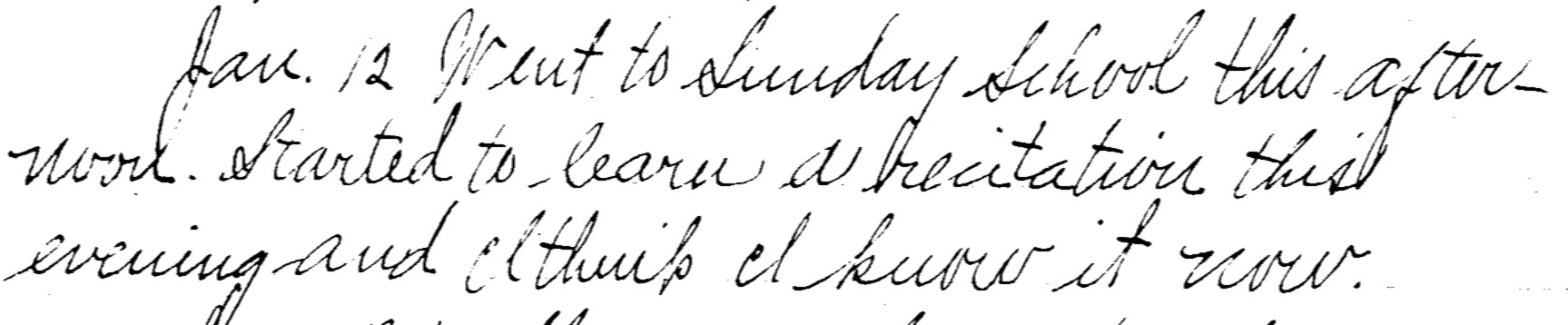
Sunday, January 11, 1913: Went to Sunday School this afternoon. Started to learn a recitation this evening and I think I know it now.

diary.1.12.13
Click on diary entry to enlarge.

Her middle-aged granddaughter’s comments 100 years later:

When I read this diary entry, I realized that I didn’t know the difference between dialogue and recitation.

Few words mean exactly the same thing.  Most synonyms have nuanced differences in meaning.

Previous diary entries mentioned pieces Grandma memorized for Literary Society presentations at her high school. For example, on January 6, she wrote that she copied off part of a dialogue to memorize. My post that day included a poem called The Old Clock on the Stairs by Longfellow as an example of a dialogue.

I now realize that the poem may not have been an example of a dialogue, but rather an example of a recitation.  A dialogue requires more than one presenter.

Here are the definitions for recitation and dialogue in the Free Dictionary:

Recitation—1(a). The act of reciting memorized materials in a public performance. (b) The material so presented. 2. (a) Oral delivery of prepared lessons by a pupil. (b) The class period within which this delivery occurs.

Dialogue—1. A conversation between two or more people. 2(a) Conversation between characters in a drama or narrative. (b) The lines or passages in a scrip that are intended to be spoken. 3. A literary work written in the form of a conversation. 4. Music A composition or passage for two or more parts, suggestive of conversational interplay. 5. An exchange of ideas or opinions.

Based on these definitions I now think a dialogue is a type of recitation—but a recitation is not always a dialogue.

1913 Silent Film: The Pickwick Papers

17-year-old Helena Muffly wrote exactly 100 years ago today: 

Saturday, January 11, 1913:  Went to Watsontown this afternoon. Went into the movies.

DSC06684.crop
Recent photo of the vacant Watson Theater in Watsontown

Her middle-aged granddaughter’s comments 100 years later:

What a fun way to spend a winter afternoon! The films would have been silent ones—probably with live melodramatic piano music.

Maybe she watched The Pickwick Papers. A short silent version of this movie was first screened in 1913. Click here to see it on YouTube.

This is the first time that Grandma mentioned going to the movies in Watsontown.—though she previously mentioned attending movies in somewhat more distant Milton. Maybe the theater in Watsontown had just opened.

A movie theater in Watsontown called the Watson Theater closed a few years ago. I thought it might have been the theater that Grandma went to, so I googled it. I discovered that the theater that Grandma went to was probably called the Lyceum Theatre and that it burned down in 1934. According to Cinema Treasures:

Opened on May 30, 1940, the Watson Theatre was built to replace the Lyceum Theatre, which burned down 6 years before.

You might also enjoy a previous post about another silent film:

1912 Silent Film: The New York Hat

Old Tongue Twisters

17-year-old Helena Muffly wrote exactly 100 years ago today: 

Friday, January 10, 1913:  Our Literary Society met this afternoon. We got that old dialogue off, but some of us made mistakes.

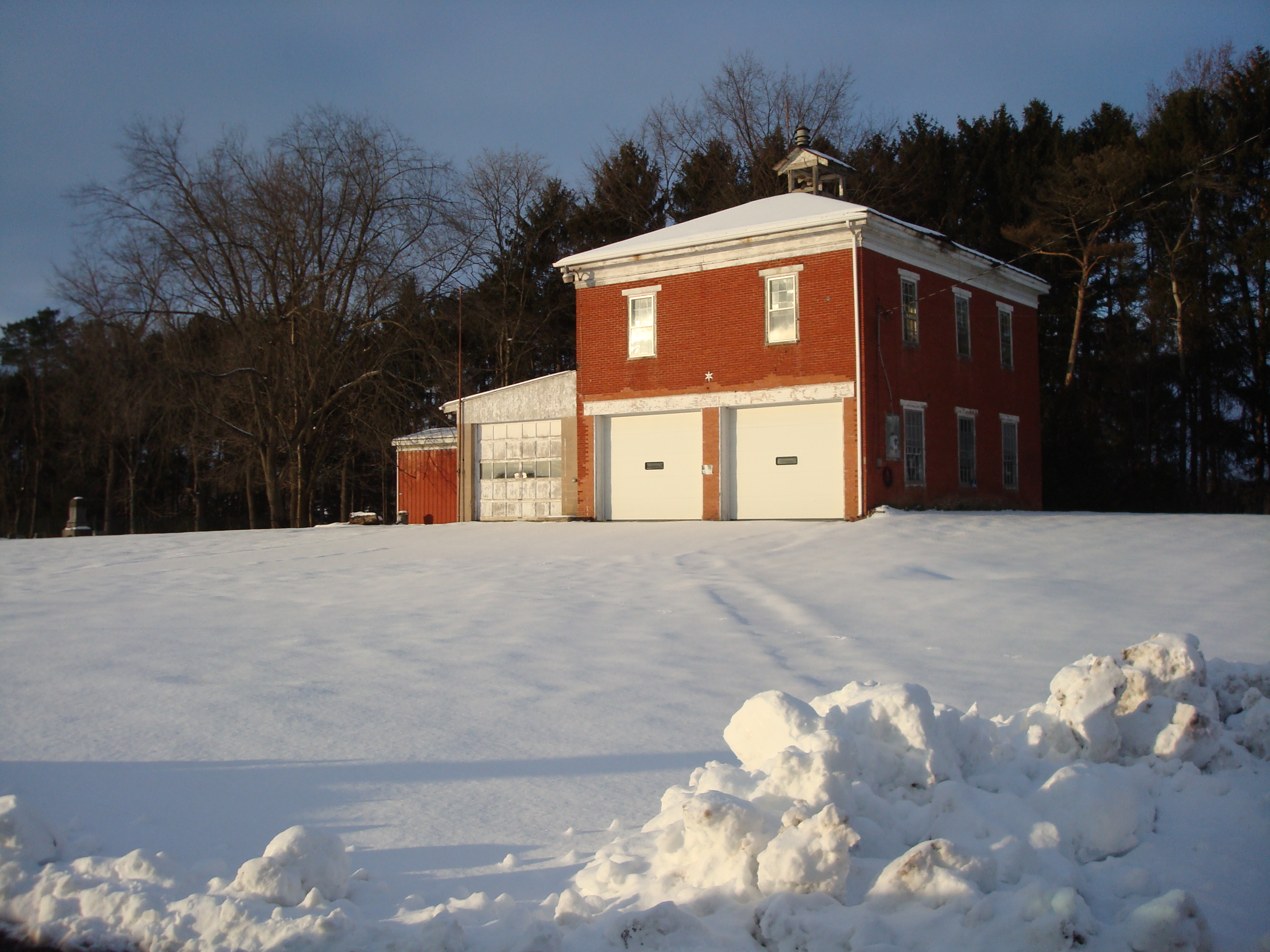
DSC07010Recent photo of building that once housed the McEwensville Schools. In 1913, the primary school was on the first floor and the high school was on the second floor.

Her middle-aged granddaughter’s comments 100 years later:

Grandma was very active in the Literary Society at McEwensville High School. Two days prior to this entry she wrote that she had memorized her part of the dialogue.

What types of mistakes did they make?  Maybe Grandma (or others) forgot some of the lines.. . . or maybe some words weren’t pronounced clearly.

A very old book called Osgood’s American Sixth Reader gives some sentences that are difficult to articulate for students to practice:

1. The cat ran up the ladder with a lump of raw liver in her mouth.

2, Summer showers and soft sunshine, shed sweet influences on spreading shrubs and shooting seeds.

3. Henry Hignham has hung his harp on the hook where hitherto he hung his hope.

4. Whelply Whewell White was a whimsical, whining, whispering, whittling whistler.

5. Round the rough and rugged rocks the ragged rascals rudely ran.

These sentences remind me of when I was a child and used to try to say, “Peter Piper picked a peck of pickled peppers” five times as fast as I could without making a mistake. . .

Visited Friends

17-year-old Helena Muffly wrote exactly 100 years ago today: 

Thursday, January 9, 1913: Ruth and I went up to Oakes’ this evening. Didn’t get my lessons out any too well for the morrow.

moonlight
Source: Wikipedia

Her middle-aged granddaughter’s comments 100 years later:

Grandma’s New Year’s resolution to study harder was apparently long forgotten .  .  .

I’m surprised that Grandma and her sister Ruth ventured out on a cold, dark (or maybe moonlit) winter evening to visit friends.

The Oakes lived on a nearby farm. Their daughter Rachel was a friend of Grandma and her sister Ruth. The Oakes also had several sons who were about the same age as the Muffly girls. In 1911, Ruth dated Jim Oakes—but that relationship seems to have ended about a year and a half prior to this diary entry