Old-fashioned Strawberry Tapioca Recipe

19-year-old Helena Muffly wrote exactly 100 years ago today: 

Saturday, June 13, 1914:  This is Saturday. Not much doing.
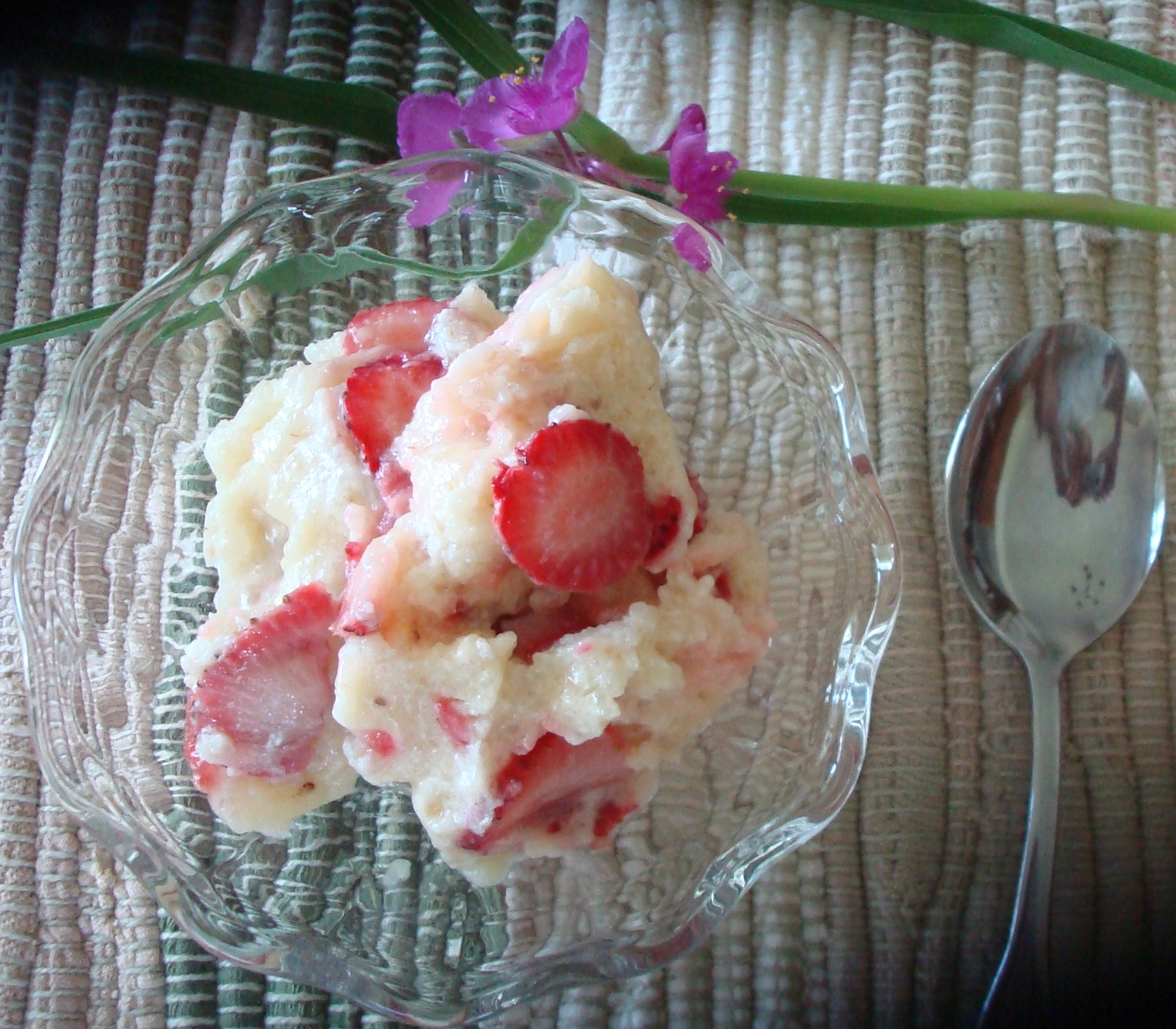
Strawberry Tapioca

Her middle-aged granddaughter’s comments 100 years later:

Since Grandma didn’t write much a hundred years ago today, I’ll share an old seasonal recipe that I really like. Strawberry Tapioca combines the classic taste of tapioca pudding with the wonderful taste and texture of fresh strawberries.

Strawberry Tapioca

1/2 cup small pearl tapioca

2 cups water

2 1/2 cups milk

1/4 teaspoon salt

1/2 cup sugar

2 eggs, separated

1 teaspoon vanilla

2 cups thinly sliced strawberries

Soak tapioca in room temperature water overnight. Drain.

Heat milk (preferably in double boiler) until warm, add drained tapioca and milk. Cover, turn heat to very low and cook for one hour. Stir occasionally. Watch to make sure that the mixture doesn’t boil. (It will boil over very easily—and also has a tendency to burn on the pan bottom if care is not used).

Beat egg yolks and sugar together. Add a little of the hot mixture to the egg mixture and blend thoroughly. Then add the egg mixture to the hot milk mixture, stirring constantly. Reheat over medium heat and cook while stirring until tapioca mixture is very thick, about 15 minutes.

Beat egg whites until stiff. Fold egg whites into hot tapioca mixture. Stir in vanilla, and then gently stir the sliced strawberries into the hot tapioca. Chill and then serve.

Makes 7 – 8 servings

Fried Pears Recipe

18-year-old Helena Muffly wrote exactly 100 years ago today: 

Friday, October 10, 1913: About the same as other days.

Fried Pears

Her middle-aged granddaughter’s comments 100 years later:

Since Grandma didn’t write much a hundred years ago today, I’ll share a recipe for Fried Pears that I found in the August, 1913 issue of Farm Journal.

Fried pears—Fried pears are delicious. Prepare in the following manner: Remove peel, seeds and core. Slice and fry to a delicate brown in drippings or melted butter. Arrange upon a dish and sprinkle powdered sugar on each piece.

I fried the pears in melted butter. At first I used a medium temperature,  but then turned it up to medium high to brown the pears. This was hotter than what I normally use when frying with butter—but the pears won’t brown until I turned the heat up.

I used a spatula to turn the pears—and probably cooked them for about 3-5 minutes on each side. Since I used such a high temperature, I watched the pears like a hawk—because I wanted them to brown but not burn.

The powdered (confectioner’s) sugar sweetened the Fried Pears slightly—but did not garnish them for very long. The sugar dissolved in less than a minute.

The Fried Pears were yummy—though very similar to what I think hot canned pears would taste like. If I made this recipe again I would skip the sugar.

Stewed Apples

17-year-old Helena Muffly wrote exactly 100 years ago today: 

Tuesday, October 8, 1912:  Don’t have anything to write.

Her middle-aged granddaughter’s comments 100 years later:

Since Grandma didn’t have much to write a hundred years ago today, I’ll share an old recipe for stewed apples with you. There easy to make, and I make this recipe several times each fall.

Like many old recipes, it doesn’t have exact amounts for ingredients—but it always seems to turn out just fine.

Stewed Apples

Peel apples, remove cores, and cut into quarters. Place them in a saucepan with a very little water. Add sugar and cinnamon to taste. If desired, a few raisins can also be added. Bring to a boil and then reduce heat. Continue to simmer gently until the apples are soft (approximately 10-15 minutes). May be served either hot or cold.

Rhubarb Pudding Recipe

17-year-old Helena Muffly wrote exactly 100 years ago today: 

Thursday, April 25, 1912: I am beginning to worry about final exams. I’m afraid that I may get left in some of my studies. But I hope that it won’t happen that way.

Her middle-aged granddaughter’s comments 100 years later:

It sounds like Grandma was at the procrastination stage—she knew that she needed to study, but hadn’t gotten beyond worrying.

When I procrastinate, I think of other things that MUST be done—like cooking.

Here’s an old Rhubarb Pudding recipe that I found in the April 1912 issue of Good Housekeeping magazine.

Rhubarb Pudding

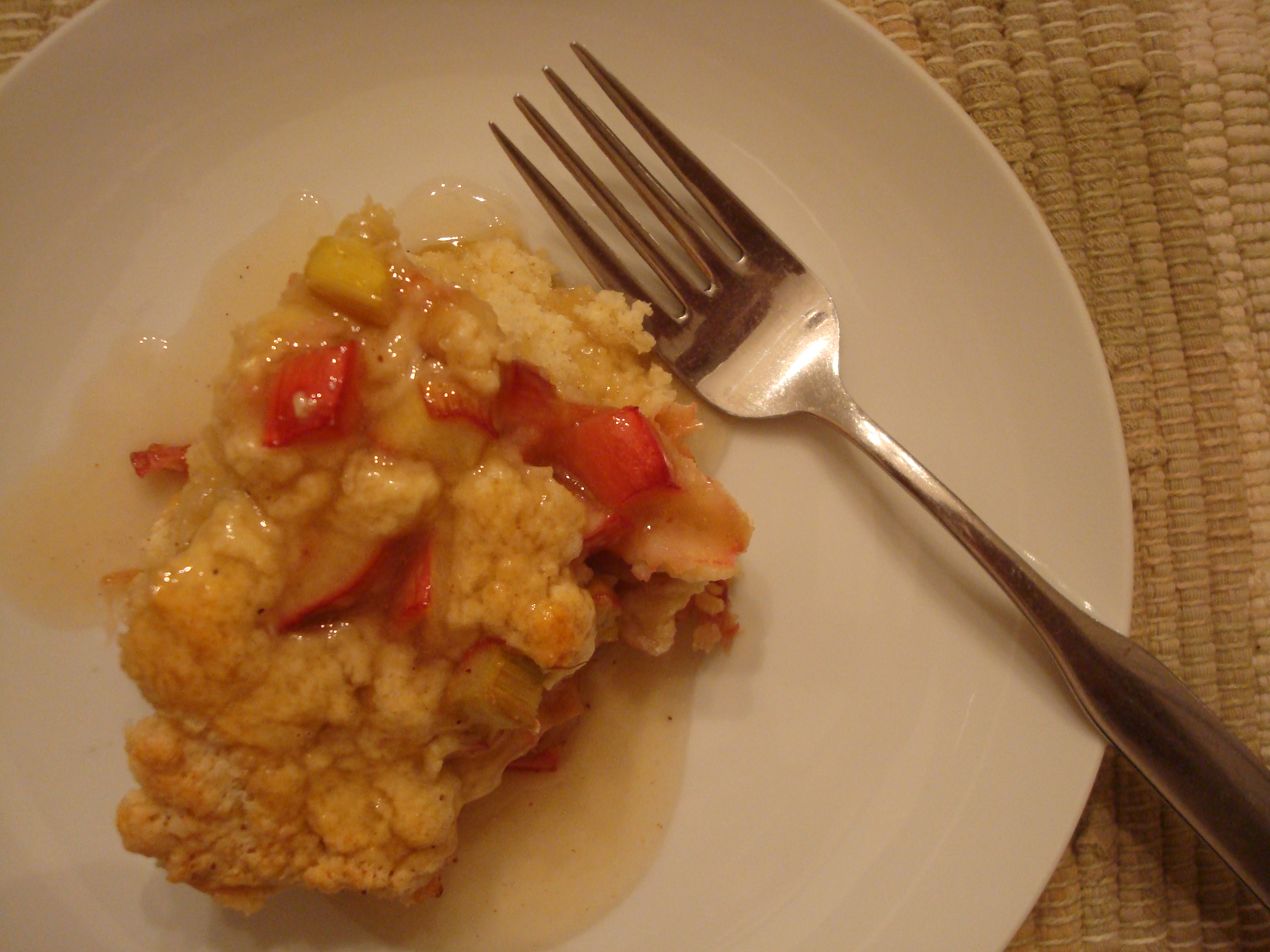
Sift together two cupfuls of flour, a pinch of salt, spices as desired, two teaspoonfuls of baking powder and half a cupful of sugar. Stir in one egg beaten with half a cupful of milk and two tablespoonfuls of butter; add two cupfuls of rhubarb, cut into small pieces (use the pink part with the skin left on), bake twenty minutes and serve with a sauce.

The only spice that I used was 1/2 teaspoon of nutmeg. The batter was extremely thick. I baked the Rhubarb Pudding in a 375 degree oven. It took about 40 minutes for the top to brown lightly. (Maybe I should have used a higher temperature.)

The Rhubarb Pudding was quite good. It was a pleasant mixture of sweet and tart tastes, and had the texture of shortcake.

I served the Rhubarb Pudding with Vanilla Sauce.

Vanilla Sauce

1/2 cup sugar

1 tablespoon cornstarch

dash salt

1 cup boiling water

2 tablespoons butter

1 teaspoon vanilla

dash nutmeg

Mix sugar, cornstarch, and salt in sauce pan. Add boiling water; and boil until thick and clear. Continue simmering over low heat, while stirring for 20 minutes. Stir in the butter, vanilla, and nutmeg. Can be refrigerated and reheated.

Rhubarb is one of my favorite Spring foods. Here are the links to past posts that included Rhubarb Recipes:

Stewed Rhubarb (Rhubarb Sauce)

Rhubarb Sponge Pie

Old-Fashioned Strawberry Shortcake

16-year-old Helena Muffly wrote exactly 100 years ago today: 

Monday, June 12, 1911: Started to pick strawberries this morning. Of course it will mean some early rising and loss of sleep, but just look at what I can earn.

Her middle-aged granddaughter’s comments 100 years later:

It sounds as if Grandma got paid for picking strawberries. I wonder if she worked for a neighbor who raised the strawberries, hired workers to pick them, and then sold them in town—or if her parents raised berries for sale (and paid their own children to harvest them).

Regardless of who owned the berry patch, I bet that the Muffly family enjoyed eating strawberries.

I don’t know how Grandma’s family served strawberries, but when I was a  child we ate shortcake muffins with strawberries and milk almost daily during June. I would guess that they also ate strawberry shortcake a hundred years ago.

We ate strawberry shortcake for supper—and it was part of the main meal (not a dessert). The  menu consisted of shortcake, and meat or fried potatoes.

It seems a little strange today—but back then on those hot June days we’d typically have a heavy meal for lunch (we called it dinner) and a relatively light meal with strawberry shortcake in the evening. In June on the farm we’d being baling hay—and there was lots of hard, hot labor required to get the hay baled and then stacked in the barn—so it seems even more amazing to me now that we ate a relatively light meal (that many today would consider a dessert) in the evening.

Here’s a traditional recipe for strawberry shortcake:

Strawberry Shortcake

1 1/4 cups flour

1 1/4 teaspoons baking powder

1/4   teaspoons salt

1/4 cup butter, softened

Scant 1/2 cup milk

Sliced strawberries

Additional milk (optional)

Preheat oven to 420 degrees. Stir the flour, baking powder, and salt together. Cut the butter into the flour mixture . Add milk and stir just enough to combine using a fork. Grease muffin pan and fill each about 3/4 full. Cook about 18-20 minutes or until lightly browned. Serve with strawberries and milk (optional).

servings: 6 muffins

Stewed Rhubarb (Rhubarb Sauce)

16-year-old Helena Muffly wrote exactly 100 years ago today: 

Wednesday, May 24, 1911: One of these days I’m going to do something of some importance. I’m getting rather tired of the same old duties, the same old ways, and the same old troubles.

Her middle-aged granddaughter’s comments 100 years later:

Whew, the same old duties, the same old ways, and the same old troubles. I wonder what Grandma was referring to. Sometimes I wish that she’d tell us more about what her daily duties were—and what she didn’t like about the “old ways”. But of course she couldn’t have known that we’d be reading her diary a hundred years later . . .

Since she didn’t tell us much about what happened, I’m going to try to guess what foods the family have might have been eating in late May.

They were probably enjoying fresh greens, radishes, and other spring vegetables from their garden. They probably were also eating rhubarb. It used to be considered one of the spring tonic foods (dandelion was another) that helped restore people’s energy and health after a long winter without fresh foods.

Stewed Rhubarb

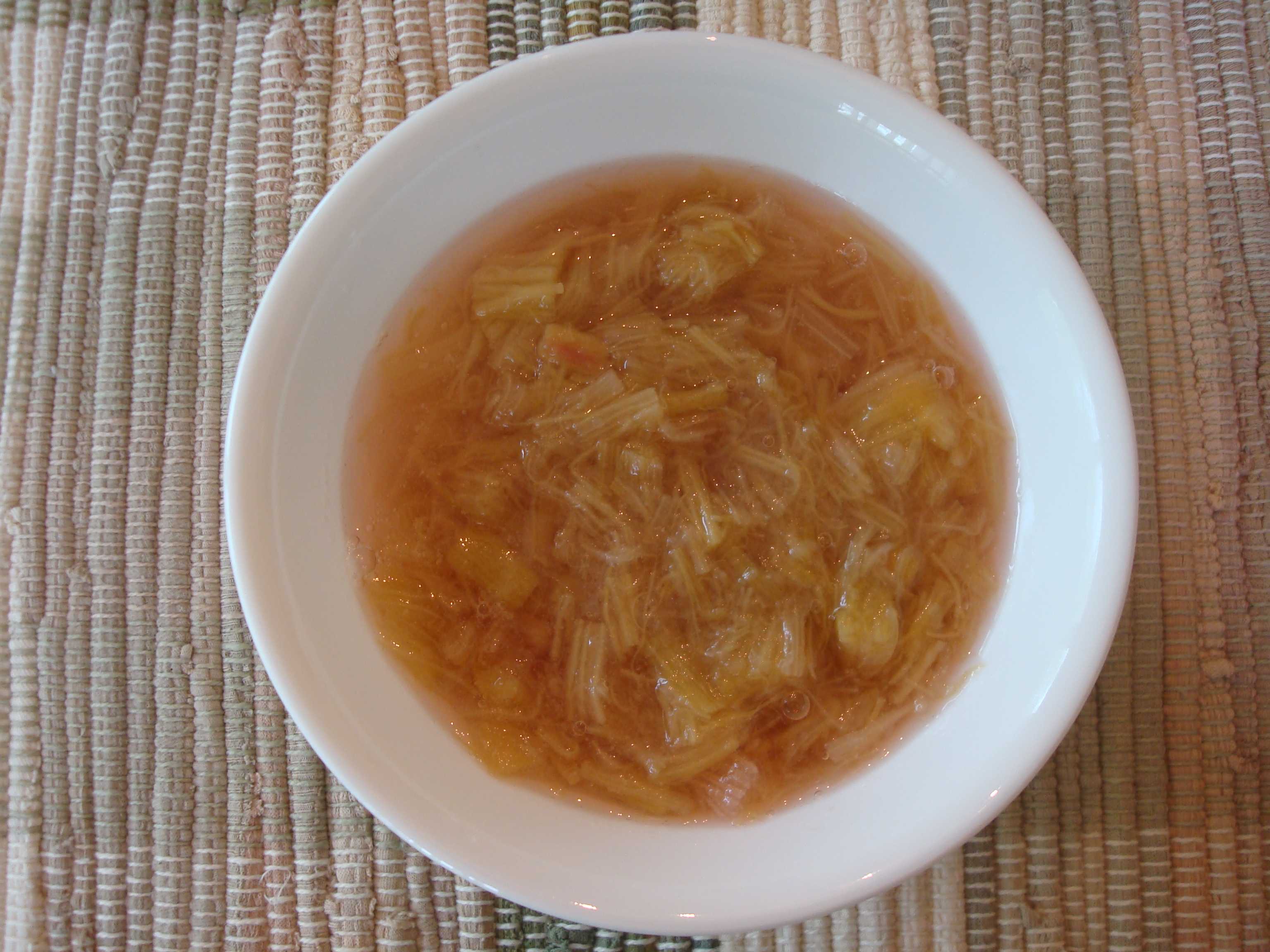
When I was a child we often ate Stewed Rhubarb (Rhubarb Sauce) in May. We ate it as a side dish during the main meal. (We ate it warm at the first meal; left-overs were eaten chilled). I don’ t have a recipe for Stewed Rhubarb, and I haven’t made it in years—but yesterday I successfully made it from memory and it tasted just as I remembered.  This is what I did:

Stewed Rhubarb (Rhubarb Sauce)

2 cups rhubarb (cut into 3/4 inch pieces)

1/3 cup sugar

1/4 cup water

1/2 teaspoon salt

Mix all of the ingredients together in a saucepan. Using medium heat, heat to boiling; reduce temperature and simmer until tender (about 5 minutes); stir occasionally. Remove from heat. Can be served either hot or chilled. 2-3 servings. Recipe can be easily doubled or tripled.

The amount of sugar can be adjusted to make the rhubarb tarter or sweeter.

My husband’s family also ate Stewed Rhubarb when he was a child—and he agrees that the recipe turned out perfectly. He took seconds—and we easily ate all of the rhubarb at one meal. (Next time I’ll make more). And, he suggested that we should have it again soon. It’s definitely an old-time food that we’ve enjoyed rediscovering.