Old-Fashioned Witches’ Layer Cake

Witches' Cake

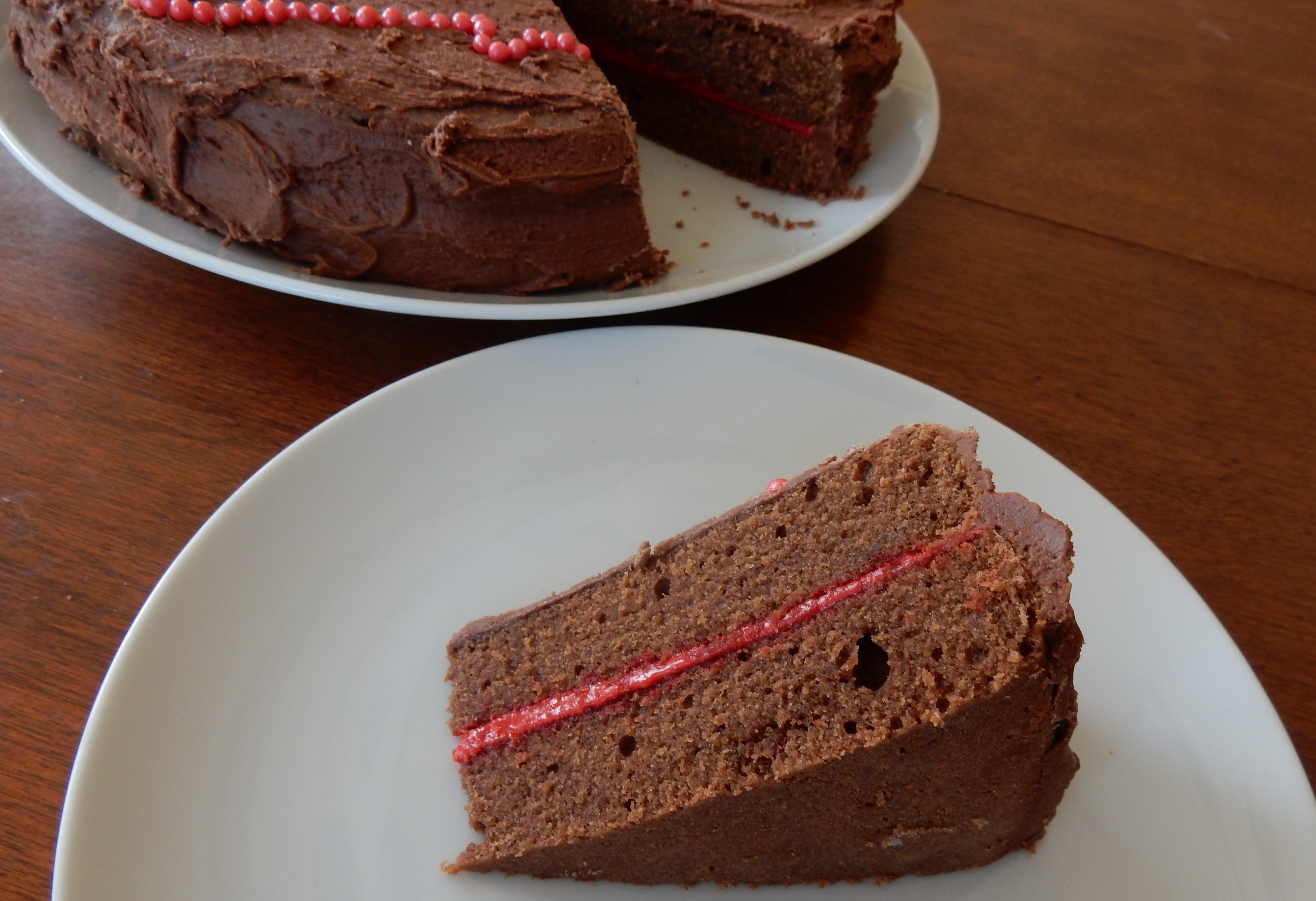
Bakers have been making spooky Halloween Cakes for at least a hundred years. The October, 1924 issue of American Cookery magazine had a recipe for Witches’ Cake. The recipe intrigued me. It called for making a chocolate layer cake, and decorating it by putting the two parts of the cake together with a red frosting, then icing it with chocolate frosting, and decorating with small red candies that are arranged to make an outline of a witch.

This was a fun recipe to make. The cake was a rich and fudgy cake with an almost brownie-like texture.

Witches' Cake

Witches' Cake

Here’s the original recipe:

Recipe for Witches' Cake
Source: American Cookery (October, 1924)

The old recipe called for tinting some of the frosting red with cochineal. I wasn’t familiar with cochineal so I did an online search. According to an article in Smithsonian Magazine, cochineal is a crimson dye made from an insect.

An average trip to the grocery store can yield a cartful of colorful foods. Bright among the rainbow are the reds, lending hues to products such as raspberry jam, canned cherries, strawberry licorice and red velvet cake. Often, their source is a certain small insect.

Cochineal bugs — oval-shaped scale insects around 0.2 inches long — are harvested and turned into the natural dyes cochineal extract, carmine and the pure pigment carminic acid. They have been used to color food, textiles and cosmetics for centuries.

Smithsonian Magazine (March 29, 2022)

I had no idea where I could buy cochineal, so I used dark red food coloring to tint the icing for the filling.

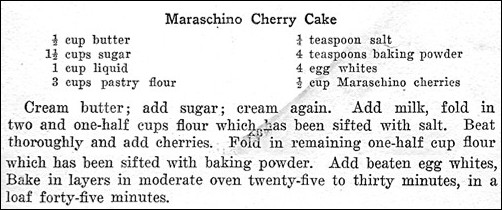
I didn’t find any small red wintergreen candies at the store where I shop, so I bought small red “sugar pearls” in the cake and cookie decorating section.

Squares of unsweetened baking chocolate have gotten smaller over the last hundred years. Back then a square was an ounce in size; today a square of a popular baking chocolate is 1/2 ounce.

This recipe doesn’t call for any baking powder or baking soda. The beaten egg whites provided the leavening.

I used 2/3 cup of milk, and I substituted all-purpose flour for the pastry flour.

I found recipes for Plain Frosting and Chocolate Frosting in a hundred-year-old cookbook:

Recipe for Plain Frosting
Source: Modern Priscilla Cook Book (1924)
Recipe for Chocolate Frosting
Source: Modern Priscilla Cook Book (1924)

I quadrupled the Plain Frosting recipe so that I’d have enough frosting to ice the cake. I did not use any water when making the Chocolate Frosting. I just used milk to get it to the right consistency. I used less chocolate than called for in the old recipe, since a square of chocolate was 1-ounce a hundred-years ago and the squares are smaller today- but it still was very chocolatey.

Here’s the recipe updated for modern cooks:

Witches' Layer Cake

  • Servings: 8 - 10
  • Difficulty: moderate
  • Print

Cake

4 eggs, separated

1 1/3 cups butter, softened

2 ounces unsweetened baking chocolate, melted (4 1/2-ounce squares)

3/4 cup sugar

2 1/2 cups all purpose or pastry flour

1/2 teaspoon salt

1 teaspoon cinnamon

2/3 cup milk

small red candies (can use wintergreen candies or sugar pearls)

Preheat oven to 350° F. Grease two 9-inch round cake pans; line with waxed paper or parchment paper, then grease again and lightly flour.

Put egg whites into a mixing bowl, and beat until peaks form. Set aside.

Cream 1/3 cup butter, then add the remaining 1 cup butter and the melted chocolate; beat until smooth. Stir in egg yolks and sugar. Sift together flour, salt, and cinnamon, then stir  into the chocolate mixture alternately with the milk; continue stirring until thoroughly combined. Fold in the beaten egg whites. Pour the 1/2 of the batter into each of the cake pans.

Bake the layers for 30 to 35 minutes or until a toothpick inserted in center comes out clean. Cool 5 minutes. Remove from pans. Cool 1 hour or until completely cooled.

Make frosting (see below).

To assemble cake, trim cake layers if needed to make even, then put a layer on a plate. Spread with red frosting, and then put the other layer on top of it. Ice with the chocolate frosting, then decorate with red candies. I used a template of a witch as a guide when arranging the candies to make an outline of the witch.

Frosting

4 cups flour confectioners’ sugar

1/3 – 1/2 cup milk

2 teaspoons vanilla

red food coloring (I used “dark red” food coloring)

2 ounces unsweetened chocolate (4 1/2-ounce squares)

Combine confectioners’ sugar and 1/3 cup milk in a mixing bowl; beat until smooth. Add vanilla, and beat until combined.   If the mixture to too thick add additional milk.

Red Filling: Put about 3/4 cup of the frosting into a small bowl. Add enough red food coloring to make the filling a bright red. Stir to combine.

Chocolate Frosting; Stir the melted chocolate into the remaining frosting.

http://www.ahundredyearsago.com

Old-Fashioned Variety Marble Cake (Marble Cocoa Cake)

Marble Cocoa Cake

Marble Cake has always been one of my favorite types of cake, so when I saw a hundred-year-old recipe for Variety Marble Cake, I decided to give it a try. The old recipe had lots of options, including options for Marble Cocoa Cake and Marble Spice Cake. I went with the Marble Cocoa Cake option.

The cake was easy to make and tasty. This recipe makes a small 8″ X 8″ cake, which is perfect for a small family.

Here’s the original recipe:

Recipes for Variety Marble Cake
Modern Priscilla Cook Book (1924)

When I made this recipe, I needed to add about 2 tablespoons of melted butter to the eggs to get 1/2 cup. I used vanilla for the flavoring.

The recipe says to alternate putting spoonfuls of light and dark batter into the pan. I followed this direction – though if I made the cake again, I’d also lightly swirl the batters using a knife to get a more even marbleing.

The recipe says to bake the cake for 45 minutes. When I made this cake, it took significantly less time (more like 35 minutes).

Here’s the recipe updated for modern cooks:

Marble Cocoa Cake

  • Servings: 6 - 8
  • Difficulty: moderate
  • Print

1 1/4 cups flour

1 cup sugar

1 1/4 teaspoon baking powder

1/2 teaspoon salt

2 eggs

2 tablespoons butter, melted

1/2 cup milk

1 teaspoon vanilla

2 tablespoons cocoa

Preheat oven to 350° F. Grease and flour an 8-inch square baking pan. Put all ingredients (except for the cocoa) in a mixing bowl. Beat until well blended.

Put 1/3 of the batter into another bowl; then add the cocoa to this batter. Beat until well-blended. Alternate putting the light and dark batters into the prepared pan, then lightly swirl with a knife.

Bake 30 to 40 minutes, or until wooden pick inserted in center comes out clean. Frost, if desired.

http://www.ahundredyearsago.com

Old-Fashioned Orange Loaf Cake

Orange Loaf Cake

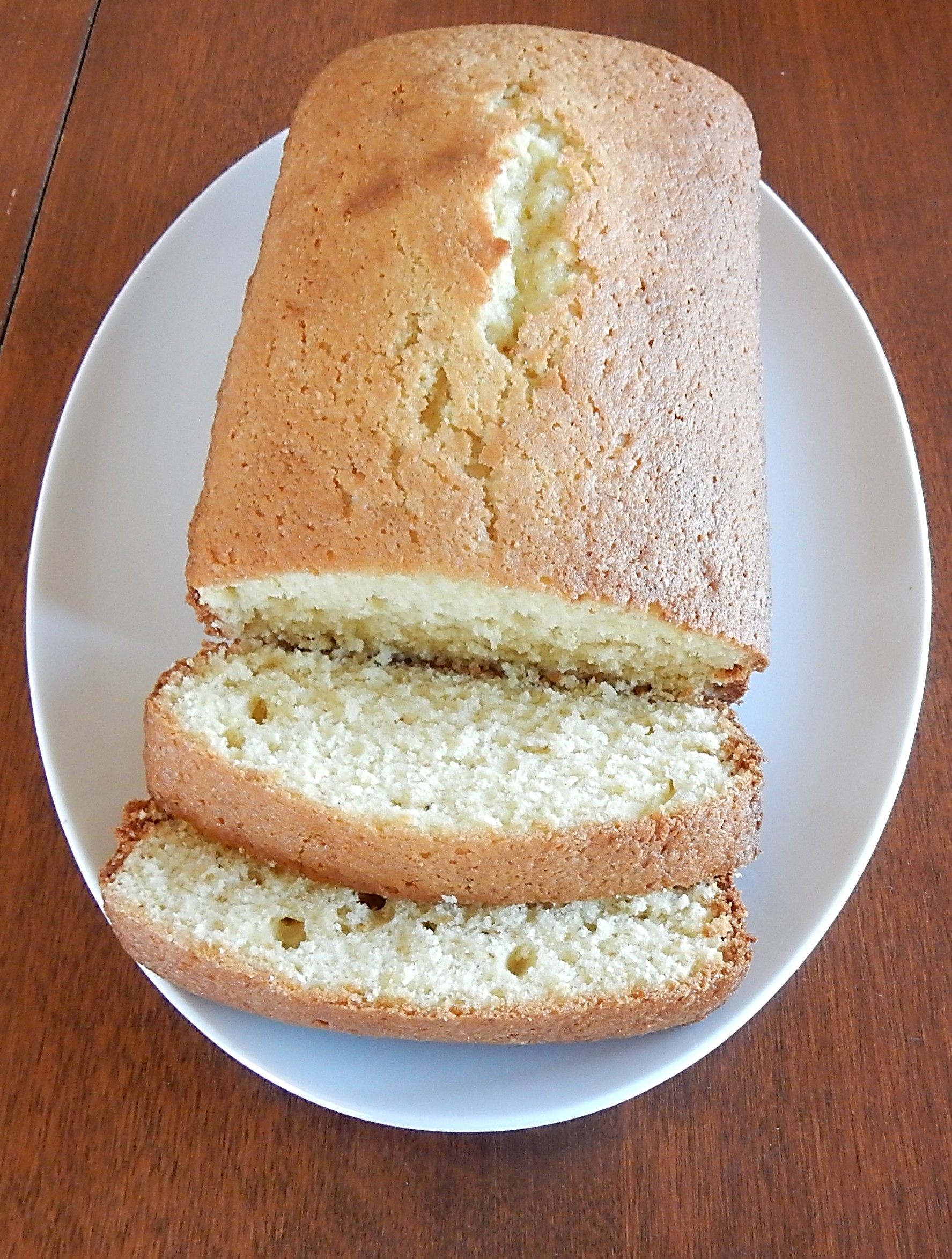
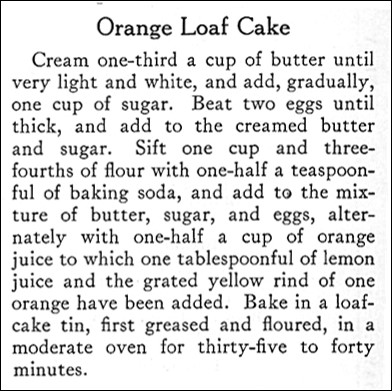
I got a request for a “healthy cake” that was low fat and low sodium, so looked through my hundred-year-old cookbooks and magazines for something that might work.  I found a recipe for Orange Loaf Cake that I think fits the bill.

The recipe only calls for 1/3 cup of butter, and just 1/2 teaspoon of baking soda and no salt. So this loaf cake is both low fat and low sodium.  The cake was very easy to make, had a nice texture, and a delightful sunny, orange flavor.

Here’s the original recipe:

recipe for Orange Loaf Cake
Source: American Cookery (November, 1924)

Here’s the recipe updated for modern cooks:

Orange Loaf Cake

  • Servings: 7 - 9
  • Difficulty: easy
  • Print

1/3 cup butter, softened

1 cup sugar

2 eggs

1 3/4 cups flour

1/2 teaspoon baking soda

1/2 cup orange juice

1 tablespoon lemon juice

grated rind of 1 orange

Preheat oven to 375°  F. Grease and flour a loaf pan.  Put butter and sugar in a mixing bowl; beat until combined. Then beat in the eggs. Add the flour, baking soda, orange juice, and lemon juice; beat until combined. Stir in the grated orange rind.  Pour into prepared pan.

Bake 35 to 40 minutes, or until wooden pick inserted in center comes out clean.

http://www.ahundredyearsago.com

Lemon Citron Cake

Lemon Citron Cake

This week I decided to make a hundred-year-old recipe for Lemon Citron Cake. I can already sense your questions. Why make this cake in February? Isn’t citron a holiday fruitcake ingredient that is usually only available in stores in December?

Well . . . let me explain.

Do you ever have ingredients left over after completing holiday baking, and don’t know how you’ll ever use them? Well, that’s how I felt about some citron that was still lingering in one of my kitchen cabinets. I thought that I might have to throw it out; but, then I happened across a recipe for Lemon Citron Cake in a hundred-year-old cookbook and decided to give it a try.

The cake was delightful. It had a lovely, light texture and a sunny citrus flavor. The original recipe didn’t indicate whether the cake should be iced. I decided to put a light lemon glaze on it, which worked well with the citron. Citron is too tasty to be relegated to just the winter holidays. Assuming you can find the citron, this cake would be lovely during any season.

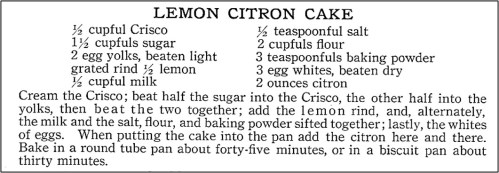
Here’s the original recipe:

Recipe for Lemon Citron Cake
Source: The Whys of Cooking by Janet Mckenzie Hill (1924)

It seemed unusual that this recipe called for two egg yolks and three egg whites, so I decided that maybe there was a typo and used three egg yolks. It worked fine. I’m also not sure why the recipe called for creaming some of the sugar with the Crisco shortening and the remainder with the egg yolks, and then combining. I just put them all in the mixing bowl.

Any shortening will work for this recipe so I didn’t specify a brand. Additionally, I gently stirred the citron into the cake batter after all the other ingredients had been combined rather then adding pieces of citron “here and there” as the batter was being poured into the pan.

Here’s the recipe updated for modern cooks:

Lemon Citron Cake

  • Servings: 8 - 10
  • Difficulty: moderate
  • Print

3 eggs, separated

1/2 cup shortening

1 1/2 cups sugar

1/2 cup milk

2 cups flour

1/2 teaspoon salt

3 teaspoons baking powder

grated rind, 1/2 lemon

2 ounces citron (about 1/4 cup)

Preheat oven to 350° F. Put egg whites in a medium mixing bowl and beat until stiff. Set aside.

Put the shortening, egg yolks, and sugar in a mixing bowl; beat until smooth. Add milk, flour, baking powder, and salt; beat to combine. Gently fold in the egg whites, then gently stir in the grated lemon rind and citron. Spoon the batter into an ungreased tube pan with removable bottom (angel food cake pan). Bake for 45 minutes or until the cake is lightly browned and the top springs back when lightly touched.

If desired, glaze with a thin icing made with melted butter, confectioners sugar, and lemon juice.

http://www.ahundredyearsago.com

Old-fashioned Loaf Chocolate Cake

Chocolate Loaf Cake

When browsing through a hundred-year-old cookbook published by a shrine patrol in Rochester New York, I saw a recipe for Loaf Chocolate Cake, and decided to give it a try. This recipe is a winner. The recipe was easy to make, and the loaf cake was soft and moist, and had just the right amount of sweetness. (I prefer cakes that aren’t overly sweet).

Here is the original recipe:

Recipe for Chocolate Loaf Cake
Source: Cook Book published by Bethany Shrine Patrol No. 1, Rochester, NY (1923)

A hundred-years-ago milk often was not pasteurized. Back then, if the non-pasteurized milk was not used quickly, the “good” bacteria in the milk would turn it into a sour milk suitable for use in recipes. Today’s pasteurized milk can be turned into a sour milk by adding a little vinegar.

In 1923, squares of baking chocolate were typically 1-ounce. Today they are often 1/2 ounce, so 4 squares rather than 2 may be needed.

Here’s the recipe updated for modern cooks:

Loaf Chocolate Cake

  • Servings: 7 - 9
  • Difficulty: easy
  • Print

1/2 cup milk

1 tablespoon vinegar

2 cups brown sugar

1/2 cup butter, melted

2 cups flour

2 eggs

2 1-ounce squares unsweetened baking chocolate, melted (Many brands of baking chocolate have squares smaller than 1 ounce, so more than 2 squares may be needed.)

1 teaspoon baking soda

1 teaspoon vanilla

1/2 cup boiling water

Preheat oven to 350° F. Grease and flour a large loaf pan (9″ X 5″) or use two smaller ones.

Put the milk in a cup or bowl, then stir in the vinegar. Set aside for at least 2 minutes to allow milk to sour.

Put brown sugar, butter, flour, eggs, melted chocolate, baking soda, vanilla, and the soured milk in a mixing bowl; stir to combine. Add boiling water; beat until smooth than put in loaf pan. Bake 1 hour 10 minutes, or until wooden pick inserted in center comes out clean. (The time would be less if two smaller pans are used.)

http://www.ahundredyearsago.com

One Egg Chocolate Cake

piece of cake on plate

I’m always intrigued by old cake recipes that have titles which emphasize the use, or non-use, of a specific ingredient. For example, I recently came across a recipe for One Egg Chocolate Cake. Why was the number of eggs stated in the title? Were eggs really expensive back then? . . . or maybe the recipe was aimed at families that raised chickens, and the chickens didn’t lay many eggs during the winter so cooks were looking for recipes that used few eggs. . . or. . . ?

This recipe made a  9-inch square cake, and was very tasty. I never missed any reduction in eggs.

Here’s the original recipe:

Recipe for One Egg Chocolate Cake
Source: Cement City Cook Book (1922) Compiled by First Baptist Church, Alphena, Michigan

I followed the recipe directions and grated the chocolate, then melted it by adding a little hot water and stirring. I was surprised how well this process melted the chocolate  – though think that the baking chocolate probably could be melted in the microwave to avoid the extra effort of grating the chocolate.

Here’s the recipe updated for modern cooks:

One Egg Chocolate Cake

  • Servings: 10 - 12
  • Difficulty: moderate
  • Print

1 cup sugar

1 egg yolk

1/4 cup  butter, softened

1/2 cup grated baking chocolate (about ounces of chocolate)

2 tablespoons hot water

approximately 3/4 cup milk

1 tablespoon vinegar or lemon juice (I used vinegar.)

1 teaspoon baking soda

1 teaspoon vanilla

1 1/2 cups flour

Preheat oven to 350° F.  Put the grated baking chocolate  in a measuring cup, then add hot water and stir until the chocolate is melted. Stir in vinegar and enough milk to make 1 cup.  Set aside for at least 2 minutes.

Put sugar and egg yolk in a mixing bowl, stir to combine. Add butter, milk and chocolate mixture, baking soda, vanilla, and flour; beat until smooth. Put in a greased and floured 9-inch square pan. Bake until a wooden pick comes out clean (approximately 35 minutes). Frost if desired

http://www.ahundredyearsago.com

Old-fashioned Ribbon Cake

Slice of Ribbon Cake

Spice cakes are a favorite around our house, so when a birthday rolled around I got the usual request for a spice cake. I wanted to honor the request – yet at the same time, do something different – so I was pleased to find a hundred-year-old recipe for Ribbon Cake, which is a three-layer cake. There are yellow cake layers on the top and bottom with a spice cake layer in the middle.

The spice cake layer contained two dried fruits- chopped raisins and chopped figs. I’ve often eaten spice cakes with raisins. This is the first time I’ve ever had one that also contained figs, and they were a wonderful addition. When eating the cake, I couldn’t distinguish between the chopped figs and the chopped raisins – but together they added a richer and more nuanced flavor and texture than if just raisins had been used.

Here’s the original recipe:

Recipe for Ribbon Cake

The old recipe doesn’t say to beat the egg white before adding to the cake batter, but I did since I couldn’t figure out why else the recipe would have called for separating the eggs. Adding beaten egg whites results in a lighter cake.

Here’s the recipe updated for modern cooks:

Ribbon Cake

  • Servings: 8 - 10
  • Difficulty: moderate
  • Print

1/2 cup butter, softened

2 cups sugar

4 eggs separated

1 cup milk

3 1/2 cups all-purpose flour

5 teaspoons baking powder

1/2 teaspoon cinnamon

1/4 teaspoon mace

1/4 teaspoon nutmeg

1 tablespoon molasses

1/3 cup raisins, chopped

1/3 cup dried figs, chopped

apple jelly

Preheat oven to 350° F. Grease three 9-inch round cake pans; line with waxed paper or parchment paper, then grease again and lightly flour.

Put egg whites into a mixing bowl, and beat until peaks form. Set aside.

Put butter, sugar, egg yolks, milk, flour, and baking powder in a large mixing bowl. Beat until well-mixed. Fold in the beaten egg whites. Pour the 2/3’s of the batter into two cake pans (1/3 in each pan).

Add the cinnamon, mace, nutmeg, and molasses to the remaining batter. Gently stir until thoroughly combined, then gently stir in the raisins and figs. Put in the third cake pan.

Bake the three layers for 25 to 30 minutes or until a toothpick inserted in center comes out clean. Cool 5 minutes. Remove from pans. Cool 1 hour or until completely cooled.

Trim cake layers if needed to make even, then put a yellow cake layer on a plate. Spread with apple jelly, and then put the spice cake layer on top of it. Spread with apple jelly, and then place the remaining yellow cake layer on top.

If desired, frost cake. (I frosted the cake with buttercream icing that was flavored with maple extract.)

http://www.ahundredyearsago.com