16-year-old Helena Muffly wrote exactly 100 years ago today:
Sunday, October 15, 1911: Went to Sunday School this morning. My verses that I am learning for that Bible has decreased some, but I’m still at it.
Her middle-aged granddaughter’s comments 100 years later:
Grandma was trying to memorize Bible verses to get a free Bible. On September 17 she wrote:
. . .One reason for my regular attendance is that if you learn a number of verses from the Bible (over 700 it is) you will in the course of time receive a Bible.. .
. . . Only learned seven verses for today. Usually have twenty-seven . . .
I wonder how many she memorized this week. I can’t even imagine trying to memorize 27 verses a week. No wonder the number of verses has decreased over time.
16-year-old Helena Muffly wrote exactly 100 years ago today:
Friday, October 13, 1911: Ruth and I went up to Oakes’ this evening and arrived home in no time.
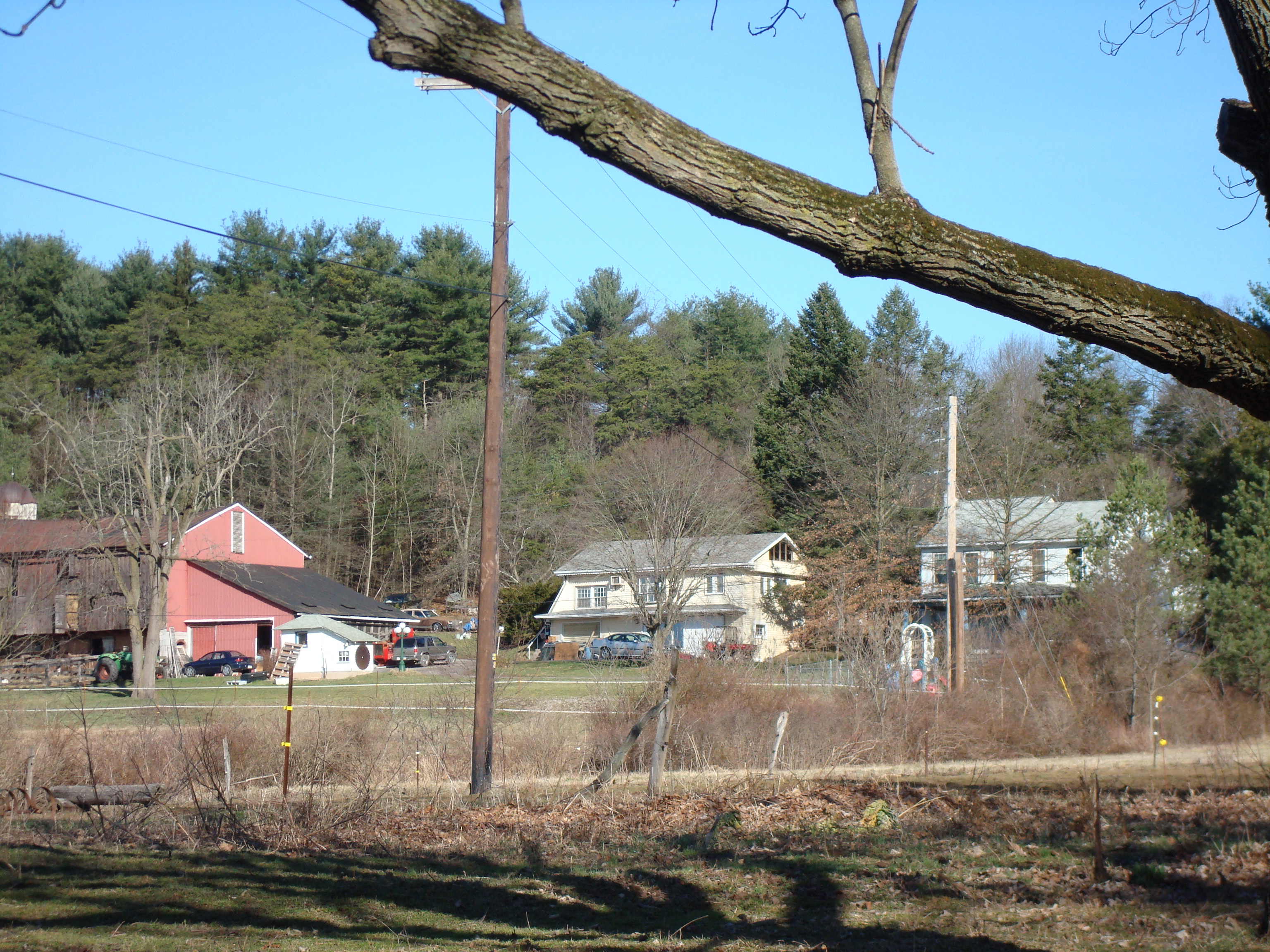
Recent photo of the farm where Rachel and Jim Oakes lived.
Her middle-aged granddaughter’s comments 100 years later:
It was a Friday night. I wonder why Grandma and her sister Ruth didn’t stay long.
The Oakes lived on a farm near the Muffly’s. Several of the Oakes children were close in age to Grandma and Ruth. Rachel Oakes was a friend and also the primary school teacher at McEwensville.
Several times during the spring and early summer Grandma mentioned in the diary that Ruth was dating Jim Oakes—though he hasn’t been mentioned recently so perhaps that relationship ended sometime prior to this date.
16-year-old Helena Muffly wrote exactly 100 years ago today:
Wednesday, October 11, 1911: Don’t know what to write. Got my report today. Was better than what I expected.
Her middle-aged granddaughter’s comments 100 years later:
Yeah! Even though it’s silly to be happy about an event that occurred a hundred years ago, I’m glad that Grandma did well on her exams.
Two days ago I quoted from a 1911 book about the purpose of education. Since Grandma didn’t write much today I’ll tell you about an interesting section in the book about the role of education for younger children (pre-school and primary grades).
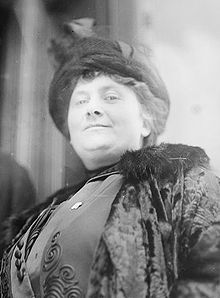
In 1911 there was a lot of interest in kindergartens. Many believed that young children needed an enriching environment and that children should develop at a pace they set for themselves. There was a huge amount of interest in the ideas of Madame Maria Montessori. She believed that children spontaneously educated themselves based upon their experiences and environment.
Madame Maria Montessori (Source: Wikipedia)
Today much of the policy discussion for young children revolves around whether there should be universal pre-schooling and how to standardize educational experiences for children in grades k-2. The focus is on teaching children reading skills. This is very different from what people believed about early education a hundred years ago:
There is good reason, however for believing that early childhood freedom is more important to good mental development than to good physical development. The mind of the child may be more injured by “thorough” mental training of any particular kind, than the body by any special form of physical training. . .
Children not only develop the power to perceive remember, imagine, reason, etc. without any special assistance, but they acquire knowledge without special teaching.
The Making of the Individual (1911) by E.A. Kirkpatrick
16-year-old Helena Muffly wrote exactly 100 years ago today:
Tuesday, October 10, 1911: Wound up with our examinations today. Don’t think I made a good mark in algebra. I have such a sore thumb! Mighty.
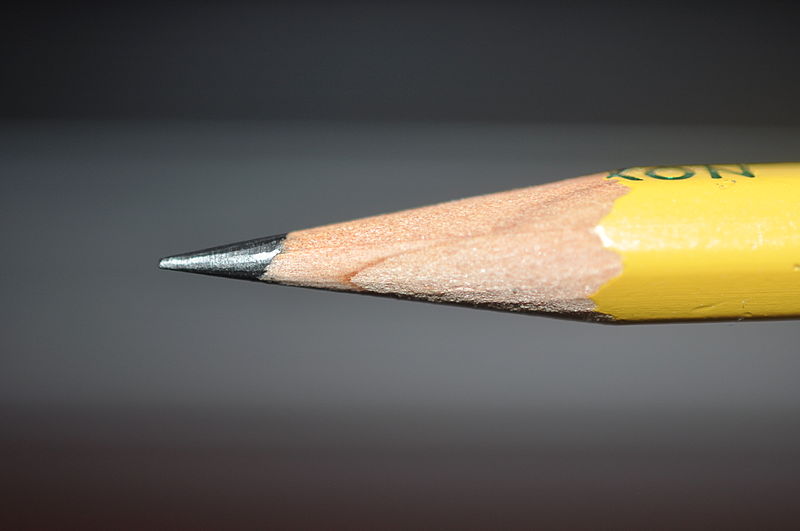
Grandma may have used a wood pencil to take written exams. Wood pencils with erasers have been around since the late 1800s. (Photo source: Wikimedia Commons)
Her middle-aged granddaughter’s comments 100 years later:
The previous day’s entry also indicated that Grandma was taking exams. And, diary entries the preceding winter and spring mentioned exams on consecutive days.
These entries imply that students at McEwensville High School took periodic exams in all subject areas on successive days. The school only had one teacher—so it seems as if the multiple exams spread over two days were by design.
Whew, I’m glad that I wasn’t a student a hundred years ago. I remember when I was a high school student how much I hated it when several teachers gave tests close together. (I did learn how to successfully take multiple exams one after the other for college finals—but never liked it.)
16-year-old Helena Muffly wrote exactly 100 years ago today:
Monday, October 9, 1911: Had examinations today. Weren’t as hard as I expected they would be.
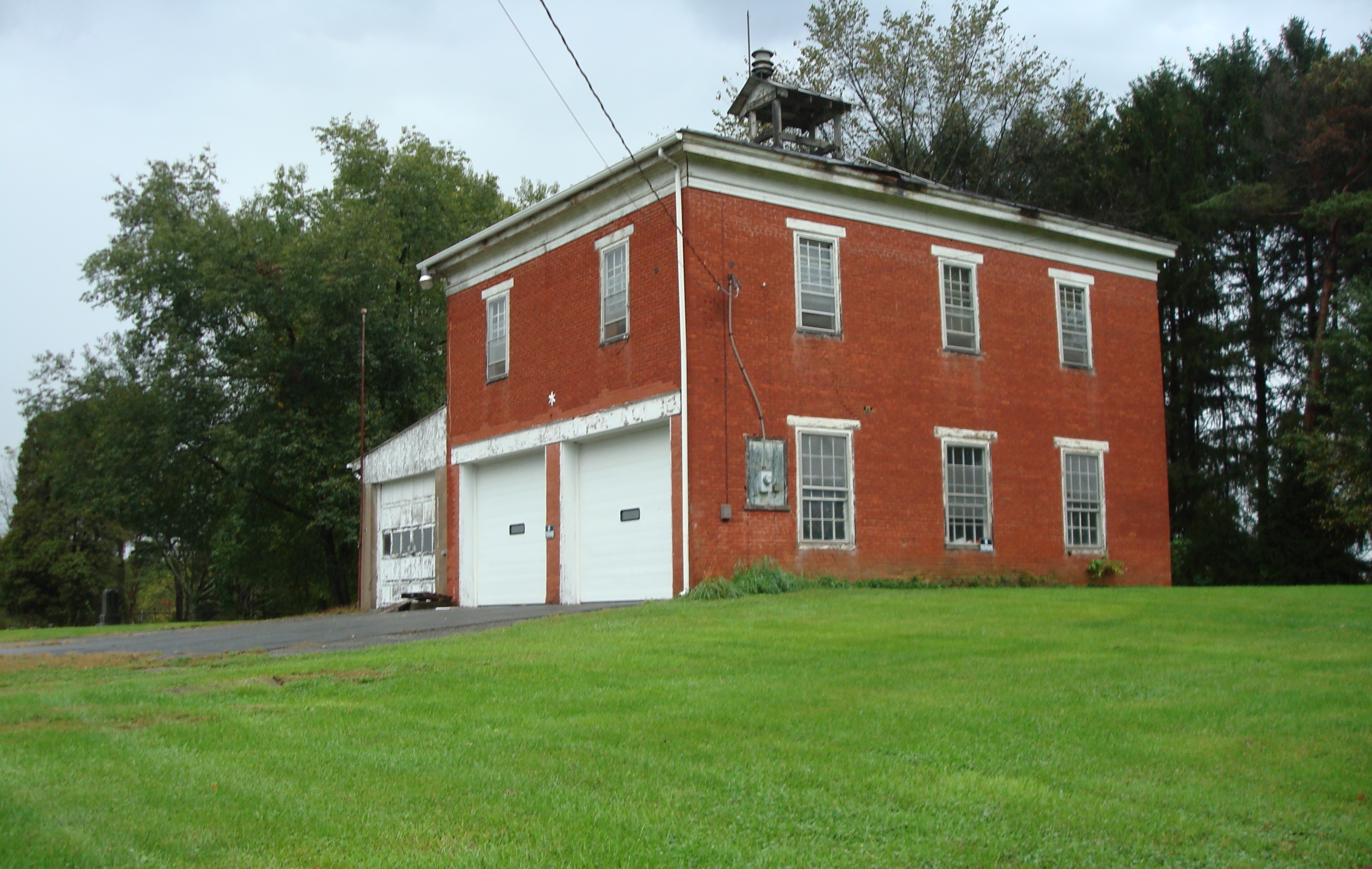
Building that once housed McEwensville High School
Her middle-aged granddaughter’s comments 100 years later:
It’s always a good sign when you feel good after an exam. It sounds like Grandma probably learned what her teacher wanted her to know. Today we worry so much about student performance—and whether they’ve learned what they were supposed to learn.
A hundred years ago people believed that schools had several purposes. According to a 1911 book:
The public school performs one of its greatest functions in developing common knowledge, habits, and ideals in its future citizens, a function that it could not perform if all school teaching and regulation of conduct were individual. A common standard of knowledge, power, and achievement, to which everyone is expected to conform, helps to mould the life of an individual in a normal way and to fix in his mind and character standards by means of which his achievements and ideals may be guided.
The Making of the Individual (1911) by E.A. Kirkpatrick
16-year-old Helena Muffly wrote exactly 100 years ago today:
Sunday, October 8, 1911: Ruth and I went down to Aunt Lizzie’s near Montandon. Such a time as we had this afternoon a hunting chestnuts and walking around. We went down on the train and came home that way. Tuu (??) took us to the depot on the return trip. Such a pain as I had a coming home. I guess I ate too much dinner.
Her middle-aged granddaughter’s comments 100 years later:
Sounds like a fun Sunday. Montandon is about 10 miles south of the Muffly farm. Grandma and her sister Ruth would have taken the train that ran from Watsontown to Milton and then on to Montandon.
I’m not sure whether Aunt Lizzie (Elizabeth) was a good cook or a poor one since Grandma ended up with a stomach ache—though the entry seems to indicate that Grandma must have enjoyed the food.
Aunt Lizzie was a sister of Grandma’s father, Albert Muffly. I’m not sure who she married—and can’t quite read Grandma’s handwriting in the diary to figure out who took them to the train station.
Albert Muffly was the fourth child of Samuel K. and Charlotte Muffly. He was born in 1857. Lizzie was born in 1862 and was the seventh child in the family. Samuel K. and Charlotte had eleven children.
For more on the Muffly family genealogy see these previous postings:
16-year-old Helena Muffly wrote exactly 100 years ago today:
Friday, October 6, 1911: Went over some of my studies tonight in order to learn what I don’t know. Exams are approaching. Dear me.Her middle-aged granddaughter’s comments 100 years later:
Grandma sounds really worried about the exams. Maybe she did some exercises to relieve stress. Here’s one from a 1911 book:
Shoulder and Back Exercise
First Position (Fig. 40)—Stand erect, with the feet together, and both arms extended on a plane with the should, so that in the first position the left arm is extended directly in front of the body and the right arm on the same plane directly behind the body. The arms must be held rigidly on the same plane.
Second Position (Fig. 41)—by a circular movement, the position of the left arm is assumed by the right, and vice versa. During the entire movement the feet must be kept firmly planted on the floor, pivoting at the hips only, while making the continuous circular movement of the arms.
Personal Hygiene and Physical Training for Women (1911) by Anna Galbraith