Infant Mortality Rates: 1912 and 2012

17-year-old Helena Muffly wrote exactly 100 years ago today: 

Wednesday, April 10, 1912:  I rubbed my shoulder rather badly when I happened to get a tumble. It’s sore yet, besides I have a big hole in my waist to mend.

Her middle-aged granddaughter’s comments 100 years later:

Since Grandma’s diary entry a hundred years ago today is self-explanatory, I’m going to follow-up on yesterday’s post.

Click on graph to enlarge.

She wrote that her nephew died shortly after he was born. I wondered how much infant mortality has decreased over the years.

I discovered that the infant death rate has decreased a lot over the years–modern medicine has done wonders—but that it’s complicated to come up with accurate numbers.

First, a couple definitions—

Neonatal mortality rate—The number of babies per thousand births who die within the first 28 days after birth. (The definition was a little looser a hundred years ago.)

Infant mortality rate—The number of babies per thousand births who die within the first year after birth.

Now the complications–

In the early 1900’s most births were at home—and the births and deaths of babies who were stillborn or died shortly after birth were often not recorded.  Only 7 states calculated a neonatal mortality rate back then, but fortunately Pennsylvania—where Grandma lived– was one of those states.

Pennsylvania’s neonatal mortality rate a hundred years ago  was 140 deaths per thousand births which was about average for the states that calculated the rate.  Today the rate is 5 neonatal deaths per thousand births. As it was a hundred years ago—Pennsylvania is still a typical state near the median of all states.

Likewise the infant mortality rate was much higher a hundred years ago than now. Back then 150 infants per 1,000 births died in the first year of life. Now it is about 8 per thousand births.

For those of you who care about the details or want to dig deeper into the data—

Since I couldn’t find 1912 details, I used 1910 data and assumed that the neonatal and infant mortality rates were about the same. Likewise, I couldn’t find 2012 data—so used date from the most recent year available (2007).

The rates from a hundred years ago are from a 1915 journal article published by the American Statistical Association called The Present Position of Infant Mortality: Its Recent Decline in the United States.

(It’s interesting that the title suggests that even in early 1900’s the infant mortality rate was declining. I wonder what it had been in the 1800s.)

The recent numbers were calculated by the Center for Disease Control and are on the Child Health USA site.

“I Am An Aunt No Longer”

17-year-old Helena Muffly wrote exactly 100 years ago today: 

Tuesday, April 9, 1912:  I was an aunt for one brief half a day yesterday, but didn’t know it until this morning. I was so disappointed when I heard it was dead. My little nephew was buried this afternoon. The baby I never saw. I feel like crying, when I think I am an aunt no longer.

Her middle-aged granddaughter’s comments 100 years later:

I also feel like crying as I write this post, even though the birth (and death) happened a hundred year ago. It’s never easy when a baby dies.  . .

I’ll give you a bit of background information. Grandma’s oldest sister Besse was married to Curt Hester, and they lived a several miles from the Muffly farm.

Surprisingly, Grandma never mentioned her sister’s pregnancy in the diary.  There’s just this entry about the birth—and death of her nephew.

Besse only had one child who survived beyond infancy–D. Curtis. He was born in 1915.

This has been a rough April for Grandma. This is only the second death mentioned  in the fifteen months that Grandma had been keeping the diary. The first one was mentioned  just five days earlier on April 4, 1912 when a girl from her Sunday School class died.

An aside–I looked through the old microfilms of the Milton Evening Standard and could find neither the baby’s death (which didn’t surprise me) nor the friend’s death (which did surprise me). Milton is about 6 miles from McEwensville and maybe the death of a teen after a long illness just wasn’t considered important enough to put in the paper–though I have seen other McEwensville obituaries in the paper.

A Quiet Easter

17-year-old Helena Muffly wrote exactly 100 years ago today: 

Sunday, April 7, 1912: Had a long time deciding whether or not to go to Sunday School this afternoon, as I rather expected some company. At last I made up my mind to go regardless of the rain. Easter came today and didn’t bring me any goodies.

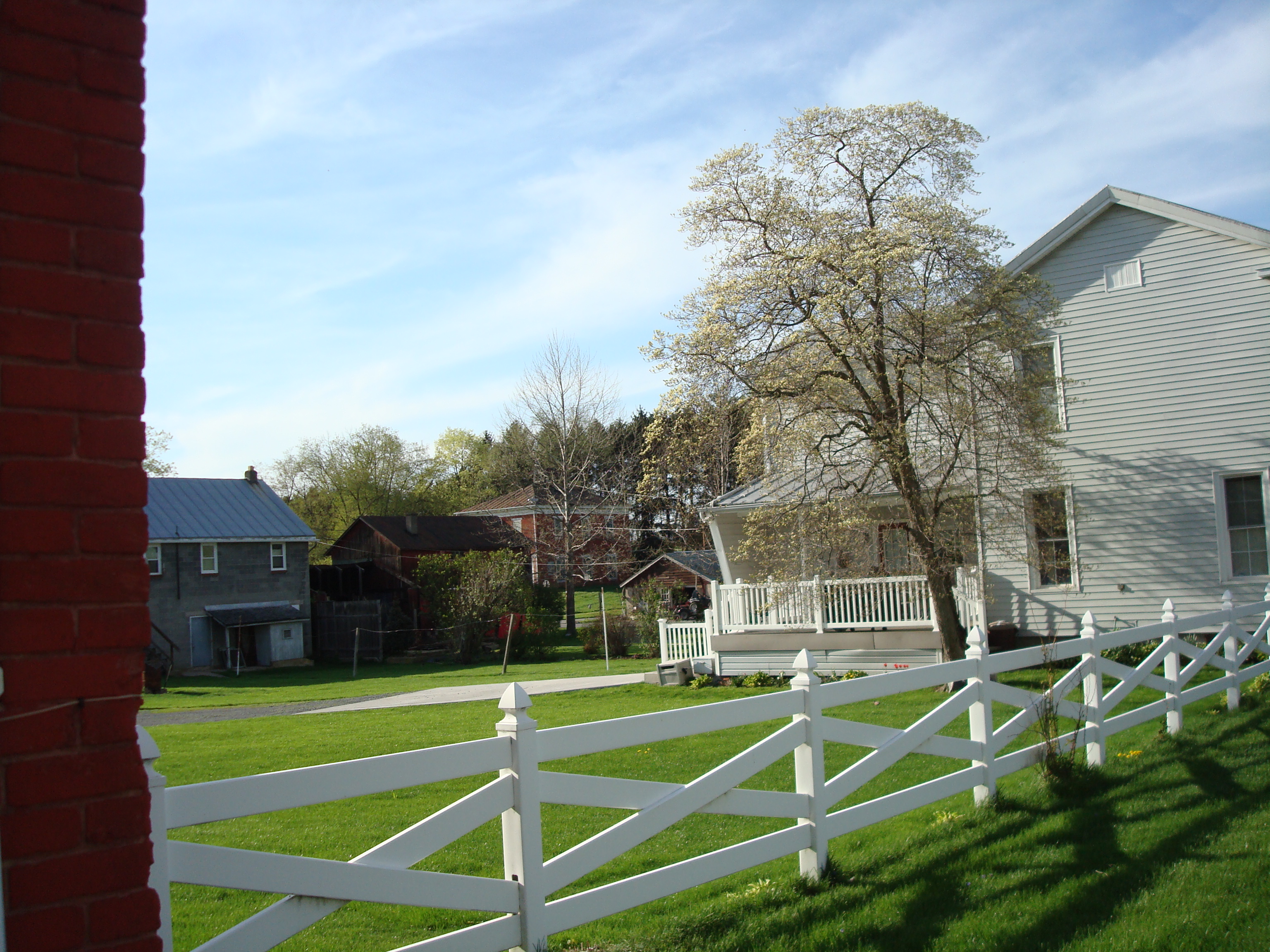
Recent photo of house where Grandma grew up.

Her middle-aged granddaughter’s comments 100 years later:

Was Grandma hoping that some relatives would stop by for Easter? Since the Muffly family didn’t have a phone they may not have always known whether or not someone was planning to visit.

I’m always surprised how little the Muffly’s celebrated holidays.  For example, on Thanksgiving, 1911 Grandma wrote:

Today is Thanksgiving. We didn’t have such a terrible sumptuous repast either. I would have liked to have had a piece of a turkey gobbler and a dish of ice cream, but we were far from that. I sat at home all day doing miscellaneous jobs which I didn’t relish any too well. . .

Went to Friend’s Funeral

17-year-old Helena Muffly wrote exactly 100 years ago today: 

Saturday, April 6, 1912: Carrie and I went up to the cemetery to attend the funeral. I got a glimpse of my friend, nor do I think I’ll ever forget how she looked as she laid in her coffin. It seemed sad to die so young. She was about a year my junior.

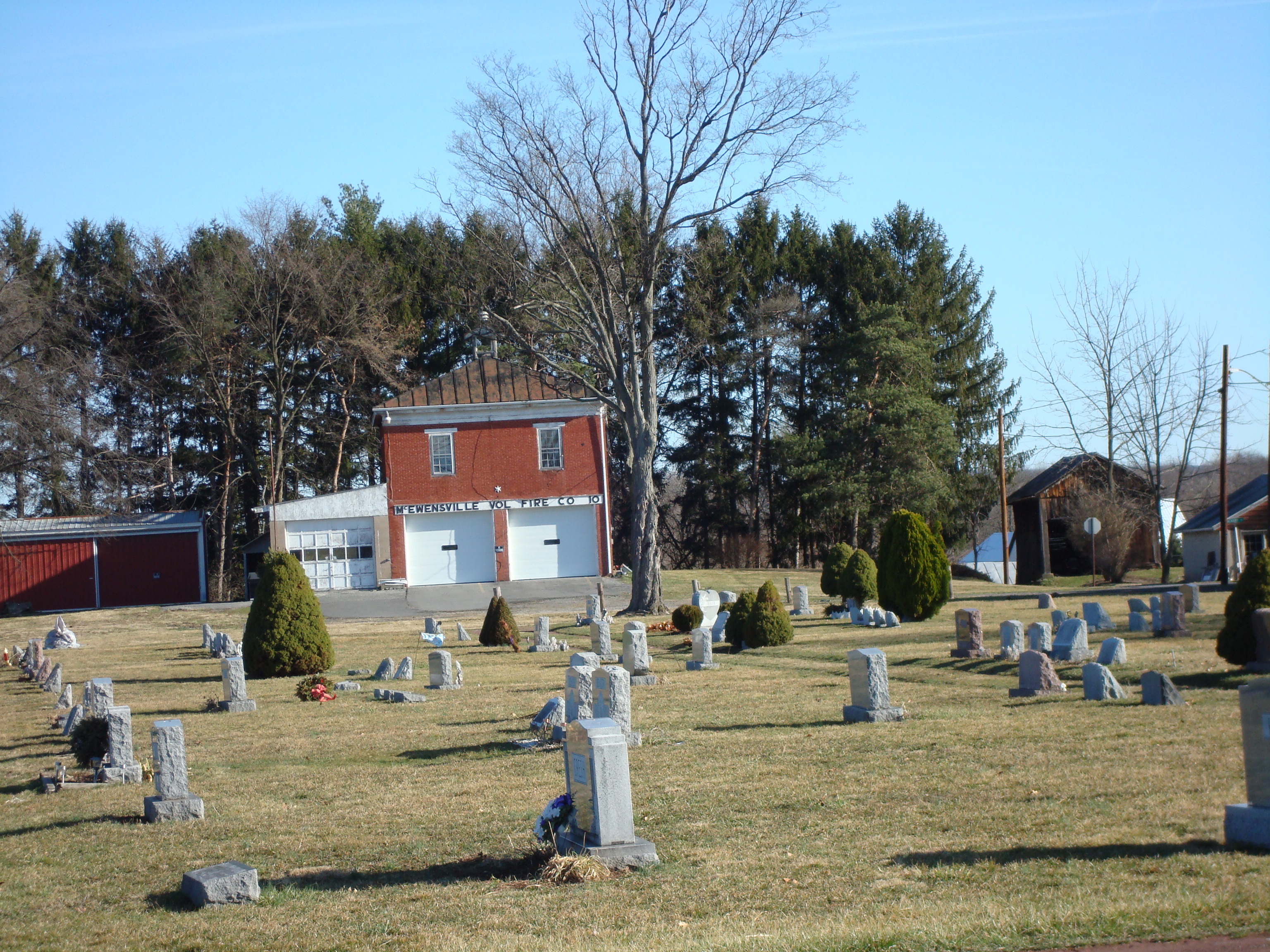
The friend was probably buried in McEwensville Cemetery. (The building that once housed McEwensville High School is in the background).
See photo from early 1900s on book cover. Though the angle is different, it's interesting how little the cemetery has changed over the years.

Her middle-aged granddaughter’s comments 100 years later:

On April 4 Grandma wrote in her diary that a friend from Sunday School  had died—but didn’t provide a name or details. After that post, readers suggested that I try to find the obituary to learn the name and more about the death. It’s a great idea and I plan to search old microfilms of the local paper soon. Keep your fingers crossed that I find it.

It’s so hard when someone young dies. I wonder if this is the first time that Grandma ever had to deal with the death of a friend.

I know that Grandma faced other difficult deaths over the years. For example, my grandfather died in a farm accident in the 1960’s. I can remember as clearly as yesterday, Grandma leaning over the coffin to say one final good-bye before it was closed.

Carrie refers to Grandma’s friend Carrie Stout.

Constructing Things in Geometry

17-year-old Helena Muffly wrote exactly 100 years ago today: 

Wednesday, April 3, 1912: Ma went to Milton today. I got her to get me a compass. We have arrived at constructing things in geometry. We have exams on Monday, so I’ve prepared in one way.

Modern plastic protractor and compass

Her middle-aged granddaughter’s comments 100 years later:

I can’t picture what compasses looked prior to the development of plastic. Were they made of wood? I wish that I’d scoped out the flea market prior to writing this post so I could describe ones from a hundred years ago.

Grandma probably also used a ruler to construct triangles, squares, and other shapes—perhaps one with a business advertisement on it. The Milton Historical Society has an old ruler from the Bijou Dream Theater. Grandma mentioned attending silent films at that theater several times in the diary, so maybe, just maybe —and I’m letting my imagination run wild–she used a Bijou Dream ruler to “construct things.”


A Friend’s Death

17-year-old Helena Muffly wrote exactly 100 years ago today: 

Thursday, April 4, 1912:I heard today of the death of a girlfriend. She died last evening I have not seen her for a long, long time. She was a member of my Sunday School class.

Recent photo of nearby McEwensville. Even though it probably was a beautiful spring day a hundred year ago today, I bet that it felt like a gloomy day to Grandma.

Her middle-aged granddaughter’s comments 100 years later:

I wonder what happened. It sounds as if the girl had been ill for awhile since Grandma hadn’t seen her in a long time.

My gut feeling is that the girl had juvenile diabetes. Insulin was not available until the 1920’s, and it was relatively common for youth to die of diabetes in the early 1900s. But it might have been an infection . . . or pneumonia . . .  or tuberculosis . . .  or . . .

I wish Grandma had included a name–though the girl probably wasn’t previously mentioned in the diary.

Old-Fashioned Insomnia Treatments and Cures

17-year-old Helena Muffly wrote exactly 100 years ago today: 

Wednesday, April 3, 1912: I haven’t much to write about. I have all my lessons out for tonight that I am going to study, so adieu till tomorrow.

Her middle-aged granddaughter’s comments 100 years later:

Ah, Grandma sounds relaxed and ready for some sweet, dreamless sleep. Here’s what a hundred year old book has to say about sleep:

A sound sleep is dreamless. Dreams require a certain expenditure of nerve force and mental energy, so that dreamless sleep is the most restful. Disagreeable dreams and “night-mares” are generally associated with indigestion and biliousness*, which also occasion a general restlessness.

Treatment for Insomnia– The mechanical measures for the relief of insomnia have for their purpose the withdrawing of the blood from the brain to the surface of the skin: hot foot-baths, general warm baths, brisk exercise, light massage, and cold rooms. Mental work should be laid aside several hours before retiring; late suppers avoided; coffee, if taken at all, should only be taken for breakfast, and then only one cup. Reading or amusement should be selected that does not excite the nerves.

To woo sleep the woman should put herself in a position of rest, which of itself physiologically induces sleep. Avoid irritations, noises, bad air, cold feet, overloaded bowels, all of which tend to wakefulness to prevent the proper physical rest. Then sleep usually comes of itself.

Personal Hygiene and Physical Training for Women (1911) by Anna M. Galbraith

*Note: Biliousness is an old-fashioned word that refers to gastric distress or excess secretion of bile.