A Party at the Creek

17-year-old Helena Muffly wrote exactly 100 years ago today: 

Thursday, August 1, 1912:

 August will fly fast enough,

And at its eve will again will be

The dear old school days.

So farewell to July.

Half of the Summer has vanished,

And half of it yet to come.

Yet the days glide on as ever,

And August another month begun.

We had our S.S. class up along the creek today. All were there and had a splendid time. Such a time as we had a losing of things, but they were all recovered. I lost the heel off of my shoe and didn’t miss it for awhile afterwards. I feel like a stuffed toad this evening.
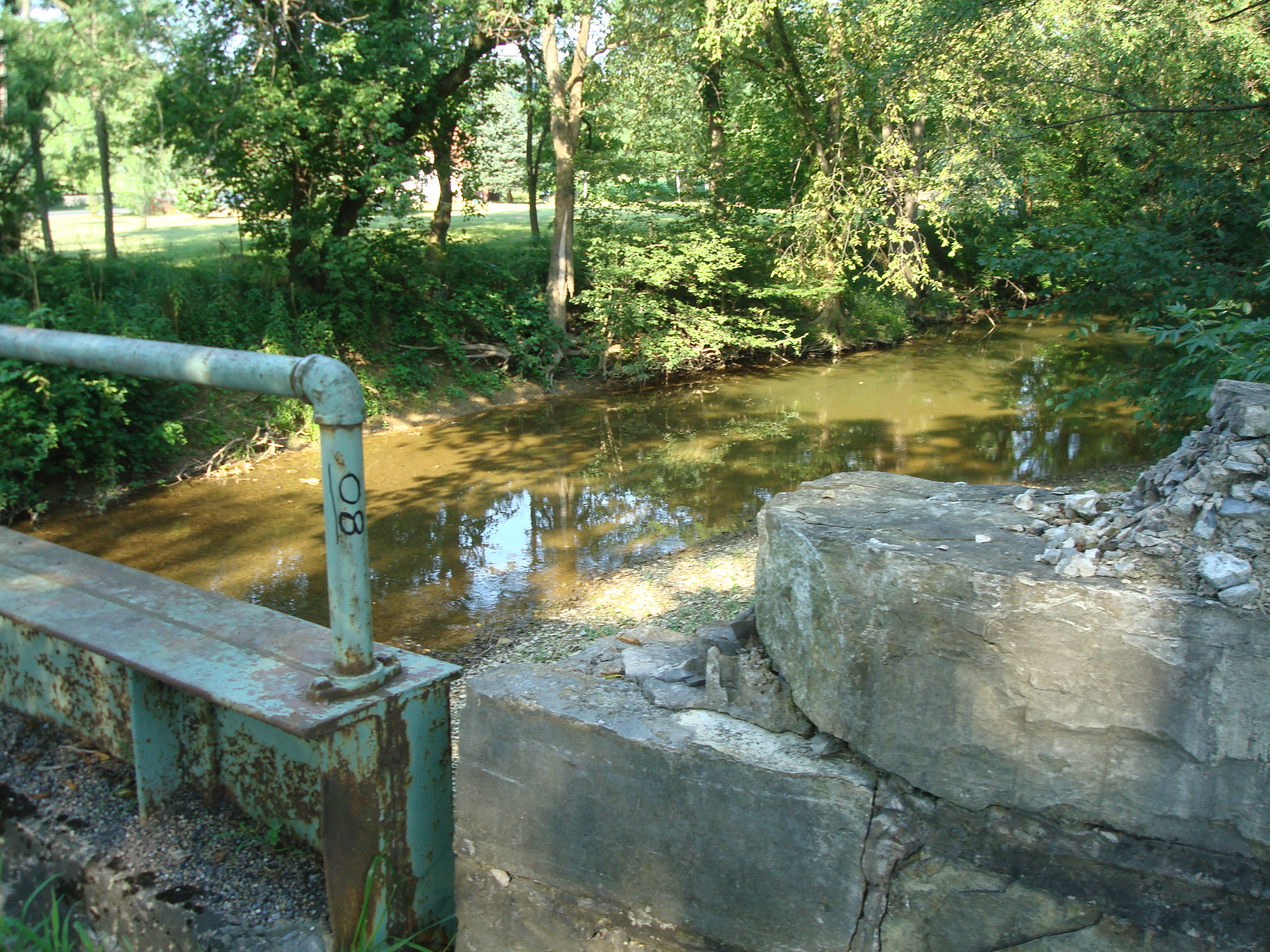
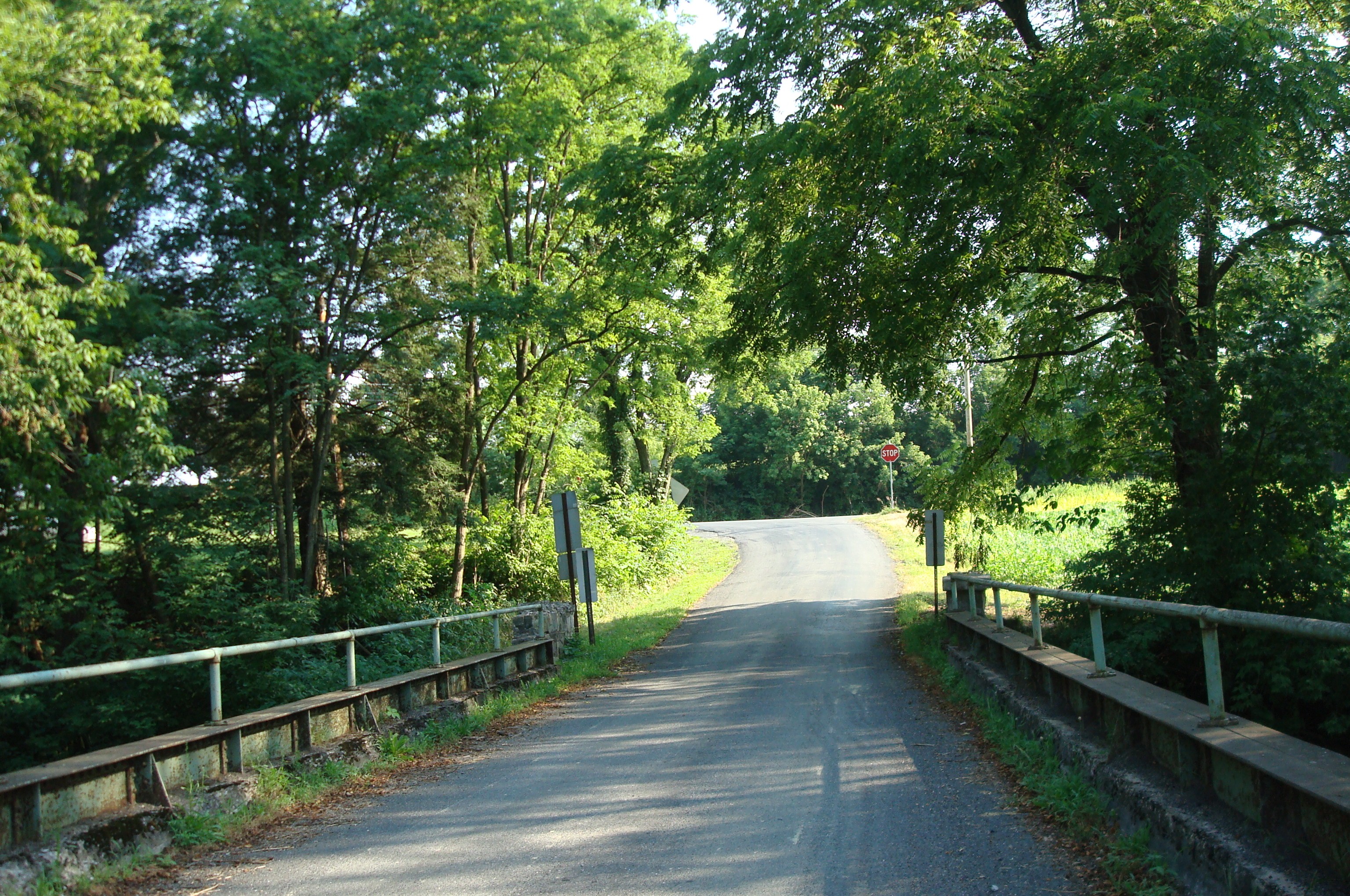
Recent photo of the stream that flows through the farm Grandma grew up on. The old Muffly barn is in the background.

Her middle-aged granddaughter’s comments 100 years later:

It sounds Grandma and her sister Ruth were the hostesses for the Sunday School party. What fun! . . . good friends. . . good food. . . wading in the creek  . . .  the perfect summer day (in spite of a broken shoe heel).

Monthly Poem

Grandma began every month in the diary with a poem. Each month I ponder whether she wrote the poem or whether she copied it from some source.

Since she’s mentioned that school will be starting in about a month in several recent posts, this month I’m voting that she wrote the poem herself.
A Trip to Watsontown

17-year-old Helena Muffly wrote exactly 100 years ago today: 

Wednesday, July 31, 1912:  Made a trip to Watsontown this afternoon. Had to get some things for tomorrow. Hope it doesn’t rain anyway.

Her middle-aged granddaughter’s comments 100 years later:

The Muffly farm was located mid-way between McEwensville and Watsontown. Grandma would have had to walk about one and a half miles to get to either town.

McEwensville was (and still is) the smaller of the two  towns, but the diary has focused more on McEwensville because it was where Grandma went to school and church.

Today, I’d like to share some recent pictures that provide a sense of what  Grandma would have seen on a trip to Watsontown.

(Unfortunately the photos weren’t all taken during the same season. Three are spring photos and one is a summer photo, but hopefully you’ll still be able to get a sense of what it was like to walk to Watsontown.)

Grandma would have walked up the road that went past her house. At the intersection she would have turned right to go to Watsontown (instead of left which would have taken her to McEwensville).
The view Grandma would have had as she walked into Watsontown. (Well, the view isn’t exactly the same because 100 years ago there would have been a bustling railroad station where the vacant lot is today.)
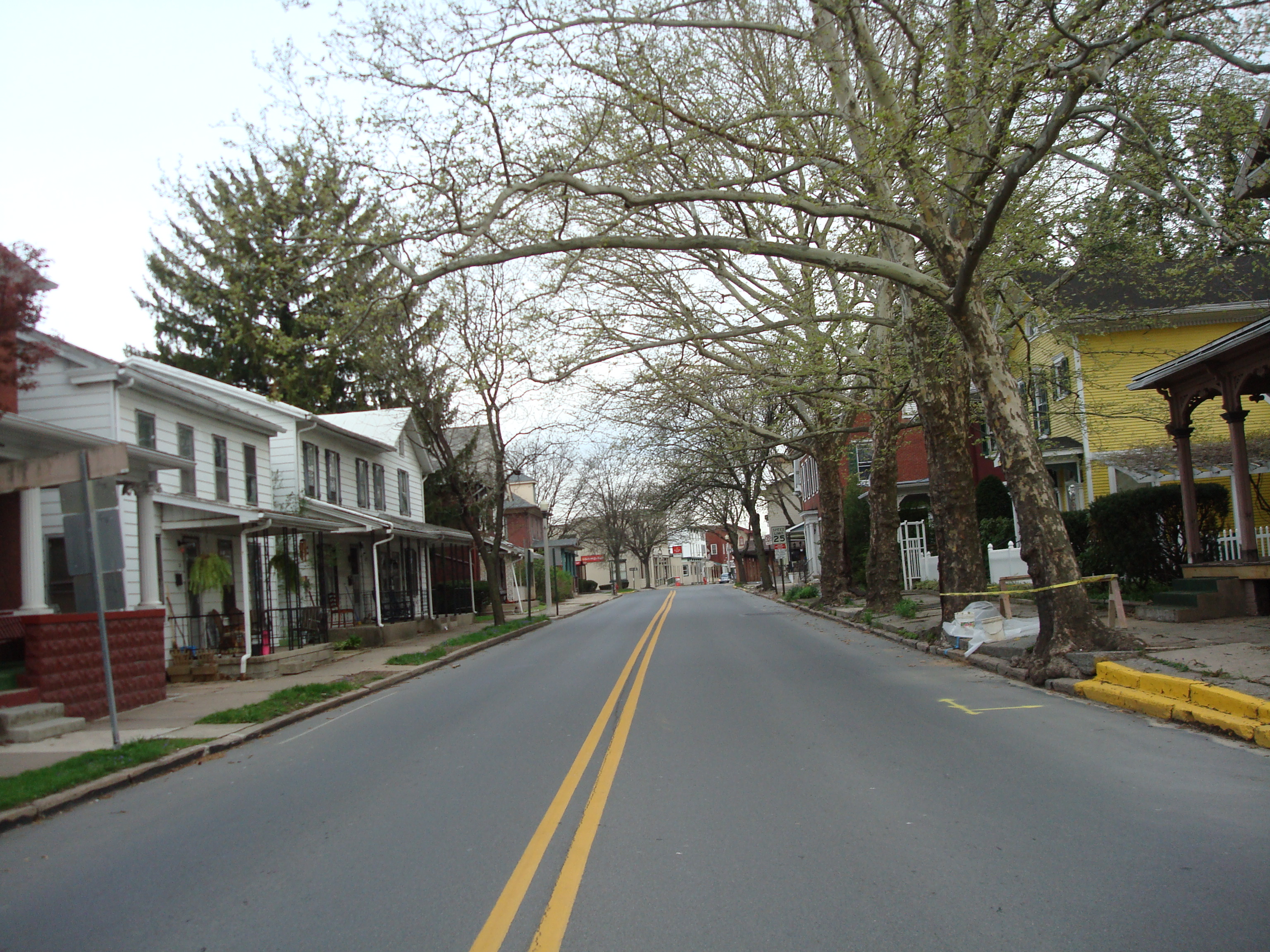
The homes that Grandma would have walked by as she entered Watsontown.
A hundred years ago today Grandma probably shopped in some of these buildings in downtown Watsontown.
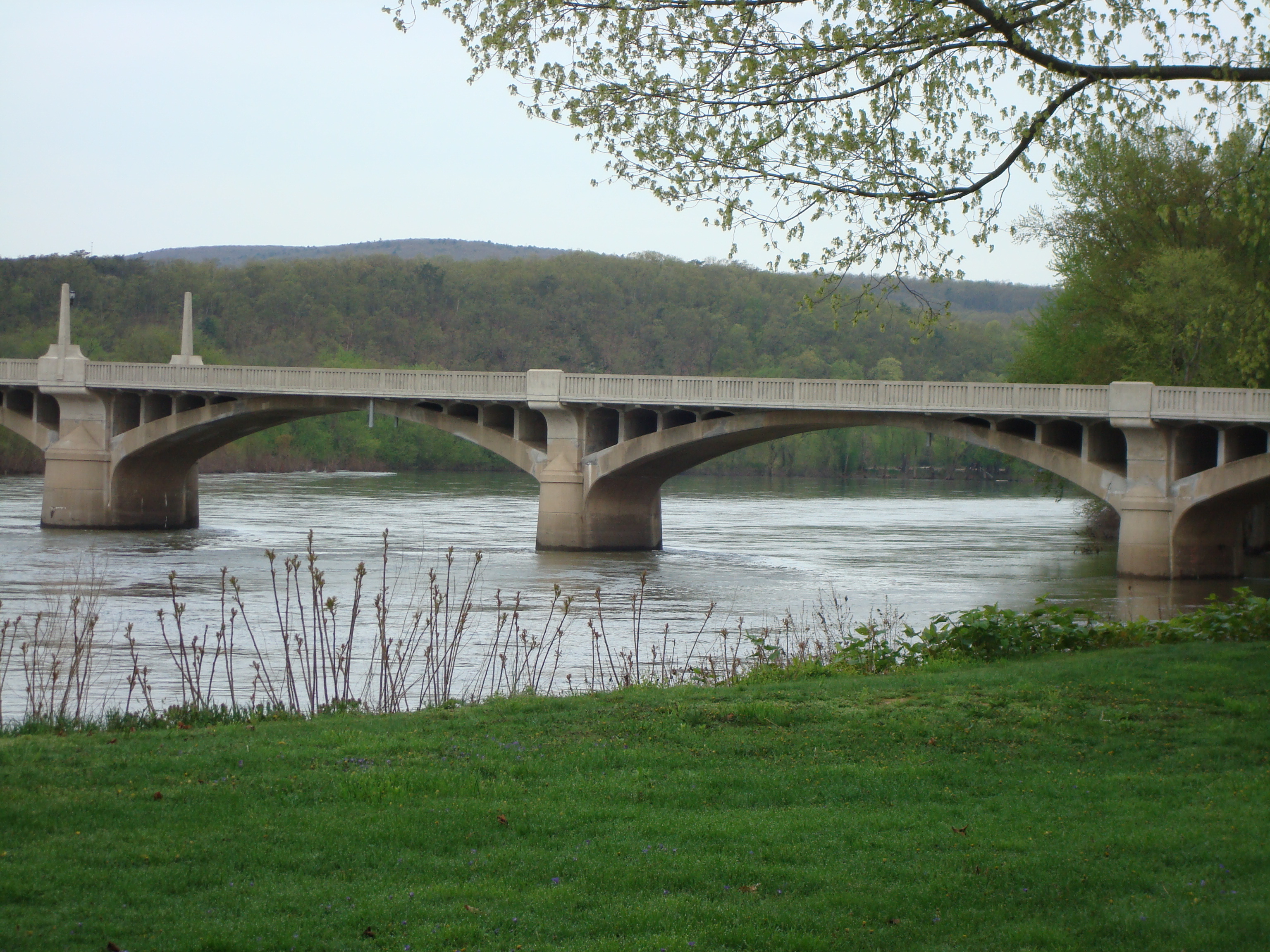
After Grandma finished shopping maybe she took a walk by the Susquehanna River. (There wouldn’t have been a bridge across the river a hundred years ago.)

Percent of Crops in the World Produced by United States, 1912 and 2012

17-year-old Helena Muffly wrote exactly 100 years ago today:

Tuesday, July 30, 1912:  Nothing doing at all.

Her middle-aged granddaughter’s comments 100 years later:

Since Grandma didn’t write much a hundred years ago today, I’d like to share some interesting statistics about world crop production in 1912 and 2012.

According to the  July 30, 1912 issue of the New York Times:

We Lead in Crops

The Bureau of Statistics of the Department of Agriculture concluded today a resume of the production of staple crops throughout the world which presents the latest information in such line of inquiry.

It shows that the United States stands first in the production of corn, wheat, oats, cotton, tobacco, and hops. The relative rank of the United States in the world’s exports is first in wheat, flour, cotton, cottonseed oil, tobacco, oilcake and oilcake meal, rosin, and turpentine.

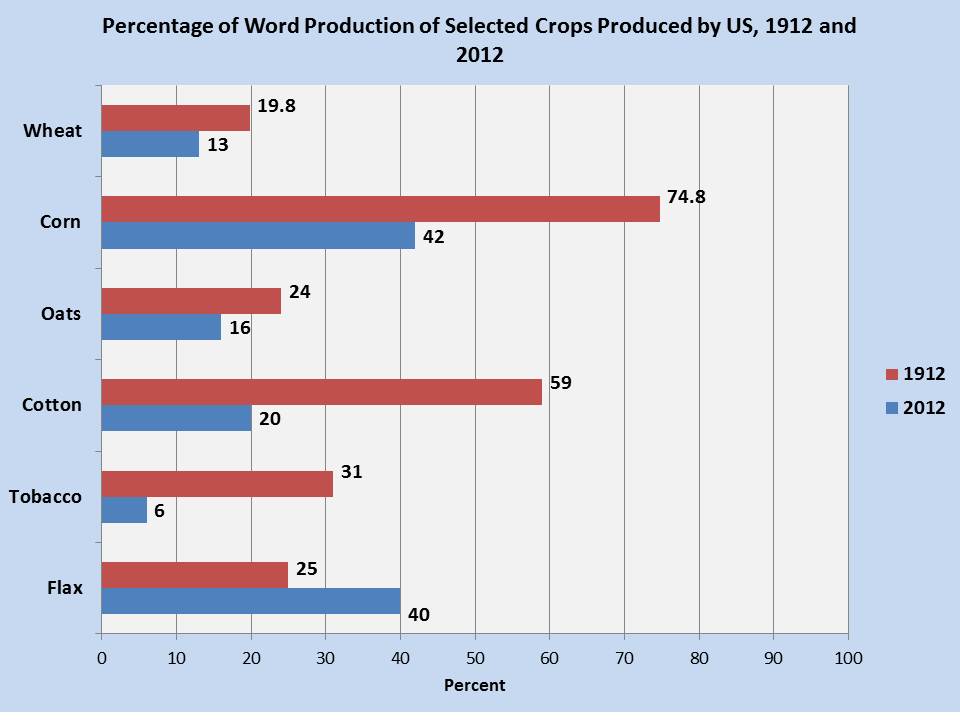
The United States produces 19.8 per cent of the world’s wheat crop, 74.8 per cent of the world’s corn crop, 24 per cent of the oat crop of the world, 59 per cent of its cotton, 31 per cent of its tobacco, and 25 per cent of its flaxseed.

Click on figure to enlarge.

The US produces a lower percentage of the world’s total production of wheat, corn, oats, cotton, and tobacco now than in 1912—though of course the actual amount produced would be higher.  (A previous post provides data about actual crop yields a hundred years ago and now.)

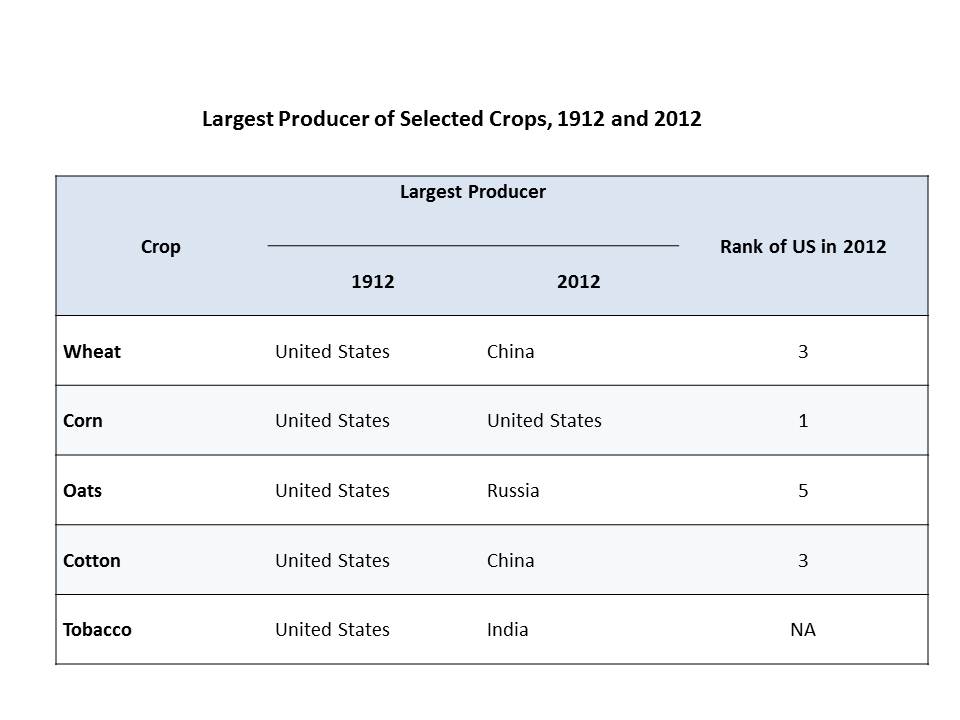
Click on table to enlarge.

In both 1912 and 2012, the US was the largest producer in the world of corn.

If you care about the details about how I compiled the data in the figures–

If 2012 data wasn’t available for a crop, I used data from the most recent year available and assumed that it was the same in 2012.

If you’d like to dig deeper into crop current crop production data here are some useful resources:

United States Department of Agriculture–Economic Research Service

Index Mundi–Agriculture

AgMRC: Agricultural Marketing Resource Center

US Environmental Protection Agency (EPA): Major Crops Grown in the United States

Watermelon: Good For Your Health

17-year-old Helena Muffly wrote exactly 100 years ago today: 

Monday, July 29, 1912:  There is really nothing worth writing for today.

watermelon

Her middle-aged granddaughter’s comments 100 years later:

Since Grandma didn’t have anything worth writing a hundred years ago today, I’ll share a fun tidbit about watermelons that I found in the June 1911 issue of Pure Food Magazine.

Watermelons furnish a delicious and most healthful luxury for the hot season. They keep the system cool, and help to ward off fever. That is why nature has supplied them so bountifully to us during the warm season. The name “watermelon” is most appropriate for it is nearly all water—91.9 percent. Hence, it is also an excellent thirst quencher. Its other nutriments add wonderfully to its healthfulness. . . The water you get in the watermelon ripened on the vine contains no impurities.

I’m always learning new things from doing this blog. Today I learned that when people worried about water quality a hundred years ago, that one alternative to drinking the water was to eat watermelon.

Next time I’m somewhere with questionable water I’ll just have to hope that watermelons are available.

Didn’t Have a Good Time at the McEwensville Festival

17-year-old Helena Muffly wrote exactly 100 years ago today: 

Saturday, July 27, 1912:  Ruth and I went to a festival this evening up at McEwensville. I didn’t have a very good time, and Ruth said she didn’t either.

Recent photo of the McEwensville Community Hall and picnic grove. The festival probably was held in this small park.

Her middle-aged granddaughter’s comments 100 years later:

I wonder why neither Grandma nor her sister Ruth had a good time. Weren’t their friends there? . . . Did the cute guys ignore them . . .

When I was a child there was an old-fashioned  carnival at McEwensville each summer.. I imagine it being similar to the festival a hundred years ago. .

There was lots of great food– barbequed chicken, chicken corn soup, cakes, pies. . .

And, a cake walk, penny throws, balloon boards . . .

There’s no longer a festival or carnival in McEwensville, but the sign is still stored in the rafters of the picnic shelter.

And, music, good times with friends . . .

There was a dunk tank. They were always looking for kids willing to be dunked. Sometimes my cousin sat in the dunking chair.  I never was brave enough to do it.

Soon Will Be Fall

17-year-old Helena Muffly wrote exactly 100 years ago today: 

Friday, July 26, 1912:  Just a month from today and study hours will be resumed. How glad I will be when they arrive. Carrie came over this afternoon and evening.

Her middle-aged granddaughter’s comments 100 years later:

Just as Grandma felt a hundred years ago, I sense that fall will be here soon. The days are getting shorter . . . and, as my father says, “The wind is blowing over the wheat stubble.”
Carrie refers to Grandma’s friend Carrie Stout.

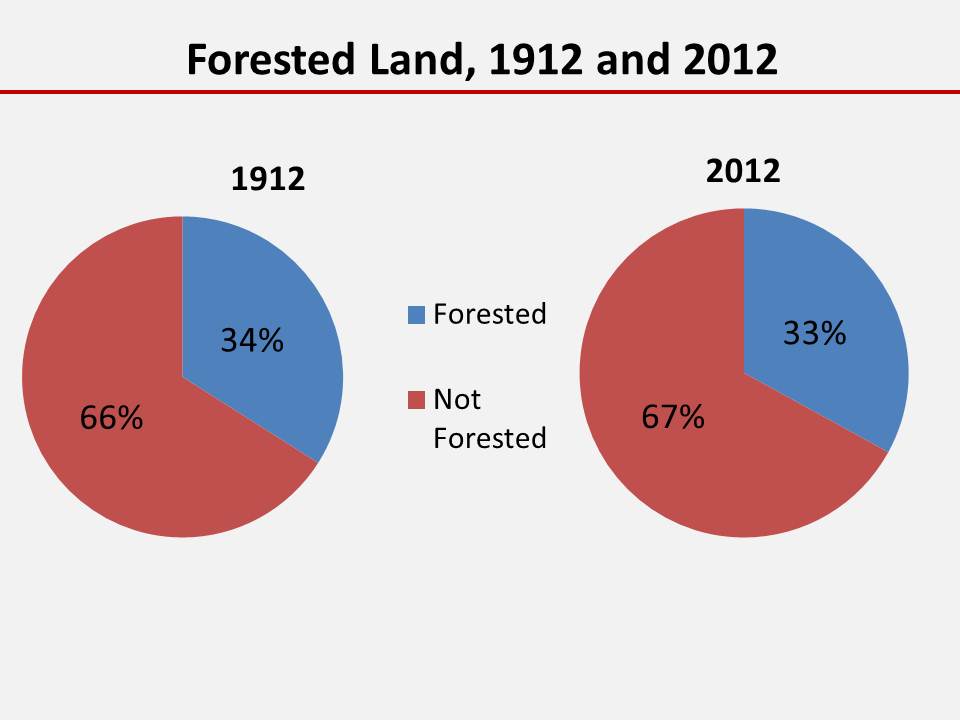
Percent of Land Covered by Forests in US, 1912 and 2012

17-year-old Helena Muffly wrote exactly 100 years ago today: 

Tuesday, July 23, 1912:  Did the ironing this morning. I’ve decided at last to get through with a book I brought home from school last spring. I studied at it some this evening. By studying twenty-five pages a day I’ll be though it by the time school starts.

Source: Commercial Geography (1910)

Her middle-aged granddaughter’s comments 100 years later:

What could the book have been about? It doesn’t sound like light reading, but rather something serious . . .  more like a textbook.

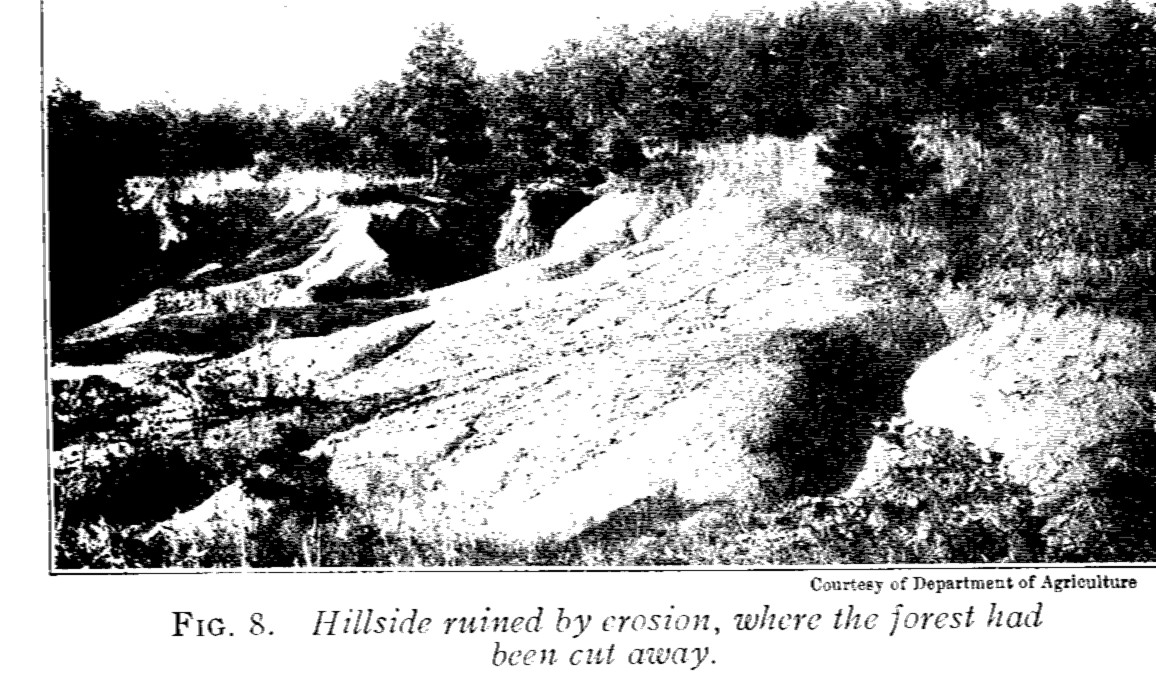
I found a hundred-year- old geography book, and was surprised to discover that even back then people were really worried about the environment and the deforestation of the US.

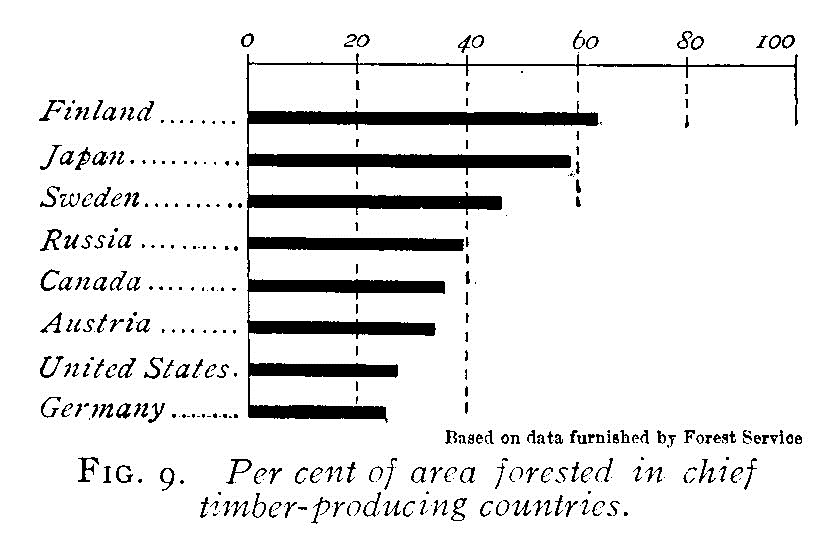
In fact, millions of acres of the uplands in the United States, now denuded of timber would best serve the uses of man if permanently reforested. Already the proportion of forested area in the United States has fallen almost as low as in Germany (Fig. 9).

Commercial Geography (1910) by Edward Van Dyke Robinson

This made we wonder if more or less of the land in the US is forested today than it was a hundred years ago.

According to the US Forest Service about 33% of the land in the US was covered by trees in both 1912 and 2012.