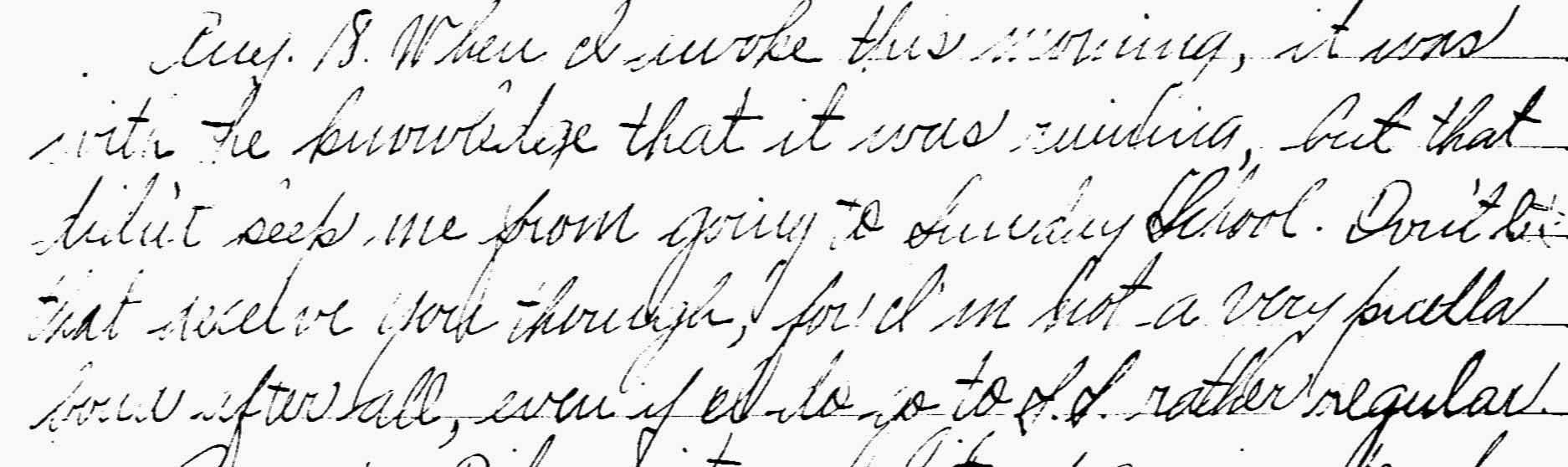
17-year-old Helena Muffly wrote exactly 100 years ago today:
Monday, August 19, 1912: Did quite a bit of sewing today. You see I’m getting some of my things out of the way for when school starts. It rained like everything this evening.

Her middle-aged granddaughter’s comments 100 years later:
What was Grandma sewing? Maybe she did some hemming—of a new dress, or to remodel a hand-me-down and make it just the right length.
Here are directions from a hundred-year-old book about how to make a hem. (An aside: I had so much fun with the recent buttonhole post that I decided to do another post using the same book).
A hem is a fold made by twice turning over the edge of the material (Fig. 16). Make a narrow, even turning, and mark the depth for the second turning on the material with a coarse pin, chalk or basting, using as a marker a card notched the desired depth of the hem. Fold on the line, and if the hem is wide, baste at top and bottom.
Hold the edges you are going to sew on, toward you; place the hem over the forefinger and under the middle finger and hold it down with the thumb. Begin at the right end and insert the needle through the fold, leaving a short end of the thread to be caught under the hemming stitches.
Pointing the needle toward the left shoulder, make a slanting stitch by taking up a few threads of the material and the fold of the hem. Fasten the thread by taking two or three stitches on top of each other.
If a new thread is needed, start as in the beginning, tucking both the end of the new and old thread under the fold of the hem and secure them with the hemming stitches. Train the eye to keep the stitches even and true.
The Dressmaker by The Butterick Publishing Co. (1911)
These directions seem awfully complicated and the drawing doesn’t look exactly right–but then, I guess that I probably couldn’t easily explain exactly how to tunnel through the cloth and then take a small stitch every half-inch or so.