Received Report Card

16-year-old Helena Muffly wrote exactly 100 years ago today: 

Monday, February 26, 1912: Went through the snow to school this morning and came home through the rain. One good things I didn’t have to walk this evening. Received my report card today. I knew what my marks were for I had caught a glimpse of them some time previous. Mine has the downward tendency this month.  Her middle-aged granddaughter’s comments 100 years later:

How did Grandma know what her grades were going to be prior to receiving the report card? Was she again snooping around the teacher’s desk?

Grandma’s teacher caught her cheating in late January—and she did not cheat when she took her tests in February. It’s too bad that her grades didn’t reflect her better behavior—though I suppose they more accurately reflected what she knew.

One-Hundred-Year Trips for Removing Mud Stains

16-year-old Helena Muffly wrote exactly 100 years ago today: 

Sunday, February 25, 1912:  Went to Sunday School this afternoon. It was exceedingly mean walking though, but managed to get through it by going the railroad.

Her middle-aged granddaughter’s comments 100 years later:

The Susquehanna, Bloomsburg, and Berwick railroad tracks crossed the Muffly farm, so Grandma could walk the tracks to get to McEwensville when the roads were very muddy.

Did Grandma get any mud on her clothes?

A hundred years ago cookbooks often contained a hints and helps section. Here are tips in a 1912 cookbook for removing mud from clothes:

Mud Stains (Colored Goods)—Let the mud dry thoroughly, and then remove as much as possible by brushing. When fully dry, cover with a mixture of salt and flour and place in a dry place.

If the stains are extensive place the garment in a large paper flour sack with a quantity of salt and flour well mixed, shake vigorously, tie up the sack, and allow it to hang behind for a few days. Afterwards shake out the dust and press.

Mud Stains (White Goods)—Dip the mud stains in kerosene before putting them in boiler. Add kerosene to the boiling water.

Calumet Raking Powder Reliable Recipes (1912)

Whew, can you imagine using kerosene to remove stains? . . . and I don’t have a wood or coal stove that I can hang the bag of stained clothes behind.

The methods for removing mud have really changed over the years. I’d just put some Shout stain remover on the spot and throw it into the laundry.

Remodeling Aunt’s Cast-off Dress

16-year-old Helena Muffly wrote exactly 100 years ago today: 

Saturday, February 24, 1912:  I fixed over a dress for myself this afternoon. It was one of my Aunt Annie’s cast-offs. I had one trying time a getting the waist and skirt together. I have it fixed now and tried it on to see the result. I’m not so much pleased with my sewing. It seems rather short in the back.

Click on photo to make larger.

Annie Van Sant is the woman in white in the center of the photo.

John and Sarah Derr Family. Taken about 1900. L to R. Front Row: John, Annie Van Sant, Sarah. Back Row: Miles, Fuller, Alice Krumm, Elmer, Phoebe Muffly, Judson, Homer. Phoebe (Derr) Muffly was the mother of Helen (Muffly) Swartz.

Her middle-aged granddaughter’s comments 100 years later:

Thirty-five year-old Annie Van Sant was Grandma’s mother’s youngest sister. She was married to Benjamin Van Sant who was a physician in nearby Turbotville. The Van Sant’s visited the Muffly’s the previous week.

I suppose that Annie was relatively well-to –do since she was a doctor’s wife—and had some relatively nice cast-offs to give her niece.

It’s amazing how people often remodeled clothes a hundred years ago. Clothing was much more expensive back then—and people often remodeled outfits instead of buying new items.

A hundred years ago, women’s shirts were called waists. Based upon the wording of this diary entry the top part of a dress apparently was also called waists.

An aside–I apologize for using this photo several times over the past year or so. I wish that I had more photos of my ancestors–but I have very few so sometimes need to use the same photo a couple times to illustrate entries.

Could Hardly Get Through the Mud

16-year-old Helena Muffly wrote exactly 100 years ago today: 

Friday, February 23, 1912:  It was so awful muddy this afternoon. Didn’t hardly know how I would get through mud and everything else coming home from school.

Her middle-aged granddaughter’s comments 100 years later:

Mud was a huge problem a  hundred years ago. Neither the streets in McEwensville nor the rural roads that Grandma needed to walk to get home from school were paved.

A muddy Main street in McEwensville in the early 1900s. Photo from Watsontown, McEwensville, and Delaware Township: A real Photo Postcard History by Robert Swope, Jr. (Photo used with permission)
Recent photo showing the same section of Main Street. The paved road is a definite improvement on muddy late winter days.

How Long is a Rod?

16-year-old Helena Muffly wrote exactly 100 years ago today: 

Thursday, February 22, 1912:  Such a time as I had getting to school this morning. It was terribly icy. Pa went along to help Jimmie along. They both went down together. It looked so comical. We observed Washington’s Birthday today by some pupils reciting different accounts of his life. Coming home tonight my cap flew off my head and I had to race after it four or five rods before I captured it.

Saw a possum tonight. That was after he met his fate.

Did Grandma's cap look like this? (Source: Ladies Home Journal--November, 1911)

Her middle-aged granddaughter’s comments 100 years later:

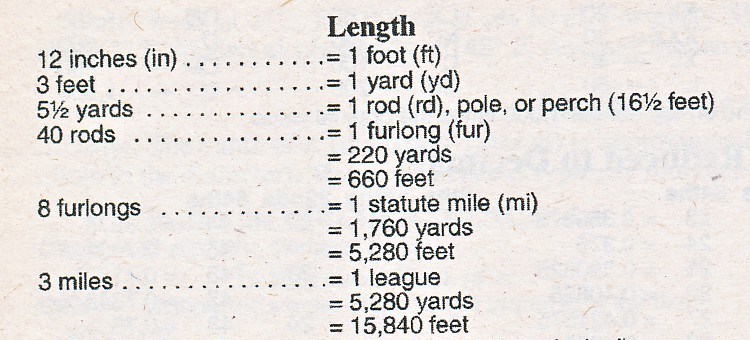
Wow, Grandma actually thought about distances in terms of rods. A rod equals 5 1/2 yards.  So Grandma had to chase the cap about 22 – 27.5 yards.

The use of rods as a unit of measurement apparently was widely used early in the 20th century—but had become largely archaic prior to the latter half of the 20th century. I have never, ever thought in terms of rods.

I can remember having composition books when I was a child that listed all sorts of mysterious weights and measures on the back—rods, perches, and so on. But word problems in math class only referred to inches, feet, yards and other commonly used units. 

Miserable Weather–Rained and Snowed

16-year-old Helena Muffly wrote exactly 100 years ago today: 

Wednesday, February 21, 1912:  It rained and snowed today. Pa came for us tonight. He got there too soon. Made me so mad. Had to miss a class as he didn’t want to wait.

Her middle-aged granddaughter’s comments 100 years later:

Sounds like a miserable, raw late winter day. It’s interesting that Grandma didn’t want to miss a class, but that her father won’t wait. Was the weather that bad? . . . or was he just in a hurry?

I assume that he took Grandma and her brother Jimmie home in a horse-drawn buggy.

Sugar and High Fructose Corn Syrup Per Capita Availability: 1912 and 2012

16-year-old Helena Muffly wrote exactly 100 years ago today: 

Tuesday, February 20, 1912:  I hardly know what to write.

Click on chart to make larger.

Her middle-aged granddaughter’s comments 100 years later:

Since Grandma didn’t write much a hundred years ago today, I’ll tell you about some interesting statistics that I found.

We hear so much about how we eat too many sweets today. The US Department of Agriculture (USDA) has one hundred years of trend data about per capita availability of sugar and high fructose corn syrup.

In 1912 there was enough sugar for every man, woman and child in the US to eat 76 pounds of sugar per year. Sugar availability was 102 pounds in 1972. By 2012 there were 64 pounds per person.

A hundred years ago people ate a small amount of corn syrup per capita, but it was not high fructose corn syrup. Prior to the late 1960s corn syrup was either glucose or dextrose.

In 1972 there was 1 pound of high fructose corn syrup per person. By 1992 there was 63 pounds per person.  It decreased to 50 pounds per person in 2012.

2009 data are the most recent year available on the USDA website. When making the chart, I assumed that per capita availability of sugar and high fructose corn syrup is the same in 2012 as it had been in 2009.