Her middle-aged granddaughter’s comments 100 years later:
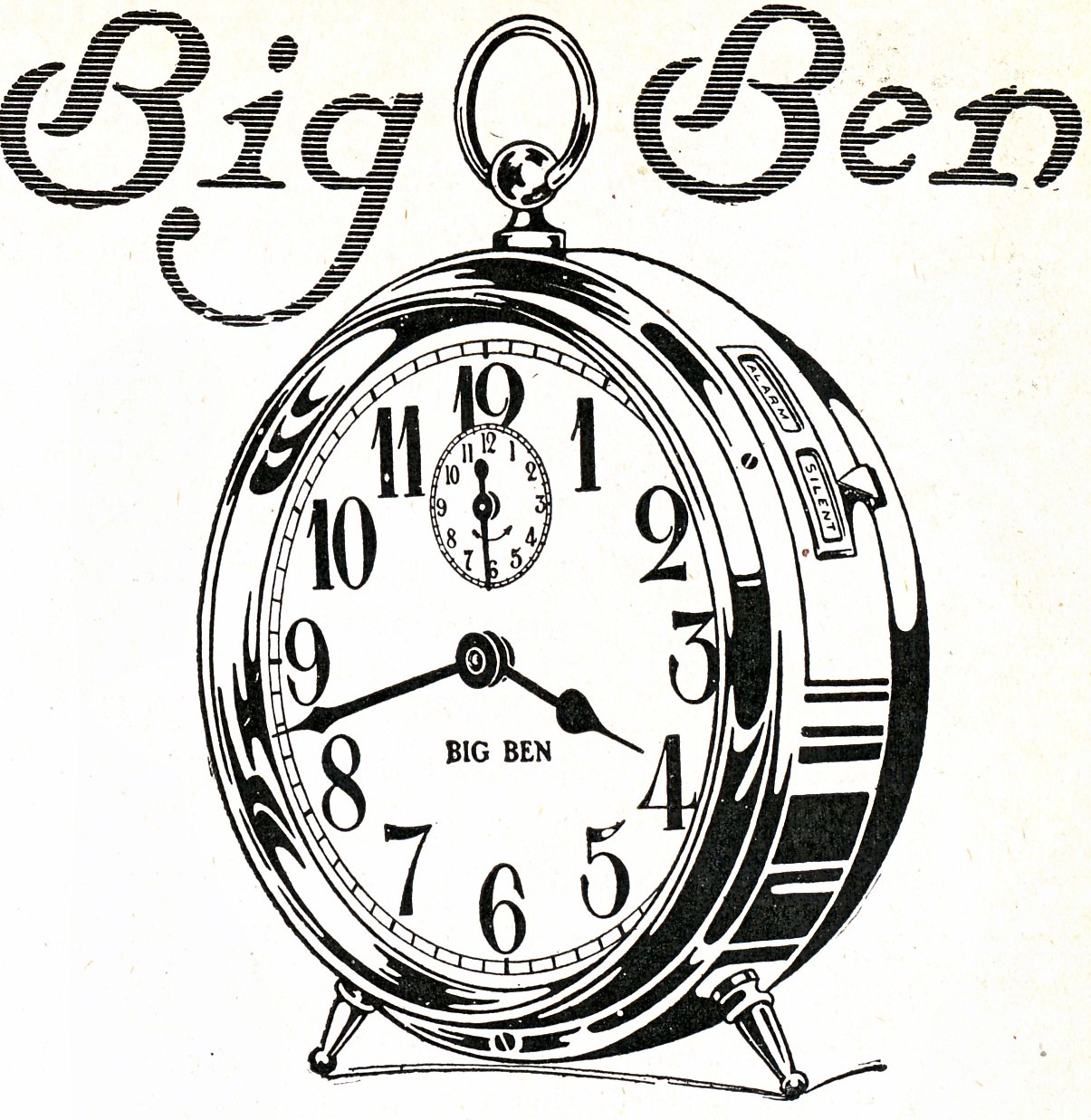
It took more effort to know what the time was in the days before electric and battery-operated clocks. Someone must have forgotten to wind (or pull the weights on) the clock.
Here are the answers to the Brain Bothers that I posted yesterday.
Brain Bothers
Transform a MULE to a PONY in four changes, one letter at a time, without transposing.
Answer: Mule, mole, pole, pone, pony
(Farm Journal, January and March, 1912)
2. What number is divisible by 2,3,4,5, and 6, with a remainder of 1 in each instance, but is divisible by 7 without a remainder?
Answer: 301
(Farm Journal, March and May, 1912)
3. Substitute a letter in the name of an American president, and make something good to eat. Do the same with an American poet with the same result.
17-year-old Helena Muffly wrote exactly 100 years ago today:
Saturday, June 1, 1912:
Passing, the spring time is passing away,
May summer appear all-a-bloom,
But the brightest and fairest of the season,
Is the bright and fair month of sweet June.
Carrie was over to see me this afternoon. I am engaged in trying to solve a puzzle. I have one ninth of it to get yet and it’s a stickler.
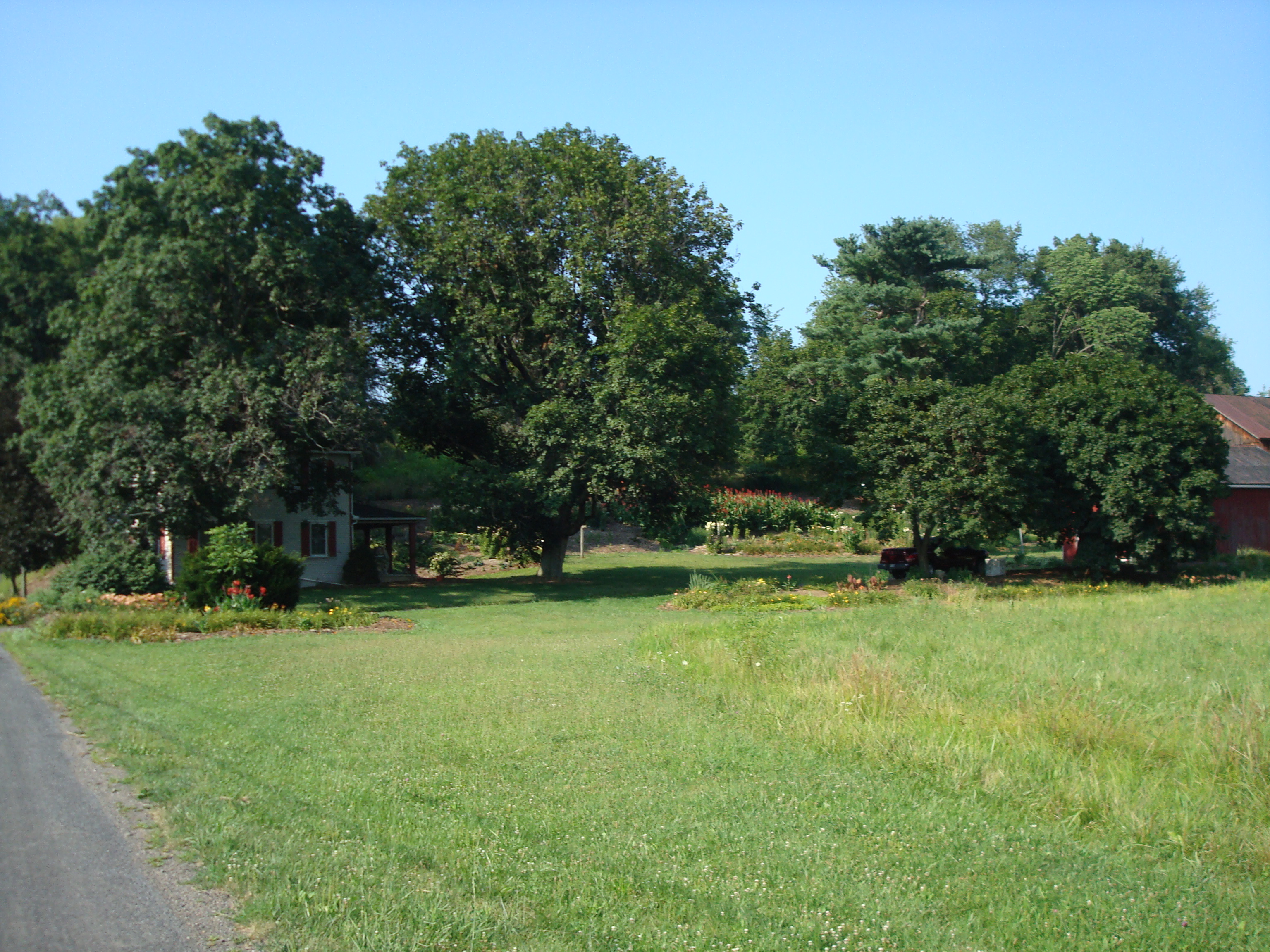
Recent photo of Muffly farm.
Her middle-aged granddaughter’s comments 100 years later:
What was the puzzle like that Grandma so challenging? I found several hundred-year-old puzzles called Brain Bothers in 1912 issues of Farm Journal. I’ll give you the answers tomorrow.
Brain Bothers
1. Transform a MULE to a PONY in four changes, one letter at a time, without transposing.
(January, 1912)
2. What number is divisible by 2,3,4,5, and 6, with a remainder of 1 in each instance, but is divisible by 7 without a remainder?
(March, 1912)
3. Substitute a letter in the name of an American president, and make something good to eat. Do the same with an American poet with the same result.
(May, 1912)
Poem, Etc.
Grandma included a poem in the diary on the first day of each month. Carrie refers to her friend Carrie Stout.
17-year-old Helena Muffly wrote exactly 100 years ago today:
Friday, May 31, 1912:Today seemed like Monday to me, as I didn’t do much work yesterday. Went over to see Carrie.
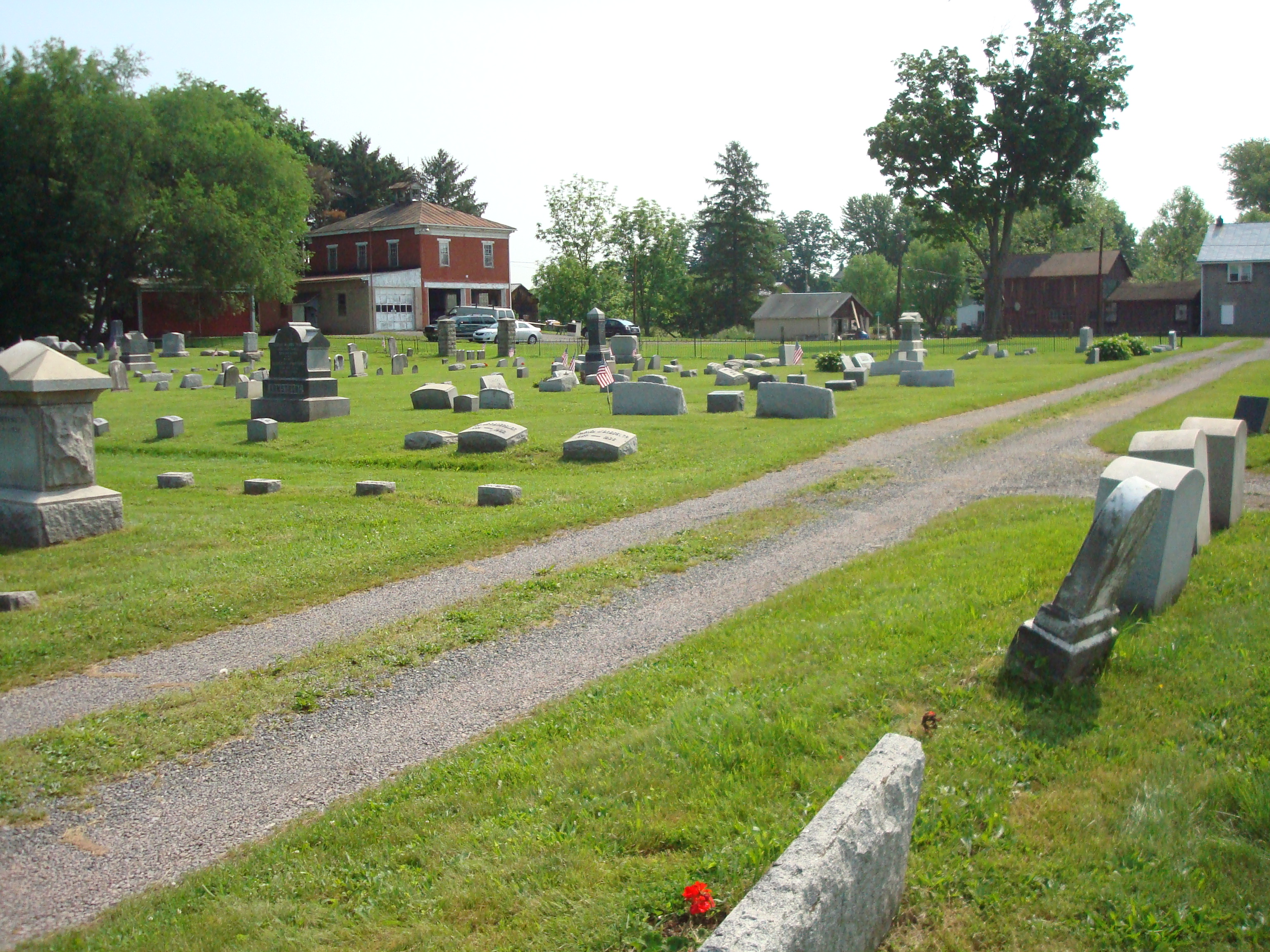
Grandma’s gravestone is in the foreground. The brick building in the background once housed the high school that she attended.
Her middle-aged granddaughter’s comments 100 years later:
I’d like to tell you some more about last week-end. I got to tour the inside of the building that once housed McEwensville High School!
The school building is next to McEwensville Cemetery and is now empty, but from the late 1950s until a few years ago it housed the McEwensville Fire Department.
When I went to the cemetery to put flowers on relatives graves for Memorial Day, I noticed that the building doors were open and that there was a garage sale taking place inside.
With my heart beating rapidly I went into the garage sale, and told the story of Grandma and her diary.
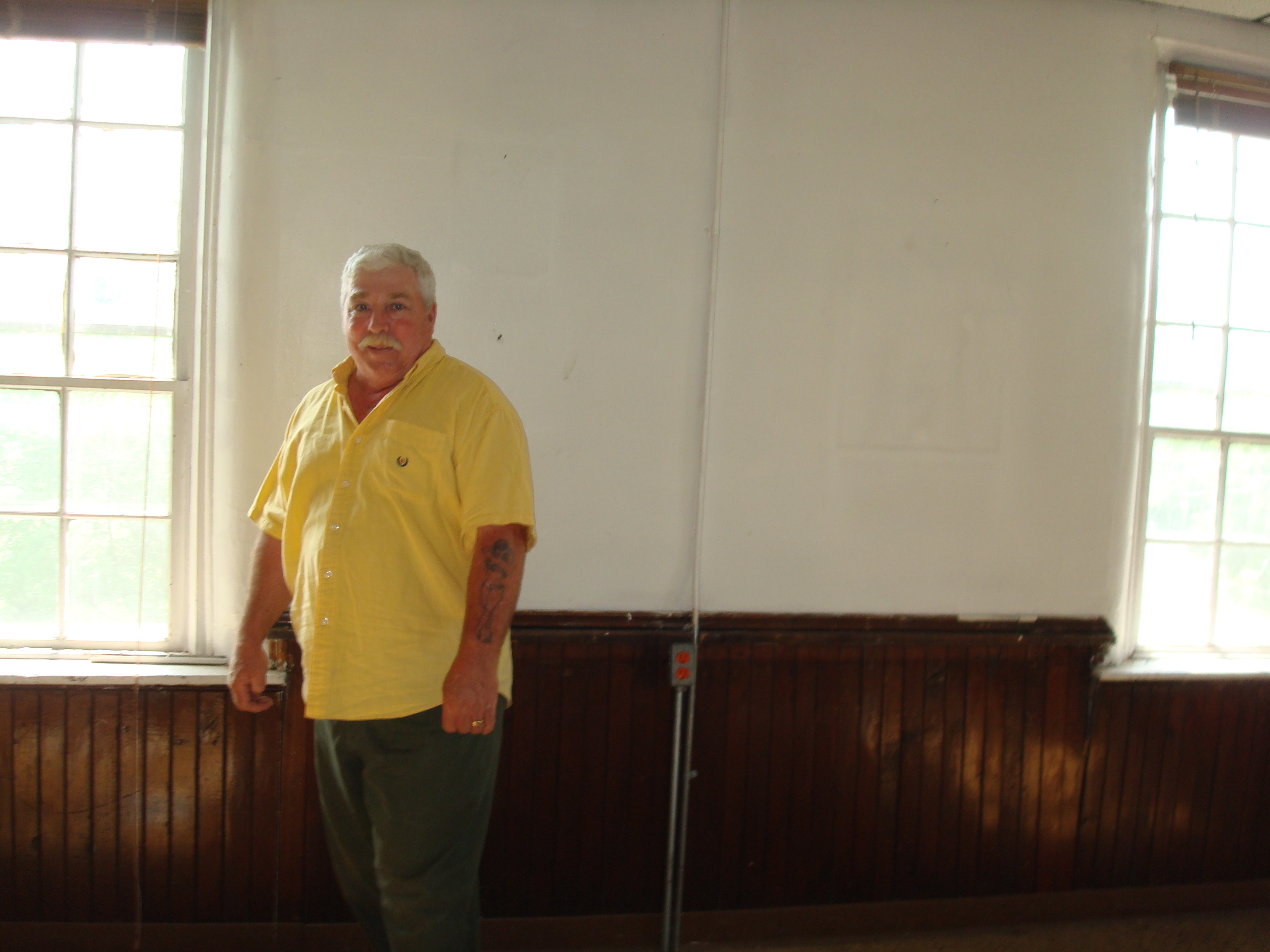
I met a wonderful family, including Vincent Emery, who had purchased the building several years ago. He even gave me a tour of the second floor where the high school was located (the primary school was on the first floor).
Vincent Emery giving me the tour.
As I ascended the stairs, my whole body tingled with excitement. I finally was going to be in the room that Grandma had written so much about. Some things had changed since Grandma’s time. The stairs had been moved to enable the building to serve as a fire truck garage and the tile ceiling was from a later time.
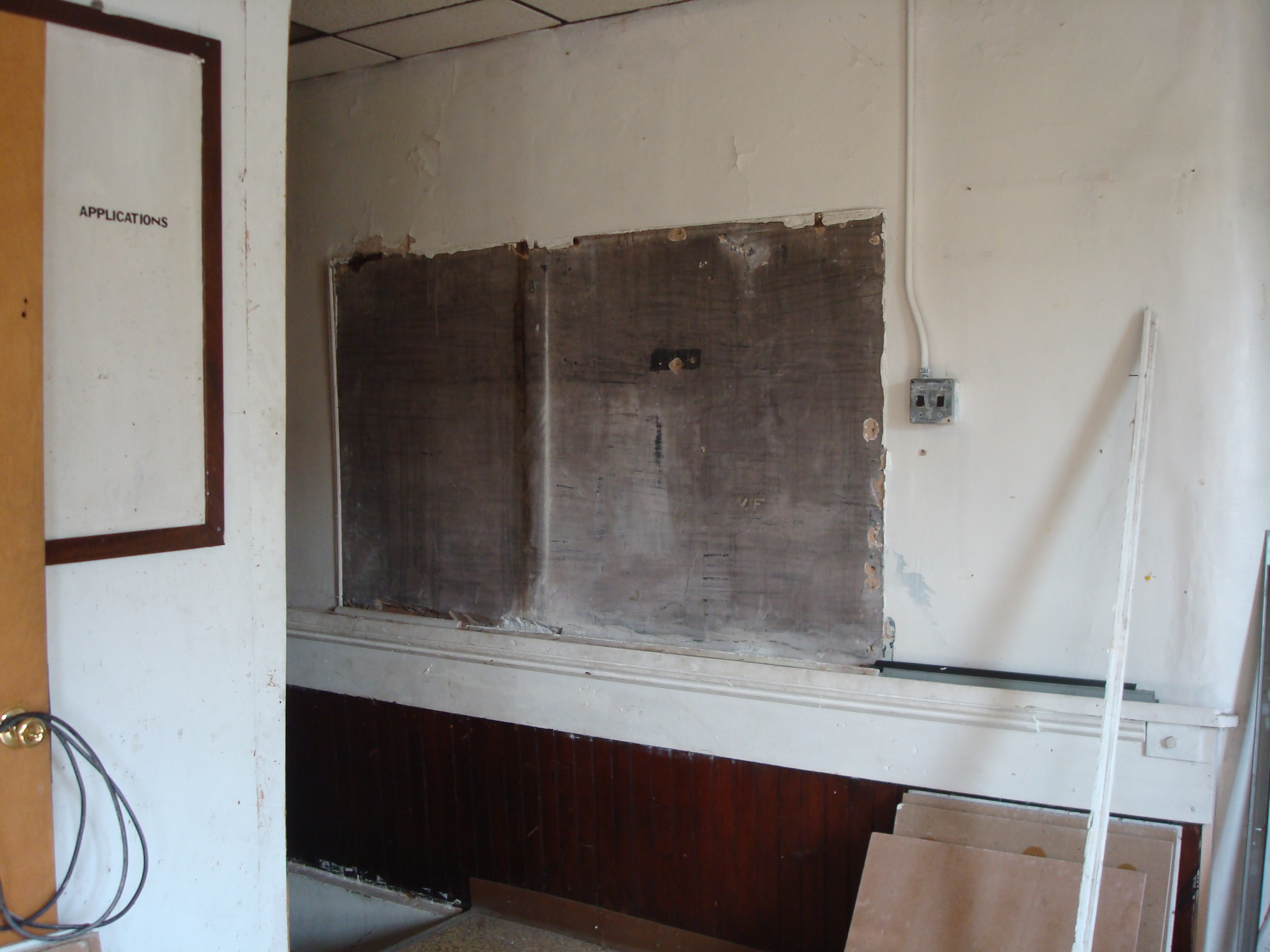
But much appeared to be the same as it had been when it was a school. . . . wooden wainscoting . . . the chalk board . . .
The old slate chalkboard now sits on the floor.The hole in the wall where the chalkboard once hung.
17-year-old Helena Muffly wrote exactly 100 years ago today:
Thursday, May 30, 1912: Memorial Day: Carrie and I went up to McEwensville this morning. This afternoon we went over to Watsontown accompanied by another girl friend. We had the pleasure of getting an automobile ride. It was the first time I was ever in one and consequently never had experienced a ride. We had a good time.
F.O.B. Detroit, including equipment of windshield, gas lamps and generator, oil lamps, tools, and horn. Three speeds forward and reverse; sliding gears. Four cylinder motor, 3 ¼-inch bore and 5 ½ inch stroke. Bosch magnets, 106-inch wheel base, 32 x 3 ½ inch tires. Color, Standard Hupmobile Blue, Roadster, $900.
Two cars whose name is your guarantee
We refer to the two leading Hupmobiles—the Long-Stroke “32” Touring Car, and the Standard 20 H.P. Runabout.
Both the product of the same engineering skill and the same shop organization that originated the Hupmobile.
Both incorporating elements of value not found elsewhere at the price or near it.
Each the sign and symbol of the highest and best construction of its particular type.
The Long-Stroke “32,” with its cylinders cast in one piece, its three bearing crank shaft, its enclosed valves—a motor of extraordinary pulling power and sturdiness and absolute silences, perfectly dust-and oil-tight.
Multiple disc clutch, 13 inches in diameter.
Three-speed transmission, large enough for a 40 H.P. car.
Each a feature for the equal of which you must go beyond Hupmobile price.
And a full floating rear axle of especially strong construction.
Fifteen thousand owners, the world over, testify to the worth and serviceability, the staunchness and durability, of the Runabout.
It, too, has a unit power plant; multiple disc clutch; and sliding gear transmission.
All the power you will ever need or want and to spare.
If you are in the market for a touring car around $900, or a two passenger car, around $750, get in touch with the Hupmobile dealer.
He will show you the actual value of these cars, the value that sets them above other cars of their prices.
Write for a complete catalog.
Standard 20 H.P. Hupmobile, $750
F.O.B. Detroit, with same power plant that took the world touring car around the world—four cylinders, 20 H.P., sliding gears, Bosch magnets, Equipped with top, windshield, gas lights and generator, oil lamps, tools, and horn. Roadster with 110-inch wheel base and highly finished steel box mounted on rear deck, $850.
Hup Motor Car Company, 1201 Jefferson Ave., Detroit Mich.
Her middle-aged granddaughter’s comments 100 years later:
Wow, it’s awesome that Grandma had her first ride in an automobile. I wonder who gave Grandma and her friend Carrie Stout the ride.
The previous year, on May 8, 1911, Grandma used a telephone for the first time.
Technology was rapidly coming to Central Pennsyvlania!
Memorial Day
A hundred years ago Memorial Day was always on May 30—instead of on the last Monday in May like it is now.
17-year-old Helena Muffly wrote exactly 100 years ago today:
Wednesday, May 29, 1912: We teased her about her anniversary, as it was just twenty eight years ago that she was wed. Miss Carrie was over this evening and we did some planning.
Her middle-aged granddaughter’s comments 100 years later:
May 29 was Grandma’s mother’s 28th wedding anniversary. The previous year, Grandma had written in the diary on May 29, 1911:
My mother’s wedding anniversary. 27 years ago. . .
I recently found an old newspaper clipping from the Watsontown Star and Record for 1909 that included a mention of the wedding in its 25 Years Ago column. It was one of the clippings in the small group of photos and clippings that were found in Grandma’s house after she died. It’s kind of cool that the clipping has survived all of these years.
Miss Carrie referred to Grandma’s friend Carrie Stout.
17-year-old Helena Muffly wrote exactly 100 years ago today:
Tuesday, May 28, 1912: Had to stay out in the rain this afternoon and therefore got a little wet. Ruth and I went up to Oakes’ this evening.
Her middle-aged granddaughter’s comments 100 years later:
Yesterday I was in the McEwensville area for reasons unrelated to the diary. On my way into town I passed the Watsontown Flea Market; and, on a whim, decided to stop to see if I could find any hundred-year-old issues of Ladies Home Journal.
No luck with the magazines, but a vender was selling red geraniums.
The geraniums reminded me of how my mother and I used to put red geraniums on the graves of deceased relatives for Memorial Day.
I haven’t put flowers on graves since I was a child; but–before I’d really thought things through–I’d purchased nine red geraniums.
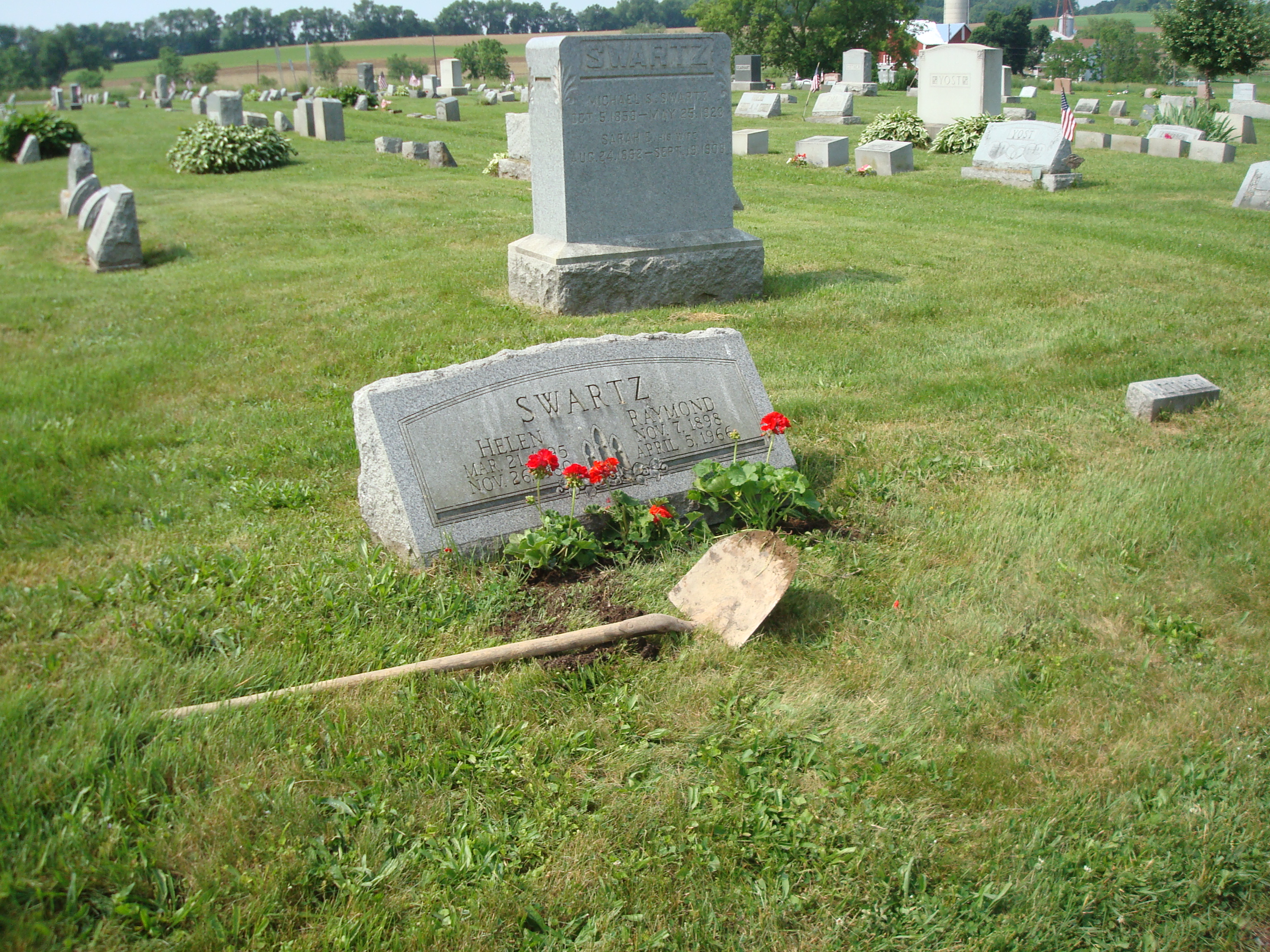
I made a short detour to locate a shovel. I could only found a rusty old shovel, but I decided that it would work. It probably was the same one I’d once used with my mother to plant geraniums.
I then headed to the McEwensville Cemetery.
When I got to the cemetery I discovered that an uncle, aunt, or cousin had already planted a red geranium. (It’s interesting that we all decided to plant red geraniums. I guess it’s a family tradition.)
I began to plant flowers on the graves of my paternal grandparents (Helen–she’d dropped the “a” long before she died– and Raymond Swartz), maternal grandparents, and other relatives.
The old rusty shovel wobbled as I planted the flowers, but it didn’t break.
I rushed because I only had a few minutes before I was supposed to be elsewhere for lunch. But somehow it felt right.
It was humid and the temperatures were in the 80’s. I started to sweat—but thought—I can’t be late, I’ve got to get this done quickly.
The last grave I got to was my mother’s. I rapidly planted the last two geraniums as the sweat beaded up on my forehead. I thought, “I’m going to only be a couple minutes late.”
At that moment the sweat rolled off my forehead and into my eyes—and stinging tears caused by the sweat started flowing. I couldn’t see and I knew that I couldn’t drive.
I was going to be very late getting to lunch, but suddenly was grateful.
It was good to remember all of my ancestors who’d gone before me—my paternal and maternal grandparents, my mother . . .
17-year-old Helena Muffly wrote exactly 100 years ago today:
Monday, May 27, 1912:I hope this week won’t be as monotonous as last week was. I have to watch cows more days and then I think I’ll make a dash for liberty.
Her middle-aged granddaughter’s comments 100 years later:
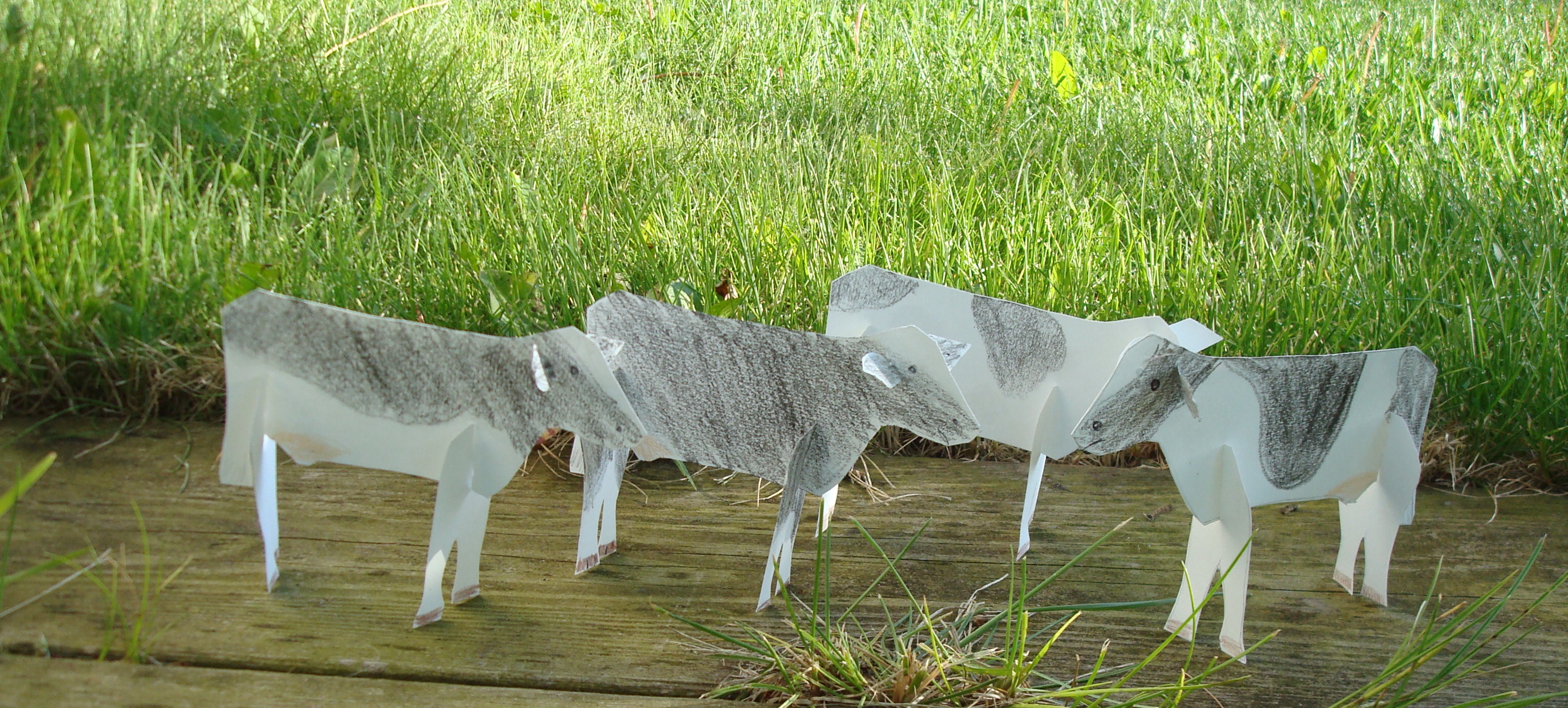
This is the third time in two weeks that Grandma mentioned watching the cows. I agree with Grandma that it’s getting monotonous, so decided to have a little fun today and make some paper cows.
(My husband thinks that I’ve gone a bit over the edge–especially when I posed the cows for the photo–but making the cows was relaxing and we all need to play sometimes. 🙂 )
The June, 1913 issue of The School-Arts Magazine had a pattern for a paper cow.
If you’d like to make some cows, here is the pattern and the directions:
Cut out the pattern pieces. On heavy cardstock trace around the pattern pieces. Cut out and decorate as desired.
Dovetail the legs and body together at the slits. The slits for the ears (see small black line between eyes and neck) can be made by an adult using a small sharp knife or very small sharp scissors.
Note: I used crayons to put the black spots on the cows. If I did it again, I might cut back spots out of construction paper.
P.S.—Previous posts with old-time paper crafts have been very popular. If you haven’t already seen them you may want to check them out:
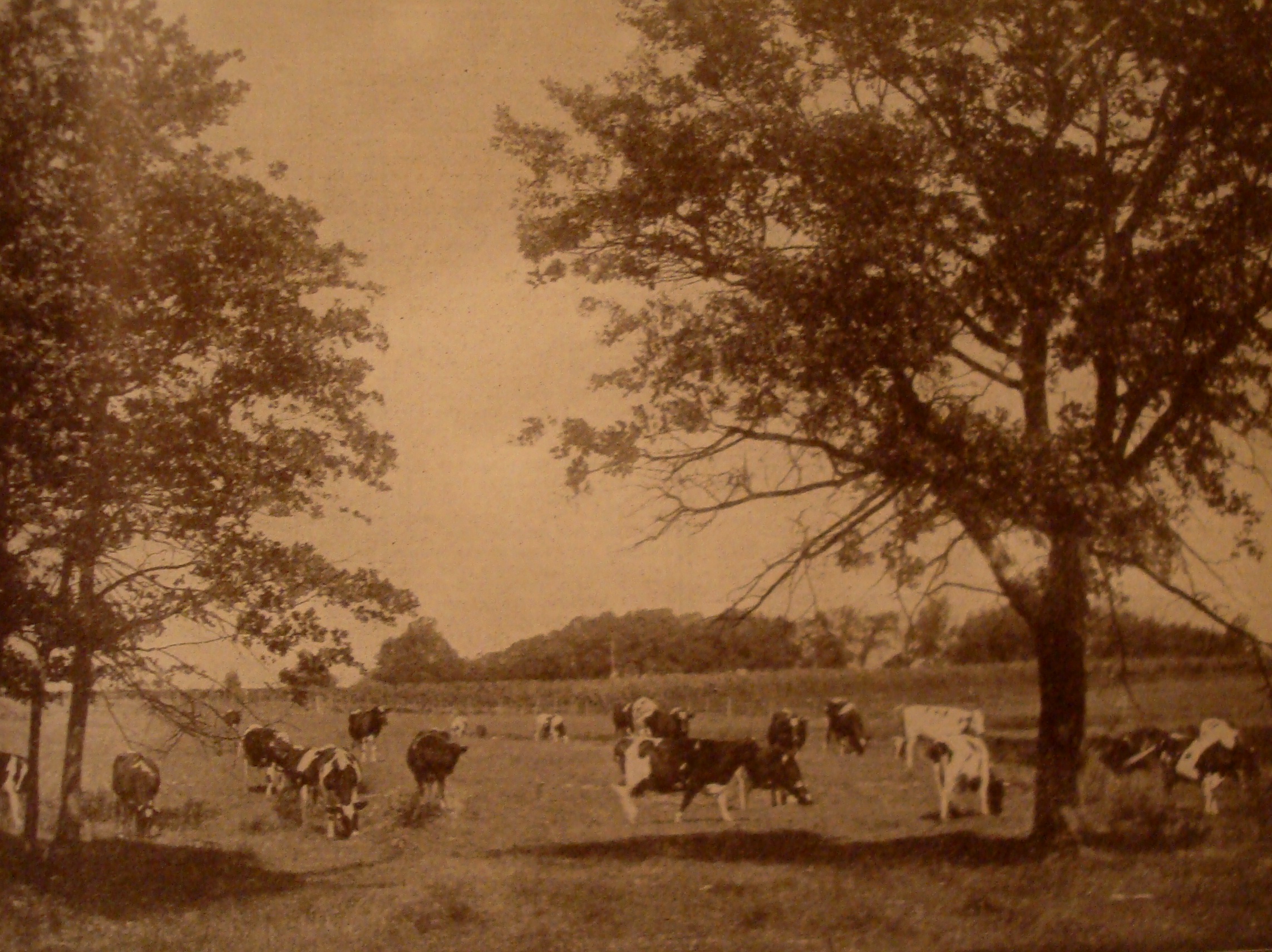
I’m reprinting this 1912 photo that I posted several days ago. I had fun trying to reproduce the look of cows in a field when I took the picture of the paper cows and thought you might enjoy seeing this photo again. Photo source: Kimball’s Dairy Farmer Magazine (June 1, 1912)