17-year-old Helena Muffly wrote exactly 100 years ago today:
Sunday, May 19, 1912:Must go to Sunday School this afternoon. Wore my white dress. Uncle Sam was here this afternoon.
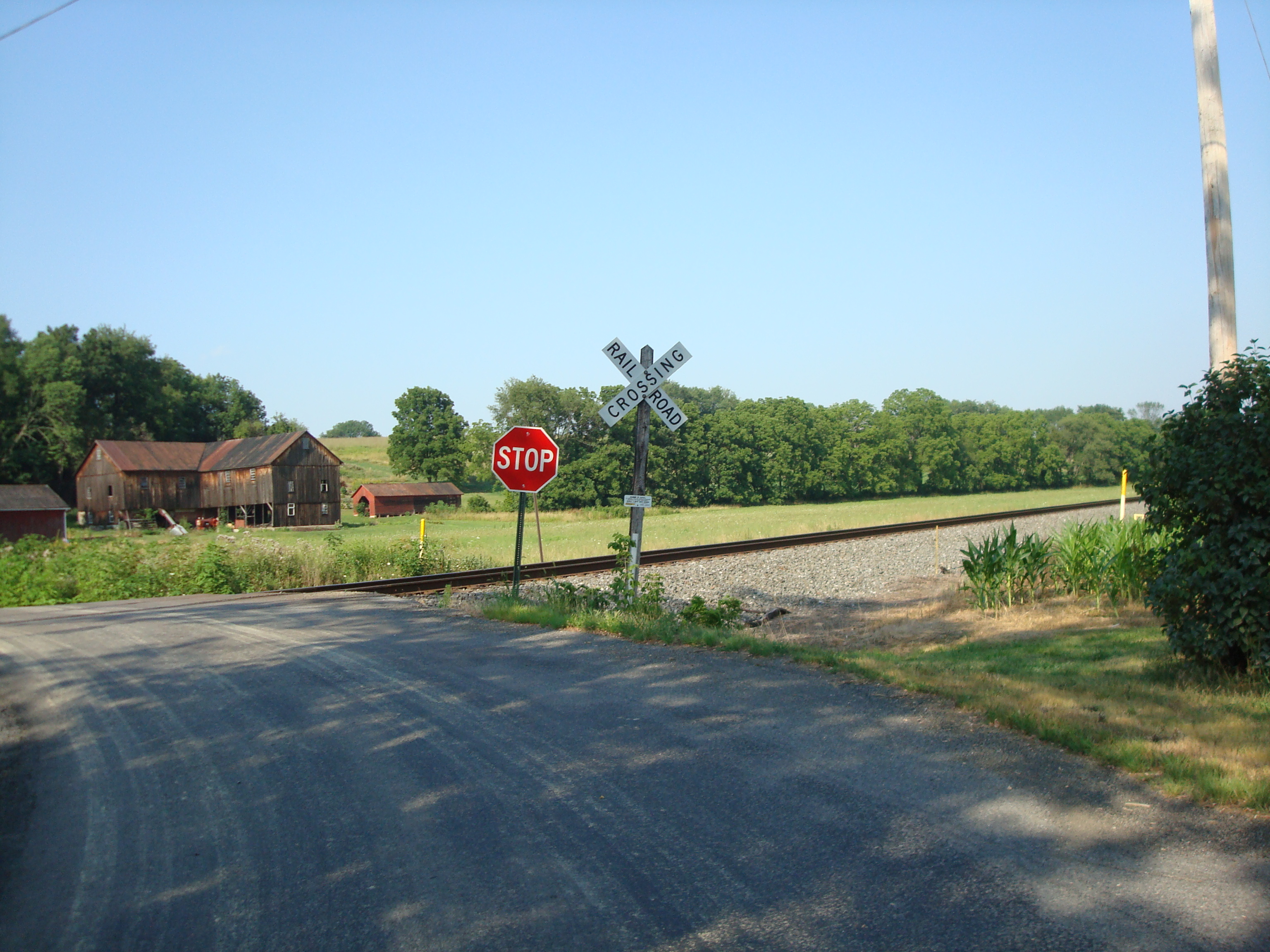
Recent photo of the railroad tracks that cross the Muffly farm.
Her middle-aged granddaughter’s comments 100 years later:
Well, we now know a little more about the new dress. It was white.
Sam Muffly was a brother of Grandma’s father, Albert. In 1912, he would have been 45 years old. He was single and lived in the small hamlet of Ottawa (Pennsylvania) with his younger brother George and his widowed sister and her two children. I think that he was a farmer.
Ottawa is about 10 miles east of McEwensville. He probably came on the Susquehanna, Bloomsburg and Berwick train since its route took it through both the Muffly farm and Ottawa. The train had a whistle-stop at a feed mill which was located very near the farm.
17-year-old Helena Muffly wrote exactly 100 years ago today:
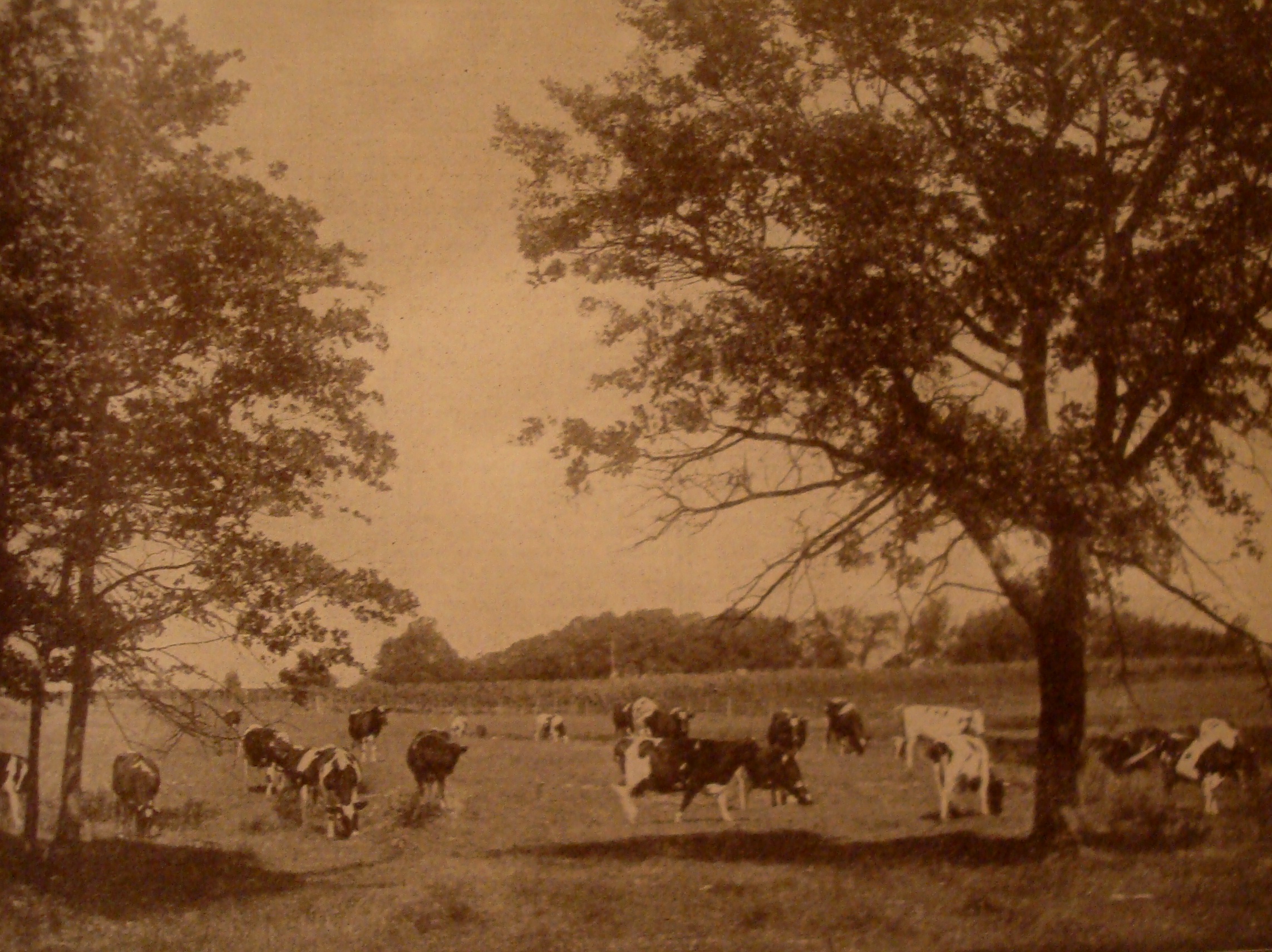
Saturday, May 18, 1912: What a doleful calamity. I had to watch the cows this morning, I mean this afternoon. I’m afraid that this is only the beginning. They got into the wheat for me.
Her middle-aged granddaughter’s comments 100 years later:
I bet that Grandma’s father was upset with her for allowing the cows to get into the wheat field. The cows could have done a lot of damage as they tramped through the field and nibbled the lush green wheat plants.
17-year-old Helena Muffly wrote exactly 100 years ago today:
Friday, May 17, 1912: Went to McEwensville this afternoon. Mousie had some business for me to transact.
Her middle-aged granddaughter’s comments 100 years later:
I assume that Mousie referred to Grandma’s mother.
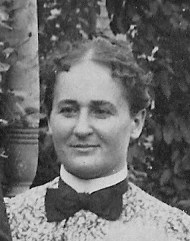
Mother: Phoebe Muffly
Did Grandma think that her mother was “mousie” and lacked an appreciation of what fashionable dresses should look like?
The previous day’s diary entry referred to a disagreement with her mother over a dress that her mother was making for her. My take on that entry was that her mother didn’t quite get how to make the dress look stylish— probably because her tastes were mousie–but that Grandma persevered and the dress ended up okay.
17-year-old Helena Muffly wrote exactly 100 years ago today:
Thursday, May 16, 1912:Oh dear today was one raining day. My dress is finished, but such a time as Ma and I had to get it so. She made it and I did the bossing. If I could have a good pen my writing might look some better.
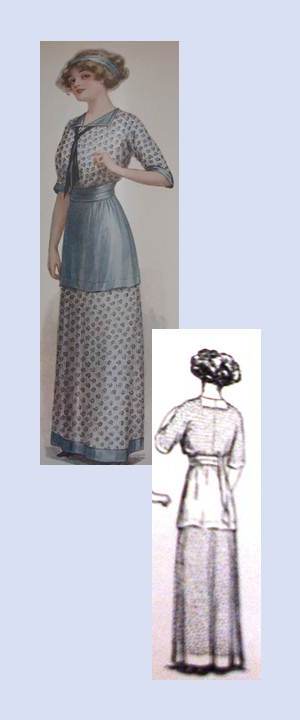
I noticed that there were small line drawings in the old Ladies Home Journal (June, 1911) magazine that showed the back of several of the dresses that I featured in previous posts, and thought you might enjoy seeing both the front and back of the dresses.
Her middle-aged granddaughter’s comments 100 years later:
Yeah, the dress was finished! Grandma mentioned the dress at least three times during May.
May 8: Did some sewing this afternoon. I have so many things to fix over and a dress I want to get made. . .
May 13: Ma got my dress on the go at last and I’ll keep at her until she gets it made.
May 15: We had sort of a sewing bee. Ma worked on my dress . . .
What could Grandma and her mother have disagreed about regarding the dress?
In other words, what stylish features did young people like a hundred years ago that their mothers thought were inappropriate or didn’t think looked good? . . . tight bodices? . . . shorter dresses that exposed ankles? . . . low necklines? . . . ???
17-year-old Helena Muffly wrote exactly 100 years ago today:
Wednesday, May 15, 1912: Besse was out this afternoon. We had sort of a sewing bee. Ma worked on my dress and Sis brought several along.
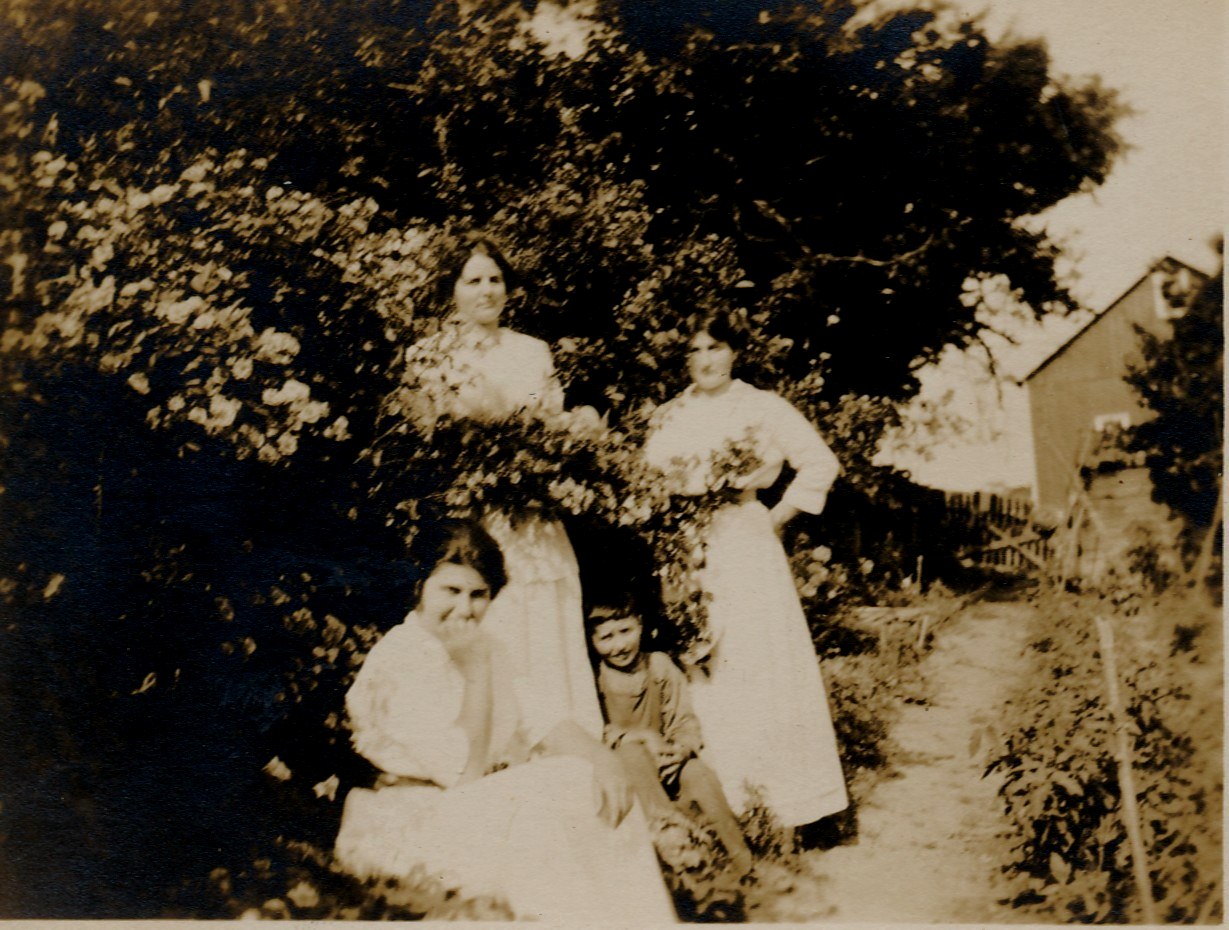
Left to right: Helena (seated), Besse, Jimmie, Ruth (circa 1912)
Her middle-aged granddaughter’s comments 100 years later:
Yeah! I finally know what Besse looked like. I recently found a picture of all four Muffly children. I think that it was taken about the same time as the diary. In 1912 Jimmie was 6-years-old, and I think that the boy in the photo looks about six.
This is the first picture that I’ve seen of Grandma’s oldest sister Besse. It’s fun to finally be able to picture what she looked like.
It’s also fun to see what the path toward the barn (or maybe some other farm building) looked like–and how the siblings arranged themselves for a group photo. It’s interesting how Jimmie is clinging to Besse, who was married and not living at home. She must have made a fuss over Jimmie when she visited. In April 1912 Besse had a baby who died shortly after birth. Maybe she transferred some of her maternal feelings to her little brother.
It’s also interesting how Ruth is standing a little separate from the others and has her hand on her hips. It reminds me of the times in the diary when Grandma refers to Ruth as “her highness.”
An aside–My brother helped me locate a small group of pictures (including this one), some old newspaper clippings, and related items that had been found in Grandma’s house after she died.
I’ve really been enjoying the newly found items, and look forward to sharing some more of the pictures and clippings over the next few weeks.
17-year-old Helena Muffly wrote exactly 100 years ago today:
Tuesday, May 14, 1912: Wish it would get warmer and quit raining. I just got a long scratch on my thumb awhile ago and it’s rather sore.
Her middle-aged granddaughter’s comments 100 years later:
How did people treat scratches and cuts a hundred years ago?
The Compendium of Everyday Wants, published in 1907, recommended:
CUTS AND WOUNDS.—There are two kinds of cuts or wounds—incised, which means cut into, or lacerated, which means torn.
The first kind are usually not so dangerous and are treated in proportion to their size and depth. These generally heal of themselves. Clots formed on a cut should not be washed away. If there is not much bleeding, wipe away any impurities and bandage. A small piece of adhesive plaster is all that is necessary for household cuts.
Lacerated wounds have ragged edges, and the soft parts about them often will be found bruised and torn. These are most frequently caused by railway accidents, machinery, and falling timbers.
Treatment.—Cleanse the wound with warm water, wet a cloth over it and bandage lightly.