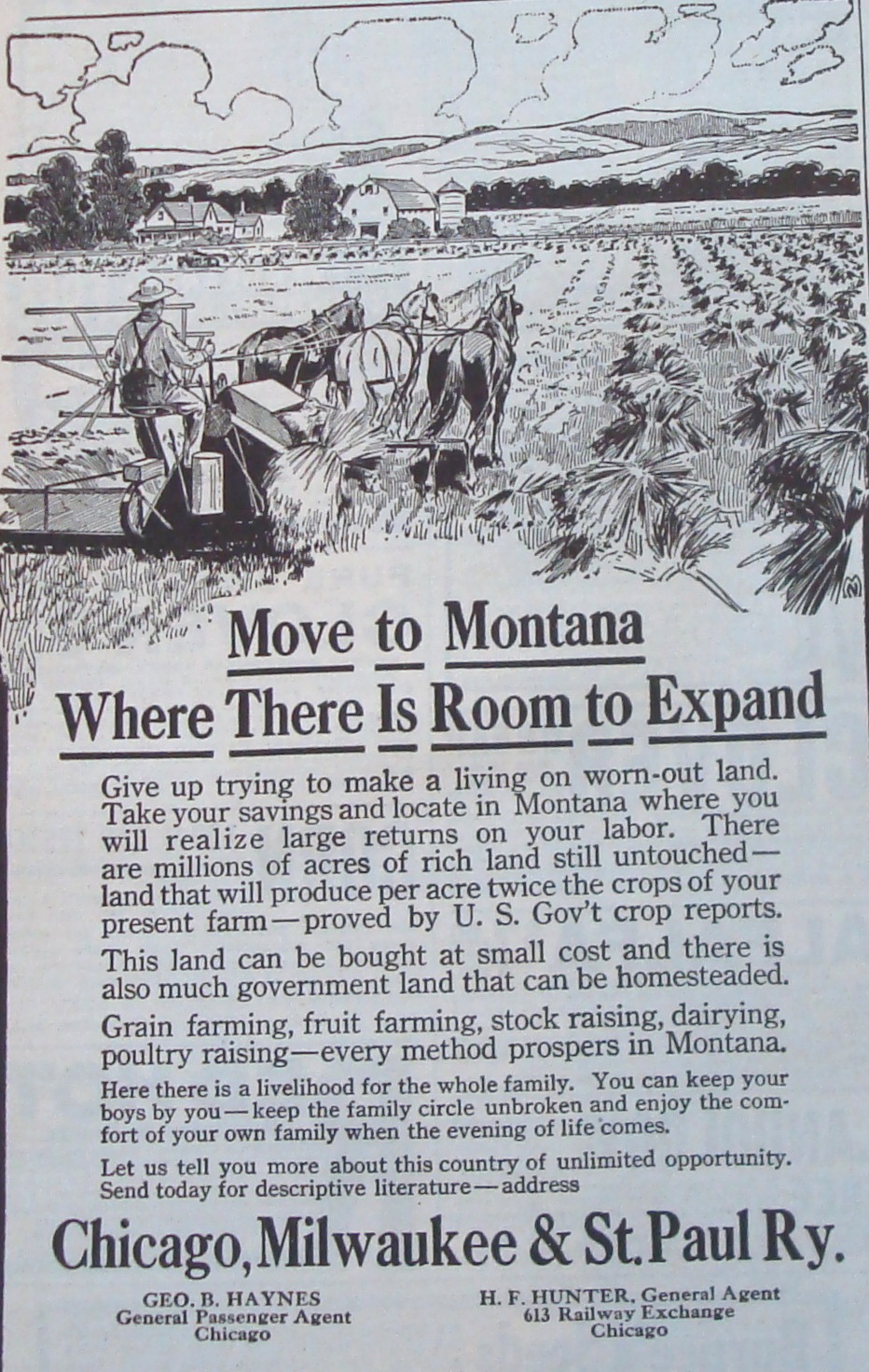
“Move to Montana” Advertisement

18-year-old Helena Muffly wrote exactly 100 years ago today:

Tuesday, February 10, 1914:  Nothing doing.

Kimball's Dairy Farmer Magazine (February 1, 1914)
Kimball’s Dairy Farmer Magazine (February 1, 1914)

Her middle-aged granddaughter’s comments 100 years later:

Since Grandma didn’t write much a hundred years ago today, I’ll share a fun ad that encouraged families to homestead  to Montana.

Whew, it’s hard to believe that there still was “unbroken” land a hundred years ago that could be had for very little money. At least the people were able to get there in relative comfort via train, and didn’t need the covered wagons that were used in prior years.

1914 Books That Have Stood the Test of Time

18-year-old Helena Muffly wrote exactly 100 years ago today: 

Monday, February 9, 1914:  Finished reading two books today. Retired later than my usual hour.
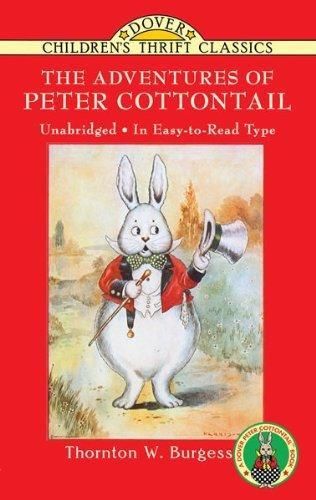
Peter-Cottontail

Her middle-aged granddaughter’s comments 100 years later:

Which books was Grandma reading?

Goodreads lists two hundred books published in 1913 that are still in widely read. They probably were not the most popular books at the time, but rather they are the books that have endured –and whose message apparently continues to resonate a hundred years later.

Ten books on the list that I recognized the title or author are listed below:

1.         The Dubliners by James Joyce

2.         Dracula’s Guest and Other Weird Stories by Bram Stoker

3.         The Beasts of Tarzan (Tarzan #3) by Edgar Rice Burroughs (magazine serial)

4.         Through the Brazilian Wilderness by Theodore Roosevelt

5.         The Adventures of Peter Cottontail by Thornton W. Burgess

6.         Dr. Montessori’s Own Handbook by Marie Montessori

7.         Tom Swift and his Photo Telephone or the Picture that Saved a Fortune (Tom Swift #17) by Victor Appleton

8.         Selected Prose of Oscar Wilde by Oscar Wilde

9.         The Mystery of the Kingdom of God by Albert Schweitzer

10.       The Social History of Smoking by George Latimer Apperson

You may also enjoy similar posts that I did for books published in 1911 – 1913:

1911 Books That Have Stood the Test of Time

1912 Books That Have Stood the Test of Time

1913 Books That Have Stood the Test of Time

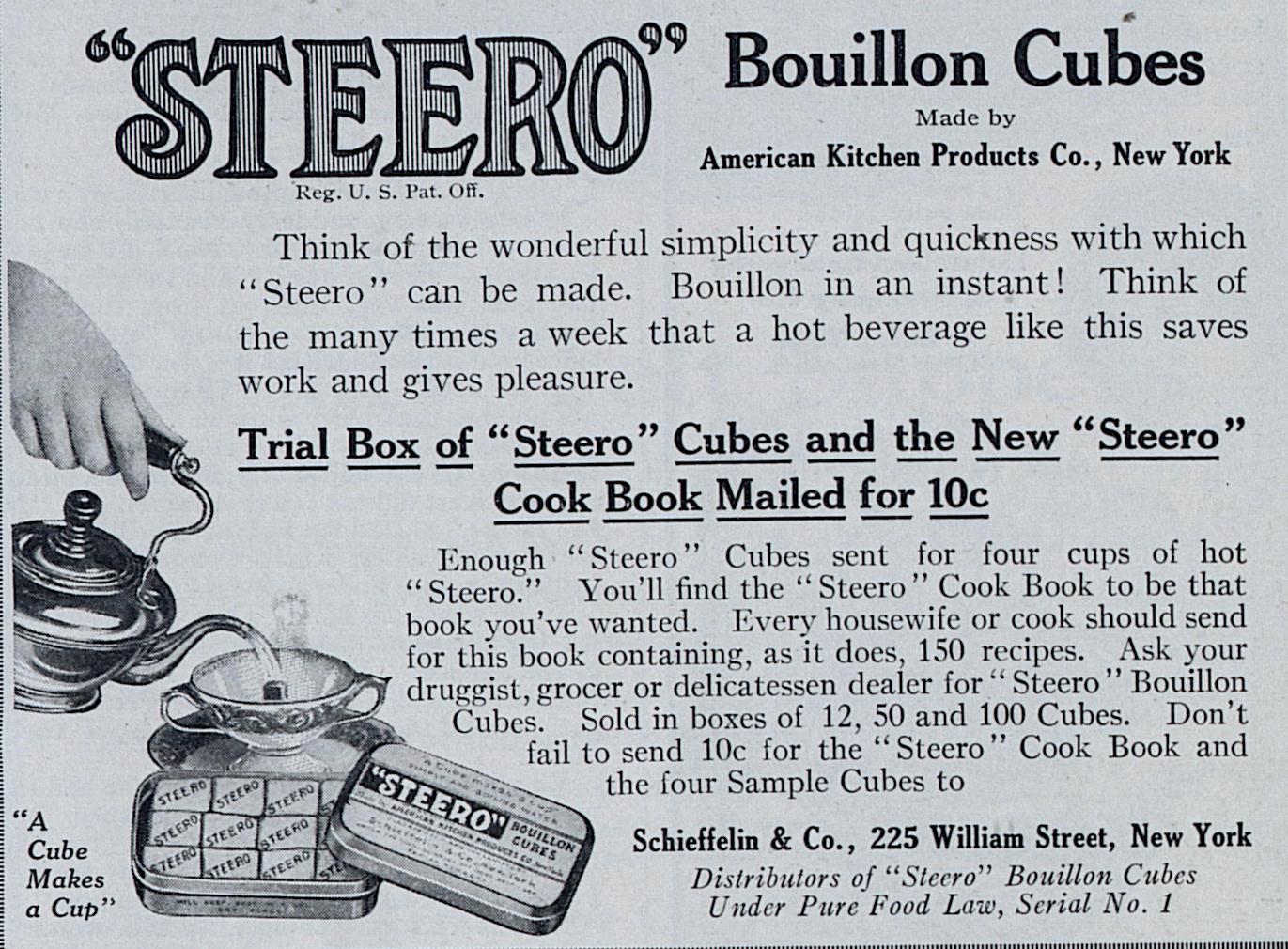
1914 Steero Bouillon Advertisement

18-year-old Helena Muffly wrote exactly 100 years ago today: 

Sunday, February 8, 1914:  Went to Sunday school this afternoon. Had an awful time coming home. The wind was simply terrific.

Source: Ladies Home Journal (February, 1914)

Her middle-aged granddaughter’s comments 100 years later:

Brrr.. . I bet Grandma was ready for a hot drink by the time she got home. . . .maybe a “modern” drink like Steero Bouillon.

Jenkins Coin Game

18-year-old Helena Muffly wrote exactly 100 years ago today: 

Saturday, February 7, 1914:  Ruth and I went up to a social at McEwensville this evening. Had quite a favorable time. Also learned how to play up Jenkins. Our side got beat some.

Quite a funny thing happened when we started to come home. It was all Ruthie’s fault any way.

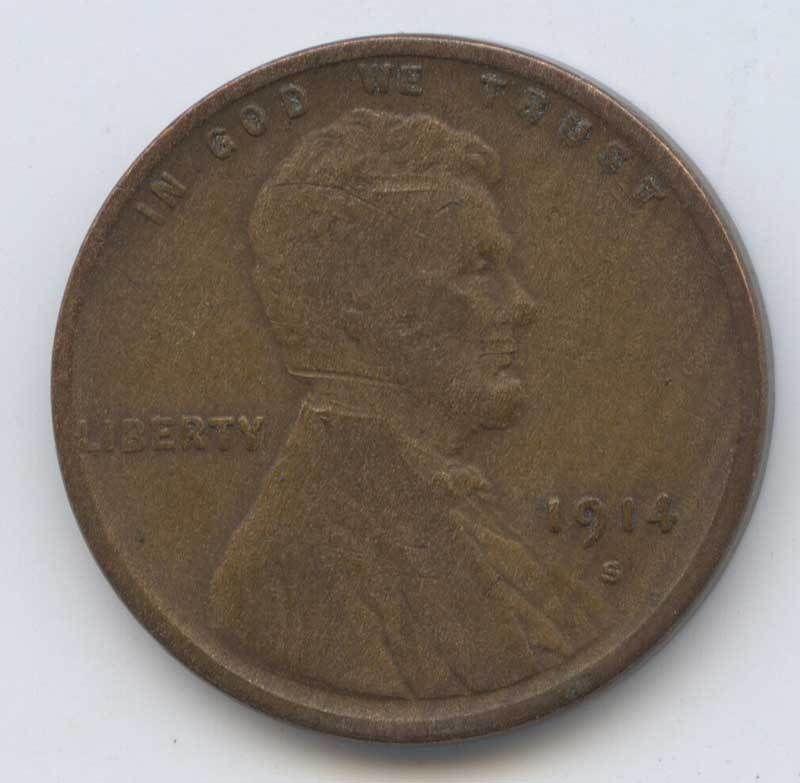
1914-penny

Her middle-aged granddaughter’s comments 100 years later:

Grandma—more please. What funny thing happened that was Ruth’s fault?

Sounds like Grandma and her sister Ruth had a fun Saturday evening—even if Grandma’s team didn’t do well.

I learned a new game today. I never heard of Jenkins; but when I googled it, a Wikipedia entry for Jenkins popped up. I discovered that it is also called Up Jenkins and is a coin game.

Players on a team hide a coin in a hand as they slap their palms down on a table. The other team tries to guess which hand the coin is under.

According to Wikipedia:

The captain of one team takes a coin and passes it under the table to the second person of the team. The players on that team pass the coin under the table back and forth from one player to another. The object of the game is to do it so carefully that the opposing team cannot guess which player has the coin.

Once this selection is made, the opposing team’s captain yells “Up Jenkins” at which point all players on the team with the coin place their elbows on the table with their hands extended straight toward the ceiling. The opposing team’s captain then yells “Down Jenkins” or “Bang Ems”, at which point the “coin” team slams their palms face-down on the table. The goal of this stage of the game is to conceal the “clink” of the coin on the table to confuse the other team as to where the coin is.

In the guessing phase of the game, the non-coin team selects palms, one by one, in an attempt to isolate the coin as the “last palm standing.”

Caught a Cold

18-year-old Helena Muffly wrote exactly 100 years ago today:

Friday, February 6, 1914:  Got a cold. Guess tis the first I’ve had this winter. Didn’t feel very good today at all.

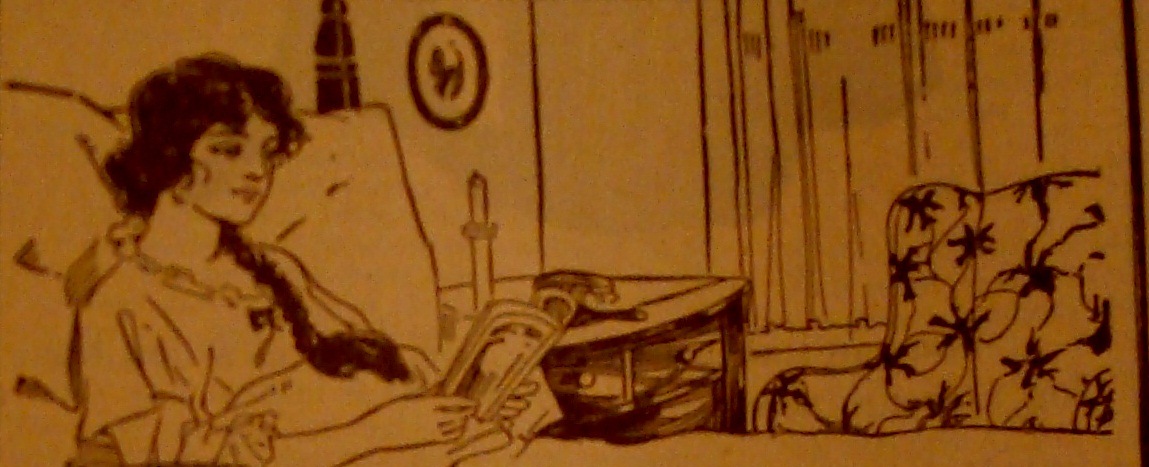
Picture Source: Kimball's Dairy Farmer Magazine (November 15, 1914)
Picture Source: Kimball’s Dairy Farmer Magazine (November 15, 1914)

 Her middle-aged granddaughter’s comments 100 years later:

Colds are no fun.

I always catch colds when I’m exhausted and feeling down.  I think that it affects my immune system.  I bet that the same thing happened to Grandma.

She did a recitation the previous night at a Christian Endeavor service—and it didn’t go well since she forgot part of it.

What Does “Made Quite a Break” Mean?

18-year-old Helena Muffly wrote exactly 100 years ago today: 

Thursday, February 5, 1914:  Got through with our affair at the church. Made quite a break, and guess that made me forget part of my recitation.

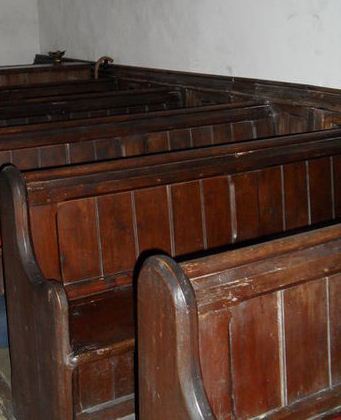
Were Grandma's friends sitting in the pews listening to her recitation? Did they giggle when she forgot her lines?  Photo source: Wikimedia Commons
I can picture Grandma’s friends in their long skirts sitting in the pews listening to the recitation. (Photo source: Wikimedia Commons)

Her middle-aged granddaughter’s comments 100 years later:

Grandma—I’m sorry that your recitation didn’t go well. What a downer!

—-

Previous diary entries said that the Christian Endeavor Union was holding a week of services in McEwensville—and that Grandma was learning a speech to give at the service on Thursday.  An entry also suggested that she may have been part of a skit or singing group at the service.

This entry doesn’t quite make sense to me. What does “ made quite a break mean?” . . . and why would it cause Grandma to forget part of her recitation?

A Little More About Christian Endeavor

18-year-old Helena Muffly wrote exactly 100 years ago today: 

Wednesday, February 4, 1914:  Was up to service and practice this evening.

DSC06534
I’m not sure where the Christian Endeavor services were held, but in 1912, a Christian Endeavor Convention was held at the Reformed Church (today called St. John’s United Church of Christ).

Her middle-aged granddaughter’s comments 100 years later:

The Christian Endeavor Union was holding a week of services in McEwensville. On Sunday, February 1 Grandma wrote:

I went up to attend some kind of C.E. Union, any way that is my definition of it. Said services are to be held every night this week. Thurs. night is when we girls take part.

Grandma apparently was going to give a speech at the service the following night—and needed to practice it. She wrote about going to a practice on January 28, and about learning the speech on January 29. Maybe Grandma and “the girls” were also singing or doing a skit since several practices were required.

According to Encyclopedia Britannica, Christian Endeavor is an interdenominational Protestant youth organization that was founded in 1881. The encyclopedia says that:

The purpose of the International Society of Christian Endeavor is “to promote an earnest Christian life among its members, to increase their mutual acquaintance, to train them for work in the church, and in every way to make them useful in the service of God and their fellow men.”