18-year-old Helena Muffly wrote exactly 100 years ago today:
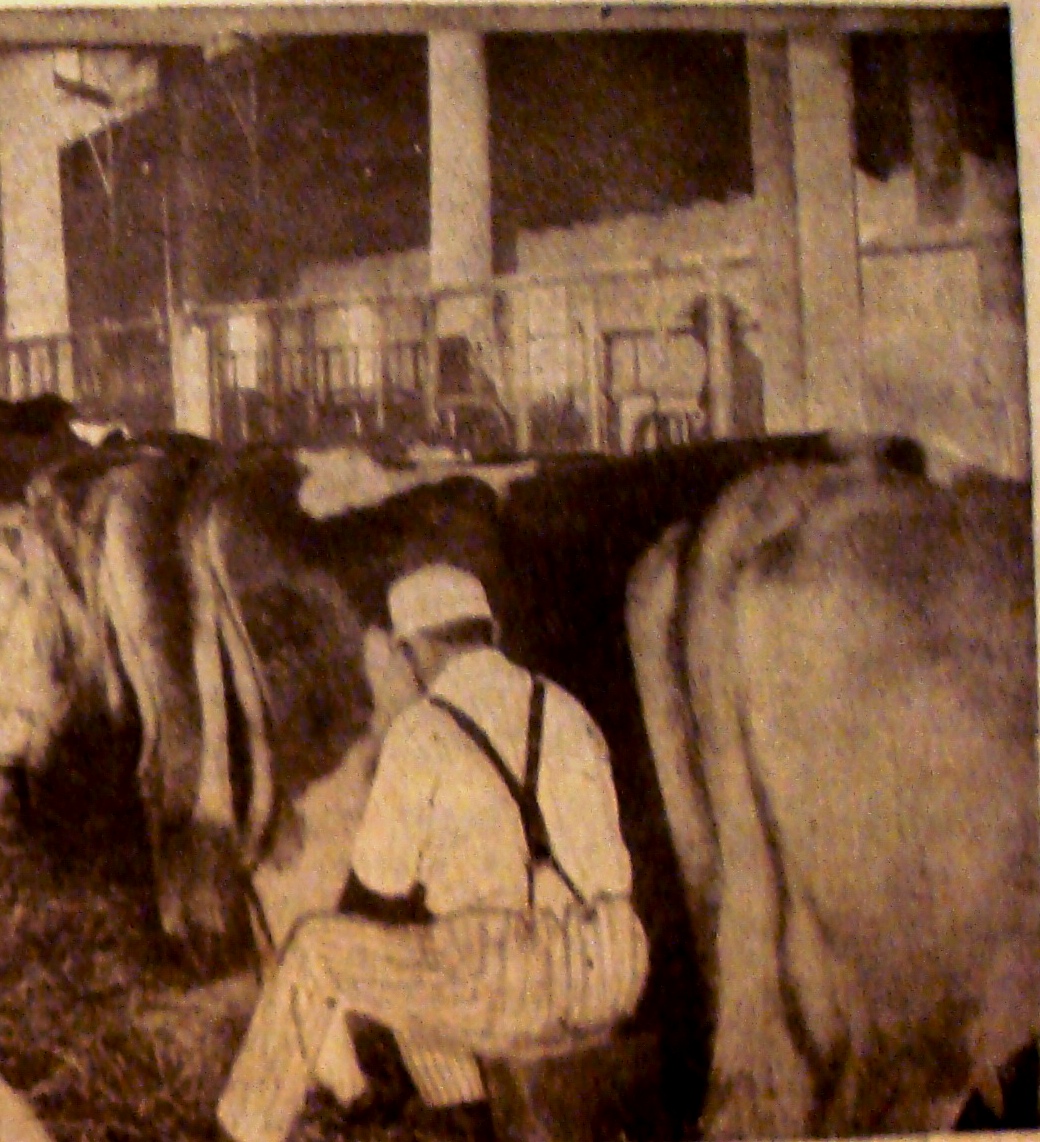
Sunday, September 7, 1913: Went to Sunday School this afternoon. We got a most refreshing rain towards evening. Ruthie is away to spend the day and I had the milking to do.
Grandma probably milked cows in a barn that looked similar to this one. (Photo source: Kimball’s Dairy Farmer Magazine: December 15, 1911) .
Her middle-aged granddaughter’s comments 100 years later:
Based on the diary, I think that Grandma and her sister Ruth shared the chore of milking the cows. The family probably had 6 or 8 cows—and each girl milked 3 or 4.
If one sister went somewhere, the other would milk all the cows. Over time the informal trading of the milking chore would balance out—and each sister got some needed breaks.
Grandma visited her cousin Alma for three days in August—and Ruth probably milked all the cows while she was gone. Now it was payback time.
18-year-old Helena Muffly wrote exactly 100 years ago today:
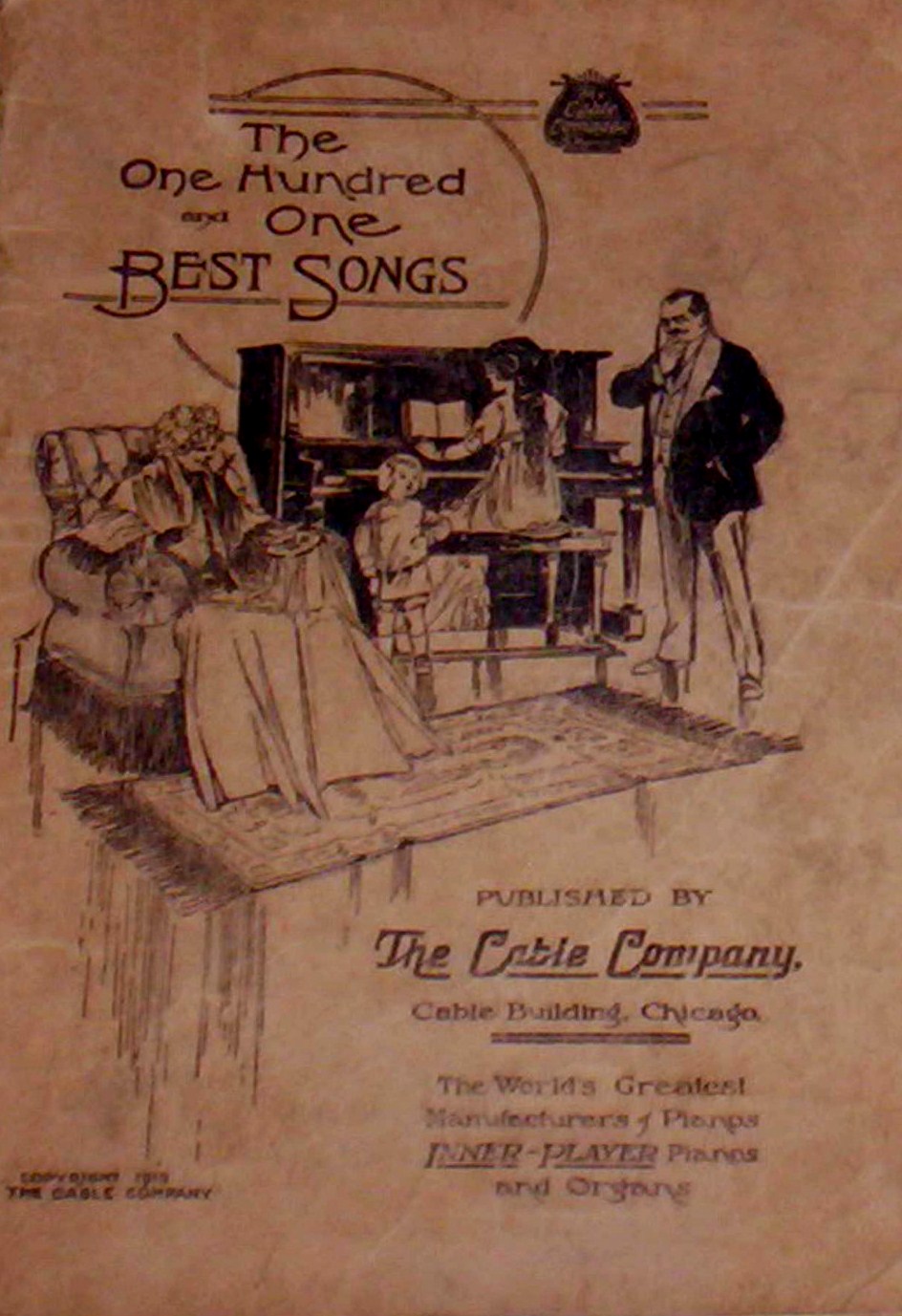
Friday, September 5, 1913: I have such a pretty piece of music. I think I’ll have this one in better condition than my other ones, because I like it and it isn’t very hard.
A 1913 Song Book
Her middle-aged granddaughter’s comments 100 years later:
Way to go, Grandma! I’m glad that you’re finally able to play some fun music—and you’re going to be well prepared for your weekly piano lesson
You’ve only been taking lessons since June—and so many diary entries have suggested that you’ve struggled to practice.
It is so much easier to practice pretty music than uninteresting pieces. Maybe you’re getting past those boring “beginner” pieces.
18-year-old Helena Muffly wrote exactly 100 years ago today:
Wednesday, September 3, 1913:An old buzz of a threshing machine is hissing away outside now. I suppose I’ll have a nice time tomorrow.
Old postcard advertising a Case threshing machine. [circa 1910]Her middle-aged granddaughter’s comments 100 years later:
Threshing day was one of the busiest days of the year on farms a hundred years ago. In the days before combines, threshing machines separated wheat (and other small grains) from the straw. Huge steam-operated threshing machines went from farm to farm.
The threshing machine probably arrived on the Muffly farm with a hissing sound a hundred years ago today–and the actual threshing was done the following day.
The previous day Grandma’s father was ill and fainted—I hope that he was feeling better and able to help. (Maybe he’d overworked trying to prepare for the threshers—which somehow contributed to his fainting.)
I think Grandma was being sarcastic about having a nice time the next day. It took lots of labor to operate the threshing machines —and the men who came to help expected a big meal. Grandma probably planned to spend the day cooking, serving food, and then washing dishes.
Grandma’s diary entries in previous years about threshing provide more information about what threshing was like:
I’m half way out of something that I worried about before school started, and that was that I was afraid I’d have to miss school when Pa had his threshing done. They started today and well I went to school today, too. So glad I don’t have to miss, that would be too bad for me.
[Note: Of course, Grandma didn’t need to worry about missing school in 1913 like she had in previous years since she’d graduated in the spring.]
Was in such terrible trepidation this morning, lest I would have to miss school and help Ma with the work, but Besse came to my relief. So glad I was. I missed those stacks and stacks of dishes for dinner, but have to confront them tonight.
[Note: Besse was Grandma’s oldest sister. She was married and lived in nearby Watsontown.]
18-year-old Helena Muffly wrote exactly 100 years ago today:
Monday, September 1, 1913:
Another month to greet us comes.
September with her golden scenes.
Is here once more to tell us that
Tis not for long e’er autumn intervenes.
Again and yet again comes the opening of school. Again chimes the dear old bell in the belfry of the ne’er to be forgotten M.H.S. No more can I respond to its summons. No more can I hasten back to my beloved studies and bury myself in their wisdom. No more can I taste of the sweetness of school days. There are indeed past, but their memory lingers still.
A recent photo of the building that once housed McEwensville High School.
Her middle-aged granddaughter’s comments 100 years later:
Grandma, I can feel your pain. Last spring you were thrilled when you graduated from McEwensville High School (M.H.S.). It must feel really strange for school to start and no longer be part of it.
When the school bell rings, I bet it really hurts that you didn’t get a teaching job. But, I don’t know that for a fact since you’ve never mentioned it in the diary.
I’ve speculated that you tried, but failed, to get a teaching job at a nearby one room school house since both of your older sisters became teachers after they graduated from high school.
During your school years, you worried so much about your grades. Weren’t they good enough for you to get a teaching position?
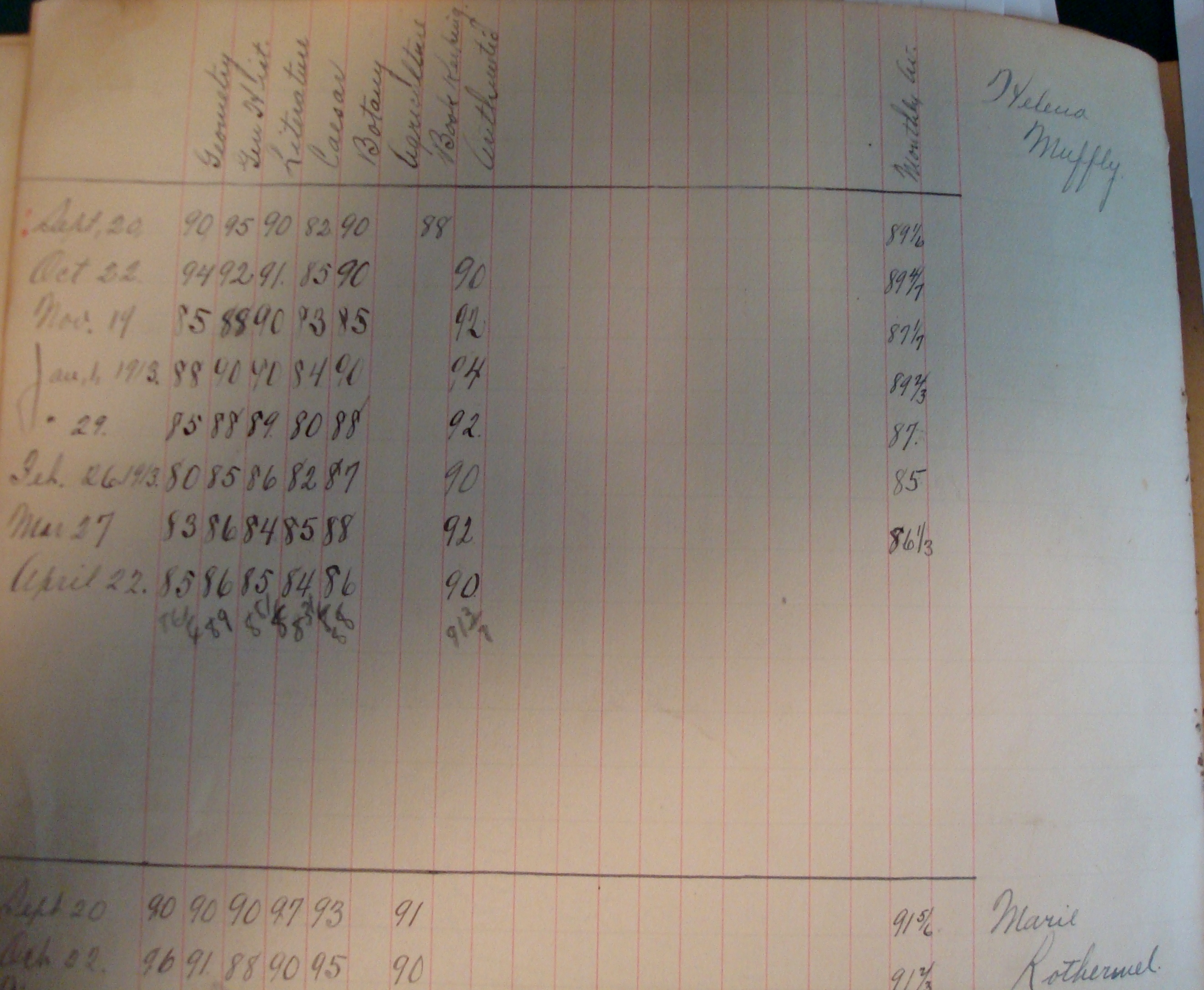
Well, I checked the school’s grade book, and discovered that your grades weren’t fantastic, but they were darn good. (See note below about how I found the grade book).
Most of your grades were in the upper 80s and you had some in the low 90s. Arithmetic was your best subject–across the year for Arithmetic you averaged 91 3/7. I love how your teacher calculated the average using a fraction. I don’t understand why you didn’t get a job.
Does life seem to be passing you by? . . .No job. . . .and, no boyfriend. A hundred years ago women often got married in their late teens and early twenties. Some of your friends probably have serious boyfriends and are looking forward to marrying soon, but you don’t have a boyfriend or prospects for an early marriage. . .
Hang in there . . . my crystal ball tells me that you’ll get married when you are 26. 🙂
—–
Sometimes I’m amazed to discover information and artifacts that I’d assumed were gone forever.
The readers of this blog are wonderful . Janet Shuman put me in touch with her mother-in-law Jane Shuman who had the old grade book from McEwensville High School. I almost shook with excitement as I flipped through the pages—and found my grandmother’s grades. Thank you, Janet and Jane!
18-year-old Helena Muffly wrote exactly 100 years ago today:
Went to Sunday School this morning. Dear old Margaret came along home with me to spend the day. Tweetie came home with Ruth. Got Ruth to take a picture of Margaret and me. The first one she spoiled and in the next one Peggy moved, so I don’t know yet how my pictures are going to pan out.
I just want to add that I was so fortunate this morning as to get an automobile ride.
1913 Ford Model T Runabout (Photo source: Wikimedia Commons)
Her middle-aged granddaughter’s comments 100 years later:
What an awesome day! Today our roads are so jam-packed with cars that it almost boggles my mind that riding in an automobile was super-special a hundred years ago.
—
If I squint a little, I can almost see three giggling teens trying to stand still while Grandma’s sister Ruth took the pictures.
And, I can almost see Grandma trying not to show her frustration when Ruth ruined the first picture. (I bet she didn’t hide her annoyance very well).
18-year-old Helena Muffly wrote exactly 100 years ago today:
Saturday, August 30, 1913:The Lutherans had a Sunday School picnic down at the park today. Of course, I went. Had a pretty good time, but I guess I ate too much from the way I feel now.
A sweet foodA sour food
Picture Source: Wikipedia
Her middle-aged granddaughter’s comments 100 years later:
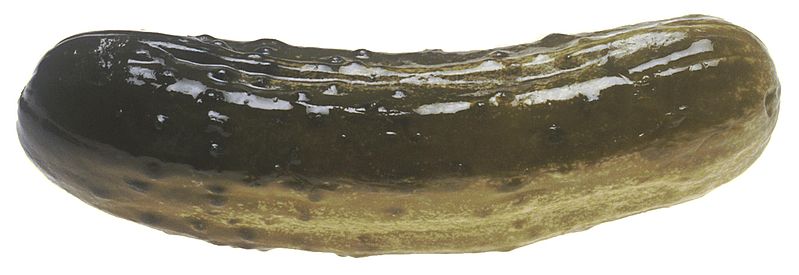
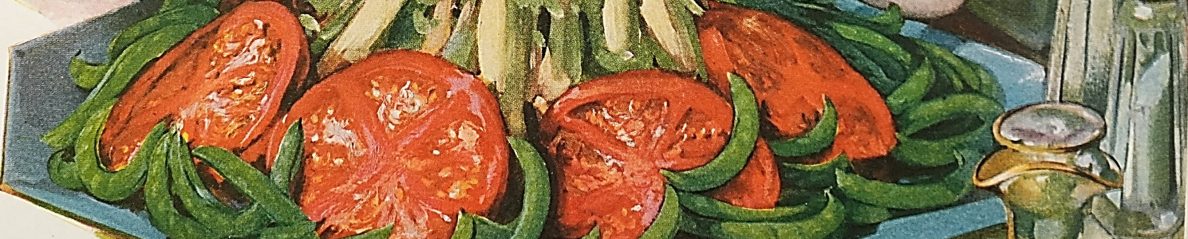
The food must have been really good. There is an old Pennsylvania saying that meals should have “seven sweets and seven sours.”
The idea was to balance sweets and sours. In other words, eat some cake—but eat some pickles, too.
The phrase is often associated with the Amish, but traditionally it was often used throughout the state in German American communities.
There probably was a plethora of both sweets and sours at the picnic. I bet that Grandma had a sweet tooth and overdid the sweets. 🙂
18-year-old Helena Muffly wrote exactly 100 years ago today:
Friday, August 29, 1913:Five of my pictures are finished. They are most too pale to be good but better than what I expected.
Here’s an illustration from a hundred-year-old book called Practical Suggestions Regarding the Selection and Use of a Photographic Equipment. It shows how F stops on a camera should be set for different magnification levels. Pictures are of the Tower at Madison School Garden (New York City).
Her middle-aged granddaughter’s comments 100 years later:
Yeah! Grandma got some more pictures finished. She got the camera earlier in the summer, took a roll of pictures, and was now developing them.
Grandma began developing the pictures on August 26 when she and her sister Ruth made a negative. On the 27th she printed three of them, and made another negative. . . now she had five finished.
I’m sure that Grandma was having lots of fun using “modern technology,” but by today’s standards it sure seems like a long drawn-out process.
Why were the pictures too pale? . . Were they overexposed?
Here’s what a 1910 book said about how to get the correct exposure:
We cannot impress upon you the all-importance of exposing for the shadow or dense portions. For general all-round out-of-door work, in the open, street scenes, etc., with very good light between 10:30 A.M. and 2 P.M. from 1/100 to 1/200 second at F. 8. Reasonably earlier or later in the day than the time specified, full aperture, F. 6.3, 1/50 to 1/100 second. As a general rule, 1/100 second is sufficient speed, but there are occasions when it is necessary to give 1/150 to 1/200 seconds, but these highest speeds should only be given when required.
On gray or clouded days or during November, December and January, when the actinic quality of the light is at its weakest, then invariably use full open lens (F. 6.3) and from 1/25 to 1/100 sec. exposure . . .
The telephoto attachment is neither difficult to use or to compute the correct exposure. To make an exposure with the telephoto we first calculate or rather determine the correct exposure for the subject at hand, with the positive lens along at a given stop, and then simply multiply that exposure by the magnification which we desire, using the same stop in the positive lens. . .
Practical Suggestions Regarding the Selection and Use of a Photographic Equipment by by Austin K. Hanks
(I’m a “point and shoot” photographer. . .and am clueless what half of the recommendations in the book mean. )
![Old postcard advertising a Case threshing machine. [circa 1910]](https://ahundredyearsago.com/wp-content/uploads/2013/09/threshingmachine-postcard.jpg)