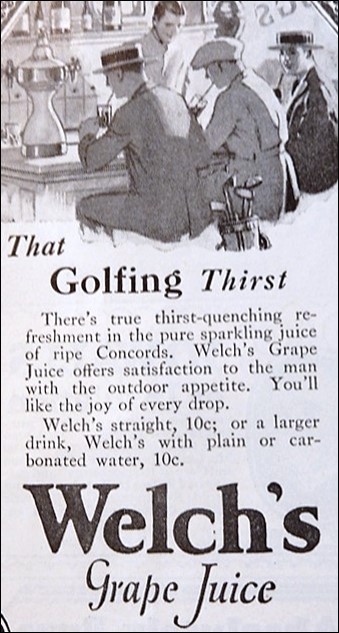
Got “that golfing thirst?” A hundred years ago prohibition was in full swing, so Welch’s Grape Juice was clearly the drink to quench it.

Got “that golfing thirst?” A hundred years ago prohibition was in full swing, so Welch’s Grape Juice was clearly the drink to quench it.
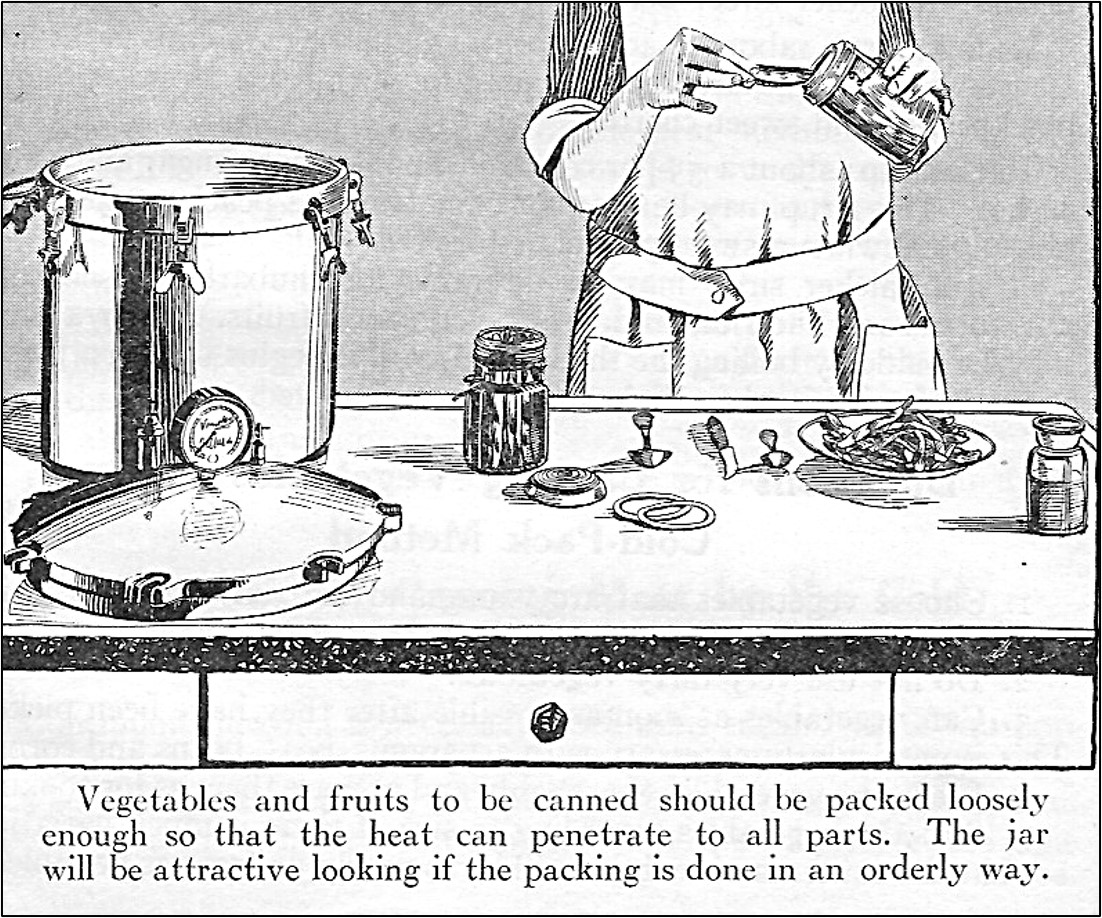
Venders at the farmers market often have bushel baskets filled with fruits and vegetables, but I’m never sure how many quarts of canned goods they’ll yield, so I was pleased to find a canning guide in a hundred-year-old cookbook. Many things change over time, but I assume that yield ratios stay the same.

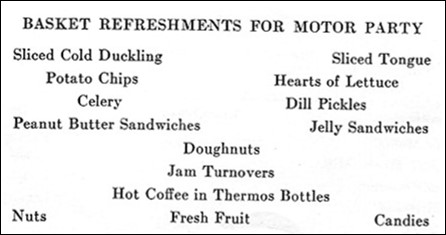
I recently came across a menu for basket refreshments for a motor party in a hundred-year-old magazine. A motor party picnic sounds like so much fun. If I could only get in a time machine, and go back to the early days of automobiles, dirt roads, and adventures. I’d wear a short dress that only came to my knees (this was the flapper era) and a huge bonnet with ribbons that tied under my chin. I’d put the refreshments in a wicker basket; and, I’d spend all morning cooking and packing refreshments for the trip. We’d drive out into the country and spread out a blanket in a grassy field, and then lay out the spread of food.
Things start to get blurry – Is this motor party a date? An event with friends? A family trip?
Then I come back to reality, and 2024. Sigh. . . maybe I should pack a picnic lunch and take it a nearby park. Somehow it just doesn’t seem the same.

Here are some tests listed in a hundred-year-old cookbook that can be used to tell when bread and cakes are done:
- When the color is a rich golden brown.
- When the mixture shrinks away from the sides of the pan.
- When the sides of the pan sizzle when touched with a damp finger.
- When a clean toothpick inserted comes out free from any particles of the mixture.
- When a cake springs back without leaving an impression when pressed gently on top.
- When the loaf of bread gives a hollow sound on tapping.
The New Butterick Cook Book (1924)

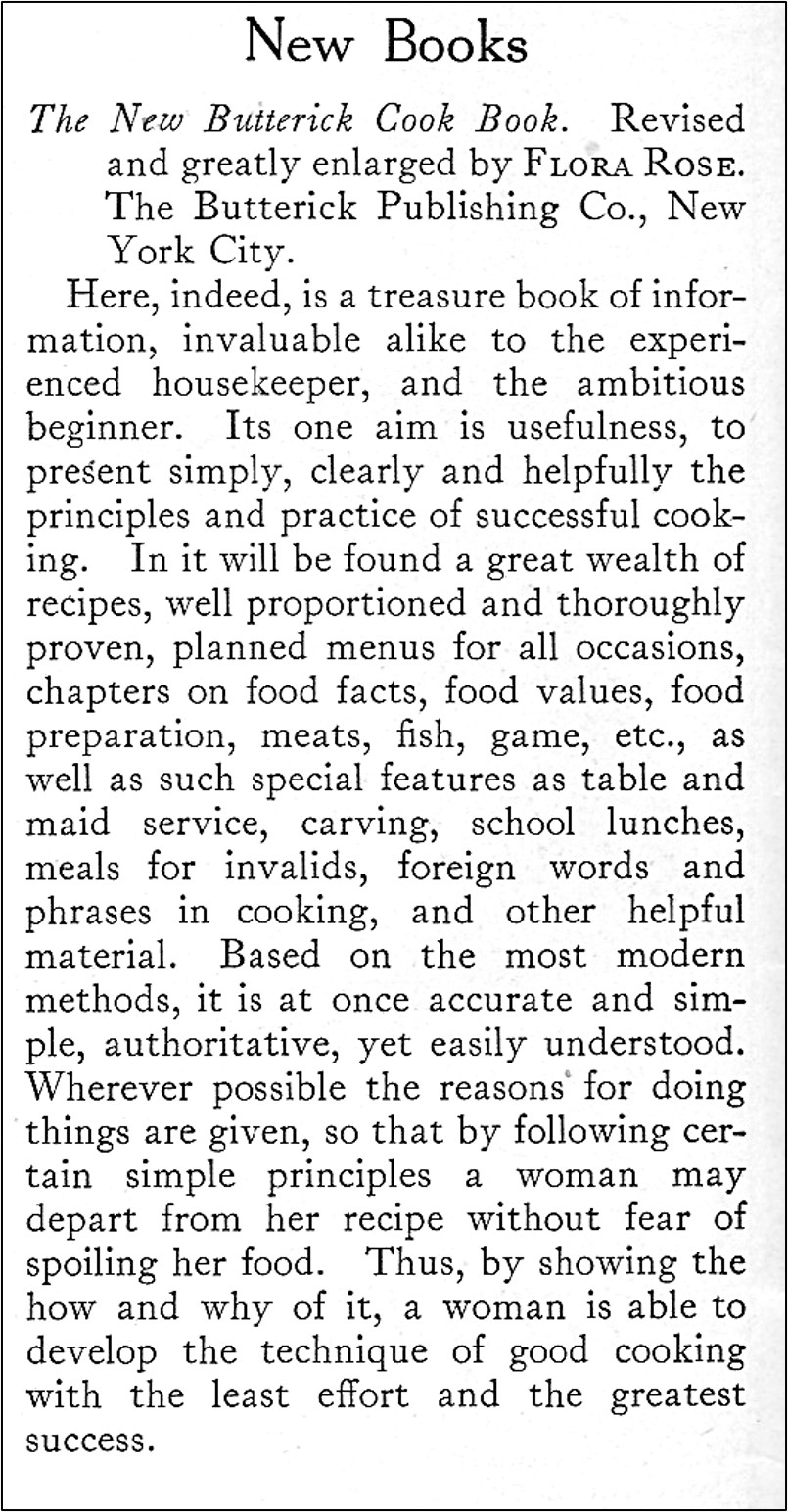
I recently flipped though the May, 1924 issue of American Cookery magazine and was surprised to discover a book review of a hundred-year-old cookbook that I’d purchased off eBay. It’s nice to know that the magazine liked The New Butterick Cook Book. I’ve enjoyed this cookbook, and have made several recipes that were in it.

Each morning my husband reads Morning AgClips. A few days ago, he said, “You’ve got to read this. You have a seriously strange hobby.” He was referring to an article titled, Seriously Strange Hobbies You Didn’t Know About.
I read the article and learned about Extreme Ironing where people iron clothes while rock climbing and sky diving, about Cheese Rolling where rounds of cheese are rolled down a hill, and about Soap Bubble Art where people use a variety of techniques to create interesting effects with soap bubbles. And, then the article went on to describe . . . drum rolls please . . . Historical Cooking which “which involves trying out recipes from the past.”
Oh, my goodness, who knew? Do I have a seriously strange hobby?

According to a hundred-year-old cookbook, there are four reasons for using a pressure cooker:
Value of a Steam Pressure Cooker
Less time for cooking – Whatever food is inside the pressure cooker is subjected to moist heat at a high temperature and cooks in much less time than it would at an ordinary temperature in an ordinary kettle. This fact has advantages for the housekeeper who has to meet emergencies in hasty preparation of meals.
Cereals may be deliciously cooked in twenty minutes in the pressure cooker, as compared with three hours of cooking on the stove. Beans may be well cooked in forty minutes instead of requiring five or six hours of cooking on the stove. A steamed pudding placed in the pressure cooker is ready to serve after being cooked for thirty minutes under ten pounds of pressure. Three hours would be required to accomplish this in any other way.
Even beef neck or flank, which would required from three to five hours of cooking on the stove, may be cooked in forty minutes in the pressure cooker.
Less fuel used – In most pressure cookers, only a short period of time is required to attain ten pounds of pressure. A low fire will maintain the pressure throughout the cooking process.
Micro-organisms killed – Micro-organisms that cause spoilage in canned foods are killed at the high temperature made possible by the use of steam under pressure.
Thorough cooking – The combination of high temperature and moist heat attained by the pressure cooker is probably more effective than any other methods of cooking for making certain foods digestible and tender. Cereals, with their large proportion of cellulose, and meats with tough fiber are among such foods.
The New Butterick Cook Book (1924)

