18-year-old Helena Muffly wrote exactly 100 years ago today:
Sunday, December 28, 1913:Went to Sunday School this afternoon for this last time in this year. Would like to say “I haven’t missed any,” but I can’t. The missing amounts to two.
Her middle-aged granddaughter’s comments 100 years later:
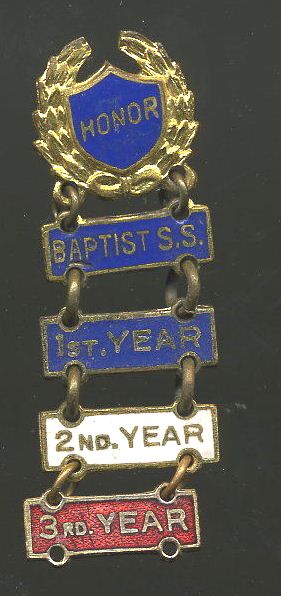
I think that this Sunday School attendance pin is from the mid-1900s. Does anyone know if there were attendance pins a hundred years ago?
Grandma—
Don’t beat yourself up for missing two Sundays. I’m impressed that you made it to Sunday School for 50 of the 52 weeks in 1913.
18-year-old Helena Muffly wrote exactly 100 years ago today:
Saturday, December 27, 1913: Expected company today, but was doomed to disappointment, no sign of cousin Alma appeared.
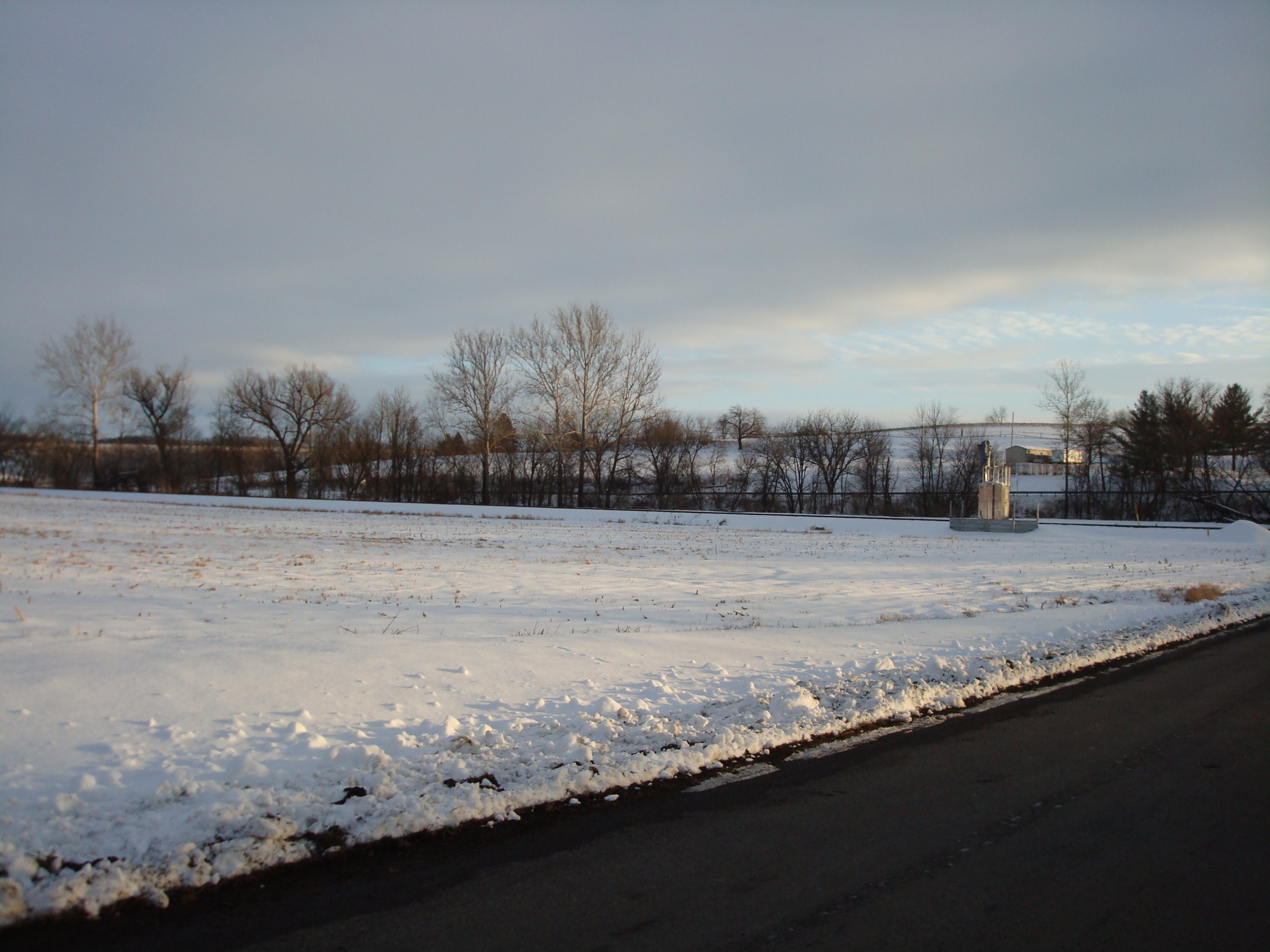
Grandma probably looked out the window, across the frozen fields, as she waited for the train (that hopefully contained Alma) to come down tracks.
Her middle-aged granddaughter’s comments 100 years later:
A hundred years ago visits were often planned via letter—and when plans changed at the last minute there was no way to let the other person know.
Grandma’s cousin. Alma Derr, lived on a farm in Montour County, Pennsylvania near the hamlet of California. Alma was the daughter of Judson Derr. He was a brother of Grandma’s mother.
Alma was 15-years-old—and was three years younger than Grandma; but despite the age difference they apparently were good friends.
The previous summer Grandma spent several days at Alma’s. For example, on August 16, 1913 Grandma wrote:
Went out to Alma’s this morning on the train. We went to a festival over at California this evening. That was the first country festival I was ever to. We went up to the Hall this afternoon to tap the packers and then we swiped a dish of ice cream. When we finished it, we washed the dish and spoon in salt water.
18-year-old Helena Muffly wrote exactly 100 years ago today:
Friday, December 26, 1913:My music teacher didn’t come this morning, perhaps on account of the snow. There was a white Christmas after all. It came in the evening.
Her middle-aged granddaughter’s comments 100 years later:
Snow! What a beautiful way for the 26th to dawn. The beauty of fresh snow after a brown Christmas (at least during the daylight hours) must have been wonderful antidote to any post-holiday blues.
Music Teacher
The music teacher came to Grandma’s house to give her piano lessons? When Grandma had previously mentioned the lessons, I’d always assumed that she’d gone to the teacher’s home.
Sometimes I don’t even realize what I don’t know something until I read a diary entry that makes me realize that I’d previously misinterpreted it.
It’s amazing how a word here and there over multiple diary entries across the course of time fills in the pieces of the puzzle.
Her middle-aged granddaughter’s comments 100 years later:
Whew, what anger! What did Grandma and her sister Ruth fight about?
Sometimes when I read a diary entry, I can’t help imagining a story in my mind even though it’s probably wrong.
Here’s the story I imagine—
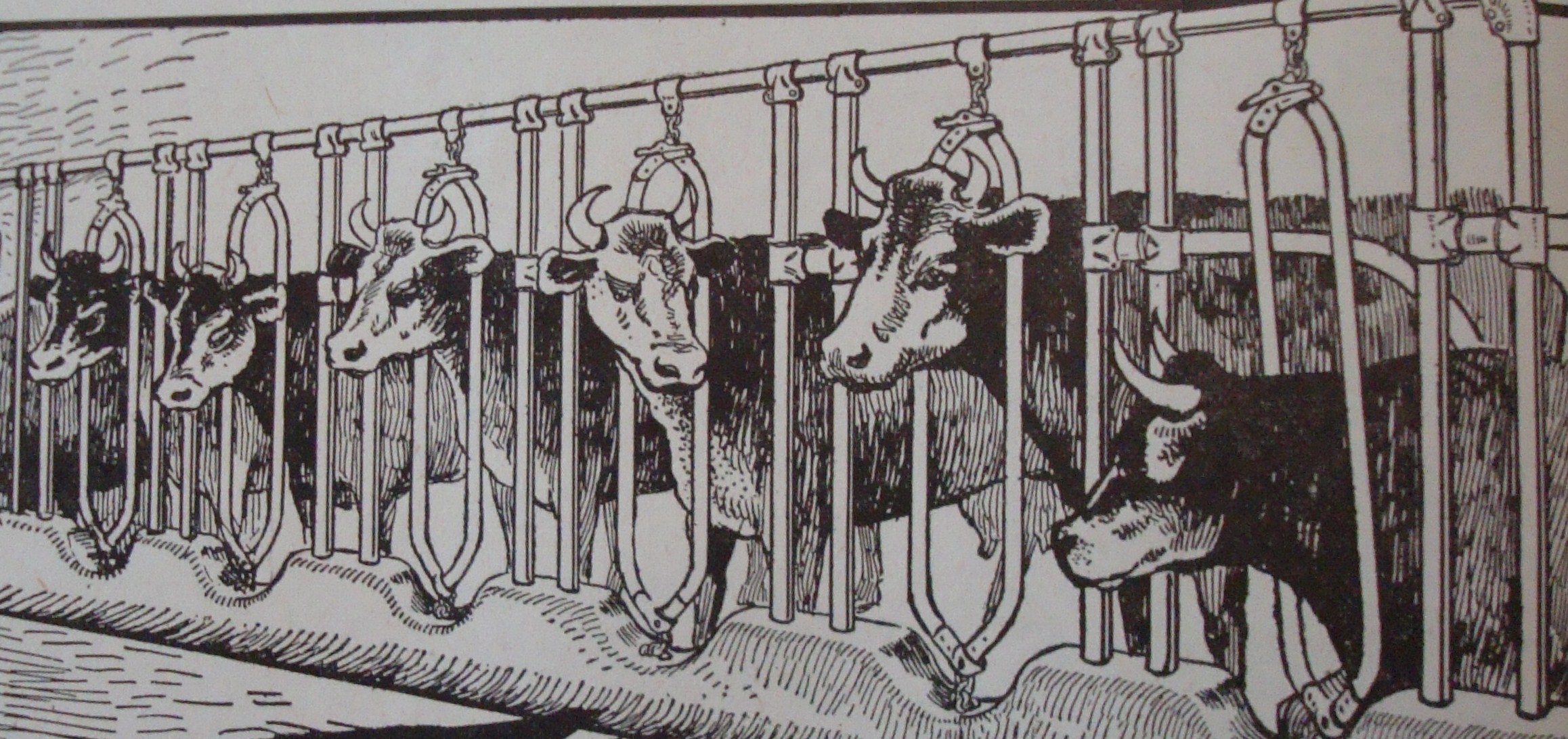
I think that the fight was about who was going to milk the cows. Ruth went to Sunbury from December 15 to December 19. On the 15th Grandma wrote:
Ruthie left for Sunbury this morning, also left me all the milking, but I’m pretty hardened to that.
Since Grandma did all of the milking for four days while Ruth as gone, I think that she wanted Ruth take a turn at doing all the milking so that Grandma could go somewhere and have a little fun. . . but Ruth refused.
. .. . Or maybe Ruth just took off to visit friends or attend a show without doing her share of the milking, and Grandma was once again forced to do it all. . . . . . . Or. . . .
18-year-old Helena Muffly wrote exactly 100 years ago today:
Sunday, December 14, 1913:Went to Sunday School this morning. My nice new hat blew off. By good fortune it didn’t land in a mud puddle, but on the grass. Came back and pinned it on for I hadn’t gone very far. Mother doesn’t know it.
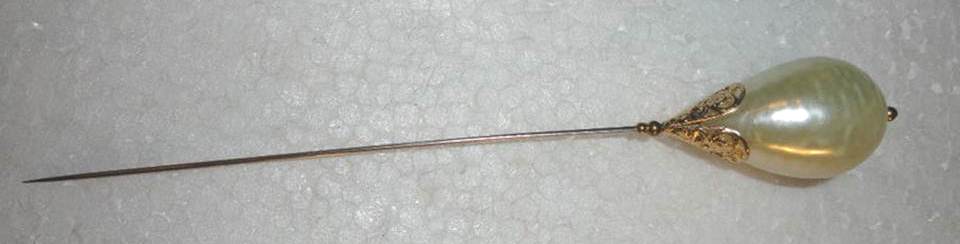
Grandma probably used a hat pin similar to this one when she pinned her hat on after the near catastrophe.
Her middle-aged granddaughter’s comments 100 years later:
Whew, thank goodness it didn’t fall into the mud puddle.
. . . I went to Milton this morning on a shopping tour. I got the daintiest hat I’ve ever had for a while. It is black velvet, trimmed with old rose ribbon and pink velvet flowers.
Sometimes I wish that I was an artist. Somehow the picture I used to illustrate this diary entry seems particularly lame when the descriptions were so vivid.
I can picture it in my mind—the beautiful black velvet hat trimmed with ribbons and flowers, the expression of horror on Grandma’s face as a gust of wind tore the hat from her head (and then the look of relief when it landed in the grass), ominous black clouds, the trees with bare branches (and Grandma’s coat and skirts) blowing in the wind. . .
18-year-old Helena Muffly wrote exactly 100 years ago today:
Tuesday, December 9, 1913: Fizzed around this morning pretending to be doing something, but in reality doing nothing. Really it is wonderful the ways I manage to put the time in.
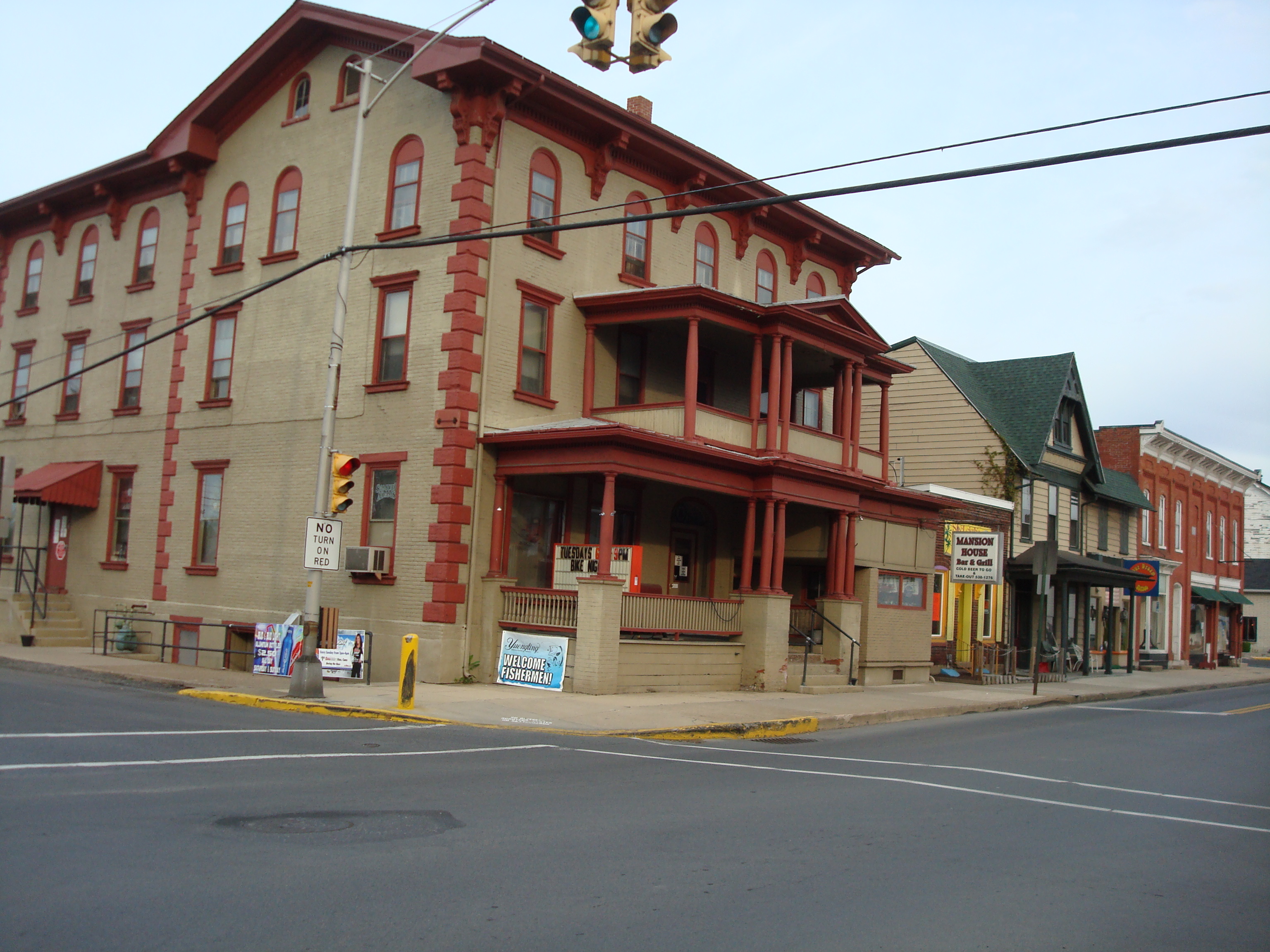
Went to a lecture with Ruth this evening in Watsontown. Fortunately we didn’t have to walk. We rode in a carriage. The lecture was real good and I enjoyed it quite a bit.
Recent picture of the main intersection in Watsontown. I bet that Grandma and Ruth felt proud of themselves as they rode through the intersection in a carriage.
Her middle-aged granddaughter’s comments 100 years later:
Grandma—
I love the word picture you created. I sometimes fizz around when really doing nothing—but won’t have been able to describe nearly as well as you did.
—
Who took Grandma and her sister Ruth to the lecture in Watsontown in a carriage?
In the early 1900s lectures presented by traveling speakers were very popular in small towns. The lectures brought culture to the towns, and often were inspirational and entertaining—though they sometimes addressed serious topics.
Somehow this diary entry makes me think of Main Street by Sinclair Lewis—though it was written a little after this time period. (Main Street was published in 1920.)
Grandma attended a single lecture, but this is how Main Street described a lecture series:
(The main character in the novel, Carol Kennicott, was from a city and struggled to fit into the small town of Gopher Prairie, so she had a somewhat negative view of the lectures.)
Nine lecturers, four of them ex-ministers, and one an ex-congressman, all of them delivering “inspirational addresses.” The only facts or opinions which Carol derived from them were: Lincoln was a celebrated president of the United States, but in his youth extremely poor. James J. Hill was the best-known railroad-man of the West, and in his youth was extremely poor. Honesty and courtesy in business are preferable to boorishness and exposed trickery, but this is not to be taken personally, since all persons in Gopher Prairie are known to be honest and courteous. London is a large city. A distinguished statesman also taught Sunday School.
Four “entertainers” who told Jewish stories, Irish stories, German stories, Chinese stories, and Tennessee mountaineer stories, most of which Carol had heard.
A “lady elocutionist” who recited Kipling and imitated children.
A lecturer with motion-pictures of an Andean exploration; excellent pictures and a halting narrative.
Three brass-bands, a company of six opera-singers, a Hawaiian sextette, and four youths who played saxophones and guitars disguised as wash-boards . . .