Not Much Nourishment in Broths

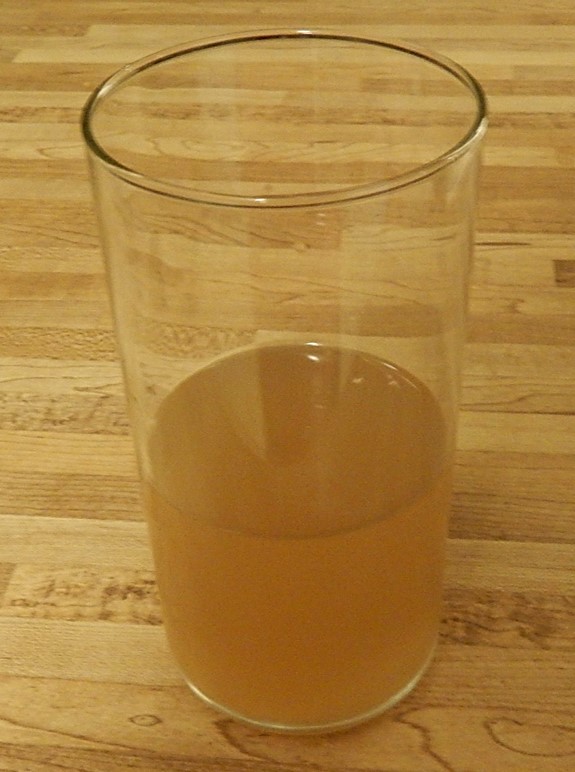
glass of meat broth

Did you ever wonder whether broths are nourishing? Well, I found the answer in a hundred-year-old magazine. Here’s the question posed by a reader and the response:

Q: I should like to ask you about the advisability of giving canned broths to invalids and children. I am speaking particularly of a child fourteen months old that is taking broths every day. Are such broths as nutritious as if freshly made? Is there any nutritive value left in the used meat?

Mrs. A.K.H., Mass.

A: Broths are usually made from meats, sometimes with the addition of vegetables, and contain only those food materials which are soluble in hot water, or, like starch, diffusible in water. Sugars and meat bases, such as creatin, are soluble in water. A part of the mineral substances in the foods is also soluble. The nutritive value of broths is necessarily limited. It is the opinion of many physicians and physiologists that the food stuffs in broths, especially the nitrogenous bases, are not equal in value to the ordinary proteins which are not soluble in water. It is a common opinion that the food materials in broths are more easily assimilated and therefore are preferable in many diseased conditions to more nutritious foods, which the impaired digestive apparatus is unable to utilize. I should regard broths of any kind as a poor substitute for milk for a child of fourteen months. Canned broths, when they are first made, are perhaps as desirable as home-made broths. They are likely to dissolve some of the tin from the container, and soluble tin salts are not particularly useful in the stomach of a child. It is not possible, in my opinion, to nourish a child on broths of kinds. It should be milk.

Good Housekeeping ( June, 1919)

Hundred-year-old Advice for Removing Chewing Gum from Hair

unwrapped stick of chewing gum

A hundred years ago Good Housekeeping magazine contained lots of household tips submitted by readers. Some tips are just as relevant today as they were in 1919. Here is advice for removing chewing gum from hair:

Chewing Gum

Perhaps some other mother will welcome this bit of news. My baby came in the other day with several pieces of chewing gum in her mass of curls. I thought at first that I must cut them at once, and prepared for the sacrifice. Then I remembered that oil will take chewing gum off one’s hands. I had no oil but instead used vaseline. It proved ideal, for the gum rolled up and I could take it right out. Then a shampoo was all that was necessary to restore the youngster’s beautiful gold curls. Mrs. J.J., N.C.

Good Housekeeping (May, 1919)


Hundred-year-old Tips on Ways to Spend Less Time in the Kitchen

spatula in green bowl

Here are some hundred-year-old suggestions for ways to spend less time in the kitchen.

Waste no minutes in the kitchen:

  • Dough, batter, whipped cream, or egg white may be scraped from a bowl with a spatula in half the time required with a spoon or other utensil.
  • Hot baked puddings and custards will not stick to the baking dishes if the dish be first rubbed over with fat and then dredged with sugar.
  • Cakes, loaf or layer, are quickly removed from loose-bottom aluminum cake-pans and the washing of the pans is a very simple matter.
  • Use a “magic cover” when rolling out soft dough of any sort. When through work, scrape the cloth with a knife, if necessary, then shake out of doors. Wash the stockinet on the rolling pin often.
  • A Scotch bowl of cast-iron with bail for lifting used for no other purpose than frying, tends to simplify this mode of cooking. If the fat be strained after use and returned to the bowl after it has been carefully wiped out, no delay is occasioned when frying is again in order.

American Cookery (February, 1919)

Coachella Date Trees a Hundred Years Ago

date tree
Source: Farm Journal (April, 1919)

When I hear the word “Coachella” I think of the annual music festival at Indio, California, so I was surprised when I recently came across an article in the April, 1919 issue of Farm Journal about Coachella – but it wasn’t about the music festival. Instead it described how the Coachella Valley in California was the perfect spot for raising dates. Here are a few excerpts.

Now, thanks to our wise Government, it is possible to obtain home-grown dates. Our agricultural experimenters found a bit of real Sahara Desert in Southwestern California, the Coachella Valley, only eight miles wide and twenty miles long. This strange little valley is 250 feet below sea-level.

The Algerian tree was dug up and carried to the newly established agricultural station named Mecca, and of course, it felt itself quite at home there. In 1904 it was fifteen feet high; now it is thirty feet high and each year bears great quantities of splendid fruit. It has become the parent tree of a great date colony of 500 acres. The trees are flourishing, thanks to the irrigation system that supplies an abundance of water to their roots.

Four hundred pounds of fruit to a tree is possible each year, and the trees live to be 200 years old.

The U.S. Department of Agriculture is still doing research in Coachella. The Agricultural Research Service is conducting research on how to improve the productivity of “old” date trees in the valley. I don’t know whether any of these old trees are from the original Algerian date tree described in hundred-year-old Farm Journal article – but somehow I want to believe they are.

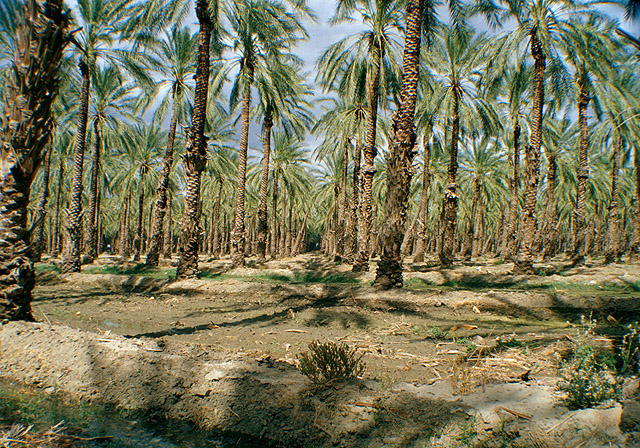
date orchard
Source: USDA ARS Online Magazine. Caption under the photo: Cover crops are being evaluated as an alternative to conventional tillage practices as a means to improve production of older orchards.

Balanced Meals a Hundred Years Ago

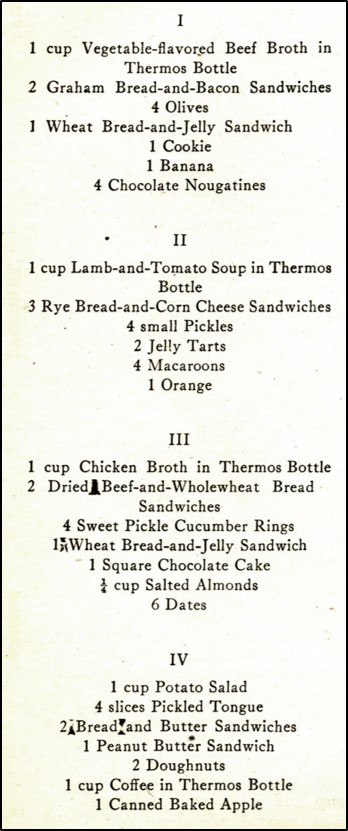
Text showing meals that are considered balanced, as well as meals that are not balanced.
Source: Household Engineering: Scientific Management in the Home by Mrs. Christine Frederick (1919)

A balanced diet helps maintain health – though I’m never exactly sure how to determine whether a particular meal is balanced. There are the five food groups, and once upon a time the U.S. Department of Agriculture’s food pyramid was used to help balance meals, but that has been relegated to the nutritional dust bin and now USDA’s MyPlate can be used to balance meals. Is meat good or bad? – Maybe it doesn’t matter as long as we follow the current mantra and eat five fruits and vegetables a day.

A hundred years ago cooks also tried to prepare balanced meals. According to a 1919 home economics textbook:

A “balanced” meal is one in which the various food principles are combined in a proper proportion. The “balanced” meal must contain some protein, some carbohydrate, some fat, some mineral salts, some water, and some bulk. This combination or “balance” should be present in all meals both for the needs of the body and for good digestion. In other words, it will not do to eat nearly all starch at one meal, and nearly all protein at the next.

Household Engineering: Scientific Management in the Home by Mrs. Christine Frederick (1919)