
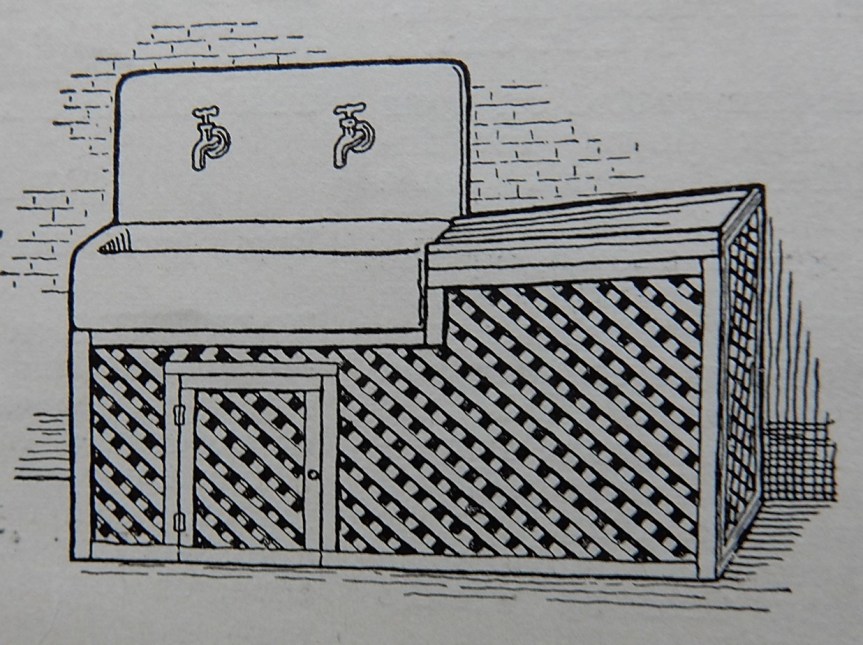
A hundred-year-old home economics textbook included a 9-step guide for washing dishes:
The steps for washing dishes correctly are:
-
Remove the dishes from the table. Remove the bits of food from the plates with the rubber plate-scraper or a piece of paper. Rinse off very dirty dishes. Pile together dishes that are alike.
-
Put to soak all cooking utensils. Hot water should be put in those which have contained sugar or syrup, and cold water in those which have been used with milk, eggs, cereal, starch or flour.
-
Pour hot water in the dishpan, make a good suds with the soap, use a clean dishcloth (not a “rag”) or mop, and wash every dish carefully. Do not have the dishpan full of dirty dishes while washing. Always wash the cleanest dishes first.
-
Place the washed dishes in a drain-pan or dish-drier, being careful not to crowd them. Crowding dishes in a pan is apt to chip them and makes it hard to scald them thoroughly. This pan or drier should be placed at the left of the pan in which the dishes are washed because this will save unnecessary motions in putting the dishes from one into the other.
-
Rinse dishes thoroughly with boiling water, being sure that each dish has been rinsed inside and out. If the dishes have been scalded in a dish-drier, it may be set on the drain-board and the dishes allowed to dry without wiping. The silver and glass should be washed first. They will look best when wiped and polished dry with a towel. Some persons like to dry all the dishes with a towel. This is a good method, but it takes more time than drying them in a rack or drier.
-
Scape out and rinse off the cooking utensils. Use plenty of hot soapy water for washing them; wash thoroughly, both inside and out, scouring if necessary. Rinse with boiling water and wipe dry. Steel knives may be scoured with scouring-powder applied with a cork.
-
Wash off the drain-boards and tables, and scour them with the powder and a brush if necessary. Use clean water for this. Wash out the sink and sour it with a brush and scouring-powder when the soapy water will not remove the stains.
-
Wash the dish-towels in clean soapy water, removing all spots. Rinse in clean water, shake out and pull into shape. Hang to dry on a rack for this purpose in the kitchen, or better still, hang outdoors in the sun. Wash and rinse the dishcloth or dish-mop.
-
Clean out the dishpan thoroughly, wipe it dry and put it away.
Elementary Home Economics (1921) by Mary Lockwook Matthews


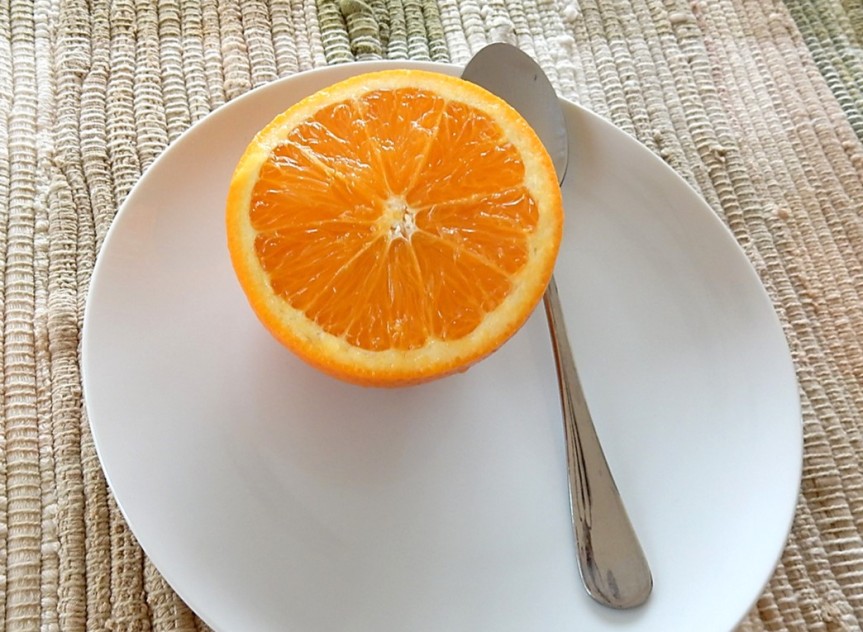 Did you ever eat an orange with a spoon? I never did until I prepared this post and needed a photo to illustrate it.
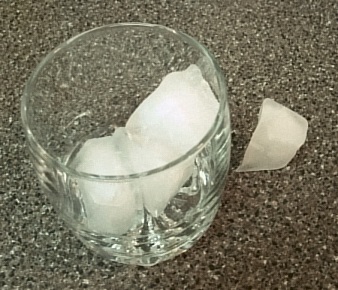 Considerations when determining ice quality have changed across the years. Here is what it said in a 1921 home economics textbook: