Using Diaries and Journals to Shed Light on the Past

16-year-old Helena Muffly wrote exactly 100 years ago today: 

Wednesday, October 25, 1911:  Nothing unusual.

Her middle-aged granddaughter’s comments 100 years later:

Since Grandma wrote very little today, you might want to check out  a guest blog post I recently wrote for The Write Way: Thoughts on Rural Living.  Brenda Visser at The Write Way asked me to reflect on how journals and diaries can help us better understand the past (and the present). The text is reprinted below:

Diaries and Journals Shed Light on the Past

by

Sheryl Lazarus

I’m sure that I have lots of interesting ancestors, but the ones I find the most interesting are the ones who left behind enough artifacts so that I can get a sense of their personality.

One relative who I find particularly interesting is my paternal grandmother, Helena Muffly (Swartz). She kept a diary from January 1911 through December 1914. She was 15-years-old when she began the diary.

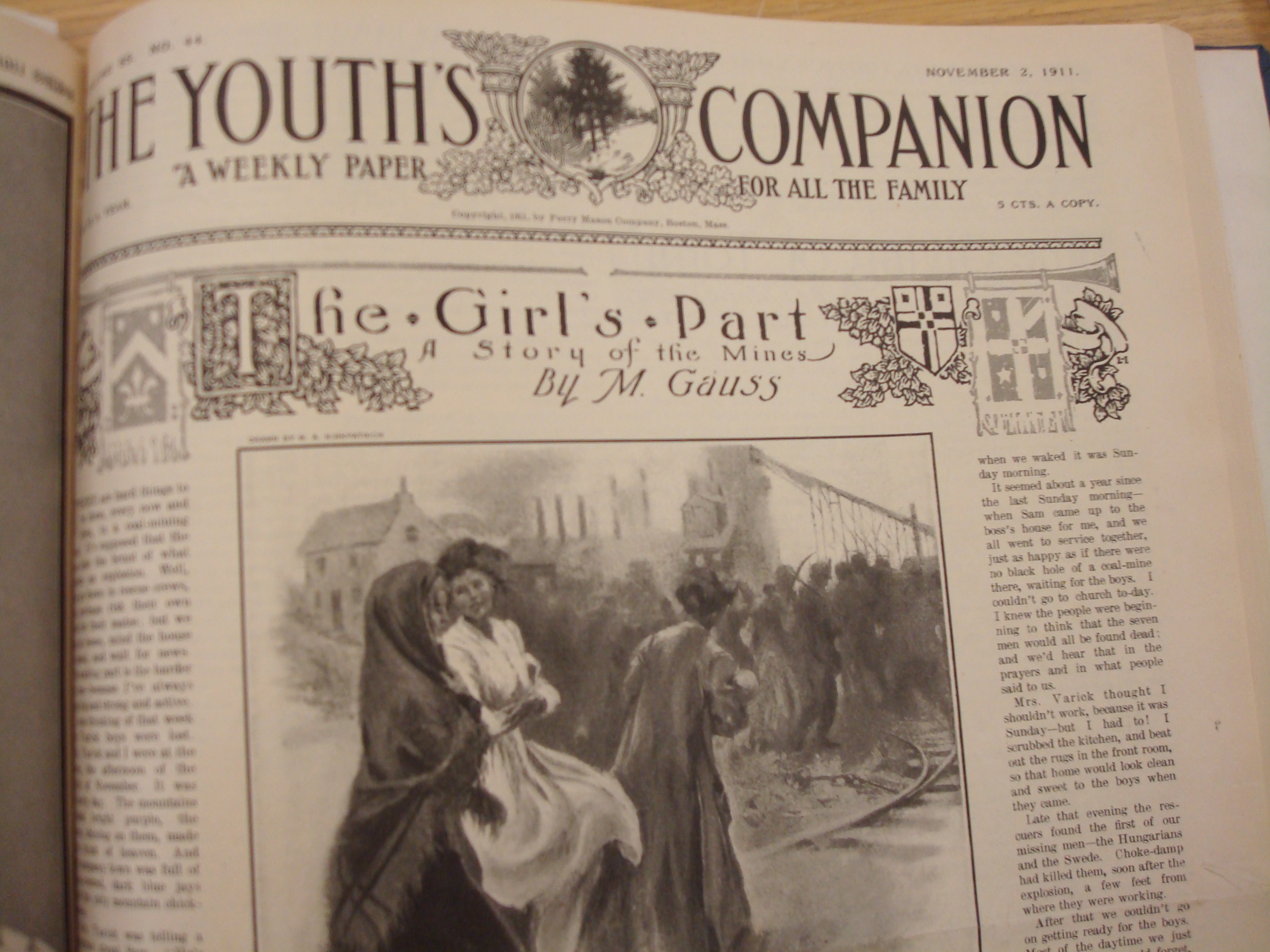
I’ve been posting her diary entries, as well as my reflections and comments, exactly 100 years to the day after she wrote them. I sometimes include old-time recipes, photos from 1911 magazines, or other things that I find interesting.

Diaries and journals can bring the past to life. They provide candid, dynamic snapshots of everyday life, and are full of details. Diaries also provide an intimate glimpse of the author–and share the writer’s hopes and fears.

The words of ordinary people reveal both similarities and differences between the past and now. The similarities enable us to better understand both the author and ourselves. The differences beg questions—Why was it different? What has changed over the years?

Why I Decided to Post the Diary Entries

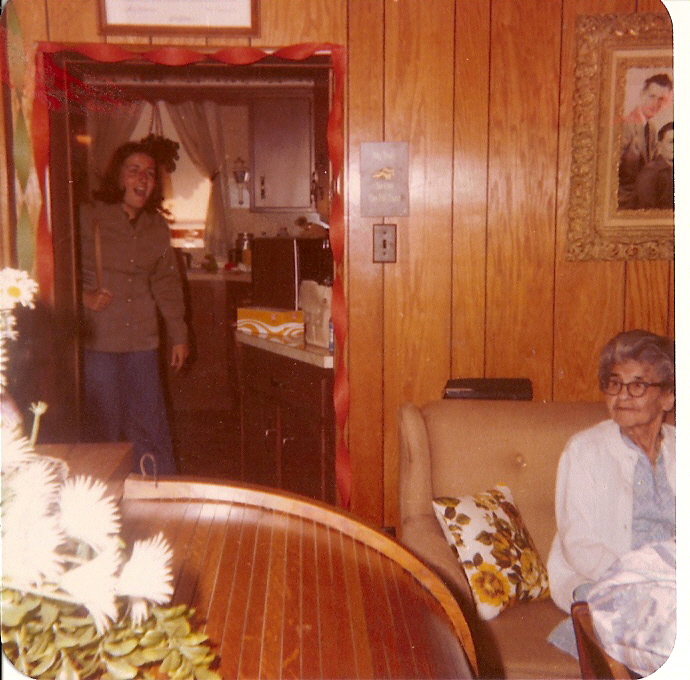
Several years ago I compiled a family cookbook, and included some family photos in the book. One was a photo of me walking through a doorway at my bridal shower. Sitting on the couch in the photo’s foreground was my 82-year-old paternal grandmother.

When I gave the cookbook to my children, my daughter asked who the old lady was. I told her that it was her great-grandmother. But her question jogged my memory about a copy of an old diary I had —

After Grandma died in 1980, her children went through her belongings. One of the items they found was the diary that Grandma had kept as a teen. They circulated the diary amongst family members. While I had it, I made a copy before passing it on.

The copy lay in a paper bag in the bottom of my hutch for more than a quarter century until my daughter’s question reminded me of it.

My memories of Grandma Helen are of a frail, elderly woman—Helena (the name she used in the diary) was a fun-loving, self-absorbed teen. I wanted to learn more about her and how she evolved into the grandmother I remember.

I also wanted to share the diary entries with family and friends. At first I planned to write a book about the diary but that seemed like too daunting a task, so I decided to post the entries daily in a blog.

What I’ve Learned

I’ve loved digging through the diary and other resources to pull the pieces together for the blog. It’s been a journey of discovery for me and other relatives.

My children can now relate to a great-grandmother who died years before they were born.  For example, on April 3, 1911 Grandma wrote:

“One day is passed of the dreaded three, and they will soon be over, for we are having our final exams now. I’m so anxious about what I will make, fraid it won’t be any too high, and sincerely hope it will not be the opposite.”

The evening that I was working on this entry my college-aged daughter called and asked what I was doing. I said that I getting ready to write about Grandma’s final exams.

My daughter replied, “Final exams are stressful!” Some things never change.

At the same time the diary has brought me closer to my elderly father (Grandma’s son). When I visit him we enjoy going on car rides to take photos of the places that Grandma once frequented, and he likes helping me figure out what some of the diary entries mean. Without his help I never would have been able to describe how farming was done in the days before tractors.

I’ve been surprised how many people who are not relatives enjoy reading the posts.

For example, several young women told me that they love the way Grandma writes about her sister—and that it helps them better understand their own relationships with their sisters. Grandma had a sister named Ruth who was just a little older than she was. The diary entries portray an intense love between the two girls, co-mingled with competiveness and sibling rivalry. For example, when Grandma was annoyed with Ruth she referred to her as “Rufus” or “her highness.”

The quiet, elderly grandmother I remember often seemed almost invisible—overshadowed by others at family gatherings. As a result of the diary I now know my grandmother much better than I did before I began this endeavor, but more importantly I now feel like I have a close connection to her and a deeper understanding of myself.

Was Grandma Incorrigible?

16-year-old Helena Muffly wrote exactly 100 years ago today: 

Tuesday, October 24, 1911: Had a fly around this morning with Ma. I as usual was the cause of it. She says I’m incorrigible, but I don’t quite agree with her. Do you?

Her middle-aged granddaughter’s comments 100 years later:

I wonder what Grandma did that led her mother to say that she was incorrigible. It’s interesting that Grandma included a rhetorical question in this post. It almost seems like she had a premonition that someone else might someday be reading the diary.

I’ll answer the question a hundred years later. I do not think that Grandma was incorrigible. She married and lived a long, productive life until she died in 1980 at the age of 85.

Grandma raised four wonderful children, and had many awesome grandchildren and great-grandchildren. (Well, maybe I shouldn’t say that since I’m one of the grandchildren, but my relatives are obviously really cool.)

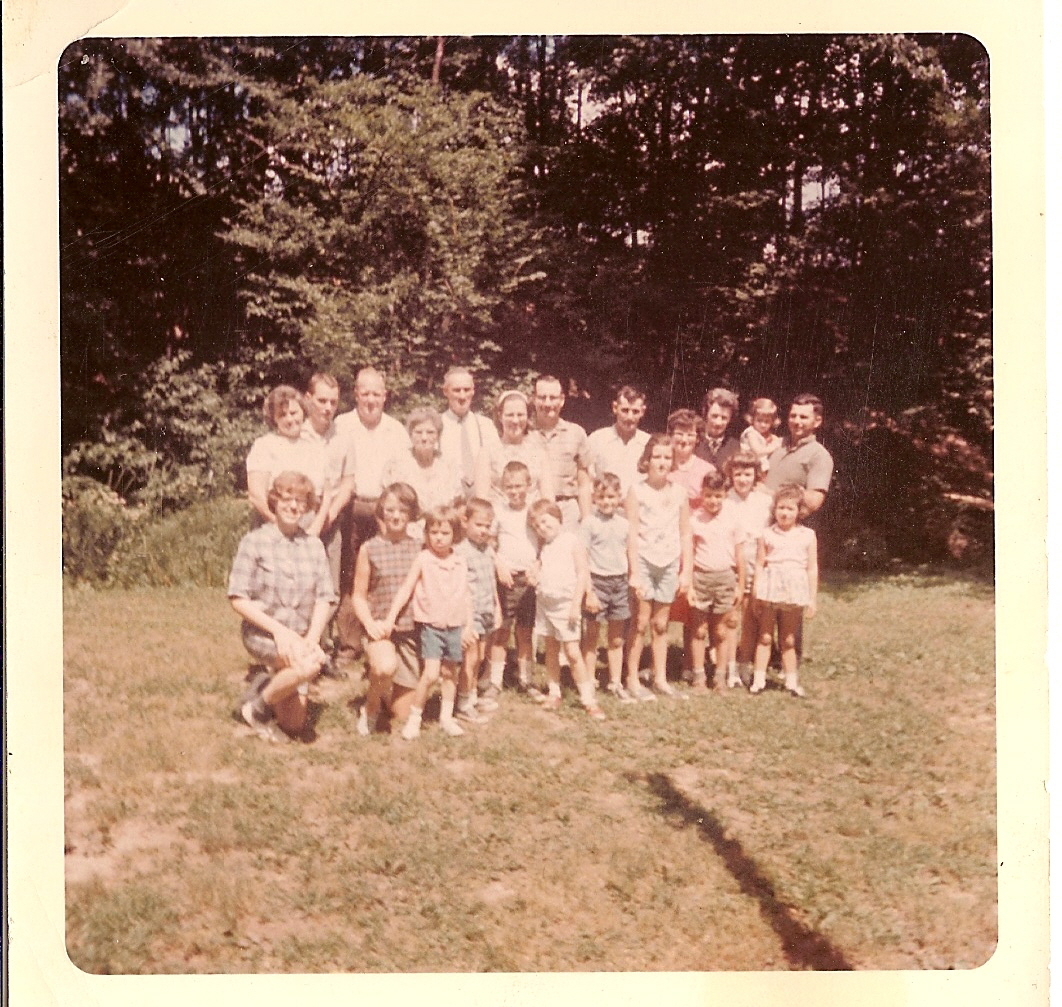
Helen(a) (Muffly) and Raymond Swartz and their descedants at the Swartz Reunion, White Deer Park, circa 1964

Grandma’s mother was obviously wrong– she was not incorrigible!

Last Lynching in Pennsylvania

16-year-old Helena Muffly wrote exactly 100 years ago today: 

Sunday, October 22, 1911: While walking to Sunday School this afternoon, I saw three men taking a man and n_____  woman to jail. Anyway that’s very likely where they’ll land before long. It’s raining tonight real hard.

Her middle-aged granddaughter’s comments 100 years later:

Whew, this diary entry upsets me. Grandma spelled out n___  in her handwritten entry in the diary, and her attitude bothers me a lot.

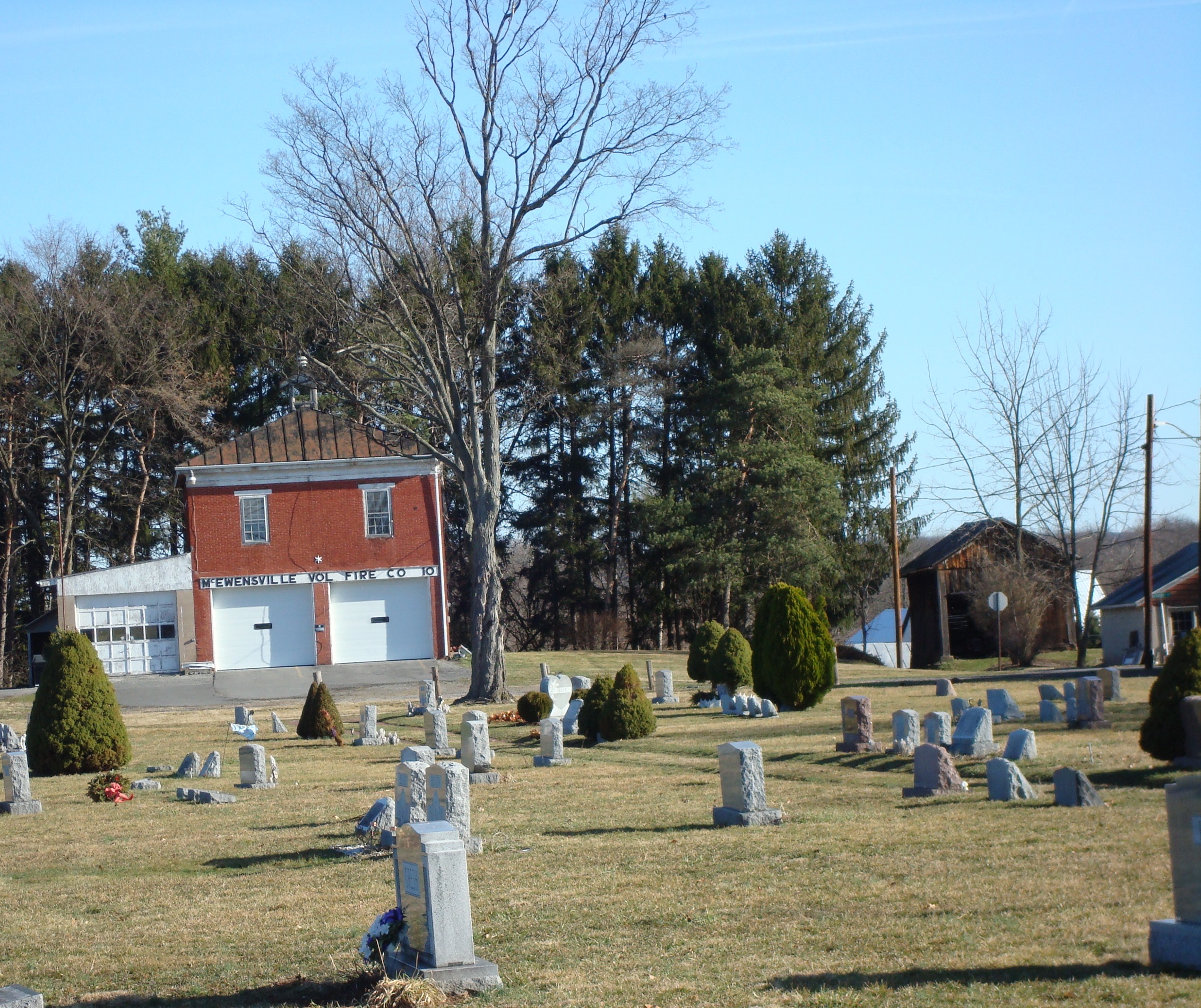
Grandma would have walked a mile or so on country roads to get to Sunday School in McEwensville.

Central Pennsylvania was not very diverse a hundred years ago, but a few Blacks lived in the area. C.V. Clark, in a presentation to the Northumberland County Historical Society, mentioned that in the late 1800’s a freed slave named Eliza lived in McEwensville–and her descendents probably were still living in the area in 1911.

I know that times were different back then, but the bottom line is that Blacks were often treated terribly a hundred years ago. To help better understand what things were like in 1911 I’d like to share some disturbing information that I recently discovered.

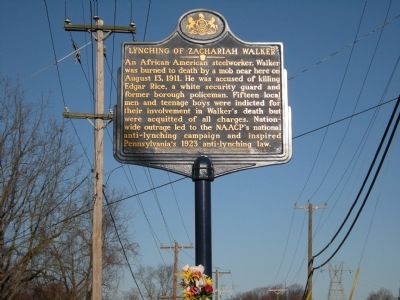
The last lynching in Pennsylvania occurred  on August 13, 1911. Zachariah Walker was lynched in Coatesville which is near Philadelphia.

Historic marker in Coatesville. Used with Permission: HMdb.org (Historic Marker Data Base); photographer: Kevin W. of Stafford VA

The inscription on the historic maker about the lynching says:

LYNCHING OF ZACHARIAH WALKER

An African American steelworker, Walker was burned to death by a mob near here on August 13, 1911. He was accused of killing Edgar Rice, a white security guard and a former borough policeman. Fifteen local men and teenage boys were indicted for their involvement in Walker’s death but were acquitted of all charges. Nationwide outrage led to the NAACP’s national anti-lynching campaign and inspired Pennsylvania’s 1923 anti-lynching law.

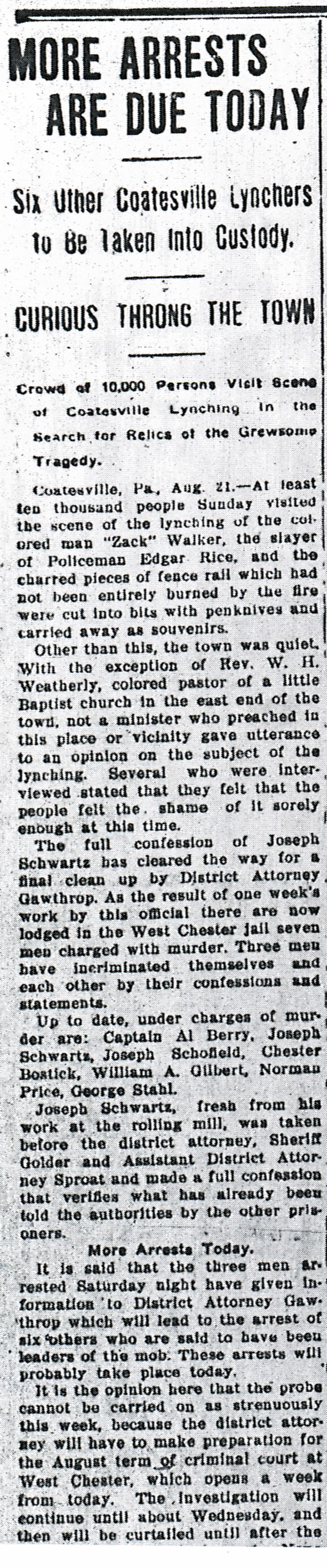
Even though Grandma lived more than a hundred miles from Coatesville, she probably was aware of the lynching. The local paper, The Milton Evening Standard periodically ran stories about it.

Milton Evening Standard, August 22, 1911

It’s the Style, Not Shoe, That Costs

16-year-old Helena Muffly wrote exactly 100 years ago today: 

Saturday, October 21, 1911: Rufus and Ma went to Milton today. Ruth got a jacket suit and Ma bought me a pair of shoes. They’re for school so you see I didn’t care so much if I wasn’t there to try them on.

It’s the style, not shoe, that costs.

Quote from The News About Shoes (Good Housekeeping Magazine, October, 1911)

Her middle-aged granddaughter’s comments 100 years later:

To clarify this entry—Grandma’s sister Ruth and her mother went shopping.  Sometimes in the diary Grandma referred to Ruth as Rufus—and in this entry she co-mingled two names for the same person.

I’m surprised that Grandma’s mother didn’t take her along to buy shoes, and that Grandma was only slightly annoyed.  . . Or . . . [another scenario, based on my second read through of this diary entry] maybe Grandma was really angry when she wrote it and was trying to convince herself that it really was okay.

Shoe sizes must have been very standardized way back then if someone could buy shoes for another person; or maybe Grandma wore the same size shoe as her mother or sister.

Missed the Visitors

16-year-old Helena Muffly wrote exactly 100 years ago today: 

Wednesday, October 18, 1911: Grandma and Aunt Alice were here today, but I didn’t get to see them because they had gone when I got home from school. We had a review in Latin today. An easy examination it was.

John and Sarah Derr Family. Taken about 1900. L to R. Front Row: John, Annie (Derr) Van Sant, Sarah. Back Row: Miles, Fuller, Alice (Derr) Krumm, Elmer, Phoebe (Derr) Muffly, Judson, Homer.

Her middle-aged granddaughter’s comments 100 years later:

Grandma’s Aunt Alice was her mother’s (Phoebe Derr Muffly) sister. She was married to John Krumm and lived in Turbotville.

Alice is referred to as Mary Alice in official records, so she apparently went by her middle name. Based on information in the 1910 census on the Family Search website, she would have been 54-years-old in 1911 and was 5 years older than Phoebe.

Alice’s and Phoebe’s mother –and Grandma’s grandmother– was Sarah Derr. Sarah also lived in Turbotville, and was 70-years-old in 1911.

Turbotville is located about 4 miles northeast of the Muffly farm. The women may have come by horse and buggy—or may have taken the train.  The Susquehanna, Bloomsburg, and Berwick Railroad provided passenger service to Turbotville—and there was a flag stop at a feed mill near the Muffly’s.

How Many Verses Did She Memorize This Week?

16-year-old Helena Muffly wrote exactly 100 years ago today: 

Sunday, October 15, 1911: Went to Sunday School this morning. My verses that I am learning for that Bible has decreased some, but I’m still at it.

Her middle-aged granddaughter’s comments 100 years later:

Grandma was trying to memorize Bible verses to get a free Bible. On September 17 she wrote:

. . .One reason for my regular attendance is that if you learn a number of verses from the Bible (over 700 it is) you will in the course of time receive a Bible.. .

And on September 24 she wrote:

 . . . Only learned seven verses for today. Usually have twenty-seven . . .

I wonder how many she memorized this week. I can’t even imagine trying to memorize 27 verses a week. No wonder the number of verses  has decreased over time.

Visited Friends, But Didn’t Stay Long

16-year-old Helena Muffly wrote exactly 100 years ago today: 

Friday, October 13, 1911: Ruth and I went up to Oakes’ this evening and arrived home in  no time.

Recent photo of the farm where Rachel and Jim Oakes lived.

Her middle-aged granddaughter’s comments 100 years later:

It was a Friday night. I wonder why Grandma and her sister Ruth didn’t stay long.

The Oakes lived on a farm near the Muffly’s. Several of the Oakes children were close in age to  Grandma and  Ruth. Rachel Oakes was a friend and also the primary school teacher at McEwensville.

Several times during the spring and early summer Grandma mentioned in the diary that Ruth was dating Jim Oakes—though he hasn’t been mentioned recently so perhaps that relationship ended sometime prior to this date.