17th Birthday

17-year-old Helena Muffly wrote exactly 100 years ago today: 

Thursday, March 21, 1912: On the first day of spring the ground is white with snow. My seventeenth birthday dawned this morning. Tried to make the most of it. I received two presents. I am staying up later this evening to study longer, also want to see the passing of my birthday.

Her middle-aged granddaughter’s comments 100 years later:

Happy Birthday, Grandma!

The previous year when Grandma turned 16, she wrote:

I hereby truthfully resolve to be a better and more useful girl in the future than I have been in the past, and may this birthday resolution never be broken.

I sign myself,

Helena Muffly,

Mar. 21, 1911

I wonder if Grandma remembered her resolution—and if she felt like she’d kept it over the course of the year.

Book Review: The Financier by Theodore Dreiser

16-year-old Helena Muffly wrote exactly 100 years ago today: 

Wednesday, March 20, 1912: I lost myself in reading a book, and as a result went to bed at a quarter of three this morning. I was awfully sleepy when I woke up.

Her middle-aged granddaughter’s comments 100 years later:

Wow, Grandma must have been  reading  an awesome book if she stayed up until almost three a.m.  And, it was even a school night!!

What could the book have been? A mystery?  . A romance?

I bet that she wasn’t reading The Financier by Theodore Dreiser.

Photo source: Wikipedia

__

A couple months ago I wrote a post about books published in 1912 that are still in print—and The Financier was one of them.

In this era of Bernie Madoff and Occupy Wall Street, I wanted to see if a hundred-year-old novel about a crooked financier would still seem relevant.

The book told the story of a man in Philadelphia  who misused municipal money to  become very, very rich.

Due to unexpected circumstances, the whole scheme unraveled and he went to jail.

I found the details of his financial scheming confusing and boring—but I did get insights into the psychology of someone who might commit financial fraud.

The book also explored social norms, and seemed very supportive of extra-marital affairs and divorce in a era when divorce was very rare—though the characters had to pay a price for finding happiness.

After the financier got out of jail—he did what he was born to do. He moved to Chicago and again became rich as he helped to develop the Commodity Exchange.

Bottom line: The book wasn’t optimistic that human nature will change—and suggested that some people just are born to know how to make money, even if it hurts others.

Studying with the Light Going Out

16-year-old Helena Muffly wrote exactly 100 years ago today: 

Monday, March 17, 1912:  Am trying to get my lessons out tonight. This light of mine is going out and tis all I can do to see.

Photo source: Wikipedia

Her middle-aged granddaughter’s comments 100 years later:

Sometimes I’m surprised by the similarities between 1912 and 2012. Other times, I’m reminded of the differences . . .

It’s hard to imagine what it must have been like to study using light from a kerosene lamp.

Popular Children’s Book Series a Hundred Years Ago

16-year-old Helena Muffly wrote exactly 100 years ago today:

Saturday, March 16, 1912:  Ruth went to Milton this morning. I made an apron today. Started to read a book this evening. The sequel of which I read about three years ago.

Source: Wikipedia

Her middle-aged granddaughter’s comments 100 years later:

Hmm. . . what was Grandma reading?  She probably was reading adult books—but since she said that she’d read the other book in the series three years previously maybe they were children’s stories.

I don’t know which adult series were popular a hundred years ago—but I can think of several children’s series.

Little Women, Little Men and other books in the series by Louisa May Alcott are classics that have retained their appeal over the years. The series was published between 1868 and 1886.

The Bobbsey Twin series of adventure stories by Laura Lee Hope were published between 1904 and 1979. Laura Lee Hope is a pseudonym used by several different authors over the years.

The Elsie Dinsmore series by Martha Finley were published between 1967 and 1905. Elsie’s mother was dead, and Elsie faced many moral conflicts (and seemed to constantly feel guilty for one minor offense or another) as she grew up in her grandparent’s home.

An aside–Grandma WAS NOT reading the Nancy Drew series (first book published in 1930) , the Hardy Boys (first book published in 1927), or the Betsy and Tacy series (first book published in 1940).

The Creek is Out of Its Banks!

16-year-old Helena Muffly wrote exactly 100 years ago today: 

Friday, March 15, 1912:  It was out of the ordinary walking to school this morning. It rained so last night that my morning, water was plainly visible everywhere. It was about the same height tonight. I thought this morning I might not get to school after all.

Recent photo of Warrior Run Creek.

Her middle-aged granddaughter’s comments 100 years later:

Grandma needed to cross Warrior Run Creek to get to school.

It sounds like the creek had flooded and was out of its banks.  However, the water apparently had not covered the road and the bridge so Grandma could get to school.

Though not visible, the creek is in the valley in the center of this photo. Probably the field next to the railroad tracks and low lands were flooded a hundred years ago today.

Tramps in the Early 1900s

16-year-old Helena Muffly wrote exactly 100 years ago today: 

Sunday, March 3, 1912:  I don’t believe we are going to get our papers back. I wouldn’t mind knowing what some of my marks are. Perhaps not very satisfactory any way.

Source: Wikipedia

Had to walk home from school behind a tramp. I walked slow enough you can bet.

Her middle-aged granddaughter’s comments 100 years later:

Sounds a little scary—

A tramp walking down a rural road—and a a teen-aged girl needing to walk the same road  to get home from school.

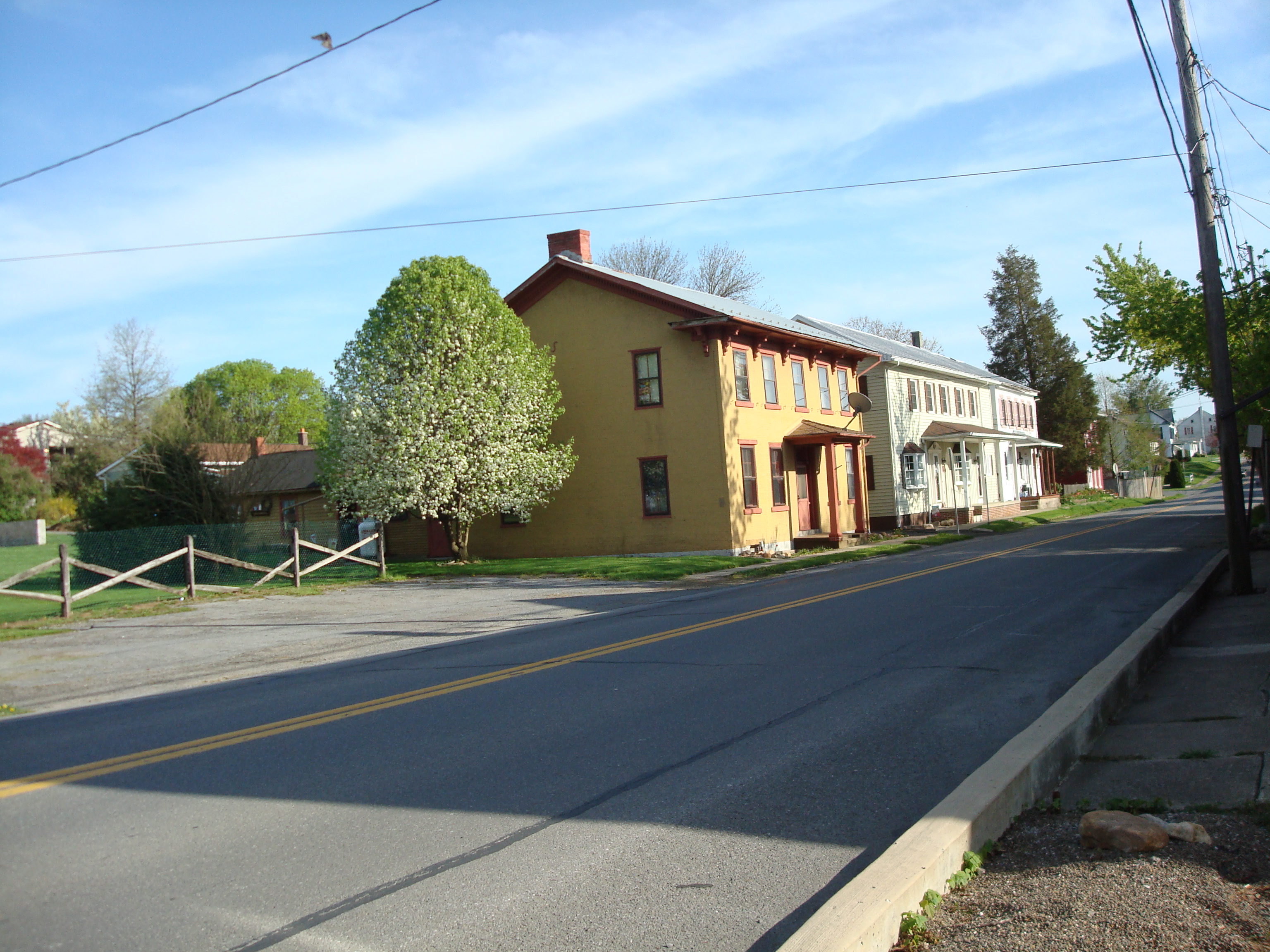
Grandma would have walked down this road to get home from school. Probably each farm-house along the way represented a safe haven.

There were lots of tramps in US in the early 1900s. Many men found it very difficult to find jobs as the country industrialized. According to Wikipedia:

In 1906, Professor Layal Shafee, after an exhaustive study, put the number of tramps in America at 500,000 (about 0.6% of the U.S. population). The article citing this figure, What Tramps Cost the Nation, was published by The New York Telegraph in 1911 and estimated the number had surged to 700,000.

A Sleepover

16-year-old Helena Muffly wrote exactly 100 years ago today: 

Sunday, March 9, 1912:  Blanche slept with Ruth and me. I slept on the rail part of the time. Made me kind of stiff. Went to Sunday School this afternoon. B. was there. Hat blew off coming home, but by luck didn’t land in the mud.

Her middle-aged granddaughter’s comments 100 years later:

Grandma had a crush on B. in the diary but doesn’t use the complete name. I think that B. refers to Bill Gauger.  Grandma’s sister Ruth married Bill several years after the diary ended.

Blanche Bryson was a friend of Grandma  and Ruth. The previous day’s entry indicated that their friend had arrived by train.

I assume that rail refers to the edge of a wooden bed frame. A hundred years ago, people didn’t have nearly the amount of privacy or space that they do today. Grandma and her sister Ruth shared a double bed—and it sounds like when they had an overnight guest they managed to squeeze a third person in.

I wonder how late they stayed awake talking. What did they talk about? Did their parents tire of the noise and tell them to go to sleep?