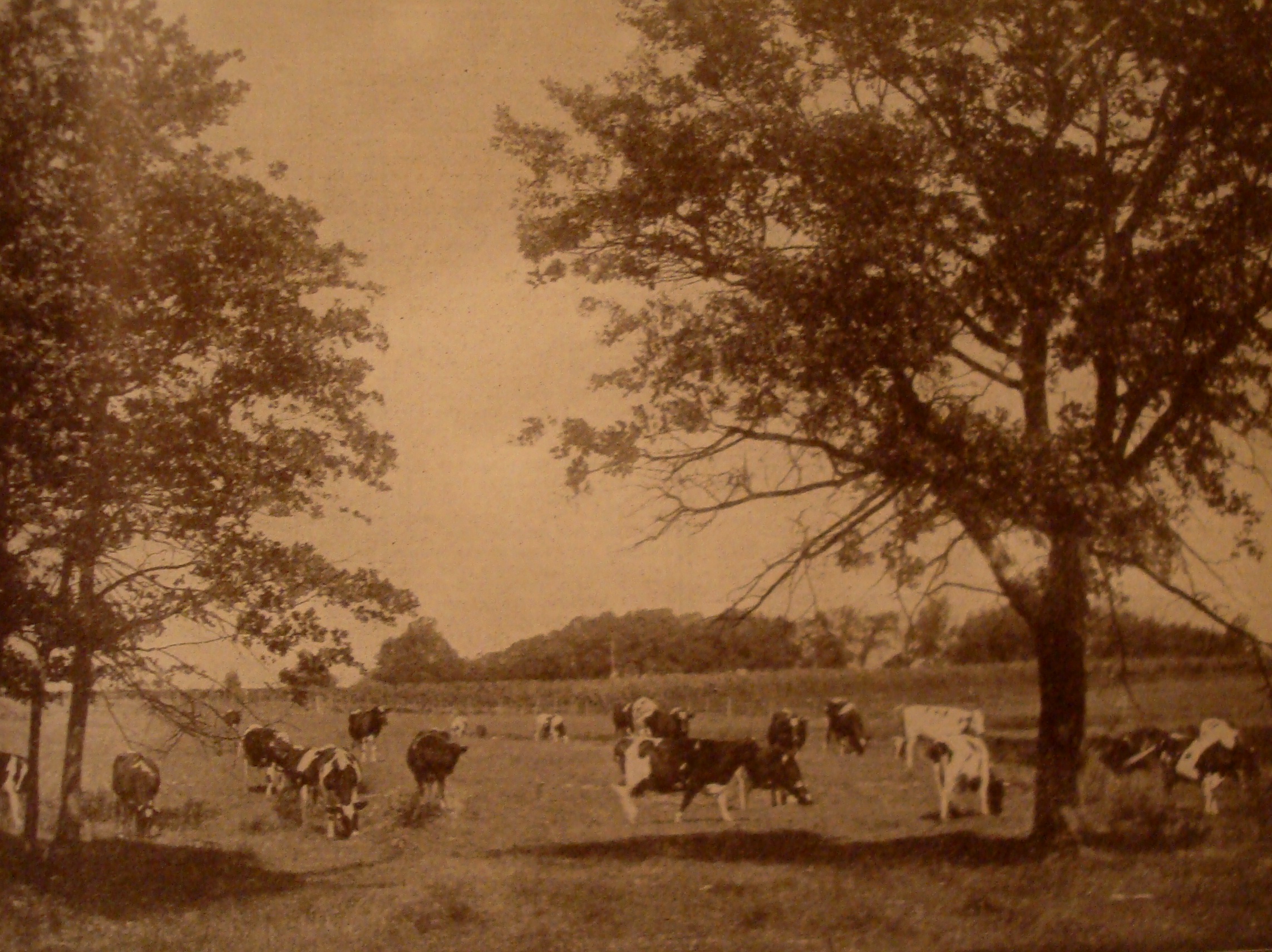
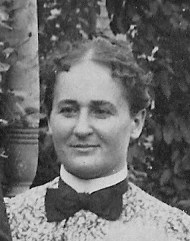
Hmm—apparently a tan wasn’t considered a good thing a hundred years ago. I guess times changed between 1912, and the 1960s and 70s. When I was a teen we were all trying to get dark tans.
As Grandma watched cows on those very long days, did she ever dream of a great career after she graduated from high school?
What Shall I Do After High School?
The average High School girl has a feeling of bewilderment as the day of her graduation approaches. She asks: “What is there that I can do?” This vocation of teaching, being the line of least resistance has gathered in many who do not care for it and are not happy at it. . .
It is not the purpose of this article to tell girls of some easy way to support themselves, but rather to deal with some of the interesting avenues of service open to women.
Nurse
The girl who goes into nursing should have a sound constitution, cheerful disposition, common-sense, capacity for prompt decision and quick action, and above all, the ability to put herself under discipline. The nurse receives her training in the classes of the city hospitals. It is well to be prepared with at least a High School education, although a number of hospitals will admit on one years’ High School work, provided the applicant fulfills the age requirement, usually eighteen years, and is “good material.”
What can a girl do with this training? She can engage in private nursing at $25 a week. This is, of course, not steady work. She may also go into Army or Navy service, into hospitals, sanatoriums, city institutions as head nurse or assistant. The best opening in all of these places is that of superintendent. The demand is far beyond the supply for superior women for these positions. The school nurse and district nurse are positions open to the young woman who is attracted to the field of preventive social work. The nurse is needed in the forward movements of the day.
Library Work
Every girl who has gone into library work is enthusiastic about it. The great criticism about the work is that while it demands a great deal of general proficiency, education and training, it nevertheless pays but small salaries in proportion to its requirements. To enter this work a girl should have a love for books, current events and general information. Library schools for the most part accept High School graduates and give courses of from one to two years, but college graduation as well as library training is demanded for the higher positions in this work.
Kindergartner
A girl who goes into this work should have good health, should be full of the play spirit, have keen insight, a sympathy for little children and ability to sing, play, and draw. Her training covers a four-year High school course, and a two-year course in a kindergarten training school.
The knowledge and personality of the kindergartner count for much. The home-visiting which is an important part of the kindergartner’s work calls for tact and judgment.
Graduate kindergartners may find positions in the public schools, in the free or mission kindergartens, in private kindergartens or in private homes. They may open kindergartens of their own. The regular kindergartner receives in the city public service from $600 to $1500. The salaries in private schools are somewhat less.
Jewelry and Silversmithing
For the girl who has artistic appreciation and who can use her hands with skill in execution, very interesting work can be found in the jewelry and silversmith trades.
Costume Designing and Illustrating
This work calls for a considerable amount of native ability. Originality counts for much. A good practical course in design and pattern drafting is recommended.
At present the women’s magazines, fashion magazines, newspapers and advertising sheets employ scores of women at this work. The remuneration varies from two to three dollars a drawing to fifty dollars. A fair artist out be make anywhere from $20 to $75 a week.
Artistic Photography
One is amazed at the rapid strides that the women are making in the field of art photography. There are at present more than fifteen hundred professional woman photographers in America. It is especially in the field of home portraiture that they are “making good.” Chemistry and physics and art work in her High School course will be of great help to her later.
There are a number of young women who are making a specialty of photographing babies and young children.
Dietitian
Only girls who have strong, practical tendencies and enjoy work of a scientific character should think of going into the field of domestic science known as “dietetics.” The scientific care and distribution of food is fast coming into the hands of trained dietitian.
Some colleges have established definite courses along these line, of three or four years in length and leading to a degree.
So much value has become attached the last few years to the subject of nutrition that a new importance has been given to the work of dining-room supervisor and there is a large opportunity for practical women to work in our college dormitories.
The hospital and institutional dietician has to take entire charge and supervision of the food question for the institution.
Interior Decorators
For girls who have a good color sense, ability in getting artistic effects, and some business enterprise there are large opportunities in the profession of interior decorating.
The field is not only that of the home, but has also extended to work in college halls and dormitories, hotels, and public buildings. Architects are now employing interior decorators.
Secretary
A secretary has been a young woman who can offer her services merely as a stenographer and typewriter; but the demand for young women of great intelligences and training, along with faculty and speed in dictation and typewriting, has developed a higher value for such services. A bright girl can get a position at $8 to $10 to start on; but few get beyond this wage.
The positions open vary from those in the average commercial or publishing house and school office to that of private secretary to a scientific investigator who demands an understanding of the details of his subject.
Ladies Home Journal, April 1912