17-year-old Helena Muffly wrote exactly 100 years ago today:
Saturday, September 7, 1912: My Saturday’s work is done for today, but I still have a heap of lessons to digest before Monday makes its appearance again. It usually takes me awhile to get myself in the notion of studying. After which I usually go to work.
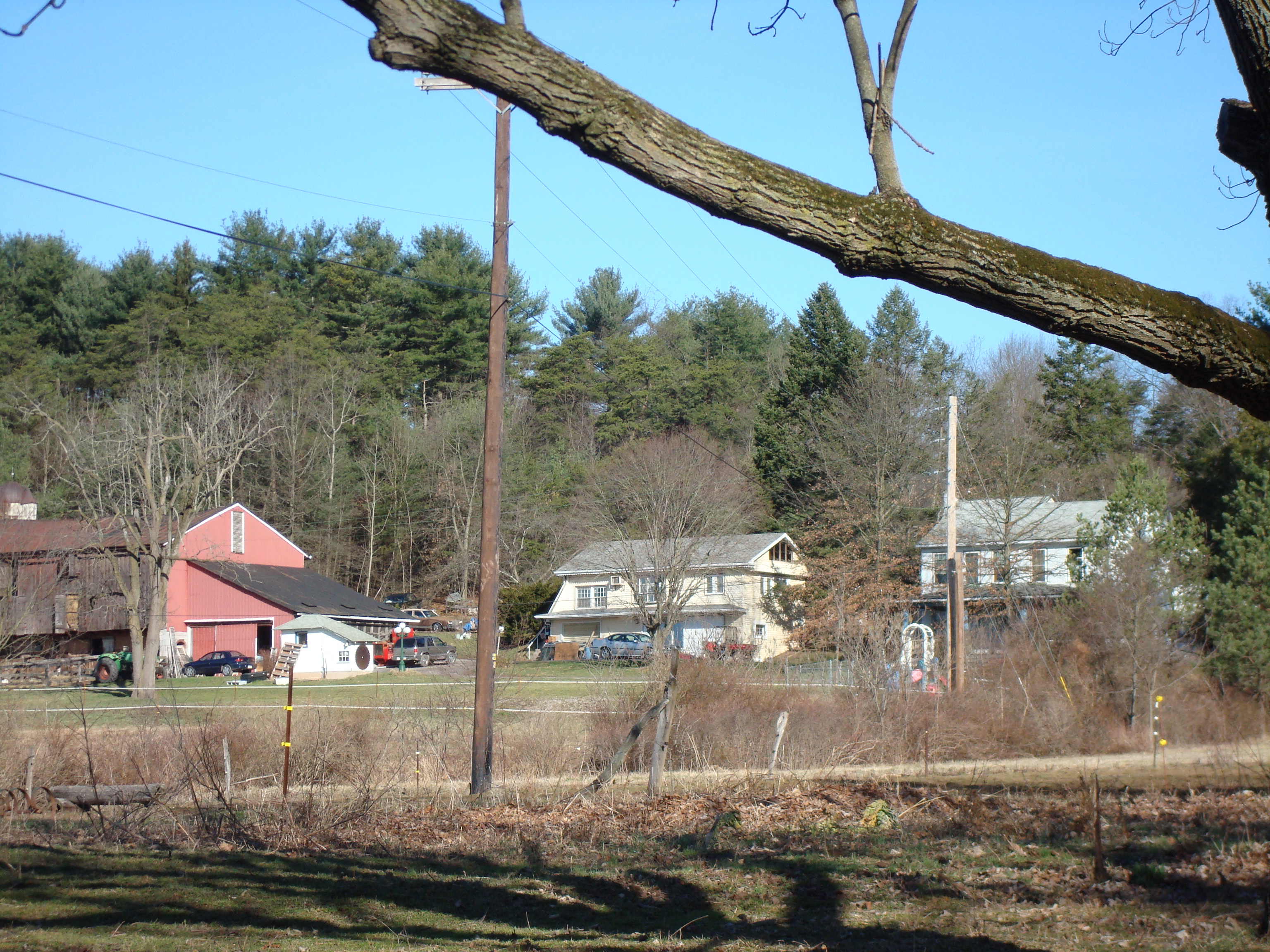
Recent picture of the house and yard where Grandma lived when she wrote the diary.
Her middle-aged granddaughter’s comments 100 years later:
I’m surprised how insightful Grandma was when she realized that even though she tended to procrastinate that she would eventually accomplish the task at hand.
When I was a teen, I got mad at myself for dawdling—yet I continued to do it over and over; and never seemed to “learn” to get things started early.
I don’t think that I knew myself well enough when I was young to realize that I will eventually get a task done (and done well) even if I delay starting it. Now I see procrastination as part of the process (and a time for creative thinking).
17-year-old Helena Muffly wrote exactly 100 years ago today:
Tuesday, September 3, 1912: Nothing doing today.
President William Taft (Republican)
Her middle-aged granddaughter’s comments 100 years later:
Since nothing much happened in Grandma’s life a hundred years ago today, I’m going tell you a little about the 1912 presidential race.
(Somehow with the Republican convention last week and the Democratic one this week, this seems like an appropriate time to step back and take a look at the big picture.)
Lots of economic, social, and environmental issues dominated the campaign rhetoric in 1912:
How much power should corporations have?
Should tariffs be high or low?
Was the government corrupt?
Did political machines have too much power?
How important were environmental issues?
What role should government play in developing social welfare policies?
Should woman have the right to vote?
What role should Blacks have in the political process?
Should children be allowed to work?
In 1912, William Taft was the current president, but there was a three-way race between Taft (Republican), Theodore Roosevelt (Bull Moose Party), and Woodrow Wilson (Democratic).
Former President Theodore Roosevelt (Bull Moose)
There had been a schism in the Republican Party between Taft and Roosevelt, which led to Roosevelt breaking away to form the Bull Moose Party.
Roosevelt had been president early in the 20th century. He was part of the progressive wing of the Republican party, but in 1908 he decided that he did not want to run for re-election and supported Taft as the Republican nominee.
However, by 1912 Roosevelt felt that Taft had not appropriately continued the progressive path he’d begun, and ran against him for the Republican nomination. When Roosevelt lost the nomination he founded the Bull Moose Party.
(Roosevelt said that he was as fit as a bull moose—and somehow it ended up being the party name.)
This split basically ensured that Woodrow Wilson would win.
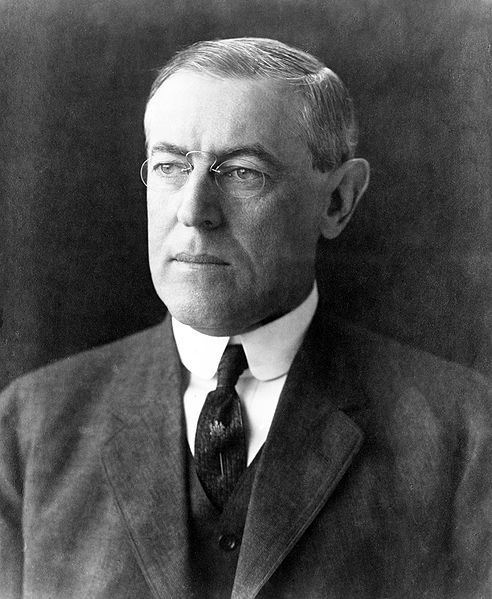
Wilson was the governor of New Jersey when he received the Democratic nomination. He’d previously been president of Princeton University—but in 1910 ran for governor because he was frustrated by the infighting within the university over issues such where the graduate school building should be located, and whether or not there should be eating clubs on the campus.
Woodrow Wilson (Democrat)
Wilson stayed out of the brawl between Taft and Roosevelt, and easily won the election.
Many of the campaign issues soon seemed less important. . .
. . . . in 1914, World War I would break out in Europe.
—-
How aware was Grandma of the national issues? Did she listen to any campaign speeches supporting one or another of the candidates? Did her father talk about who he planned to vote for? Did she hope that within a few years that she’d be able to vote?
17-year-old Helena Muffly wrote exactly 100 years ago today:
Saturday, August 31, 1912: The Lutherans had their S.S. picnic down at the park today. I got down there sometime after eleven. On the whole I had quite a nice time. Met three or four girls, four it was. Didn’t have to do the milking when I came home, as it was already done.
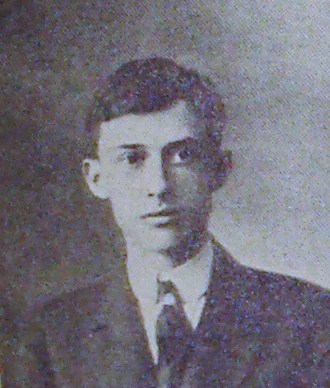
Raymond Swartz
Her middle-aged granddaughter’s comments 100 years later:
Was Grandma’s future husband (and my grandfather), Raymond Swartz, also at the picnic?
My grandparents were members of Messiah Lutheran Church in McEwensville when I was a child. I assume that Raymond was raised Lutheran, and that Grandma converted from Baptist to Lutheran when she got married.
Raymond lived on a farm just south of McEwensville and also attended McEwensville High School. He was three and a half years younger than Grandma—and did not seem to be on her radar screen when she was writing the diary.
When Grandma wrote this diary entry she was17—Raymond was 13.
Farm Chores
Did Grandma’s sister Ruth do Grandma’s share of the milking? Numerous diary entries mention times when Ruth got home late –and Grandma got stuck with the milking. For example, on June 12, 1912, she wrote.
I’m mad at that Ruth tonight. She goes away and leaves me with the milking.
I think this is the first time a diary entry suggests that maybe Ruth also got stuck with all the milking sometimes.
17-year-old Helena Muffly wrote exactly 100 years ago today:
Thursday, August 29, 1912:Was real nice going to school this morning. You see it rained last night. Had our first visitors at school today. They were Miss Cakes and Miss Bryson. We had our last class, while they were there.
Recent photo of building that once housed McEwensville High School.
Her middle-aged granddaughter’s comments 100 years later:
It sounds like the rain the previous night broke a hot spell.
Here’s what the weather report in the New York Times for August 29, 1912 said.
The Weather
. . . Temperatures remain below the seasonal average in the Northeastern States, the region of the Great Lakes, and the Upper Mississippi Valley, and continue high in the Lower Ohio and Middle Mississippi Valleys and throughout the South. . . . .
Steamships departing Thursday for European ports will have moderate variable winds and overcast showery weather to the Grand Banks.
Cool—It’s amazing that there was a steamship forecast. How many steamships left the port of New York on a typical day? . . . How many people were on those ships? There must have been a lot or the New York Times probably wouldn’t have included the steamship forecast.
Visitors
I’m not sure who the two visitors were. Miss Bryson might possibly refer to Blanche Bryson, She was a friend of Grandma and her sister Ruth.
17-year-old Helena Muffly wrote exactly 100 years ago today:
Monday, August 26, 1912: At last the day has dawned and back again to our studies we go. Have four new studies this year, so that may mean some energy expended upon them.
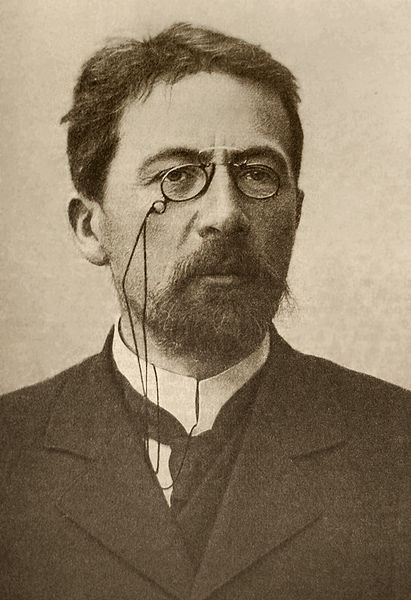
He is rather wide, wears a pair of pinchers, and has yellow hair. Not so very cross, but I believe he could be.
Her middle-aged granddaughter’s comments 100 years later:
Yeah! The first day of school finally arrived. Grandma’s been waiting so long for it to start again. I hope that she likes her new teacher.
According to The History of McEwensville Schools by Thomas Kramm, the teacher of McEwensville High School for the 1912-13 school year was Bruce Bloom.
Pinchers (pince-nez) refer to glasses that pinch the wearer’s nose.
According to Wikipedia pinchers were popular from 1880 to 1900, so Grandma probably thought that they were out-of style and old-fashioned when her teacher wore them.
17-year-old Helena Muffly wrote exactly 100 years ago today:
Sunday, August 25, 1912: Won’t I be glad when tomorrow morn is here and this day is passed. Went to Sunday School this afternoon. Besse and Curt were here today.
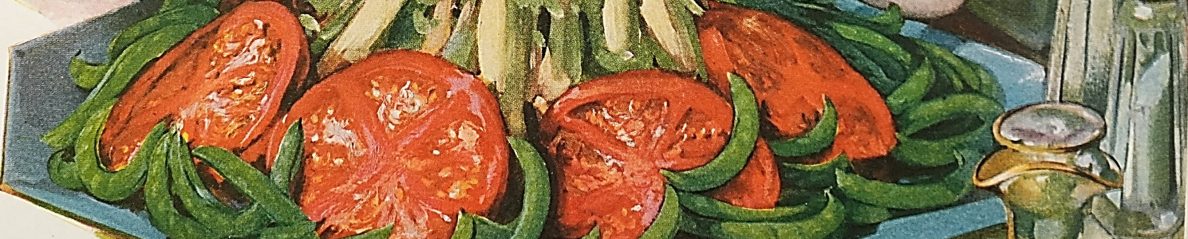
Basket of cookies (Source: Ladies Home Journal, August, 1912)
Her middle-aged granddaughter’s comments 100 years later:
With entries like this, I always create stories in my mind–even if the diary text doesn’t really provide enough information to tell whether my imagination is right or way off base.
For example, for this diary entry I picture Grandma, and her sister and brother-in-law, Besse and Curt Hester, sitting on the porch on a beautiful summer afternoon nibbling cookies. There’s a bit of a breeze–just enough to make the day seem really pleasant.
The zinnias and hollyhocks are blooming in a nearly flower garden. And, the young folks are catching up on all the gossip–who just got engaged, the runaway horse in downtown Watsontown, . . . and that school was going to start for Grandma the next day.
. . . or maybe there were thunderheads in the sky so Grandma, Besse, and Curt . . . .