Are Soups the “Antigarbagepail”?

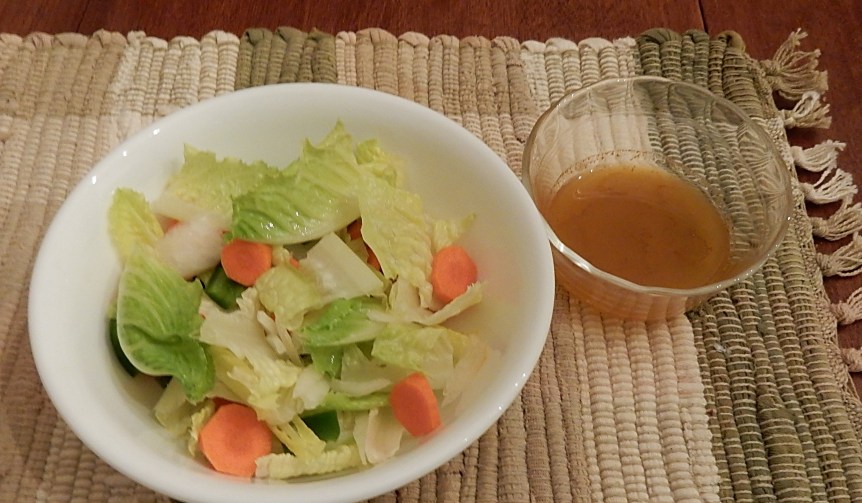
soupI’ve often heard that leftovers can be turned into wonderful soups, but was taken aback when a hundred-year-old cookbook referred to soups as the “antigarbagepail.”
As I remark in another portion of this work, what won’t go into a salad will go into a soup. It is very true. The soup kettle, if you will forgive me, should be a sort of antigarbagepail. Many a time and oft has my family smacked its collective lips and said, “Um-m-m, that’s good soup. What kind is it?” And when I repeat the component parts they sit aghast – but they don’t stop eating it!

The Calorie Cook Book by Mary Dickerson Donahey (1923)

The author may be right, but personally I prefer to “repurpose” my leftovers to make soup. . . or to use leftovers to “enrich” my soup. . . .or . . .

Hundred-year-old Tip for Storing Lemons

lemon under a glass

Hundred-year-old cookbooks often included hints and tips. Here’s one for storing lemons:

tip for storing lemons
Source: General Welfare Guild Cook Book (Beaver Valley General Hospital, New Brighton, Pennsylvania)

It may work to store lemons under a drinking glass, but I wondered if a plastic bag might be more convenient and work just as well – then I realized that plastic bags didn’t exist in 1923.  According to Dienamics, plastic bags were first used in 1957 when they were used to package rolls.

Hundred-Year-Old Tip for Whiter Boiled Potatoes

potatoes in water and milkHundred-year-old cookbooks often contain household tips. Sometimes they leave me scratching my head or wondering if they really work. For example, I had my doubts about the following tip:

When boiling old potatoes, put a tablespoon of milk in the water in which they are cooked and they will be much whiter.

General Welfare Guild Cook Book (Beaver Valley General Hospital, New Brighton, PA, 1923)

When I saw the tip, I could think of no reason why boiled potatoes would be whiter if cooked in water that had a little milk added. And, I wondered why anyone would care. My boiled potatoes generally look fine (even if they are cream colored).

When I tried this tip, I think (much to my surprise) that it actually worked. The potatoes seemed whiter than usual.

This tip also made me wonder about the use of the term “old potatoes.” Is there such a thing as old potatoes in today’s world? When I was young, I can remember potatoes starting to sprout, and getting soft and mealy in the spring – but I seldom see those types of potatoes during any season any more.

Hundred-Year-Old Tips for Gaining Weight

menus
Source: The Calorie Cook Book by Mary Dickerson Donahey (1923)

A 1923 cookbook called The Calorie Cook Book by Mary Dickerson Donahey contained menus for those who wanted to lose weight, as well as menus for those who wanted to gain weight. Here’s the sample Autumn “upbuilding”  menu for gaining weight. The cookbook also contained the following tips for those who believed they were too thin:

Hints for the Thin

The thin folks may feel that I have been stingy with them. They have been given only one menu a season instead of seven.

It is from no lack of interest or sympathy. It is simply that in their case there is a distinction with a difference.

There is always the fact that excessive thinness may mean ill health or overwork. No one can recommend a diet of more food, or richer food, unless quite certain that the person who is to eat all that extra stuff is able to get away with it.

So if your collar bones make you resemble a hat rack, and your vertebrae are altogether too interested in popping out to look at the world for themselves, first see your doctor. If he says you are physically fit – fall to and eat up! Only don’t try to pad out with dill pickles or sauerkraut.

Eat more of everything. Be sure you eat a variety. Eat starches, fats and the simpler sweets. Don’t think it necessary to dispose of French pastries by the dozen. You may gain flesh but you’ll lose your health. And good health is more to be prized than beauty. There’s no comfort without it, and really no lasting beauty, either.

You will notice in your menus that I have simply arranged a variety of fattening foods, well interspersed with green salads and fruits, and that things easy of digestion have been chosen most often. In your own planning, do likewise.

The meals suggested here are not so very big. No second helpings are allowed for, and almost everybody wants a second helping of something. If you can eat them, do of course. But if the meals on the other hand, seem too big, don’t force yourself to the point of disgust.

Don’t eat between meals – that is bad for everybody. But arrange for extra meals at regular hours. Milk is the best thing to take at such meals, as you aren’t apt to get enough anyhow, and it’s the best thing for you. but you may take cocoa, or simple ice cream, without extra rich sauces, or a bowl of rice – brown rice preferably – or oat meal, or whole wheat, steamed soft, with whole milk or cream and brown sugar. Have maybe five meals a day. Breakfast, early lunch, afternoon tea, dinner, and a bedtime supper. Food eaten just before you sleep produces more fat than food eaten at any other time.

You should reverse the advice given the fat folk. If possible have your food portions made with more butter, more creamy, than those served to other people – and if you can eat them, more generous, too.

Remember you need all the fresh air you can get, exercise, though that in moderation, and above all – peace! Don’t worry! You very, very seldom see a fat worrier!

The Calorie Cook Book (1923) by Mary Dickerson Donahey

Popular Food Combinations a Hundred Years Ago

List of food combinations
Source: General Welfare Guild Cook Book (Beaver Valley General Hospital, 1923)

Some foods just seem to go together – bacon and eggs, burgers and fries, meat and potatoes. . . I could go on and on. I recently came across a list of food combinations in a hundred-year-old cookbook, and was surprised to see some of the suggestions.  Roast mutton, mashed potatoes, brown sauce, and turnips anyone?