
I’m a bit foggy on how steaks and pork chops were broiled a hundred years ago, but the price of a Dundee Broiler is right. At just $3.50, I want one.

I’m a bit foggy on how steaks and pork chops were broiled a hundred years ago, but the price of a Dundee Broiler is right. At just $3.50, I want one.

Flavorings and extracts have been around for more than a hundred years. The 1923 edition of The Boston Cooking-School Cook Book had an advertisement for Foss’ Pure Flavoring Extracts in the back of the book. In Chapter 1, there was a description of flavoring extracts:
Flavoring Extracts
Many flavoring extracts are on the market. Examples: almond, vanilla, lemon, orange, rose, etc. These are made from the flower, fruit, or seed from which they are named. Strawberry, pineapple, and banana extracts are obtained from the fruits themselves or manufactured from chemicals.
The Boston Cooking School Cook Book (1923)

1923 was the third year of prohibition in the U.S. I have no idea which five fruits were in Hay’s Five Fruit, or what it tasted like, but I’m intrigued that it can replace “wines and other flavors formerly used in cooking.”
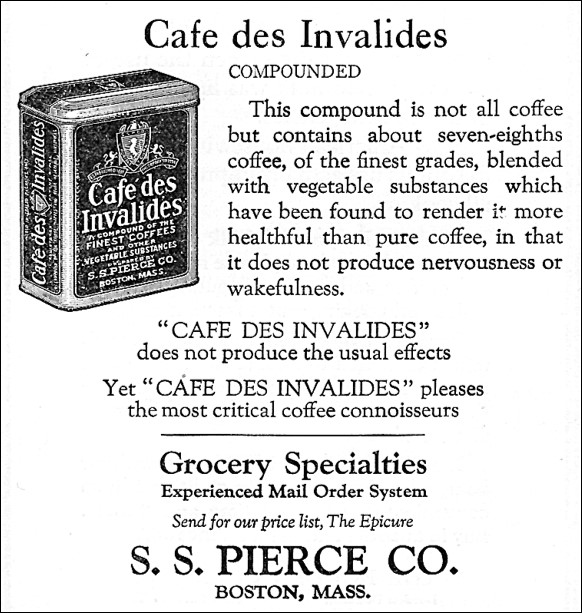
A hundred years ago there was a coffee beverage called Cafe des Invalides. Not sure that name would work today (or that I’d buy this product), but I love the descriptive nature of the name.
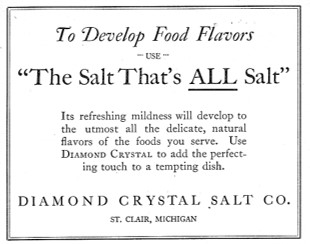
Is some salt, not all salt? This hundred-year-old ad makes me wonder if I use an inferior salt.
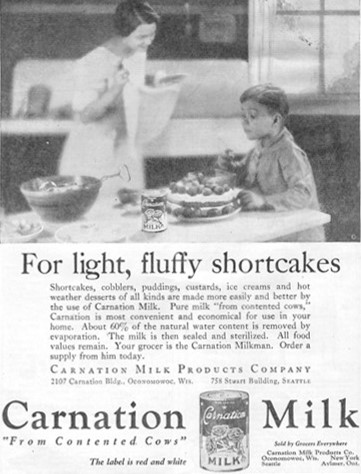
I made strawberry shortcake for dinner last night – though I used 2% milk. Perhaps I should have followed the advice in the hundred-year-old advertisement, and used Carnation Milk. Maybe (I’m a bit of a skeptic), the shortcake would have been lighter and fluffier.
I was also surprised to see a photo in the old magazine with the mother and the background intentionally blurred. I tend to think of that as a more modern photography technique.

I want some ice cream. What the old saying? –I scream, you scream, we all scream for ice cream.
