Lateral Trunk and Waist Exercises

19-year-old Helena Muffly wrote exactly 100 years ago today: 

Wednesday, June 3, 1914:  Nothing doing.
Source: Personal Hygiene and Physical Training for Women (1911)

Her middle-aged granddaughter’s comments 100 years later:

Grandma—

You seem so bored. I really hate to suggest it because you do so much hard physical labor—but maybe you’d feel a little better if you did a few exercises.

Here are the directions in a hundred-year-old book for doing Side Bend Exercises—though the book calls them Lateral Trunk and Waist Exercises (Good grief—that’s a mouthful. I wonder if that’s what people actually called this exercise back then.)

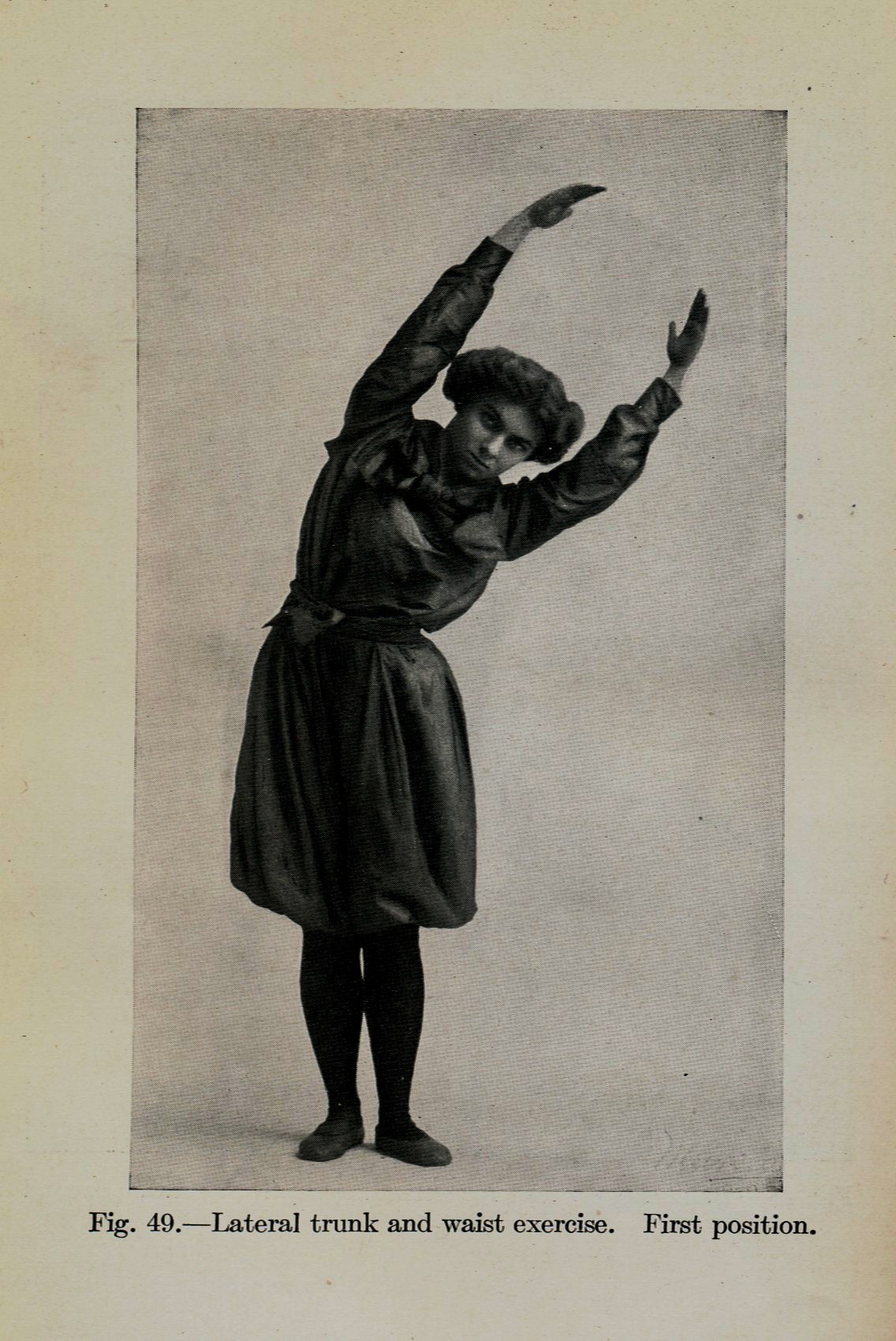
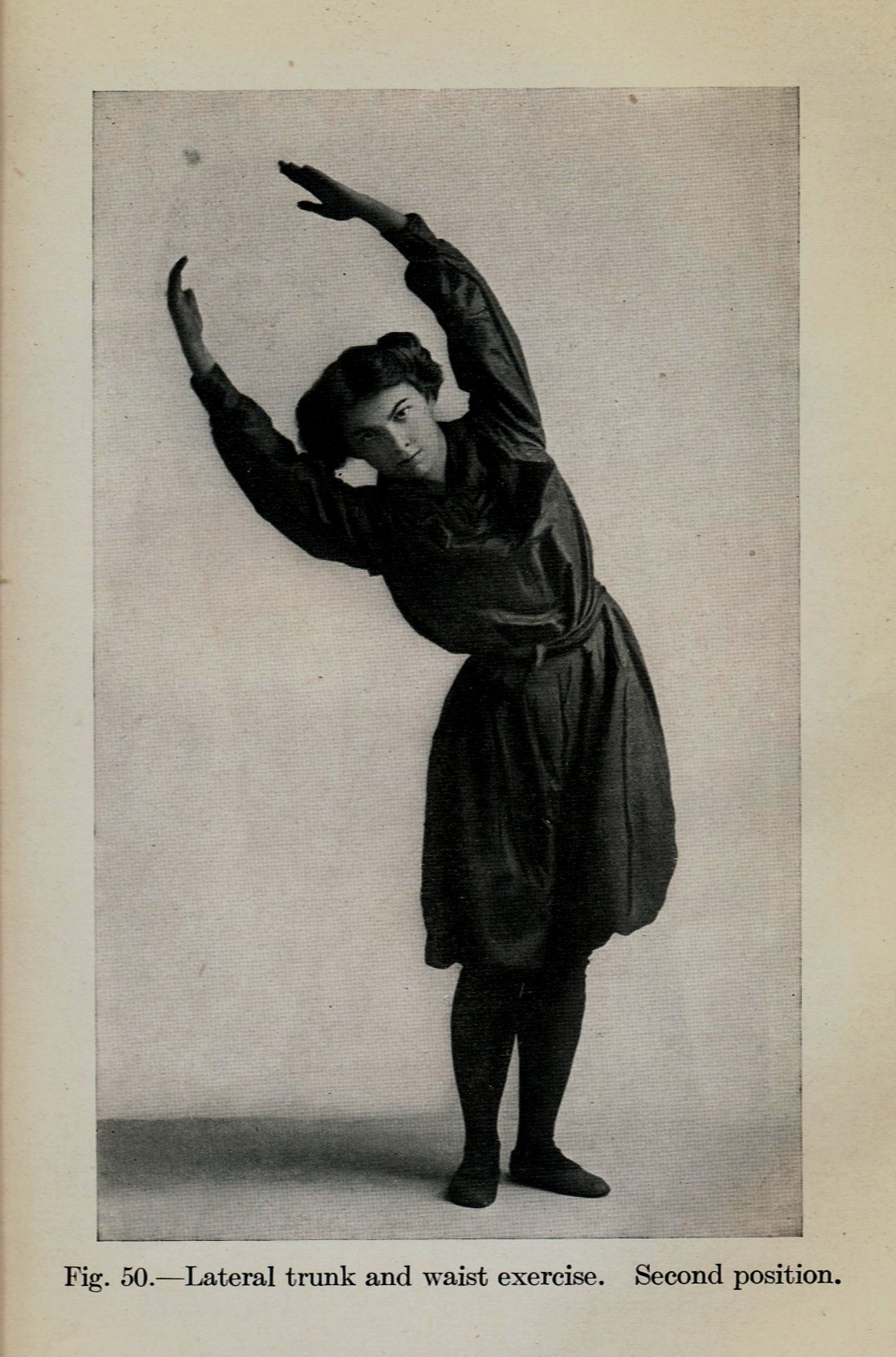
Lateral Trunk and Waist Exercises (Figs. 49, 50)

First Position—Stand with the feet nearly together and the arms extended above the head; the arms are relaxed at the wrists and elbows, so that a slightly curved line is formed as is shown in the figure. First sway to the left, bending at the waist line as far as possible, and return to the original position.

trunk exercise 2

Second Position—The attitude is the same as in the first position; sway to the right in the same manner.

These exercises strengthen the muscles on the sides of the abdomen and the lower part of the back , and are an excellent means to reduce the size of the waist in case of corpulency.

Personal Hygiene and Physical Training for Women (1911) by Anna M. Galbraith
You might also enjoy this previous post:
Hundred-year-old Exercise for Shoulders and Back

Gossiping with a Friend

19-year-old Helena Muffly wrote exactly 100 years ago today: 

Tuesday, June 2, 1914: Carrie was over. We had some gossip and some other rare tidbits. Miss Ruthie, she spends the days away now.DSC04329

Her middle-aged granddaughter’s comments 100 years later:

Grandma—

Yeah! A friend managed to navigate her way into your lonely castle at the side of  the brook!

What did you talk about? PLEASE tell us the gossip and the rare tidbits. We want ALL the juicy details.

Carrie Stump was a friend of Grandma’s who lived on a nearby farm.

Hmm. . . Miss Ruthie? . . .   Was Grandma annoyed,? . . . Jealous? . . .Grandma had various nicknames for her sister Ruth. For example, she often called her Rufus when she was upset with her.

What was Ruth doing these days? Ruth was a teacher at a nearby one-room school house during the school year—and in past years she helped with the house and farm work during the summer months. Did Ruth have a job in Summer 1914? . . . or was she spending her days at friends’ homes? . . . or doing something else?

This Lonely Castle by the Side of a Brook

19-year-old Helena Muffly wrote exactly 100 years ago today: 

Monday, June 1, 1914:

Let us smile for June is here.

June this welcome of all things bright and fair.

The month that wills so soon pass us by.

The month that will a flowery garment wear.

Nothing much doing in this lonely castle by the side of a brook.

Her middle-aged granddaughter’s comments 100 years later:

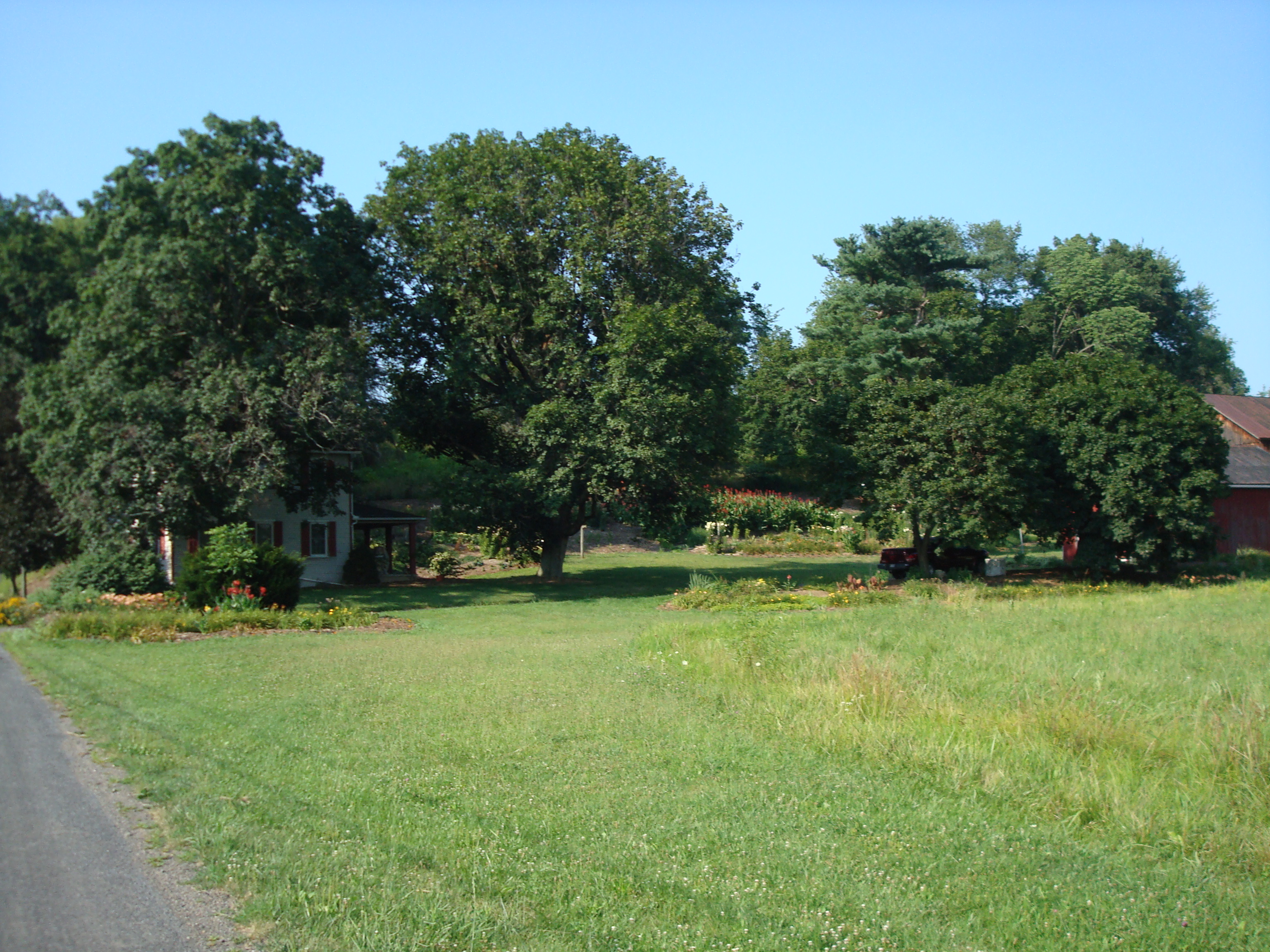
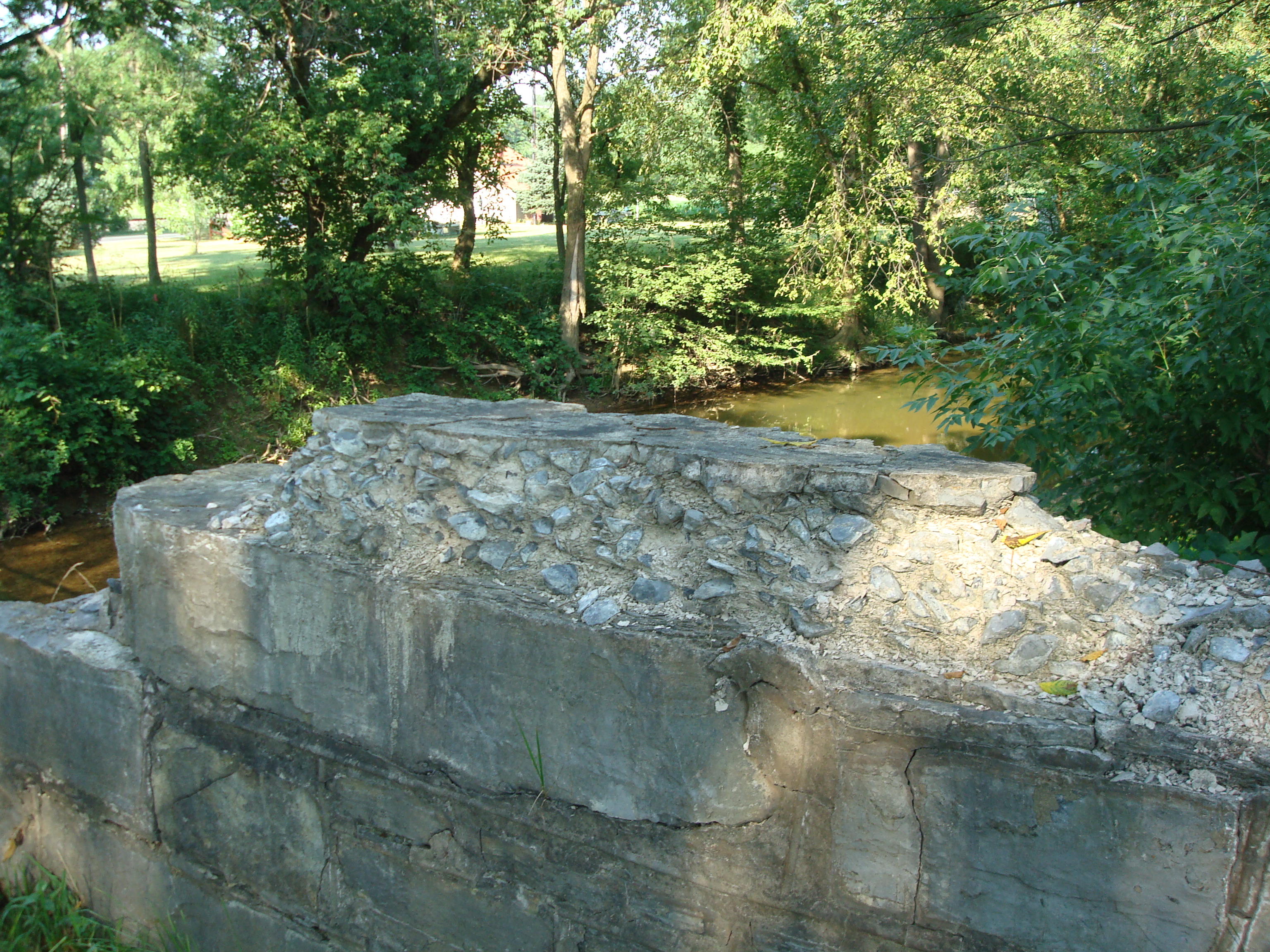
DSC04312Warrior Run Creek the runs along the edge of the farm where the Muffly’s lived. If you look closely you can see the house and barn through the trees.

I love the imagery. Another month—another poem and a bored, lonely “princess.” Poor Grandma. . .

DSC04318Me standing on the bridge in 2012.

DSC04319This is the view of the farm after the brook  is crossed.

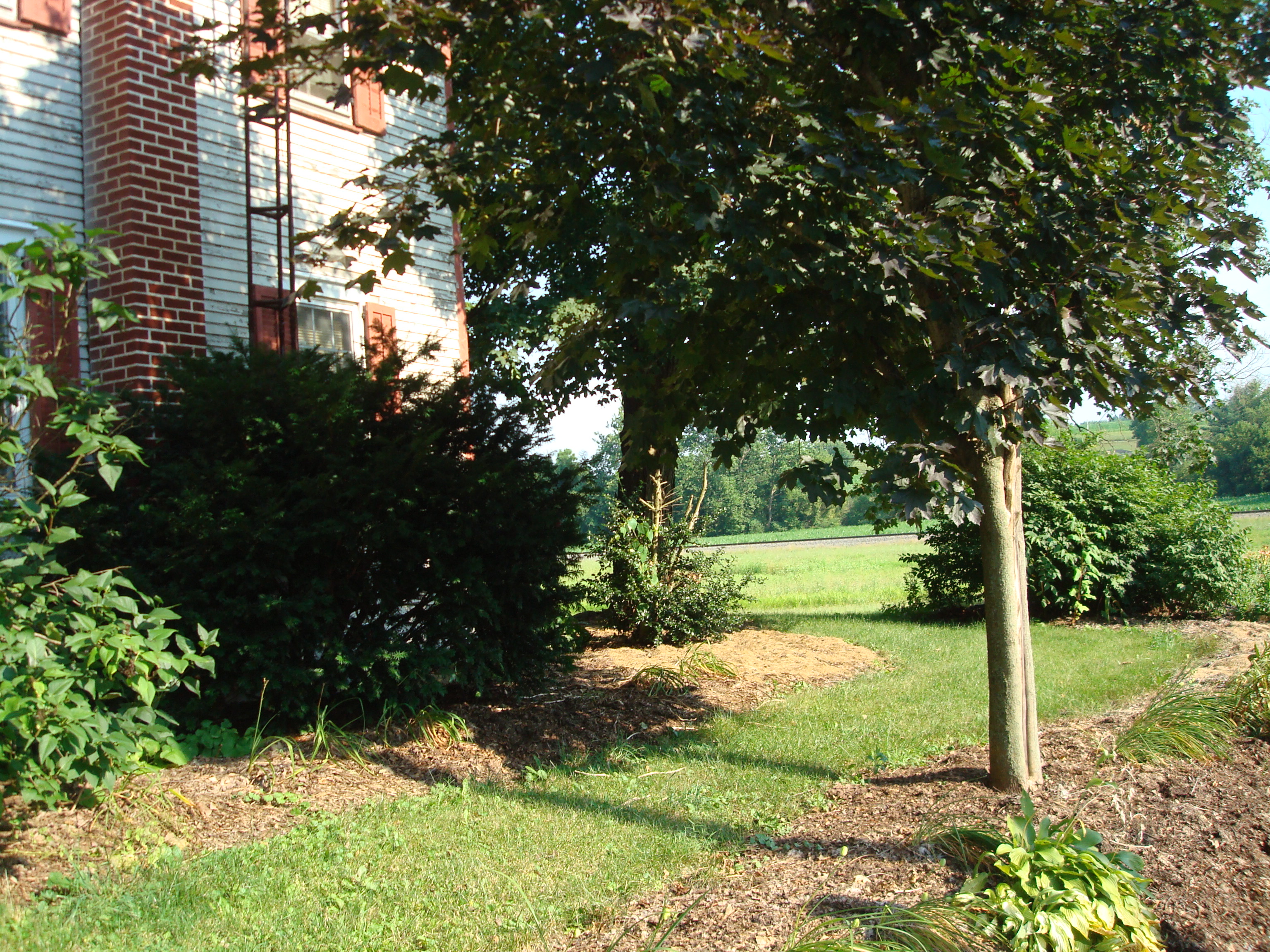
DSC04324The lonely castle

Monthly Poem

Grandma began each month with a poem. For more information, see this post:

Monthly Poem in Diary

Hundred-year-old French Twist Directions

19-year-old Helena Muffly wrote exactly 100 years ago today:

Sunday, May 31, 1914: <<no entry>>

Source: Ladies Home Journal (April, 1914)

Her middle-aged granddaughter’s comments 100 years later:

Sometimes on boring Sunday afternoons when I was a teen, I practiced creating glamorous hair styles shown in the flyer that came with Adorn hairspray.

Did Grandma also style her hair when she was bored? . . .

Since Grandma didn’t write anything a hundred years ago today, I’m going to share 1914 directions for how to do the latest hair style, the French Twist.

French Twist

This coiffure is no more difficult than any other but to be entirely successful the hair must be artificially waved or possess a natural undulation.1914-04-73 a

Part the hair high on the crown, almost on a line with the ears, as the greater portion of the hair must be in back. Plait the back hair loosely to hold in place until you comb back the side portions.

1914-04-73 b

Then take a small portion of hair from the center front as shown in the illustration. Twist this in a loose knot temporarily and comb back each side portion of the hair, fastening halfway between the crown and lower hair-line, as indicated in the illustration.

1914-04-73 c

Twist this in a  loose knot temporarily and comb back each side portion of the hair, fastening halfway between the crown and the lower hair-line as indicated in the illustration.

Now unfasten the top portion which you knotted. Begin at the end and roll under, forming into a puff to be used as the foundation on which to pin the back portion. Unfasten the loose braid in back; brush and smooth this strand of hair, and taking the entire strand. Draw it upward.

Give it a single twist near the crown of the head, keeping the lower portion smooth and straight. Then begin to roll under the end as you did with the front section, fastening in a becoming line on the top of the head. Place the pins underneath, so they will be practically invisible. The comb may be placed in back or in a diagonal position in front , following the line of the twist. Comb the hair together at the partings and fasten with invisible pins.

Ladies Home Journal (April, 1914)

Memorial Day, 1914

19-year-old Helena Muffly wrote exactly 100 years ago today: 

 Saturday, May 30, 1914: Went up to town this morning to take in the doings. Went with a couple of friends over to Watsontown this afternoon. Saw a fat cousin.

If I squint a little I think that I can see a parade slowly advancing down Main Street in Watsontown–a band,  the GAR Civil War Veterans, a couple horses pulling carts advertising local businesses. . .

Her middle-aged granddaughter’s comments 100 years later:

Prior to 1971 Memorial Day was always on May 30.

Yeah, Grandma! I’m glad that you’re finally having some fun. Was there a parade? . . . food? . . .music? Did the old veterans make speeches? It’s been a rough few days with the death of your infant niece—and it’s good that you’re finally getting out with friends again.

—-

Memorial Day sounds like a fun holiday a hundred years ago. For example, on May 30, 1912 Grandma wrote:

Memorial Day: Carrie and I went up to McEwensville this morning. This afternoon we went over to Watsontown accompanied by another girl friend. We had the pleasure of getting an automobile ride. It was the first time I was ever in one and consequently never had experienced a ride. We had a good time.

Hundred-year-old Tips for Buying Shoes that Fit

19-year-old Helena Muffly wrote exactly 100 years ago today: 

Friday, May 29, 1914:  Just like some other days.

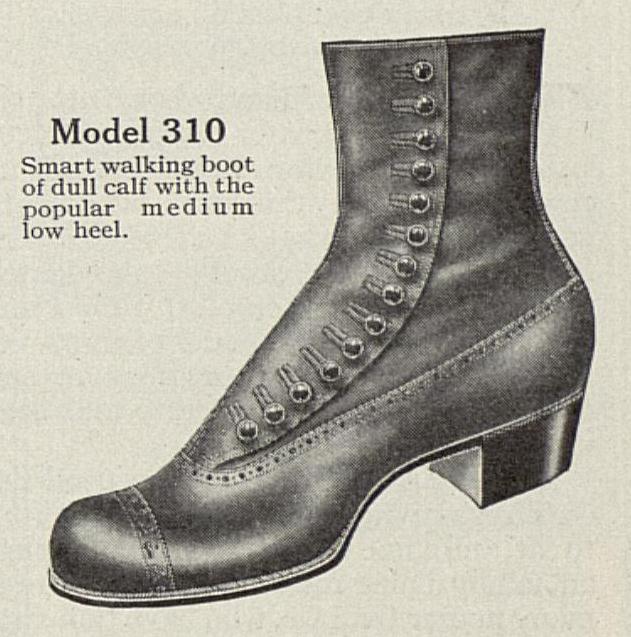
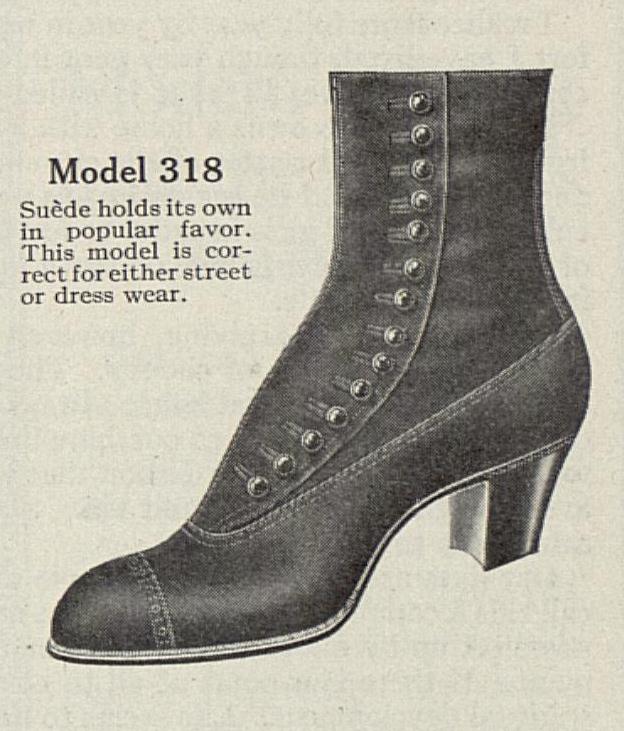
Picture Source: Red Cross Shoe Ad in Ladies Home Journal (November, 1913)

Her middle-aged granddaughter’s comments 100 years later:

Since Grandma didn’t write much a hundred years ago today, I’m going to go off on a tangent.

My feet hurt! A few days ago I wore some new shoes—and ended up with terrible blisters. This hundred-old-information about how to select shoes resonated with me—and gave me clues about what was wrong with my shoes. (I think they are too wide and my foot is slipping forward.)

The Shoe

The style of the shoe is very closely related to the corset in the amount of harm it is capable of doing. The compression of the foot interferes with the circulation, compresses the nerves, weakens muscles and ligaments which should support the arch, and is the prolific source of corns, bunions, weak ankles, and “flat” foot.

The front part of the sole must be so designed that the great toe will retain its normal position. In many shoes the great toe is forced out of its natural position toward the middle of the sole instead of pointing straight forward. This leads to a malformation of the foot and ingrowing toe-nails.

The front part of the upper leather must be broad enough for the free movement of all the toes in walking; when it does not give room enough for the toes to spread outward and forward in walking they are bent on themselves. This makes the descent of hills and all active exercise and games very painful. Tight leather uppers are also productive of corns.

The shoe should be slightly longer than the foot, and sufficiently broad for the foot to spread in walking; but, at the same time, the shoe must fit snugly about the heal and instep, or else the foot will slip forward in walking, and all the evil effects of too short a shoe will result.

1913-11-47.d

The heel must be broad and low. High heels force the foot to keep perpetually and unnaturally on the stretch; if they are worn in early youth, they may bring about permanent deformity of the skeleton and the foot.

Moreover, the high heel interferes with the natural walk, in which the pressure of the foot on the ground passes from the heel to the toes. The high heel requires that the front of the foot should be set down first instead of the heel. The result is an awkward tripping gait and a short step, which is very fatiguing,

Personal Hygiene and Physical Training for Women (1911) by Anna M. Galbraith

1914 Horse Sale Advertisement

19-year-old Helena Muffly wrote exactly 100 years ago today: 

Sunday, May 24 – Thursday, May 28, 1914: Nothing much doing.

Milton Evening Standard (April 1, 1914)

Her middle-aged granddaughter’s comments 100 years later:

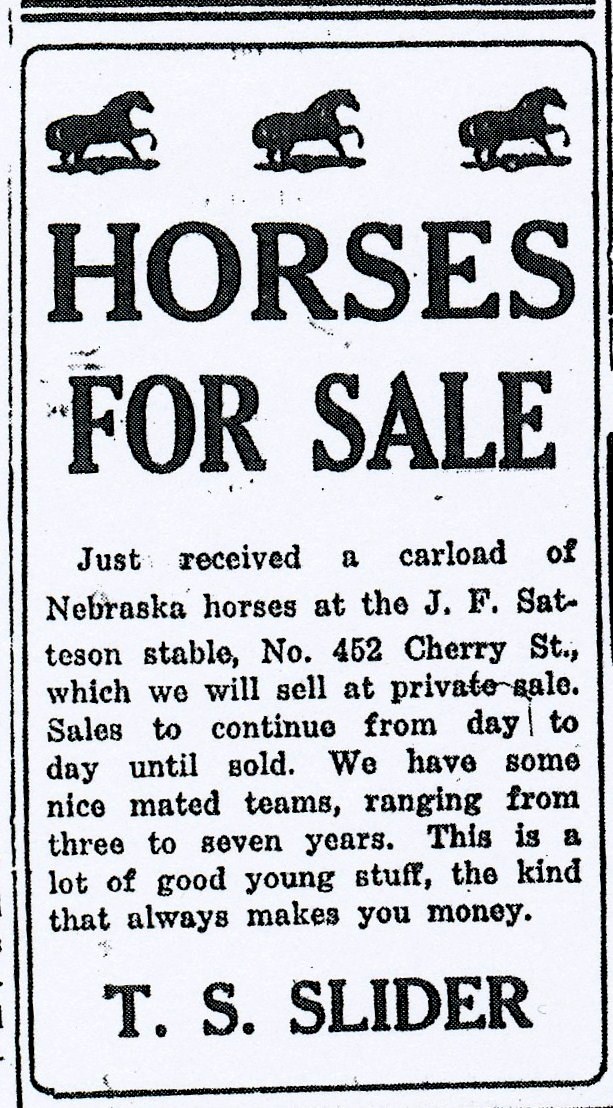
Since Grandma didn’t write anything specific for this date, I thought that you might enjoy seeing this 1914 advertisement for horses in Grandma’s local newspaper, the Milton Evening Standard.

It’s hard to imagine how far agriculture has come in a hundred years—and that living horses were the primary providers of “horse power” in 1914.

The spring planting season would have been a busy time on the Muffly farm. I wonder how many horses Grandma’s father owned to help with the work.