Cow Had Fourth Male Calf

19-year-old Helena Muffly wrote exactly 100 years ago today: 

Wednesday, September 16, 1914: Born to Mollie, a son, and he’s a big one. While Mollie is very proud of him, I am still prouder, for he belongs to me. This is the fourth calf of Mollie’s family. The others are dead. Snapped a picture of Ruth’s school this morning.
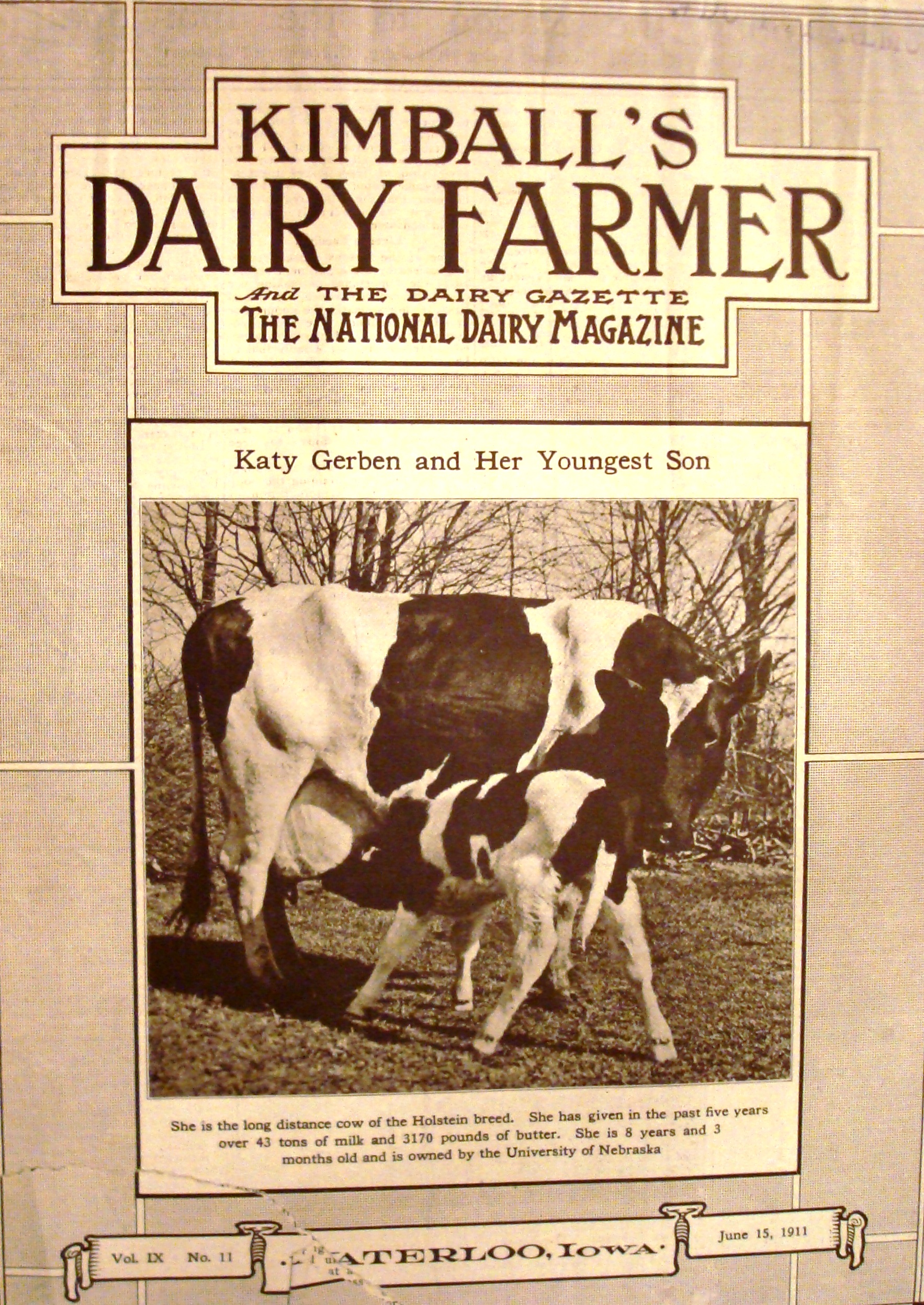
Kimball's Dairy Farmer Magazine (June 15, 1911)
Kimball’s Dairy Farmer Magazine (June 15, 1911)

Her middle-aged granddaughter’s comments 100 years later:

Mollie was Grandma’s cow. I think that her parents gave each child a cow. When the cow had a male calf, the child got the money from the sale; when it was a female, their personal herd grew.

This was the fourth year in a row that Mollie had a male calf.

On November 20, 1913, Grandma wrote:

My Mollie’s calf over which I have been rejoicing for the past week or two on account of his bigness was sold this afternoon. He weighed 164 pounds. I had figured out a week or so ago that he would just have to weigh at least 145 pounds. Haven’t I something to be thankful for?

On December 27, 1912, Grandma wrote:

 Sold Mollie’s calf today. It wasn’t a very big one and I rather feared my fortune would be pretty small, but after all it weighed one hundred and forty-four lbs. Received a neat sum of $11.56. . .

And, on August 21, 1911, she wrote:

. . . I have decided to name Mollie’s calf Wobbly as he is rather weak in his legs, but he’ll get stronger bye and bye.

It’s surprising that Mollie’s had no female calves. I’m a little foggy on how you calculate the probability, but I think that there is only a 1 out of 16 chance of this occurring.

Climbed Tree to Harvest Grapes

19-year-old Helena Muffly wrote exactly 100 years ago today: 

Tuesday, September 15, 1914:  Climbed an old apple tree after grapes, and got well scratched up.

Source: Wikimedia Commons

Her middle-aged granddaughter’s comments 100 years later:

Grandma—

It sounds like harvesting grapes is challenging and dangerous work. At least you didn’t fall out of the tree.

Old-fashioned grape vines were much larger than more modern ones. I suppose that the apple tree served as a trellis for the grape vine—and that the grapes were Concord grapes or another similar variety with seeds and slip skins.

Canning Peaches

19-year-old Helena Muffly wrote exactly 100 years ago today: 

Monday, September 14, 1914: Did the washing this morning, while mother canned peaches. I helped eat some, too.

Source: Wikimedia Commons

Her middle-aged granddaughter’s comments 100 years later:

Here are the directions in a hundred-old-cookbook for canning peaches:

Canned Peaches

4 pounds peaches

2 pounds sugar

1 pint water

Pare peaches and cook in sugar and water, either whole or in halves, until tender. Arrange in jars, fill with syrup, and seal.

Pears, pineapples, and plums are canned in the same way as peaches.

Lowney’s Cook Book (1907)

I hope that Grandma’s mother was already very knowledgeable about canning because this recipe does not give me anywhere near enough information to even begin trying to can peaches.


A Little More About “Tweet”

19-year-old Helena Muffly wrote exactly 100 years ago today:

Sunday, September 13, 1914: Went to Sunday School this morning. Was up at Tweet’s this afternoon, and went to church this evening.

Wesner's Dairy Milk Bottle
Wesner’s Dairy Milk Bottle (Photo Source: Worthpoint)

Her middle-aged granddaughter’s comments 100 years later:

Tweet was the nickname of Helen Wesner. She was a friend of Grandma’s who was occasionally mentioned in the diary. Based on the diary, and other sources, here’s what I know about her:

Helen was three years older than Grandma. Helen never married—and worked on her family’s farm and in their small dairy processing plant that produced bottled milk. She died in 1976 at the age of 84.

Anyone with the nickname of Tweet had to have been a fun person. Here are two previous diary entries that mentioned Tweet or the Wesner’s.

On December 6, 1913 Grandma wrote:

The whole family was invited out for dinner today. We all went except Pa. It was up at Tweet’s place. We had something that I always had a curiosity to know what they tasted like. It was waffles.

And, on January 3, 1914, Grandma wrote:

Made a call this afternoon, so that the time wouldn’t be so tedious. I’m wishing and longing for a sleigh ride, now that there is sleighing.

Ruth and I went up to Wesner’s this evening. There were some other girls there too. Renewed my acquaintance with a former school mate whom I hadn’t seen for over three years I guess, until I saw her on Christmas eve. Had a good time.

Apple Upside-down Skillet Cake

19-year-old Helena Muffly wrote exactly 100 years ago today: 

Saturday, September 12, 1914:  Made a cake today. It looked like having been made by a green-horn.

???????????????????????????????

Her middle-aged granddaughter’s comments 100 years later:

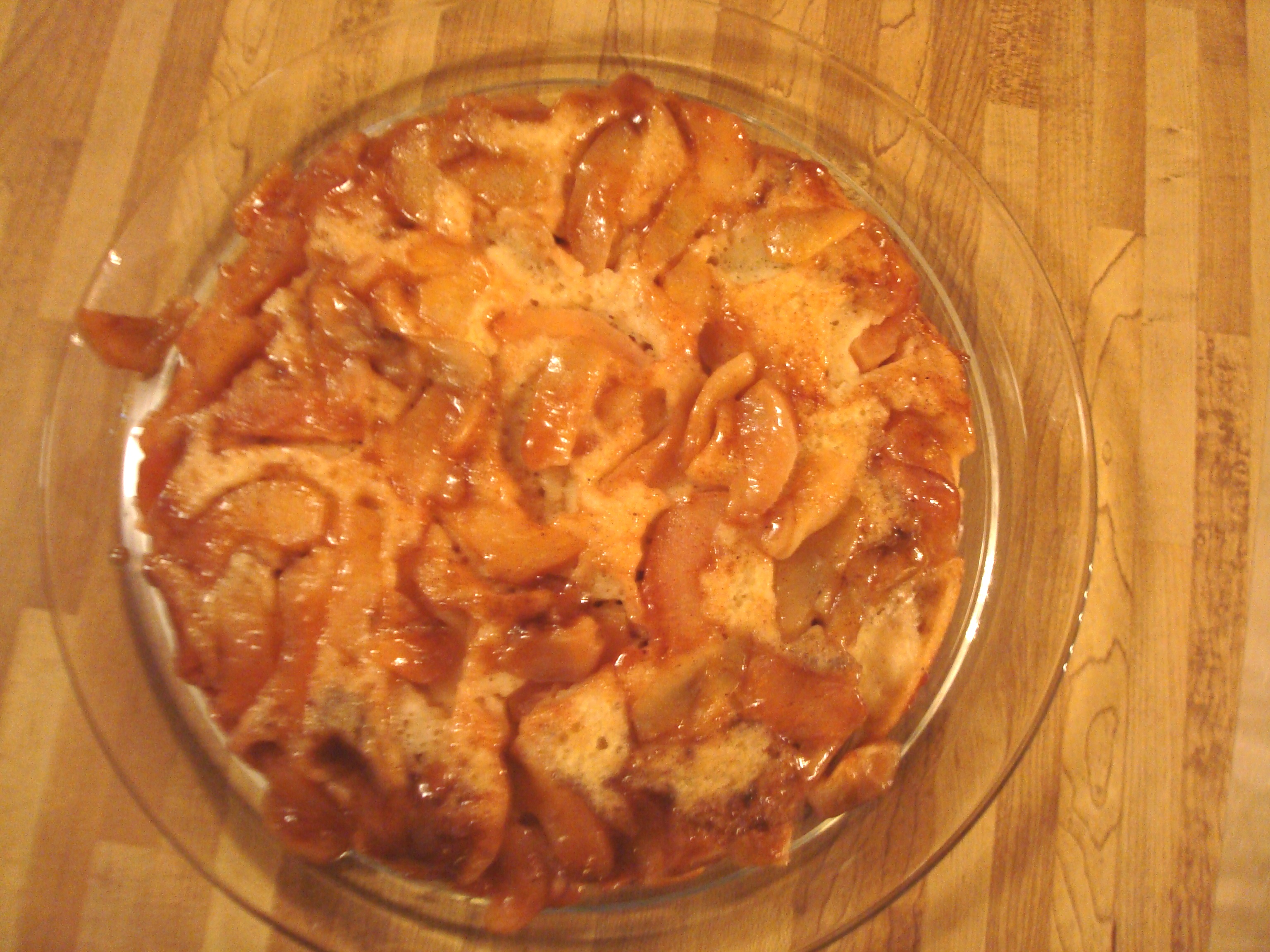
Hmm. . . what kind of cake did Grandma make? It’s getting to be apple season—maybe Grandma made an Apple Upside-down Skillet Cake. It can be a little tricky to successfully get it out of the pan in one piece—so if care is not used it can end up looking like it was made by a “green-horn.”

Apple Upside-down Skillet Cake

1 2/3 cups flour

1/2 teaspoon salt

2 1/4 teaspoons baking powder

2/3 cup sugar

1/3 cup shortening

2 eggs

1/2 teaspoon vanilla

1/2 cup milk

1/2 cup sugar

1 1/2 tablespoons corn starch

1/2 teaspoon cinnamon

1/2 teaspoon nutmeg

1/2 cup water

1 1/2 tablespoons butter

2 cups sliced apples

In a mixing bowl combine flour, salt, baking powder, 2/3 cup sugar, shortening, eggs, vanilla, and milk. Beat until there is a smooth batter. Set aside.

Stir 1/2 cup sugar, cornstarch, cinnamon, and nutmeg together in a small bowl. Add water and butter, and then pour into a 10-inch skillet with an oven-proof handle. Cook on the stove top using medium heat. Stir constantly until sauce boils and becomes clear. Turn off heat. Add the apple slices, and spread evenly in the skillet.

Pour the batter into skillet over the apple slices.

Bake in oven at 350° F. for 35-40 minutes, or until the center of cake is springy when lightly pressed with finger tips. Cool in skillet for about ten minutes; then turn out onto a serving plate.

Household Hints and Tips from Ladies Home Journal Readers

19-year-old Helena Muffly wrote exactly 100 years ago today: 

Friday, September 11, 1914: Nothing doing.

DSC09294

Her middle-aged granddaughter’s comments 100 years later:

Since Grandma didn’t’ write anything of substance a hundred years ago today, I’ll share some hundred-year-old household hints and tips from the April, 1914 issue of Ladies Home Journal.  The hints were published in a column called “What Other Women Have Found Out.” It’s basically an old-time version of Hints from Heloise.

The Ladies Home Journal Readers’ Exchange encouraged readers to submit helpful hints; and, according to the magazine “a crisp dollar bill is paid for any idea accepted.”

What Other Women Have Found Out

When Making Muffins or Cakes in muffin-pans or rings, if there is not enough of the mixture for all of the pans you may prevent the empty ones from burning by filling them with water.

M.G.M.

When Straining Soup set a coarse strainer inside a fine one and pour the liquid through both; thus you will avoid clogging the fine one with pieces of meat and broken bones.

E.T.P.

burlap bag b

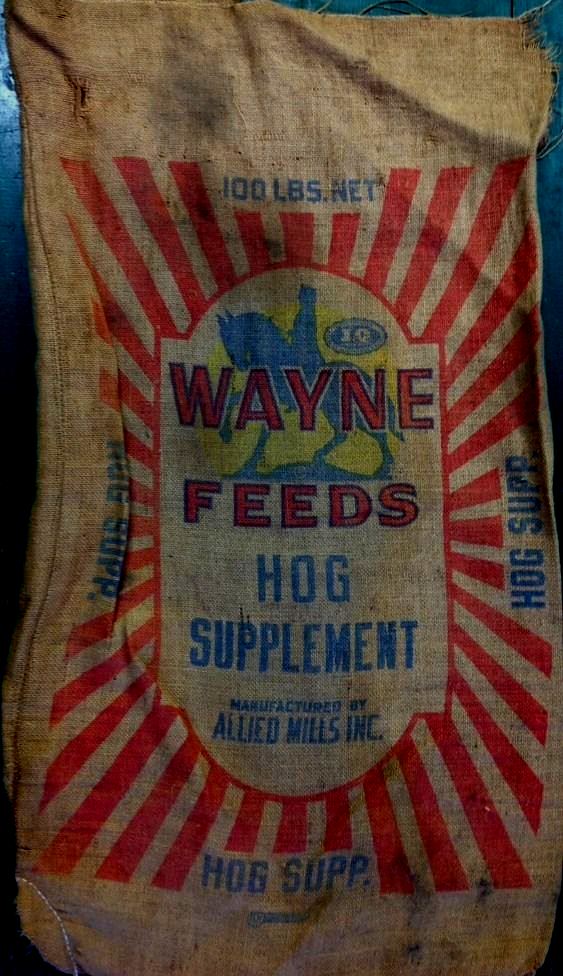
Play Aprons for Children may be made most satisfactorily of burlap. An ordinary feed-bag will do. Fold the material at the shoulders and cut a kimono slip apron having a square neck large enough to permit of dropping the apron over the child’s head. Do not seam it, but bind it all around with some bright-colored material and fasten under the arms with large buttons and loops. These kinds of apron require little washing, as the coarseness of the material prevents the dirt from sticking to it. Such aprons will protect the children when playing in the sand or dirt, or making mud pies.

Ohio

Use a Fork in Mixing Pie Crust and in mixing baking-powder biscuit, if you wish both to be praised for their lightness.

N.H.

Children’s Collections, however dear to them, are often a great bother to the mother. She dislikes to destroy what the child has taken so much trouble to get together, yet there are few houses big enough to hold all that a child can accumulate. One good mother, who had nearly exhausted all the places she had for storing treasures committed to her care, has two deep drawers made under the framework of an old-fashioned high lounge. These deep drawers the children have in which to keep their collections and no one ever interferes with the contents of them. The house has been much neater and the children are proud of having a special place for their possessions.

N.S.

Ladies Home Journal (April, 1914)

House Jackets (Sweater Vests) a Hundred Years Ago

19-year-old Helena Muffly wrote exactly 100 years ago today: 

Thursday, September 10, 1914: Called on Carrie this afternoon.

1914-09-39 e
Source: Ladies Home Journal (September, 1914)

This design is the ever-useful “hug-me-tight,” of waist length and with a pretty variation in collar and sleeves.

Her middle-aged granddaughter’s comments 100 years later:

Carrie Stout was a good friend of Grandma’s who lived on the nearby farm. In my mind, I picture Carrie and Grandma sitting in a quiet corner of the living room, leaning forward towards each other while excitedly chatting about Grandma’s recent trip . . . guys . . . neighborhood gossip. . . whatever.

Were the days starting to get cooler? The house may have had a chill since the heating stove in the living room probably wasn’t yet operating.  Maybe Grandma and Carrie wore “house jackets” (I think that I’d call these sweaters, sweater vests, or short-sleeved sweaters, but the September, 1914 issue of Ladies Home Journal called them house jackets.)

1914-09-39 cHouse jackets of soft fleecy worsted are as popular as ever and each year brings to us some dainty new designs. The one in pale blue is made in almost straight lines and designed to wear in the house or under a coat. The revers form a good chest protector if one is needed with an open coat.

1914-09-39 dAn adorable kimono which every woman loves is unmistakable in the pink-and white-garment.