I love road trips. They enable spontaneity and flexibility, and are a wonderful opportunity to explore lots of fascinating places that are off the beaten path. Last week my husband and I got home from a 3,500 mile road trip that went from home to Kansas City to Chicago to the Indiana Dunes National Park to the Cuyahoga Valley National Park to central Pennsylvania to Delaware to Ocean City, New Jersey, and then back home. Our son and two grandsons joined us for part of the trip. It was the stuff that memories are made of.
After I got home, I flipped through my hundred-year-old issues of Ladies Home Journal trying to come up an idea for this post, and was floored when I saw an article about how to eat when taking a “long cross-country motor trip.” My first thought was, “Wow, I had no clue that cars were dependable enough, and roads good enough, in 1926 for people to take long road trips.”
Many of the magazine’s readers were actually probably “arm-chair tourists” who enjoyed thinking about making a cross-country trip, but never would actually do it. Today, we dream of going on a safari in Africa and love to read stories about people who actually take a safari; back then people dreamed of making cross-country motor trips.
According to the old Ladies Home Journal magazine:
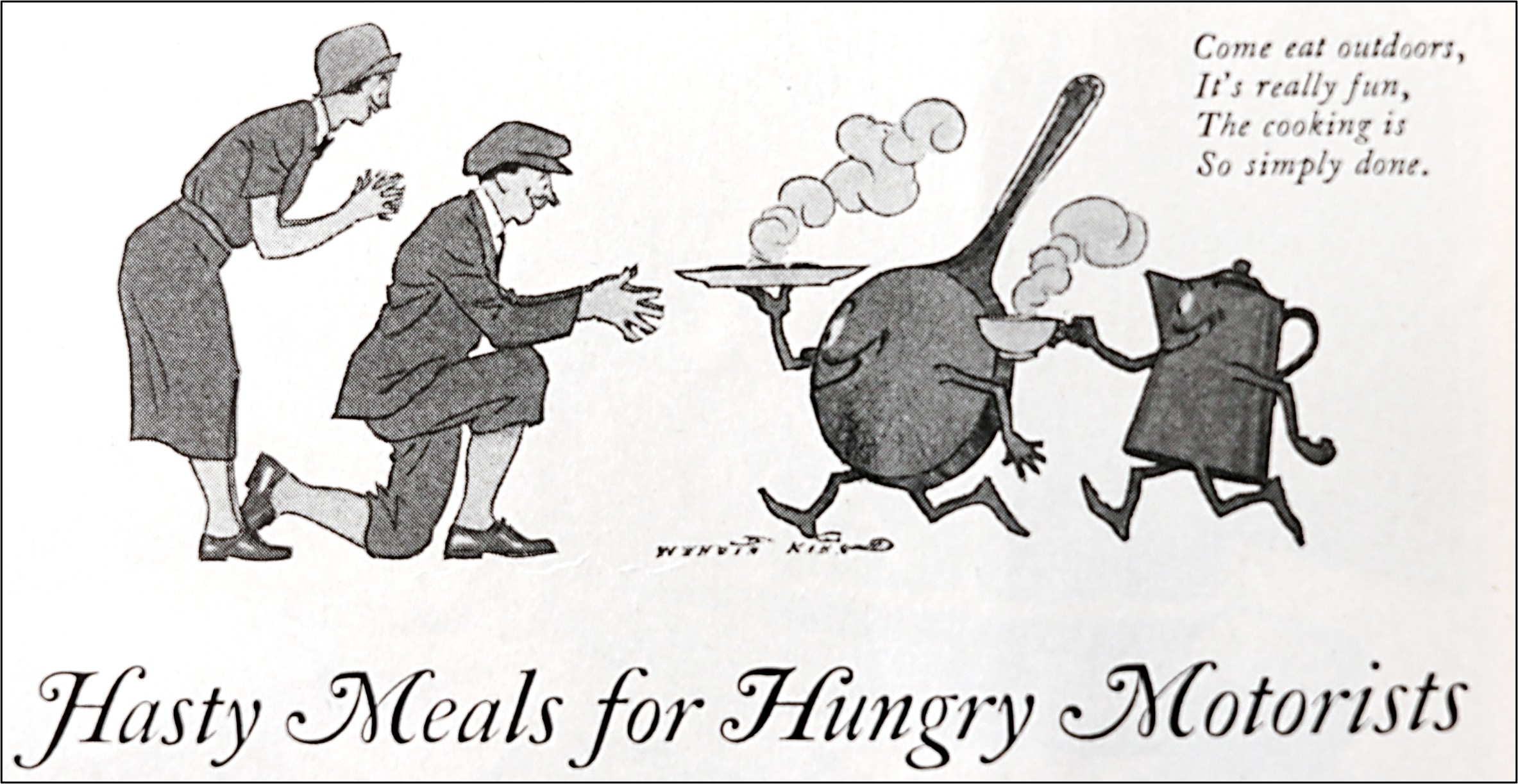
Hasty Meals for Hungary Motorists
Three adequate, well-balanced meals daily are essential to the complete enjoyment of long, cross-country motor trips. Yet a great many motorists struggle along on a wretched diet of cheese, crackers, pickles, fruit and candy, rather than attempt to wrestle with the coffeepot and frying pan. While camp and wayside cookery is necessarily limited to dishes that are simple and easy to prepare, by a little effort and forethought substantial daily menus are not difficult to manage.
Supplies, including fresh meat, eggs, vegetables and milk may generally be purchased as needed along the way; so it is unnecessary, except when touring through unsettled districts to stock up heavily with these commodities. However, it is always advisable to anticipate your needs and purchase accordingly, and to start out with the “grub box” well filled with such necessary staples as coffee, sugar, powdered and evaporated milk, salt, pepper, bread, butter, jam, onions, potatoes and bacon, always sliced. And I always tuck in a small bottle each of chili and curry powder to give a pleasing variety to the humble meat stew, baked beans and such.
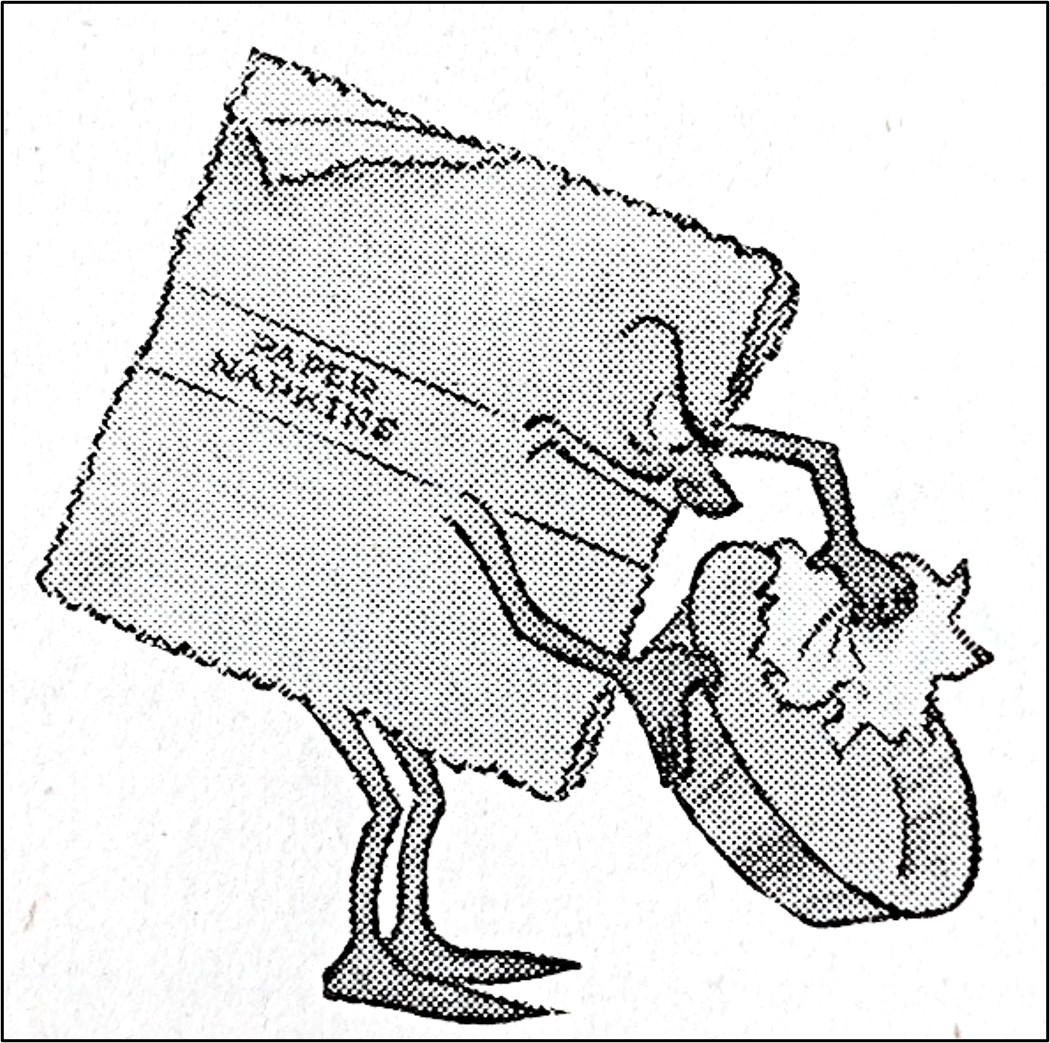
And while paper napkins do not actually come under the heading of necessities, if you will add a generous bundle to your outfit you will never once begrudge the tiny space they take. They are invaluable for wiping out soiled dishes and greasy pots and pans, to say nothing of rending first aid to sticky fingers.
Your cooking outfit need not be elaborate or expensive. I know three seasoned motorists who have twice crossed the continent, and toured far into Canada and Mexico, with no other cooking equipment than a battered old frying pan, coffeepot, saucepan and a folding camp grid stove!
Ladies Home Journal (July, 1926)
Some things haven’t changed across the years. Just like a hundred years ago, on my recent road trip, we snacked in the car on cheese, crackers, apples and other fruit, and candy. That’s four of the five foods (the fifth item was pickles) mentioned in the old article as being a “wretched diet” for travelers. (Kids really like candy!)
The article emphasized the important role that potatoes could play when preparing meals on a cross-country motor trip:
To boil potatoes in their jackets seems to the most convenient as well as the favorite camp method of cooking this useful vegetable. Save all left-over potatoes. They are easy to carry in the grub box and will furnish you the nucleus of many a hasty meal. They are delicious fried, creamed, hashed browned, in a salad, or in corned beef hash.
Ladies Home Journal (July, 1926)
Hmm . . . I can’t imagine saving cold cooked potatoes in a grub box which I assume wasn’t a cooler that kept food cold, but apparently it was considered safe back then.
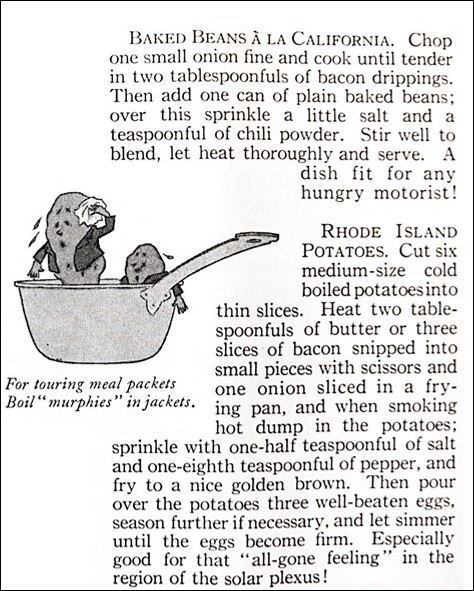
The old article included several recipes. Here are two of them:
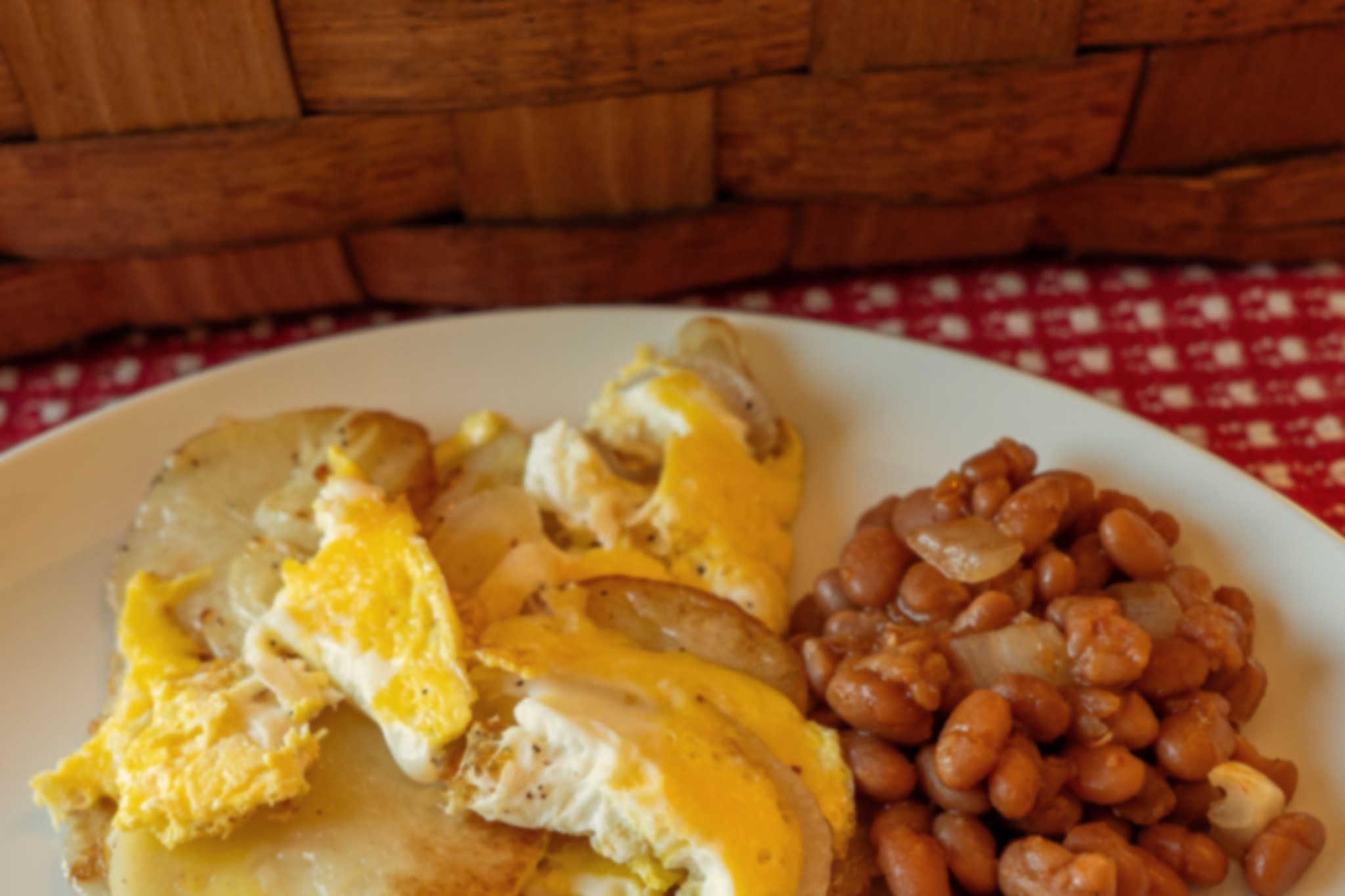

I am here for the “wretched diet”! Hard-boiled eggs were a standard on our trips. This brings back memories.
It’s nice to hear that you enjoyed this post. I’d forgotten about hard-boiled eggs. They were an important part of road trip meals when I was young.
Your trip sounded wonderful, and y’all made it to my new neck of the woods. Traveling back in the day seemed so hard. Even when I was young, my family traveled up and down the East Coast, and there were no McDonald’s or other fast food places. When we were traveling back and forth from Texas, I bought a cooler that plugged into the car and the hotel room. It is hard for me to stop by the road, as I have to eat gluten-free. I either packed cooked steak and a salad or the Cold Chicken Rice Salad (on my blog). I had ham and cheese roll-ups for lunch and cereal with hard-boiled eggs for breakfast. It was safe food for me and actually saved a lot of time.
Your meals sound much tastier than the typical fast food fare. Your plug-in cooler sounds wonderful. I need to look for one of them. When we go on road trips, ice packs always keep the food nice and cold for the first day, and then things go downhill from there.
I love the plugin cooler. I was going to make a post about traveling with GF food, but never did. You gave me renewed interest in the idea.
You should do a post on it. I would enjoy learning more about it.
I’m pretty sure I would have packed the pickles first!
🙂 Don’t know how I forgot the pickles on our recent road trip.
What a fun sounding trip! People don’t seem to enjoy road trips as much. Maybe because on the freeway, everything looks the same.
Cars and covered wagons were in use at the same time. You might enjoy this story. https://ebranch.lili.org/midvale-staging/wp-content/uploads/sites/178/2017/06/FretwellOregonInCoveredWagon_0.pdf
I was really surprised that they had paper napkins then. The milk was most likely canned. The eggs wouldn’t have the protective coating washed off (like European eggs today) and didn’t need refrigeration. The bacon would’ve been preserved so it would last. They might have even carried a sourdough crock. Oatmeal was common as well as lard. Potatoes would’ve fit right in, but saving the leftover potatoes surprised me.
On the covered wagons, “The camp stove was approximately thirty inches long made of sheet iron divided into a fire box and an oven. The
oven heat was controlled by the amount of wood in the fire box. We used sage brush for fire wood.”
When we lived in Colorado took the road to the top of Pike’s Peak, found out it was a tourist destination for people in cars starting in the 1920’s. It was a true adventure for anyone taking a car across the US then. The roads were wagon trails, awful gravel roads, and dirt roads. Potholes abounded. While the Ladies Home Journal made it sound like a pleasant trip, it took real guts to do it to travel by car instead of train.
Thanks for sharing the link. I loved reading description of the 1923 trip from Idaho to Oregon via covered wagon. It is so vivid. I never would have guessed that both cars and covered wagons traveled cross country during that time period. It’s interesting how (when they didn’t have to walk to make the load lighter for the horses when going uphill) they sometimes read Ladies Home Journal while riding in the wagon. And, I never thought about how there were horse traders in most every town, and how they could be somewhat aggressive and scary.
You are welcome. I thought you might enjoy it!
Not all that long ago in some ways. I remember sandwiches with pickles and fried chicken along the way.
mmm. . . cold fried chicken sounds good. I actually find that as I get older that I am reverting to sometimes taking picnic lunches when traveling. It’s so much better than most of the food options available along the interstates.
That’s fascinating! Before the days of roadside restaurants people had to be prepared. The two recipes you include remind me of real old-fashioned camp meals that used to be served to construction and forestry crews. I had a summer job one year with forestry and both these meals were definitely served! It sounds like you had a great family road trip, Sheryl.
It’s nice to hear that these recipes brought back memories of old-fashioned meals once served at construction and forestry crews. It was good food. I really enjoyed making these two recipes to get the photos for this blog post. The kitchen smelled really good while the foods were cooking. I was super hungry by the time we sat down to eat, and I really enjoyed these dishes.
When I travel across the country I eat McDonald’s.
Works for me. My grandkids also really like McDonald’s, Subway, etc., and we enjoyed eating at many of the fast food places along the highway on our recent road trip.
Road trips are the best! I never thought what it must have taken to travel across the USA a hundred years ago. We are so blessed with so many choices!
A hundred years ago, long-distance road trips were a major adventure!
Wow amazing
It’s fun to think about what a long-distance road trip would have entailed a hundred years ago.
Its very nice post 📫
It’s nice to hear that you enjoyed this post.
It’s incredible to see how the spirit of road trips hasn’t changed in a century, even if our snack choices have! The idea of packing a 1920s ‘grub box’ with chili and curry powder to spice up camp stews is brilliant—and honestly, cold leftover potatoes might just be the original road trip comfort food! 🚗💨
Road trips, both then and now, hold so much promise for a fun adventure. It’s an intriguing idea, but you may be right that cold leftover potatoes were the original road trip comfort food.
And now you can take anything for comfort food and even anything to sleep on. It’s not even that dangerous than it used to be. by the way it was a lovely read.
Thank you. It’s nice to hear that you enjoyed this post. Road trips are definitely easier today than they once were.
I remember stopping on the long family road trips of my youth to slice up a watermelon. No utensils, save a knife. To this day there is nothing sweeter, nothing cooler, than freshly sliced watermelon on a road trip.
What a lovely memory! Those watermelons sound really special.
Hi Sheryl
We love road trips as well. We did them in the US and Canada and in Africa, but by far the most beautiful ones we made in Europe. Especially in Scandinavia and Switzerland we had a great time. As we are not great eaters we have a breakfast in the hotel we stayed. Afterwards we hit the road again and we had a nice meal in the evening, in between we usually have nothing except some dried fruit or an ice cream. Siri and Selma may have some liquorice (especially when driving in the Netherlands where they have the best liquorice).
Thanks & cheers
The Fab Four of Cley
🙂 🙂 🙂 🙂
Your road trips sound lovely. Road trips are a wonderful way to really get to know an area.
I, too, love road trips and have been craving one again. The 1926 article’s mention of “camp and wayside cookery” reminds me that the experience of cross-country travel was likely much different before the interstate highway system was founded. It also occurs to me that I rarely cook while traveling, unless I book lodging with a kitchen or stay in a friend’s home, but I imagine it was more necessary to cook while road tripping in 1926 than it is today. Thank you so much for highlighting an article that has provided me so much food for thought!
How true! Cross country travel was really different in the days before interstate highways. The highways allow us to travel quickly, but we don’t get a sense of what the areas we are going through are like. I cooked when camping when the children were young, but haven’t done that in years.
We did a 13 hour drive back when we didn’t know any better. It was long and tiring. One of the great memories of that drive was our breakfast, lunch, and dinner stops. We actually did include it in our drive itinerary. It was fun to have good meals and rest during these stops.
Similarly to you, I enjoy eating at local restaurants and diners when traveling. Unfortunately, too often, we seem to end up at cookie cutter, chain, fast food places.
What a fascinating journey through history! It’s amazing how much road-trip food and travel advice has stayed surprisingly familiar over 100 years. ❤️
Some things change a lot across time; other things don’t change much.
What a lovely post, Sheryl. Your 3,500 mile road trip sounded wonderful, and I appreciate how you wove it together with that 1926 Ladies Home Journal article. It’s funny, a hundred years later, we’re still packing cheese and crackers and candy, still stopping for meals at diners. Some things don’t change because they matter. The journey itself is what matters. 💙
Much love,
Khadija 💕🤗
You’re absolutely right. It’s the journey itself that matters.
I LOVE old magazines and catalogues~~ I love how particular they were back then. 🙂 My dad was born in ’36, so in ten years he will be 100. o.O I’m 52 btw, and my name is Sammi 🙂
Similarly to you, I have a lot of fun looking at old magazines and cookbooks. I’m often amazed how long and detailed many articles were in old magazines. Back in those days, when people bought a magazine, it often was their main source of reading material for the month, and they wanted it to keep them entertained for a substantial amount of time.
How very interesting. Nothing better than a long road trip and cooking and planning meals.
Cheers from a full time caravan traveller from down under! 😊
👍
wonderful
It’s nice to hear that you enjoyed this post.
Certainly healthier than fast food which is today’s go to when traveling.
Definitely healthier back then – We ate more fast food than I want to admit on our recent road trip.