
Bananas are tasty, inexpensive, nutritious, and easy to eat. They are wonderful in smoothies, and delightful sliced on top of cereal or oatmeal. They also are tasty in banana breads and muffins. Mashed bananas are one of the first solid foods that babies typically eat, and they are equally popular with older children and adults of all ages.
According to the Cleveland Clinic, bananas are sometimes called “nature’s perfect snack.” They are a higher fiber food, and contain lots of vitamins and minerals. They are especially known for being a good source of potassium, which can help reduce blood pressure.
Bananas have been popular in the United States since the latter part of the 1800s. As people became aware of germs, they liked how the peel kept the banana clean until it was ready to be eaten.
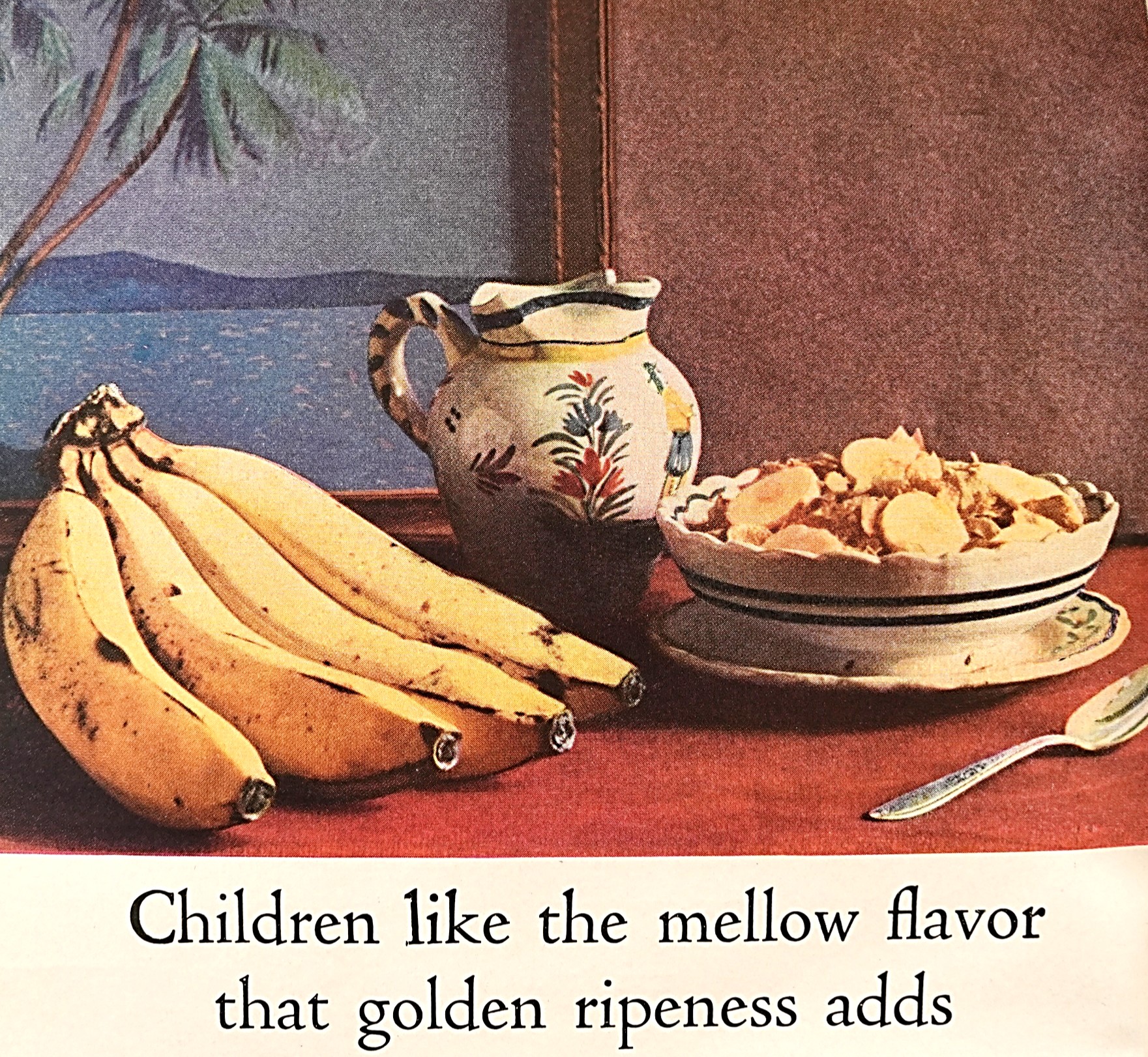
By the early 1900’s, large quantities of bananas were imported into the United States from Latin America and the Caribbean. The Fruit Dispatch Company had an advertisement for Unifruitco bananas in the April, 1926 issue of Good Housekeeping. The Fruit Dispatch Company was a selling agency for the United Fruit Company back then. (United Fruit Company is now Chiquita Brands International.) Here are some excepts from the 1926 advertisement:
Offer a child a ripe banana, and see eager eyes light up with the joy of anticipated goodness. Children find an appetite allure in ripe bananas – and do you know what it is? It is sugar – mellow sweetness in its most easily digested form.
Bananas are rich in carbohydrates – the energy-building food values so necessary for children, and so good for everyone. In bananas that are fully ripe, this valuable food element is present in the form of fruit sugars, nature’s most easily digested and most wholesome form of sweetness. . .
Buy them in advance of use and let them ripen at home. . . When all green is gone from the tip, and the yellow skin has turned to a mellow gold, flecked with brown, then a banana is fully ripe and most delicious. . .
The choicest bananas you can find are Unifruitco Bananas. They are grown and harvested down in the tropics, under the most modern methods of cultivation. They come north in specially constructed ships. The Fruit Dispatch Company, Importers of Unifruitco Bananas, distributes them all over the country to wholesalers and jobbers, who keep this fruit in banana rooms until your dealer wants them.
Good Housekeeping (April, 1926)
Both a hundred years ago and now, there was recognition that bananas contain more sugar when fully ripe than when they are greener. The old advertisement recommended eating completely ripe bananas that were a “mellow gold, flecked with brown.” Today people who are concerned about maintaining a steady blood sugar often prefer greener bananas that contain more starch. According to the Cleveland Clinic article:
Green bananas can contain less than half the amount of sugar than ripe ones.
For those concerned about blood sugar levels with more yellow bananas, pairing the fruit with a protein source (such as a handful of nuts or a cheese stick) can help better regulate the increase.

The biggest concern with bananas is that commercial production is a monoculture of one variety, Cavendish. Bananas are susceptible to a fungal pathogen, a Fusarium species, that wiped out the Gros Michel cultivar that was the main banana type marketed before 1950. Cavendish has been relatively resistant to Fusarium, but a new race of the fungus has developed that attacks Cavendish. There’s a lot of research being done to develop a new banana cultivar that is resistant to this race, and to develop possible treatments. (My husband is a plant pathologist, so I’ve learned a lot about plants, particularly vegetables and fruits, over the years 😀).
So neat to know!!! Hope they find the “cure” soon!!
Whew, it’s scary how dependent the commercial production of bananas is on just one variety. Hopefully, they are able to develop new banana cultivars and treatments before the new type of fungus spreads too much.
I’m sure you know much more about it than me, but this reminds me of things I’ve read about the destruction of the Florida orange crop in recent years due to the Citrus Greening disease. I just did a online search to check on the name of this disease and found an interesting Food and Wine article:
What Happened to Florida’s Oranges? A Deep Dive Into the Devastation of Citrus Greening
Such a shame that bananas are the only fruit I can’t abide!
They do have a very unique flavor and texture.
I very much enjoyed this look back at bananas, Sheryl, and the gorgeous old photos.
It’s wonderful to hear that you enjoyed this post.
I am glad to see in the comments that I am not the only one who “can’t abide” bananas. One time, I was supposed to make banana bread for a bike ride, and I used a box mix, so I did not have to deal with the real fruit. I did let my kids eat them, but I just could not.
Thank goodness there are plenty of other types of fruit you can eat. 🙂
We always have a bunch on our counter, the perfect portable snack. In fact, I was running late for pottery class this morning and didn’t have time to eat, so I just grabbed a banana and ate it at a break!
Agree – I also find bananas to be a perfect portable snack.
We enjoy our bananas on the greener side of life! It would be fun to tour a banana room someday.
This brings back memories of my parents. My father always liked bananas on the greener side, and my mother preferred very ripe ones. She used to complain that he ate all the bananas before they got ripe enough for her to eat.
Thanks for all that cool banana info!
It’s wonderful to hear that you enjoyed this post.