
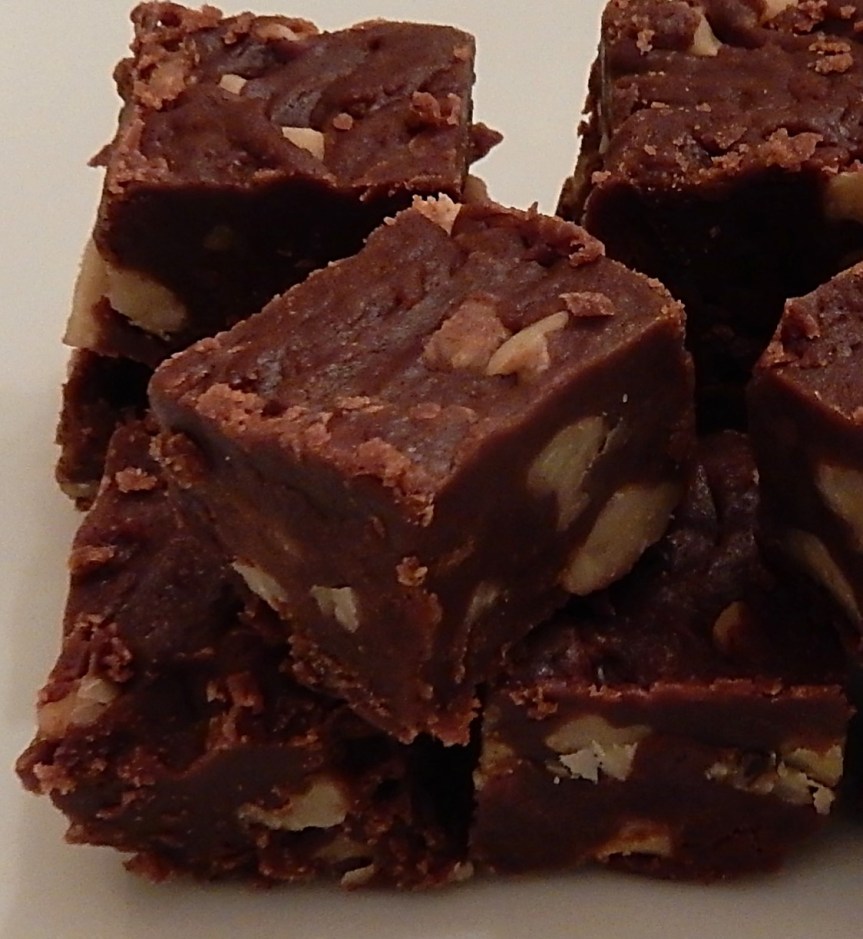
I make a “new” hundred-year-old candy recipe each December. This year I flipped through several 1923 cookbooks trying to decide which sweet confection to make – and ended up going with a recipe called Smith College Fudge that I found in a hospital auxiliary cookbook from western Pennsylvania.
The name intrigued me. Was this fudge commonly made by Smith College students? And, how did a fudge named after a college in Massachusetts end up in a western Pennsylvania cookbook?
This recipe was a winner. This classic fudge was rich and melted in my mouth. It contained a small amount of molasses which is not typically included in modern fudge recipes. The molasses made the fudge more flavorful in a delightful, nuanced way.
Here’s the original recipe:
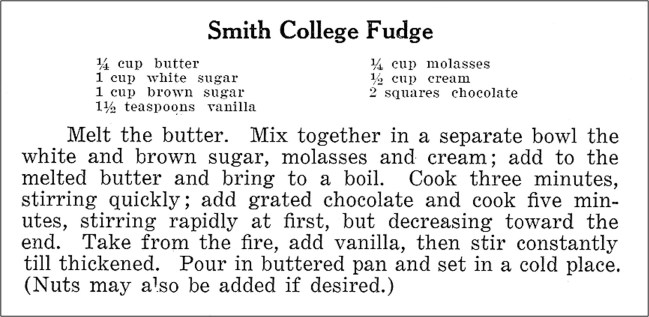
Chocolate squares are smaller now than they used to be. A square once was 1 ounce; today the squares for many brands are only 1/2 ounce. When I made this recipe, I assumed that the author was referring to the larger chocolate squares of yesteryear, so used 4 squares (2 ounces) instead of the two that the recipe called for. I melted the chocolate prior to mixing with the other ingredients rather than grating it. I also added walnuts when I made this recipe.
Here’s the recipe updated for modern cooks:
Smith College Fudge
1/4 cup butter
1 cup white sugar
1 cup brown sugar
1/4 cup molasses
1/2 cup heavy cream
2 ounces unsweetened chocolate (4 squares of many brands), melted
1 1/2 teaspoons vanilla
1 cup walnuts (optional)
Put white sugar, brown sugar, molasses, and cream in a bowl; stir to combine. Set aside.
In the meantime, melt butter in a saucepan. Stir in the sugar and cream mixture. Using medium heat, bring to a boil. Reduce heat, but continue to boil while stirring rapidly for three minutes. Then add the melted chocolate and boil gently for an additional five minutes; stir rapidly at first, and then stir less towards the end. Remove from heat and stir in the vanilla. Continue stirring until the mixture thickens. If desired, stir in walnuts. Pour into an 8″ X 8″ buttered pan and set in the refrigerator until cool. Then cut into pieces.

The fudge sounds really good. We have so many sweets already that I probably won’t make it. A friend sends us a large box of Lebkuchen from Germany, and we got it several weeks ago.
mmm . . . the Lebkuchen sounds wonderful.
Wish I could share some Lebkuchen with you.
This sounds interesting with the molasses and I am a fudge lover especially with walnuts which are one of my favourite nuts 🙂
If you like fudge, I think that you’d enjoy this recipe. The hint of molasses in the fudge nicely complemented the walnuts.
I agree that the molasses sounds like an interesting addition. I make recipes from my parents and have been watching the “shrinkage” of products for years.
I hadn’t thought about it until you mentioned it, but I think that you’re right. There are numerous ingredients, including molasses, that were widely used a hundred years ago, but are much less commonly used today.
Yum!
It’s tasty.
This sounds really familiar. I think my mom might have had this recipe, I vaguely remember the molasses. She loved making fudge.
However, my mother was not a terribly patient person when it came to candy making, and we had no special thermometer, so I joke that I grew up thinking fudge was something you ate on a spoon…
It definitely takes patience to make candy – though maybe I’m too patient. If I’m not careful, I tend to end up with crumbly candy.
Had to wipe my husband’s drool off my phone! I have never seen fudge with molasses until now. This looks divine!
Your husband would like this fudge. It’s really tasty.
I like the idea of adding molasses! This reminds me of early fudge-making from my mom’s recipe–hers was always so good, but I apparently didn’t have the “stirring” gene.
🙂 My arm got tired when I made this fudge. Stirring is an important part of making classic fudges.
Soooo sweet! I steer clear of fudge as it is too sweet for me – gives me a sugar headache!
Fudge is too sweet for me, too – but somehow I manage to eat it (and, if I’d admit it, enjoy it). 🙂
Here’s a good overview of the women’s college fudge phnomenon. Note that the Smith college recipe was unique in its use of molasses. https://www.atlasobscura.com/articles/who-invented-fudge
Thanks for finding and sharing this link. It’s so much fun. Just the thought of “illicit fudge parties” at the women’s colleges years ago makes me smile. Time sure have changed.
I made the fudge recipe this afternoon. However, I was disappointed that it did not cut well. In fact, the fudge was very tacky and the pieces ended up more like balls than squares. Do you think I may not have boiled it long enough?
Oh dear, I’m sorry to hear that the fudge ended up too soft. I think that you are probably right that you didn’t cook it long enough, and that there was not enough evaporation.