
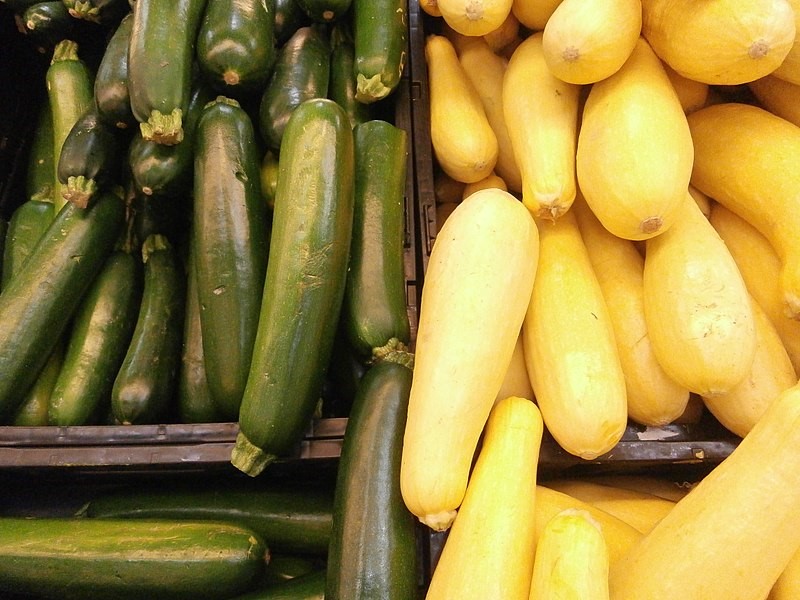
 Here’s advice in a hundred-year-old cookbook on the care of vegetables:
Care of Vegetables
Summer vegetables should be cooked as soon after gathering as possible; in case they must be kept, spread on bottom of cool, dry, well-ventilated cellar, or place in ice-box. Lettuce may be best kept by sprinkling with cold water and placing in a tin pan closely covered. Wilted vegetables may be freshened by allowing to stand in cold water. Vegetables which contain sugar lose some of their sweetness by standing; corn and peas are more quickly affected than others.
Winter vegetables should be kept in a cold, dry place. Beets, carrots, turnips, potatoes, etc., should be put in barrels or piled in bins, to exclude as much air as possible. Squash should be spread, and needs careful watching; when dark spots appear, cook at once. . .
A few years ago native vegetables were alone sold; but now our markets are largely supplied from the Southern States and California, thus allowing us fresh vegetables throughout the year.
The Boston Cooking-School Cook Book (1923)
Wow – it’s amazing that already a hundred years ago that the transportation system in the U.S. was good enough to allow vegetables to routinely be shipped across the country.

A hundred years ago isn’t that long ago. A hundred years ago, my own mother and aunts were regularly traveling from town to town by train. Any train that can carry passengers can carry freight.
You’re absolutely right. The older I get, the more I realize that a hundred-years-ago really isn’t that long ago.
I am surprised they did not mention canning. We get many of our vegetables from southern countries along the Pacific coast.
The cookbook has another chapter on canning so maybe that’s why it’s not discussed in the Vegetables chapter.
Good tips, although I wouldn’t store lettuce that way.
This was the pre-Tupperware era. 🙂
We need to remember, too, that in 1923 fewer homes had electricity, particularly in rural areas.
People had to be creative when they didn’t have electricity. I found it fascinating that the old cookbook recommended spreading vegetables out on the floor of the cellar – which probably was cooler than the rest of the house, but not what most people would do today.
Root cellars and spring houses were common until the beginning of ice-boxes. And those first “refrigerators”–my mother’s first refrigerator was powered by gas!
There is so much practical knowledge that is almost lost. I don’t even think about root cellars and spring houses, yet they were widely used for many generations to store food. It’s fascinating that some early refrigerators were powered by gas.
These techniques still work!!
I agree!
My grandmother harvested vegetables in the morning and we either ate them or they were blanched that day and frozen. How fun to see the suggestion of storing lettuce in a tin pan, closely covered! We now have just about every vegetable and fruit imaginable in our stores, but I’m sure their first appearance were a real luxury.
In many ways I miss the freshly harvested vegetables of my childhood – and sometimes think that I should should garden more seriously than what I do.