Old-fashioned Cherry Pie Recipe

17-year-old Helena Muffly wrote exactly 100 years ago today:

Thursday, June 13, 1912:  I guess I’ve forgotten.

Her middle-aged granddaughter’s comments 100 years later:

My sour cherries are getting ripe and I made an old-fashioned cherry pie. Grandma mentioned picking berries on June 10—but hasn’t mentioned cherries. I wonder if cherries ripened this early in 1912.

Here’s the recipe I used to make the pie:

Old-Fashioned Cherry Pie

Pastry for 9-inch two crust pie (see pie pastry recipe in previous post)

1 cup sugar

2/3 cup flour

4 cups fresh pitted sour cherries

1/4 teaspoon almond extract

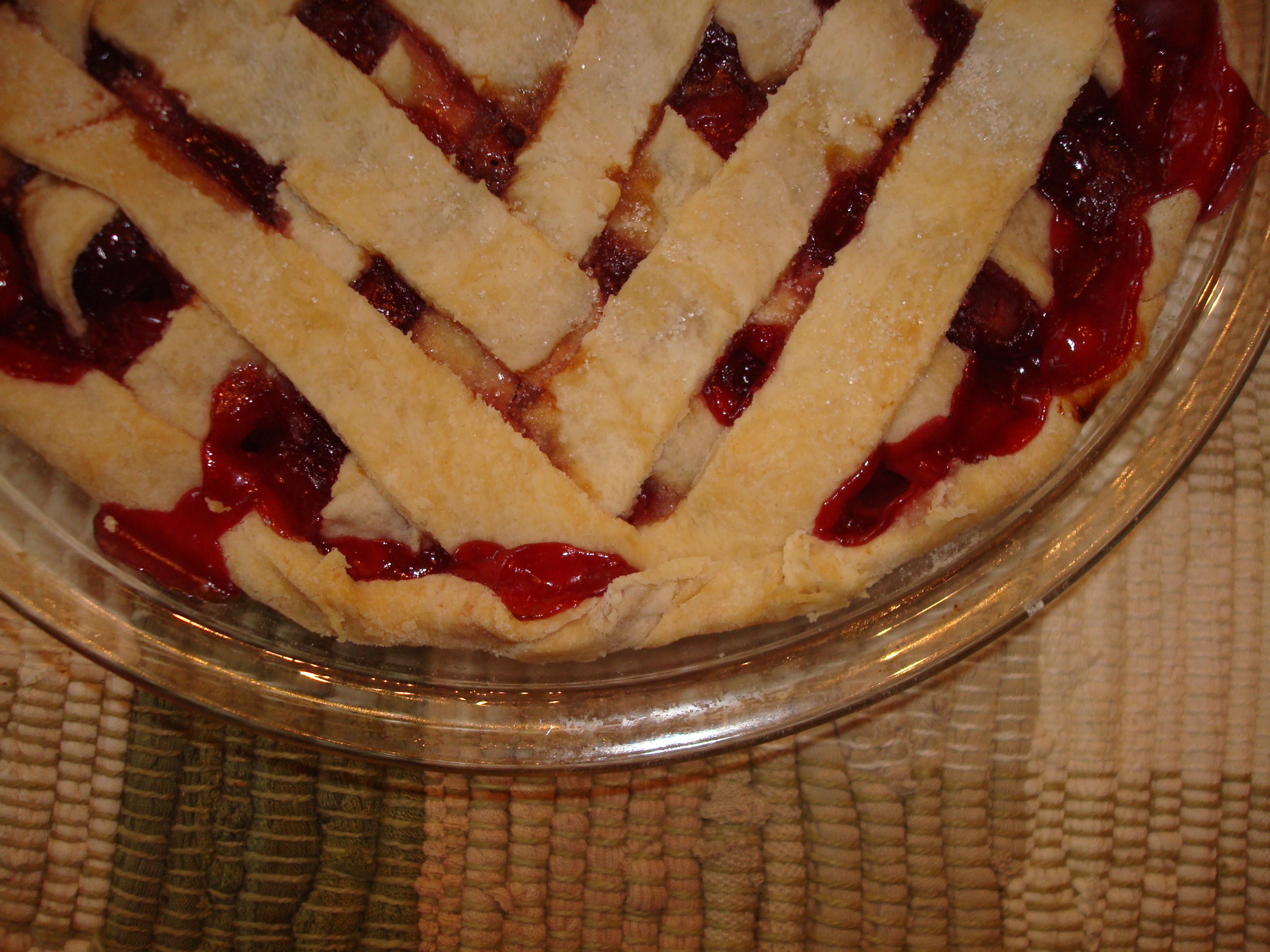
Heat oven to 425 degrees. Stir the sugar, flour, and almond extract into the cherries.  If the mixture is very juicy add additional flour. Turn into pastry-lined pie pan. Make a lattice top crust and flute edges. Brush crust with a small amount of milk; sprinkle with sugar.  Bake in oven for 10 minutes; then reduce heat to 350 degrees. Bake an additional 20 to 30 minutes or until crust is lightly  browned and juice just begins to bubble.
I made my own pie crust dough using the recipe that I previously included in the post for Rhubarb Sponge Pie.  I doubled that recipe since I basically needed two crusts for this pie.

For the lattice top crust, I cut the dough into strips about 3/4 inch wide and laid them on the top of the pie. I try to lay every other one perpendicular to the previous one—but the lattice never ends up being woven exactly right.  I never worry much about that because the pie tastes so awesome.
Rhubarb Sponge Pie Recipe

16-year-old Helena Muffly wrote exactly 100 years ago today: 

Monday, June 5, 1911: Mother, Besse and Ruthie flew around today a baking pies and cakes. I thought it be fun to swipe one, but oh, the result.

Rhubarb Sponge Pie

 Her middle-aged granddaughter’s comments 100 years later:

Grandma’s married sister Besse came to help her mother and sister bake pies and cakes. It sounds like Grandma didn’t help—I wonder why. As a 16-year-old, you’d think that she’d be a competent baker (or at least could help with some of the easier tasks). But instead Grandma apparently was clowning around—and swiped a pie—and got into trouble. Whew, what  punishment was referred to as “the result”?

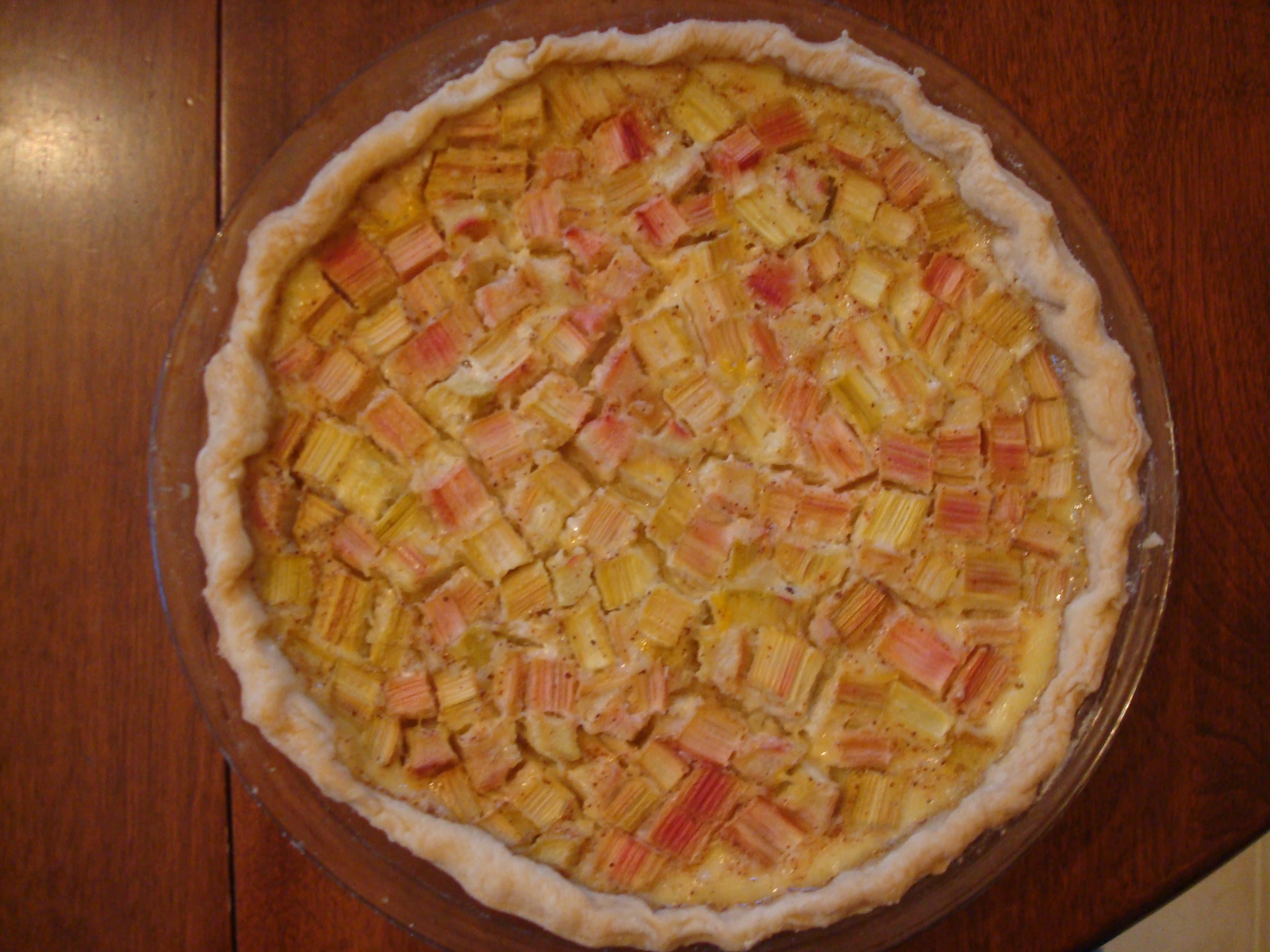
What kinds of pie did they make? My favorite old-fashioned spring pie is Rhubarb Sponge Pie. (I got this recipe from my mother-in-law. However, it is an old-time Pennsylvania recipe—and the Muffly women may have made a similar pie.)

Rhubarb Sponge Pie

3 eggs

3 tablespoons all purpose flour

1/2 teaspoon nutmeg

3/4 cup sugar

dash salt

1 cup milk

2 cups rhubarb

9 inch pie shell (see recipe below)

Heat oven to 425 degrees. Beat eggs slightly. Add flour, nutmeg, sugar, and salt; Beat for 1 minute. Add milk and beat until blended. Stir in rhubarb. Bake at 425 degrees for 5 minutes. Reduce heat to 325 degrees. Bake (1 – 1  1/2 hours*) until knife inserted into center of pie comes out clean.

*This pie takes a long time to bake. If the rhubarb starts to turn brown (burn) before the center of the pie is solid, reduce heat to 300 degrees.

Any pie pastry recipe—or a pie pastry purchased at the store— can be used to make Rhubarb Sponge Pie. But for a really flakey crust with an absolutely awesome taste, make an old-fashioned pie shell using lard.

I absolutely love the recipe below. At the stores where I shop lard can be surprisingly difficult to find—and I am always searching for it so that I can make really good pies. (Clayton and Elizabeth, thank you for the lard that I used to make the pie in the photo!)

In any case, here’s the recipe:

Old-Fashioned Pie Pastry (1 crust, 9 inch)

 1 cup flour

1/3 cup lard

2 to 3 tablespoons cold water

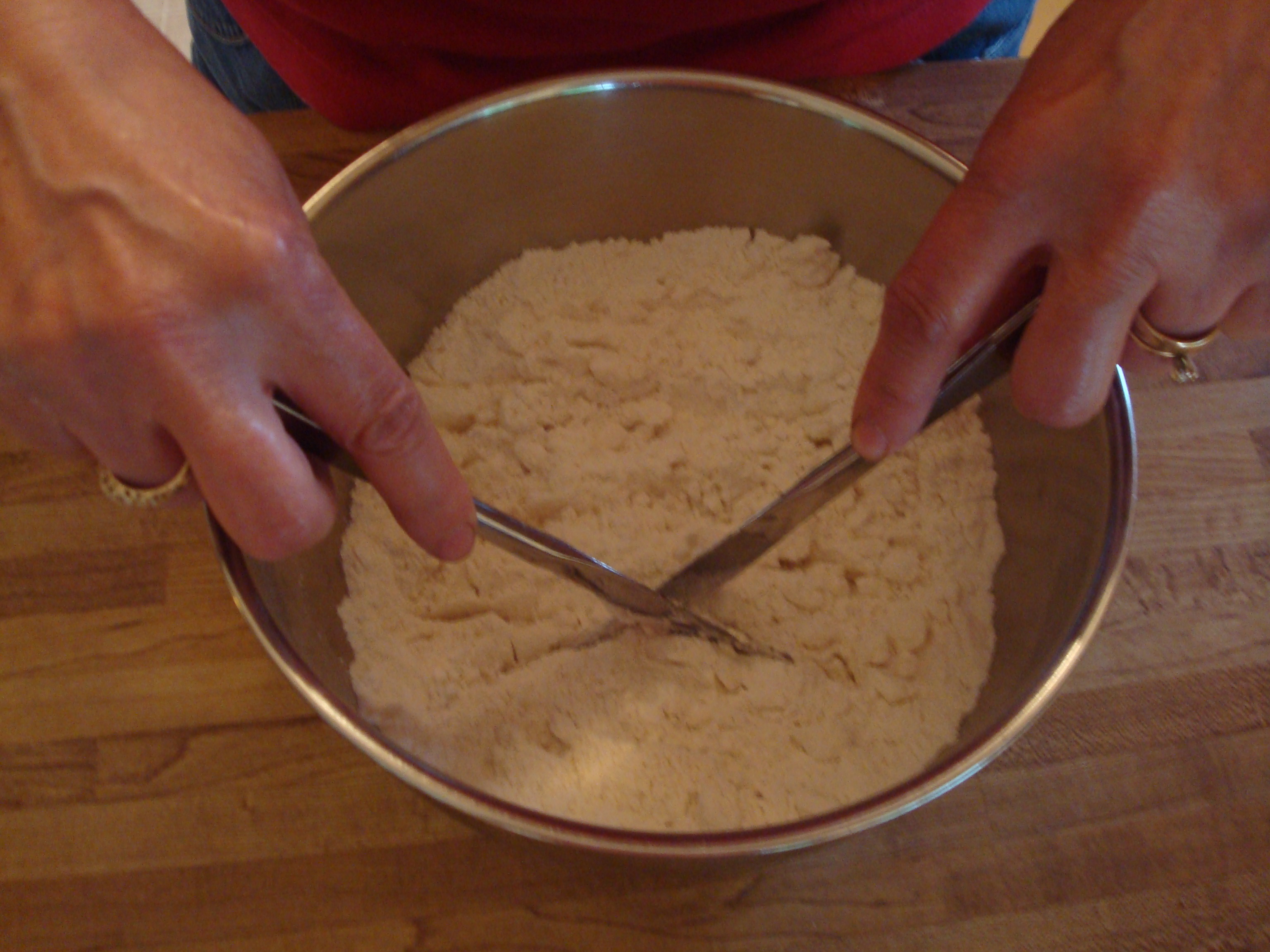
Put flour into bowl. Cut in shortening  using two knives or a pastry blender. Add water and mix using a fork until dough starts to cling together. If needed, add additional water.

With a little practice it’s easy to cut lard (or shortening) into the flour using two knives. I learned how to do it when I was young and have never felt a need to buy a pastry blender.

Gather dough together in a ball. Flatten into a round circle on lightly floured surface (a floured pastry cloth works well).  Roll dough 2 inches larger than needed to fit pie pan using floured rolling pin. Fold pastry into quarters; unfold and fit into pan.

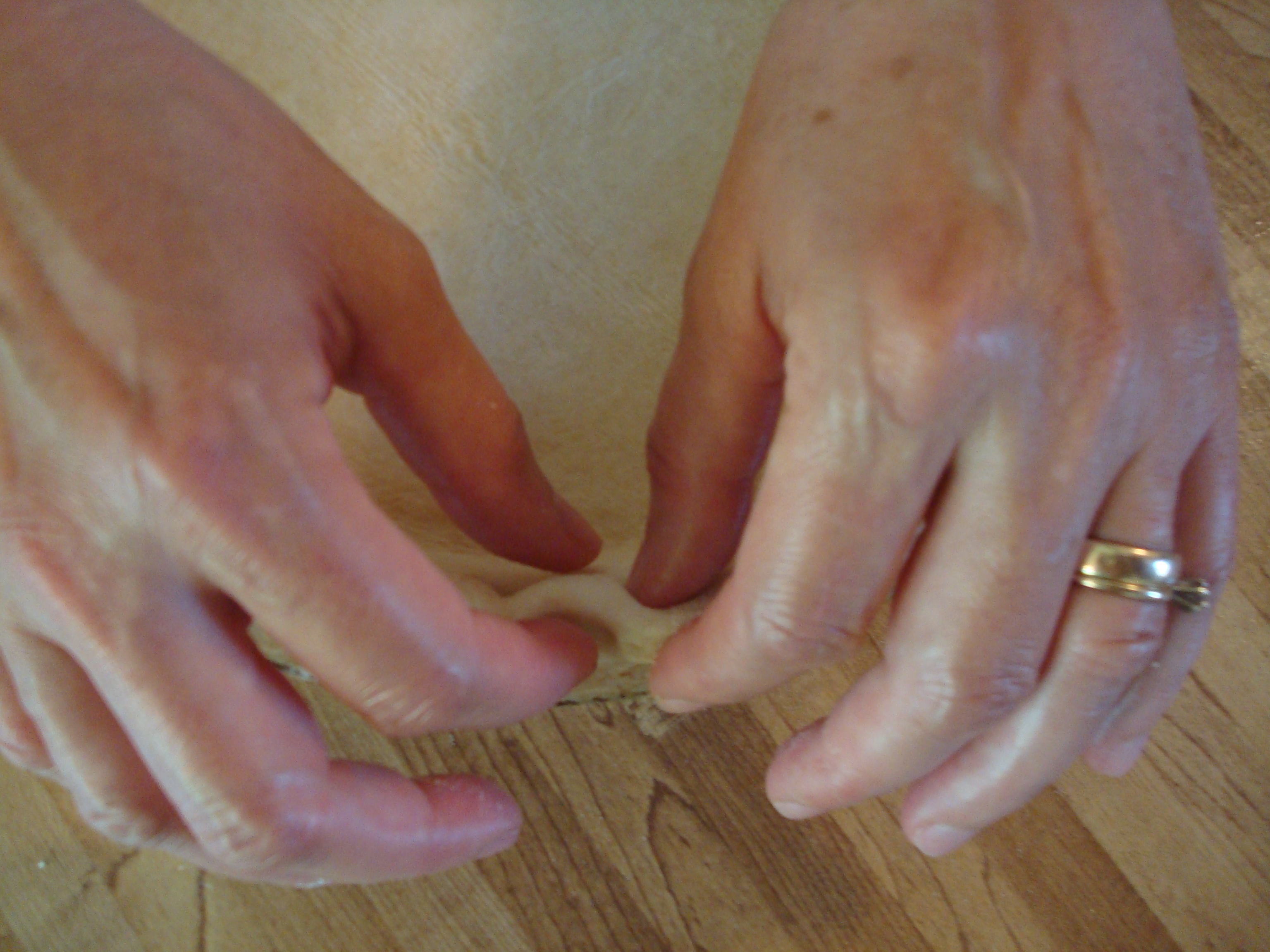
Trim  edge of pastry 1/2 inch from rim of pan. Flute pastry to create edge by pressing between fingers that are moving in opposite directions.

Fluting pie edge