19-year-old Helena Muffly wrote exactly 100 years ago today:
Friday, June 5, 1914: Went to Watsontown this morning.
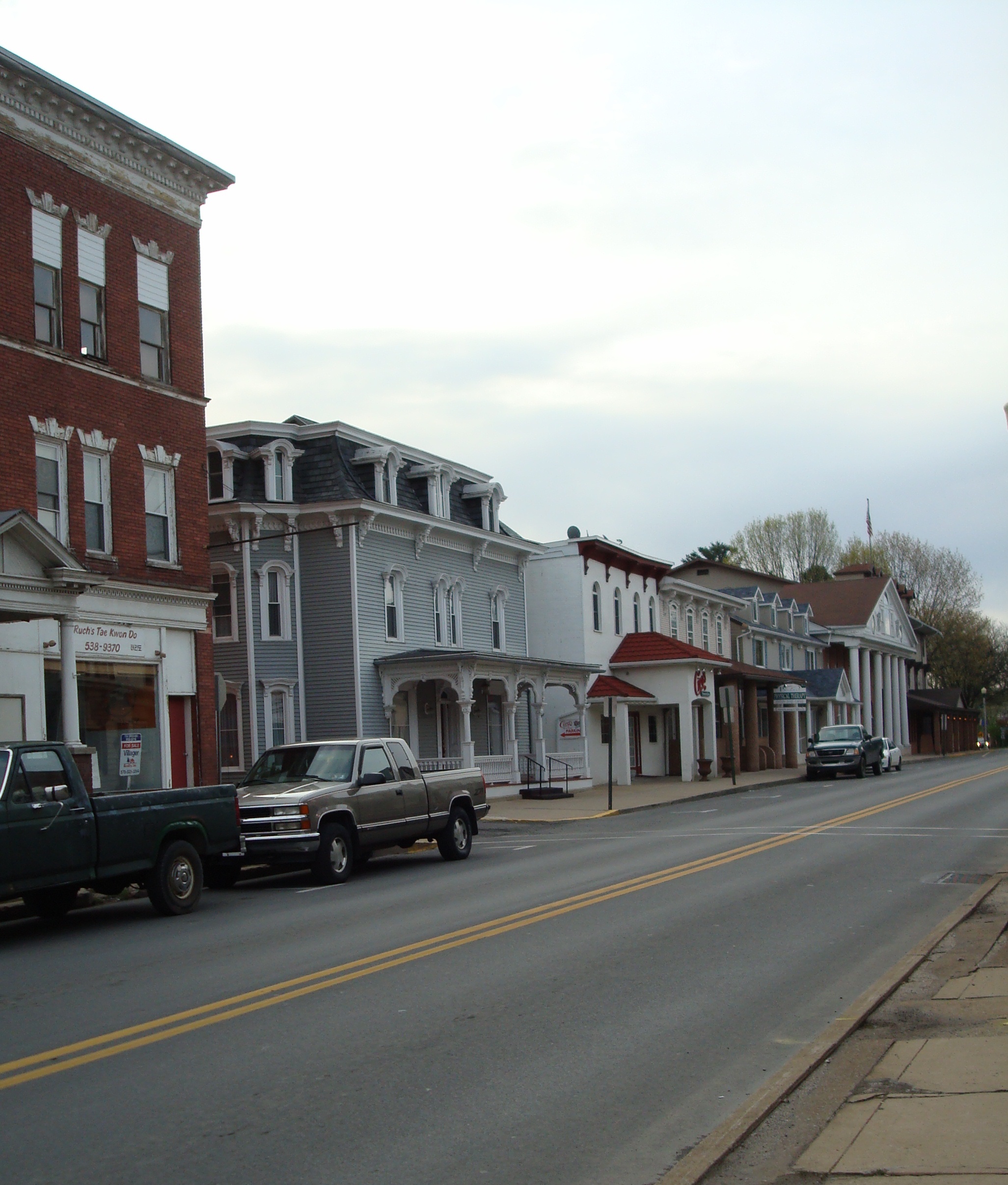
Recent photo of the view Grandma would have had as she walked into Watsontown. (Well, the isn’t exactly the same because 100 years ago there would have been a bustling railroad station on the right.)
Her middle-aged granddaughter’s comments 100 years later:
Hmm. . . Why did Grandma go to the nearby town of Watsontown? . . . Did she go shopping? . . . Run an errand for her mother or father?
19-year-old Helena Muffly wrote exactly 100 years ago today:
Thursday, June 4, 1914: Ditto
Her middle-aged granddaughter’s comments 100 years later:
Oh dear. . . another slow day. . . The previous day Grandma wrote, “Nothing doing.”
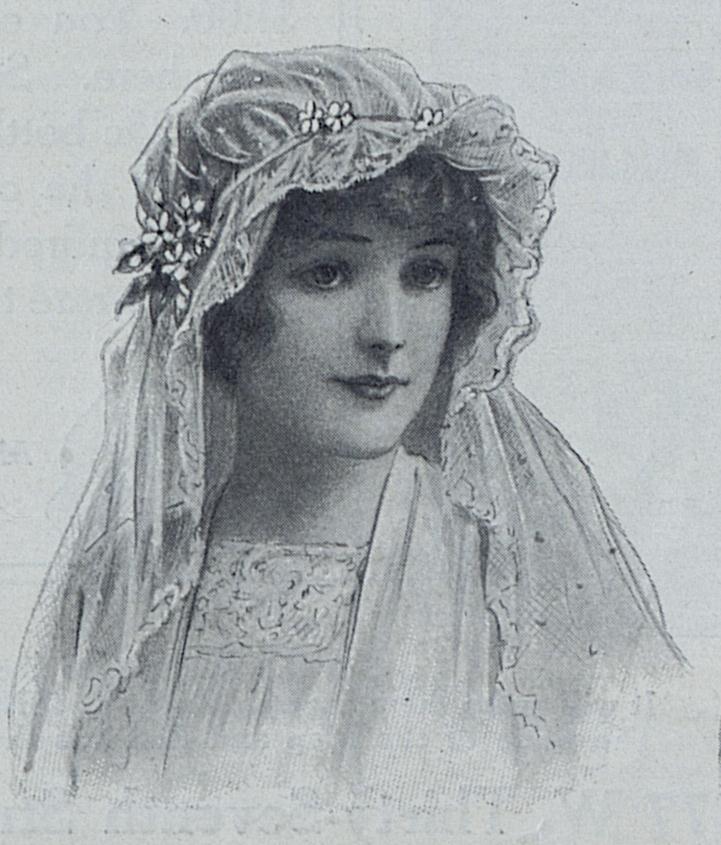
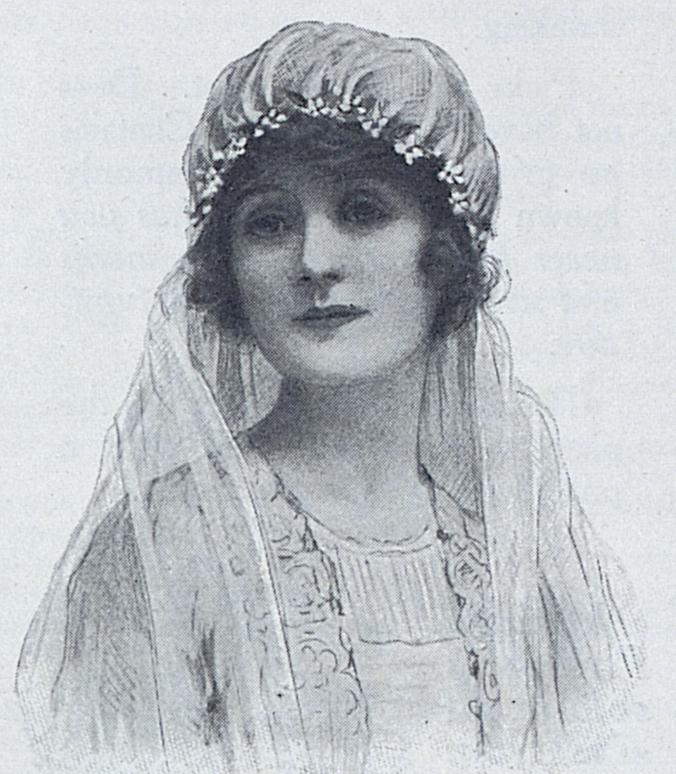
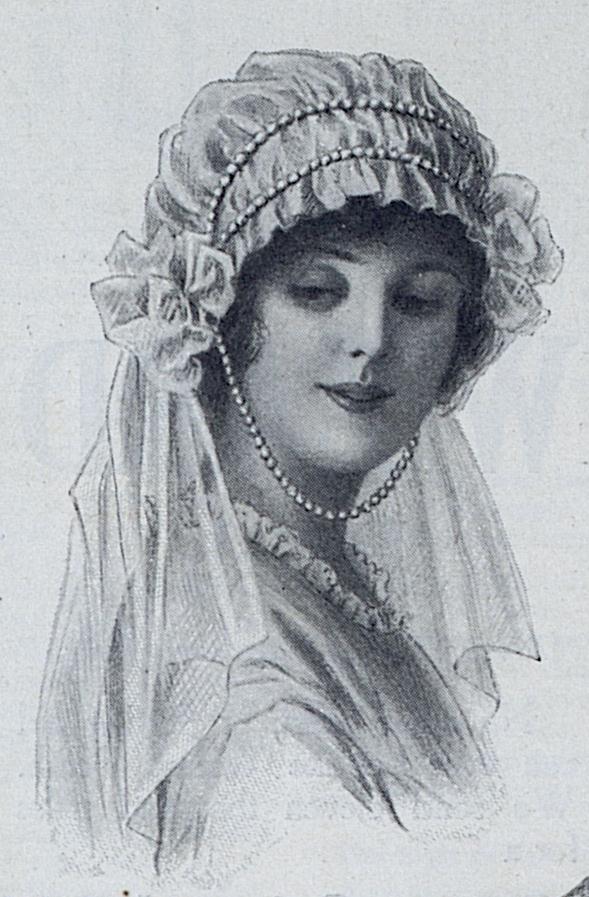
While Grandma was doing nothing, maybe she flipped through Ladies Home Journal and pored over the pictures of bridal veils—and selected her favorite veil, while dreaming that she’d someday have a storybook wedding. . . .Or maybe the pictures depressed her and made her worry that she’d never get married.
The New Bridal Veils
As old as the wedding ceremony itself is the custom of wearing the bridal veil. Of course the bridal veil need not be an expensive article, for, unless there is rare old lace in the possession of the brides’ family, it would be perfectly charming and dainty made of fine tulle or of sheer net. Fine lace may edge the veil, or form or trim the cap or head covering, but this is not essential for the beauty of the veil.
Trimming the veil with orange blossoms is likewise a custom of long standing. Still there is no reason why other white flowers or strings of pearl beads cannot be substituted should one’s fancy so dictate.
If you enjoyed these pictures and would like to see some more bridal veils from the same issue of Ladies Home Journal, go to Fashion a Hundred Years Ago. It is the companion site to this blog, and I posted several additional pictures there.
19-year-old Helena Muffly wrote exactly 100 years ago today:
Wednesday, June 3, 1914: Nothing doing.
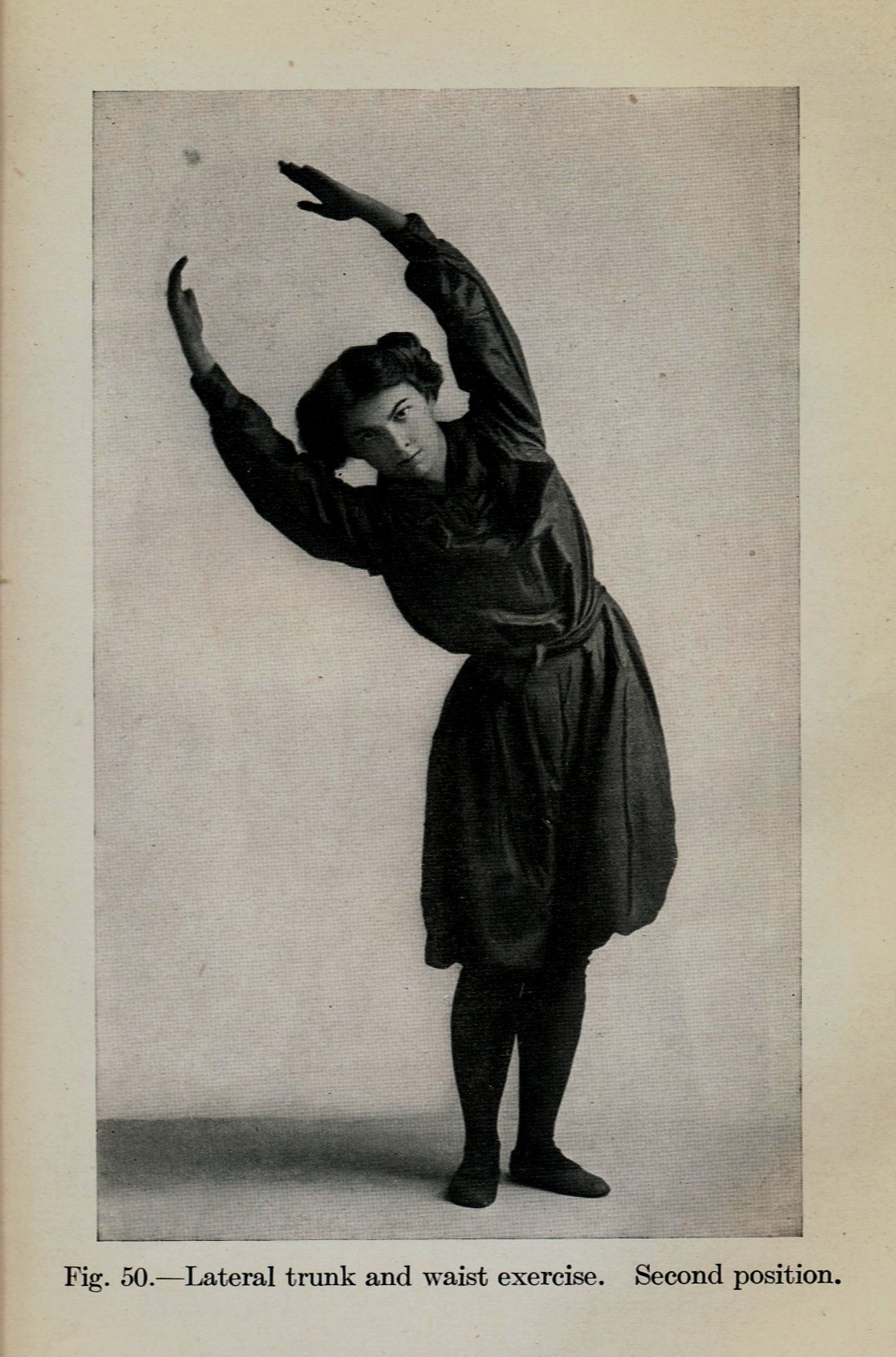
Source: Personal Hygiene and Physical Training for Women (1911)
Her middle-aged granddaughter’s comments 100 years later:
Grandma—
You seem so bored. I really hate to suggest it because you do so much hard physical labor—but maybe you’d feel a little better if you did a few exercises.
—
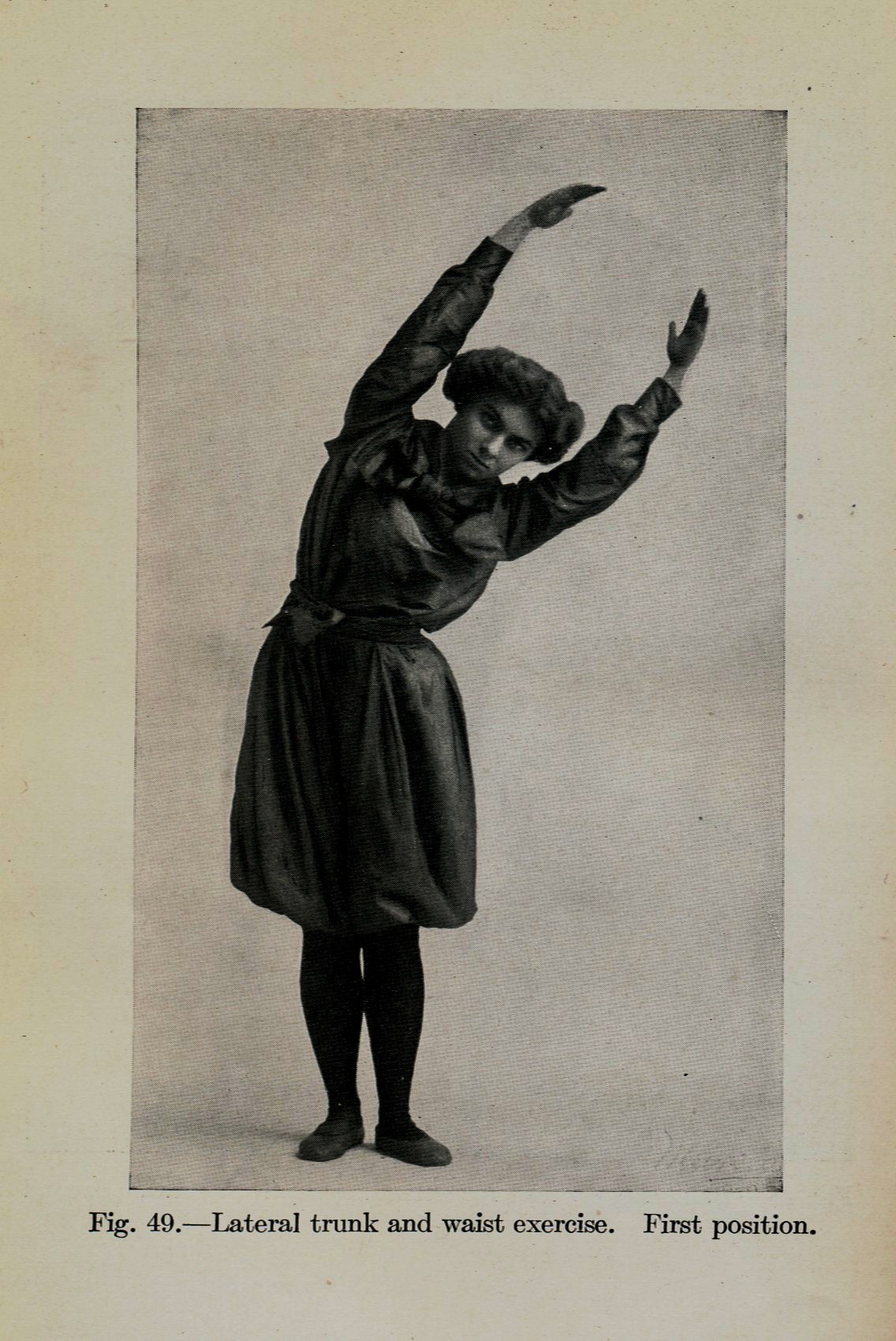
Here are the directions in a hundred-year-old book for doing Side Bend Exercises—though the book calls them Lateral Trunk and Waist Exercises (Good grief—that’s a mouthful. I wonder if that’s what people actually called this exercise back then.)
Lateral Trunk and Waist Exercises (Figs. 49, 50)
First Position—Stand with the feet nearly together and the arms extended above the head; the arms are relaxed at the wrists and elbows, so that a slightly curved line is formed as is shown in the figure. First sway to the left, bending at the waist line as far as possible, and return to the original position.
Second Position—The attitude is the same as in the first position; sway to the right in the same manner.
These exercises strengthen the muscles on the sides of the abdomen and the lower part of the back , and are an excellent means to reduce the size of the waist in case of corpulency.
Personal Hygiene and Physical Training for Women (1911) by Anna M. Galbraith
What did you talk about? PLEASE tell us the gossip and the rare tidbits. We want ALL the juicy details.
—
Carrie Stump was a friend of Grandma’s who lived on a nearby farm.
—
Hmm. . . Miss Ruthie? . . . Was Grandma annoyed,? . . . Jealous? . . .Grandma had various nicknames for her sister Ruth. For example, she often called her Rufus when she was upset with her.
What was Ruth doing these days? Ruth was a teacher at a nearby one-room school house during the school year—and in past years she helped with the house and farm work during the summer months. Did Ruth have a job in Summer 1914? . . . or was she spending her days at friends’ homes? . . . or doing something else?
19-year-old Helena Muffly wrote exactly 100 years ago today:
Sunday, May 31, 1914: <<no entry>>
Source: Ladies Home Journal (April, 1914)
Her middle-aged granddaughter’s comments 100 years later:
Sometimes on boring Sunday afternoons when I was a teen, I practiced creating glamorous hair styles shown in the flyer that came with Adorn hairspray.
Did Grandma also style her hair when she was bored? . . .
Since Grandma didn’t write anything a hundred years ago today, I’m going to share 1914 directions for how to do the latest hair style, the French Twist.
French Twist
This coiffure is no more difficult than any other but to be entirely successful the hair must be artificially waved or possess a natural undulation.
Part the hair high on the crown, almost on a line with the ears, as the greater portion of the hair must be in back. Plait the back hair loosely to hold in place until you comb back the side portions.
Then take a small portion of hair from the center front as shown in the illustration. Twist this in a loose knot temporarily and comb back each side portion of the hair, fastening halfway between the crown and lower hair-line, as indicated in the illustration.
Twist this in a loose knot temporarily and comb back each side portion of the hair, fastening halfway between the crown and the lower hair-line as indicated in the illustration.
Now unfasten the top portion which you knotted. Begin at the end and roll under, forming into a puff to be used as the foundation on which to pin the back portion. Unfasten the loose braid in back; brush and smooth this strand of hair, and taking the entire strand. Draw it upward.
Give it a single twist near the crown of the head, keeping the lower portion smooth and straight. Then begin to roll under the end as you did with the front section, fastening in a becoming line on the top of the head. Place the pins underneath, so they will be practically invisible. The comb may be placed in back or in a diagonal position in front , following the line of the twist. Comb the hair together at the partings and fasten with invisible pins.
19-year-old Helena Muffly wrote exactly 100 years ago today:
Saturday, May 30, 1914: Went up to town this morning to take in the doings. Went with a couple of friends over to Watsontown this afternoon. Saw a fat cousin.
If I squint a little I think that I can see a parade slowly advancing down Main Street in Watsontown–a band, the GAR Civil War Veterans, a couple horses pulling carts advertising local businesses. . .
Her middle-aged granddaughter’s comments 100 years later:
Prior to 1971 Memorial Day was always on May 30.
—
Yeah, Grandma! I’m glad that you’re finally having some fun. Was there a parade? . . . food? . . .music? Did the old veterans make speeches? It’s been a rough few days with the death of your infant niece—and it’s good that you’re finally getting out with friends again.
—-
Memorial Day sounds like a fun holiday a hundred years ago. For example, on May 30, 1912 Grandma wrote:
Memorial Day: Carrie and I went up to McEwensville this morning. This afternoon we went over to Watsontown accompanied by another girl friend. We had the pleasure of getting an automobile ride. It was the first time I was ever in one and consequently never had experienced a ride. We had a good time.