Apple Crisp Recipes: Comparison of Old and Modern Recipes

17-year-old Helena Muffly wrote exactly 100 years ago today:    

Saturday, August 24, 1912: We’ve been expecting company for the last several days, but it seems to be as if they aren’t coming. It seems to be the luck around here.

Her middle-aged granddaughter’s comments 100 years later:

Did they make food in anticipation of the company that didn’t show? Since apples are in season, maybe they made an apple dessert..

I tried two Apple Crisp recipes to see which was the best.  First I made the recipe that was in an old Pennsylvania Grange Cookbook; then I made the recipe on the Betty Crocker website.

Old Pennsylvania Apple Crisp Recipe

1 cup flour

1/2 cup sugar

3/4  teaspoon salt

1 teaspoon baking powder

1/3 cup butter, melted

1 egg, slightly beaten

5 medium apples

1/2 teaspoon cinnamon

1/4 teaspoon nutmeg

Preheat oven to 350 degrees. Stir together flour, sugar (1/2 cup), salt, and baking powder; add melted butter and egg. Stir together until crumbly.

Pare and slice apples, and place in an 8” X 8” baking dish. Cover with the flour mixture. Bake approximately 45 minutes or until the apples are soft.
Then I made the apple crisp recipe on the Betty Crocker website:

Betty Crocker Apple Crisp Recipe

4 medium tart cooking apples, sliced (4 cups)

3/4 cup packed brown sugar

1/2 cup all-purpose flour

1/2 cup quick-cooking or old-fashioned oats

1/3 cup butter or margarine, softened

3/4 teaspoon ground cinnamon

3/4 teaspoon ground nutmeg

Cream or Ice cream, if desired

Heat oven to 375º F. Grease bottom and sides of 8-inch square pan with shortening.

Spread apples in pan. In medium bowl, stir remaining ingredients except cream until well mixed; sprinkle over apples.

Bake about 30 minutes or until topping is golden brown and apples are tender when pierced with a fork. Serve warm with cream.

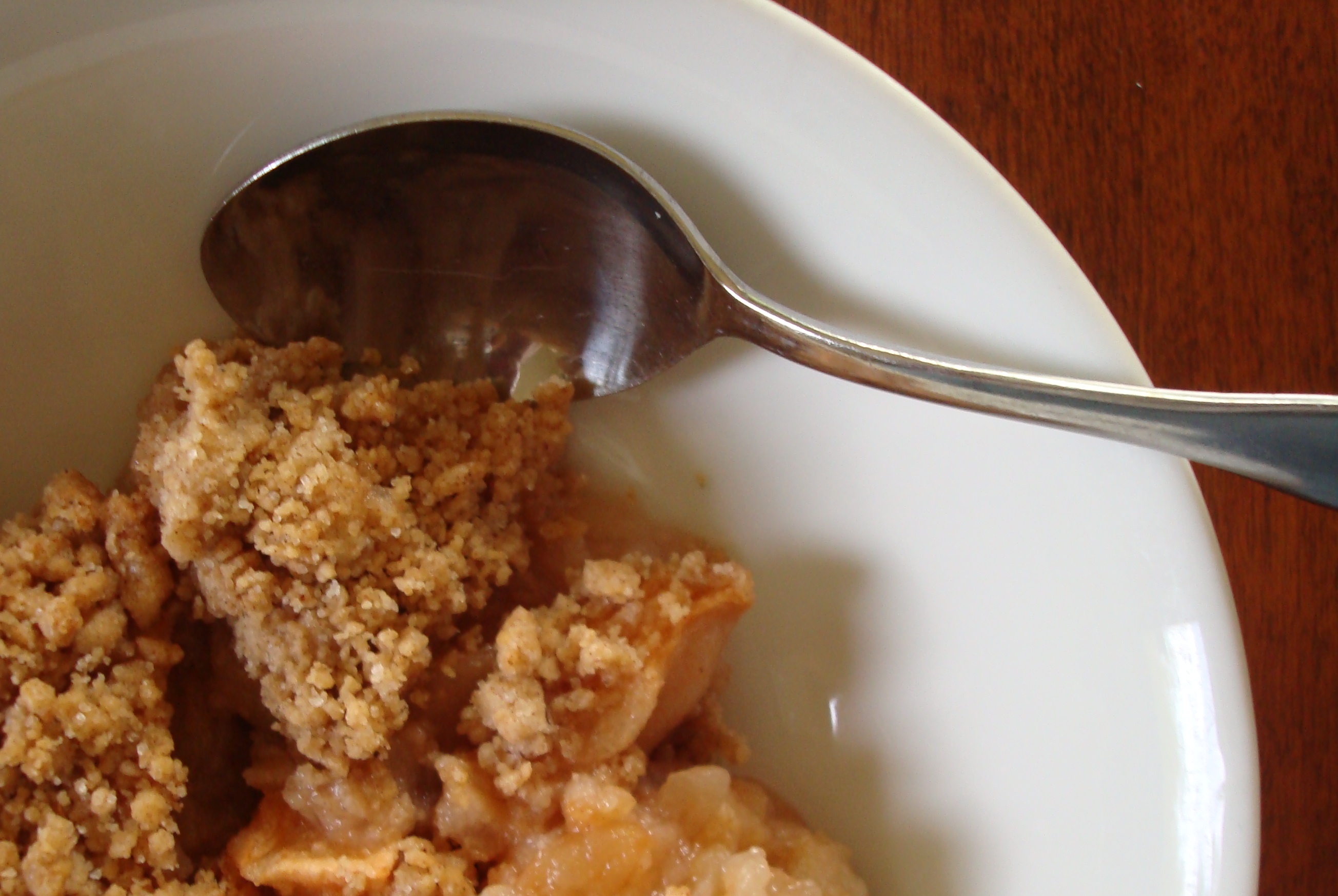
The verdict—Both recipes were good and I’d recommend either recipe.

The oatmeal in the Betty Crocker recipe made that Apple Crisp crunchier than the other one. And, the flavors were a little more subdued with the Old Pennsylvania recipe because white sugar (rather than brown sugar) and fewer spices were used.

Old Lemon Water Ice Recipe

17-year-old Helena Muffly wrote exactly 100 years ago today: 

Saturday, May 25, 1912: Today was clean-up and get things ready for an expected guest who didn’t come after all. That seems to be the luck.

Her middle-aged granddaughter’s comments 100 years later:

Who might the anticipated guest have been?  . . . Relatives? . . . Friends of Grandma’s parents? No-shows with no explanation probably were much more common in the days before cell phones and text messages. (And, the Muffly’s didn’t even have a landline phone.)

I wonder if they made any desserts in anticipation of the guests. Old-fashioned Water Ice would have been good on a hot spring day. I’m going to share a recipe for Lemon Water Ice that  I found in a hundred-year-old cookbook.

Lemon Water Ice

2 cups water

1 cup sugar

4 egg whites

Grated rind of 1 lemon

Juice of 3 lemons

Boil sugar and water; cool. Add egg whites beaten until stiff, grated lemon rind, lemon juice. Freeze in ice cream freezer.

(Just to be safe, I used pasteurized egg whites.)

Adapted from Lowneys’ Cook Book, Revised (1912)

The Lemon Water Ice was refreshingly tart and wonderful on a hot day. I’ll make it again—though will double the recipe because it didn’t make very much.

Hand-cranked ice cream freezers were popular a hundred-years and there are lots of delicious-looking frozen dessert recipes in old cookbooks. I plan to try a few more this summer.

Traditional Apple Betty Recipe

16-year-old Helena Muffly wrote exactly 100 years ago today: 

Thursday, October 19, 1911: That’s all.

Her middle-aged granddaughter’s comments 100 years later:

Since Grandma didn’t write anything of substance a hundred years ago today, I’m going to share another very old recipe.

We often ate Apple Betty during the fall and winter when I was a child. It always seemed very old-fashioned and I’d guess that Grandma ate similar dishes when she was young.

When I was small, we’d save bread crusts and tear them into small pieces. We’d put the torn bread into an open canister to dry. Whenever we got enough for Apple Betty, we’d make it.

Farmers always had lots of apples in those days from their orchards, and I guess this was a way to use both the apples and the leftover bread crusts.

We’d eat Apple Betty as a side dish during the main meal–though it could be eaten as a dessert. After I got older. I guess our family felt more prosperous and we generally threw bread crusts out—and we no longer made this recipe.

 Apple Betty

2 cups coarse dry bread crumbs

4 cups, sliced, peeled tart apples (5 to 7 medium apples)

1/2 cup sugar

1/4 teaspoon cinnamon

1/4 teaspoon salt

3 tablespoons lemon juice (1 lemon)

1/4 cup water

2 tablespoons butter

Preheat oven to 350 degrees. Put 1/3 of the bread crumbs into the bottom of a buttered 6 to 8 cup casserole dish, then cover with half of the apples. Mix the sugar, cinnamon, and salt together, and sprinkle half the mixture over the apples. Add another layer of bread crumbs and another of apples, and sprinkle with the rest of the sugar mixture. Top with remaining crumbs, pour lemon juice and water all over, and dot with butter. Cover and bake for 25 minutes.

Yield: 6 to 8 servings

When I recently made this recipe, rather than sitting the bread crumbs out to dry, I tore several slices of fresh  bread into pieces and put them on a cookie sheet. I then dried the very coarse crumbs for about one-half  hour in a 175 degree oven.

My husband Bill said that the Apple Betty reminded him of bread pudding—though the bread is definitely drier with this recipe than is typical of a bread pudding.

The dish can be eaten either hot or cold.  I prefer it hot, but Bill ate cold left-over Apple Betty and in no time it was gone. This historic recipe is a keeper.

Old-fashioned Cherry Pudding Recipe

16-year-old Helena Muffly wrote exactly 100 years ago today: 

Monday, June 26, 1911:  Felt so terrible this morning, so did Ruth. Picked cherries nearly all afternoon! There were sour ones, so there was no danger of spoiling my hands to any considerable extent.

Her middle-aged granddaughter’s comments 100 years later:

How did the Muffly family use the sour cherries? In pies? . . . jam?. . . fruit compote? . . . cherry pudding?

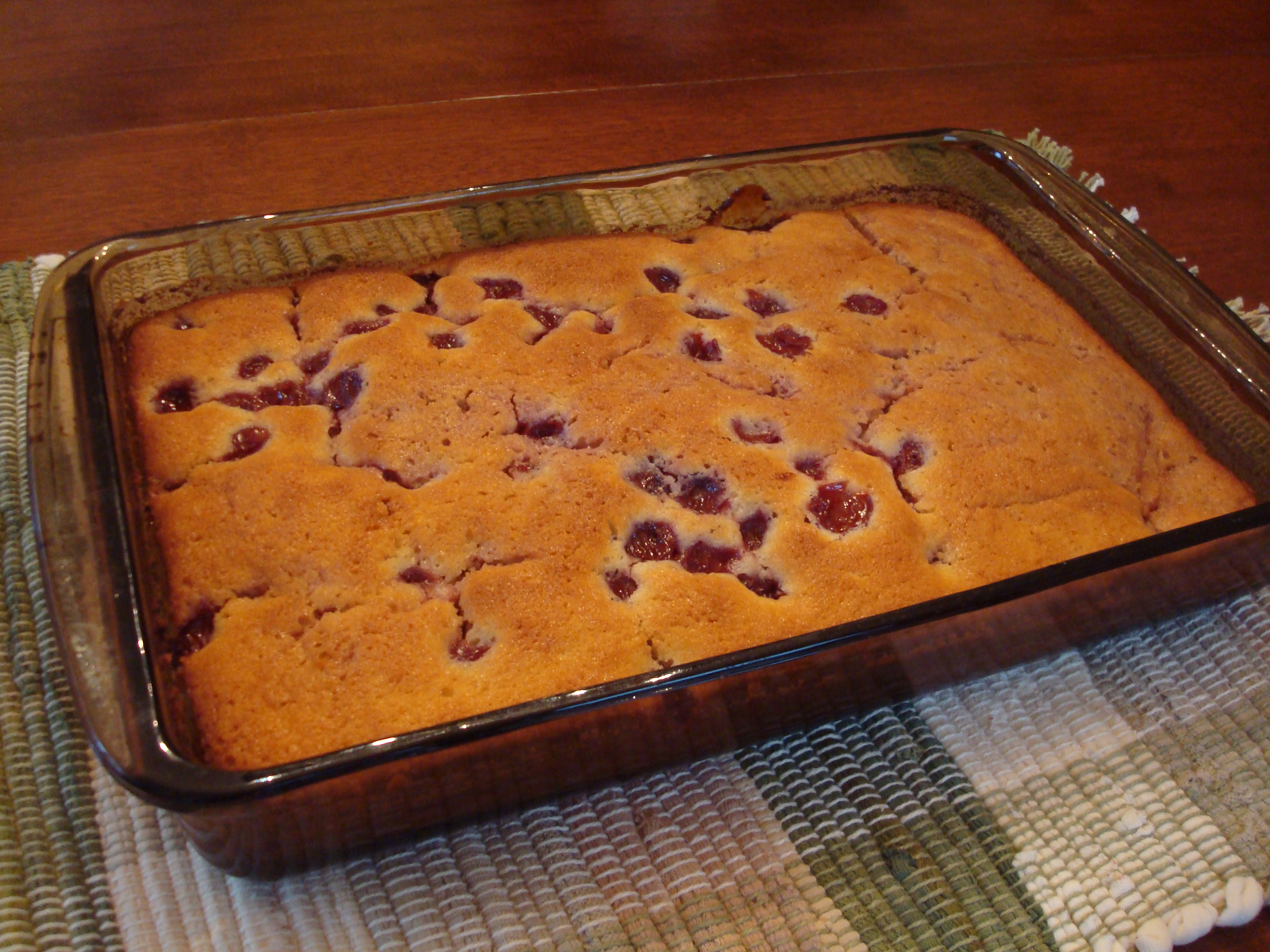
I can remember cherry pudding tasting awesome on hot summer evenings after a hard day of making hay.  Here’s the old family recipe that I use to  make Cherry Pudding.

Cherry Pudding

1/2 cup butter, melted

1 cup sugar

1 1/2 teaspoon baking powder

1/4 teaspoon salt

1 egg

1 cup milk

1 1/2 cups all-purpose flour

1 teaspoon vanilla

3/4 cup sugar

2 1/2 cups pitted sour cherries*

1/2 cup water

Preheat oven to 350 degrees. Put into a mixing bowl: butter, sugar, baking powder, salt, egg, milk, flour, and vanilla; beat until smooth. Pour into a 7 1/2  X  12  X  2 inch rectangular casserole dish, or similarly sized dish.

Make sauce by heating the 3/4 cup of sugar, cherries (including any juice), and water. Bring to a boil; then pour the cherry sauce over the batter.  Place in oven and bake for 35 to 45 minutes, or until pudding just begins to shrink from sides of dish, and the top is golden brown. When baked, cherries and sauce will be on the bottom. Serve warm. If desired, may be served with milk.

*Frozen or canned cherries may be used. Do not drain frozen or canned cherries; and include juice when measuring cherries. It works okay to use a 1 pound can of cherries—there just will be somewhat fewer cherries in the dish than if fresh or frozen cherries were used. Reduce amount of sugar, if using cherries canned or frozen in sugar syrup.

Old-time Recipe for Stirred Custard

16-year-old Helena Muffly wrote exactly 100 years ago today: 

Sunday, April 30, 1911:  Pa and Ma and Jimmie went away today. Ruth had invited Helen Wesner and Blanche Bryson to come and do justice to her very excellent cooking. I rode home from Sunday school with them. I choked at the dinner table which displayed my most excellent manners.

Her middle-aged granddaughter’s comments 100 years later:

It sounds like Grandma’s sister Ruth had fun cooking a meal for friends—and that Grandma displayed her sense of humor by pretending to choke on the food. A few days ago (see the April 25 and April 27 postings) two of my cousins shared memories about how much Grandma enjoyed practical jokes when she was an older woman. I can now see that this was a trait that she had throughout her life.

Menu page in April, 1911 issue of Good Housekeeping Magazine.

I wonder what her sister Ruth cooked. A hundred years ago Good Housekeeping magazine included sample menus each month. One of the April, 1911 Sunday dinner menus is below:

Sunday Dinner

Tomato bouillon

Roast veal, brown sauce

Mashed potatoes

String beans

Boiled custard*

Sponge cake

Coffee

An asterisk meant that the magazine contained the recipe.  For  the Sunday dinner menu, the only included recipe was for Boiled Custard:

Boiled Custard

Scald one pint of milk in a double boiler. Unless for some special reason milk should always be scaled, not boiled.

Beat the yolks of two eggs, or one whole egg, very light with two tablespoonfuls of sugar; and when the milk has scalded, pour it slowly on to the eggs and sugar, stirring all the while. The milk is added to the eggs and sugar instead of these being added to it, for two reasons. The slow addition of a small amount of hot liquid cools the egg, already divided by the beating in of the sugar, without coagulating it until it is so hard that it separates and permits the custard to separate. Also, in this way all of the egg and sugar is mixed with the milk. When an attempt is made to add adds to milk it is difficult, especially with a small amount, to clean out the dish properly. A little lost with small proportions may spoil or deduce the deliciousness of the dish.

Return the milk, eggs and sugar to the double boiler and cook for three minutes, stirring slowly, but steadily and carefully. A minute’s carelessness here may spoil the custard. If not sufficiently cooked the custard will have a raw “eggy” taste, and a minute too long cooks the egg too hard and the custard seemingly curdles. As soon as the custard coats the spoon, or as soon as it begins to feel thicker as one stirs, add the salt. [Note: I used ½ teaspoon salt.] Strain into a cool dish and flavor with a teaspoonful of vanilla. Properly made, the custard will be smooth and the consistency of rich cream.

I made this recipe using a sauce pan since I don’t own a double boiler, and it turned out fine.

The stirred custard  had a nice flavor—but the recipe directions are definitely right when it says that the custard has the consistency of rich cream.  As I look back at the menu in the old magazine, I see that it also lists sponge cake. After seeing the consistency of the Stirred Custard, I now think that it may have been used as a sauce on the cake.