Hundred-Year-Old Tips for Caring for Wood and Coal Stoves

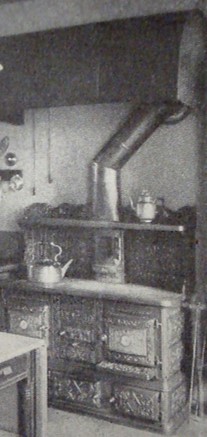
coal stoveHere’s some abridged tips for caring for wood and coal stoves from a hundred-year old magazine:
  • Stove grates will last ten years, or longer, if well cared for (that is if the ashes were removed once or even twice daily).
  • Grates should not be kept red hot with ashes banked up against them.
  • Do not bank the fire overnight with the ashpan fun of ashes, thereby keeping the grated heated all of the twenty-four hours, never giving them a chance to cool.
  • A cheap stove is poor economy. Therefore, always purchase a stove of a well-known make, and then take care of it.
  • Clean out the soot from underneath the stove.
  • Brush the soot and ashes from around the sides of the stove. The butterfly, in the back of the stove, should be opened, and the stove rake, or poker, slipped in, so that the soot may be pushed downward into the space below the oven, where it may be taken out through the opening made for that purpose. This pipe is often entirely clogged or closed by the unburned particles of carbon deposited there from the coal.
  • Clean the stove pipe, which may be responsible for lack of draught and may be half full of soot, especially if it is a long pipe, or has more than one turn in it.
  • Keeping the stove red hot, for any length of time. will warp the lids, and burn out the various parts. After a fire is started, the drafts should be adjusted, so that it burns well, but not so as to permit the stove to become red hot.
  • Piling up coal until it is against the top of the stove will also cause the lids to warp.
  • Another cause of injury to a stove is the burning of wet garbage. Coffee grounds or liquids should not be poured on the red hot lining of the stove. This may produce cracking.
  • If one is going away for some time, the stove should have a liberal coating of grease, or liquid black shellac, to prevent rusting; or otherwise the dampness of a closed house may cause serious damage. Under such conditions the stove pipe should be taken down, oiled and left down, or else rain, coming down the chimney may cause the pipe to rust out in one season.
  • Even if one is at home and does not use the coal stove in summer, papers should be burned in it occasionally to dry out the stove pipe and inner parts of the stove.
  • If the stove has an enameled back or trimmings, these may be cleaned with a scouring powder, which is not gritty.
  • Foods, grease, etc. must not be allowed to collect on the surfaces, or these will be burned on from the intense heat, and cannot be removed without injury to the surface.
  • Clinkers will not form so readily if the fire is made every day.

Excerpts from American Cookery (March, 1925)

Hundred-Year-Old Tips for Crisp Waffles

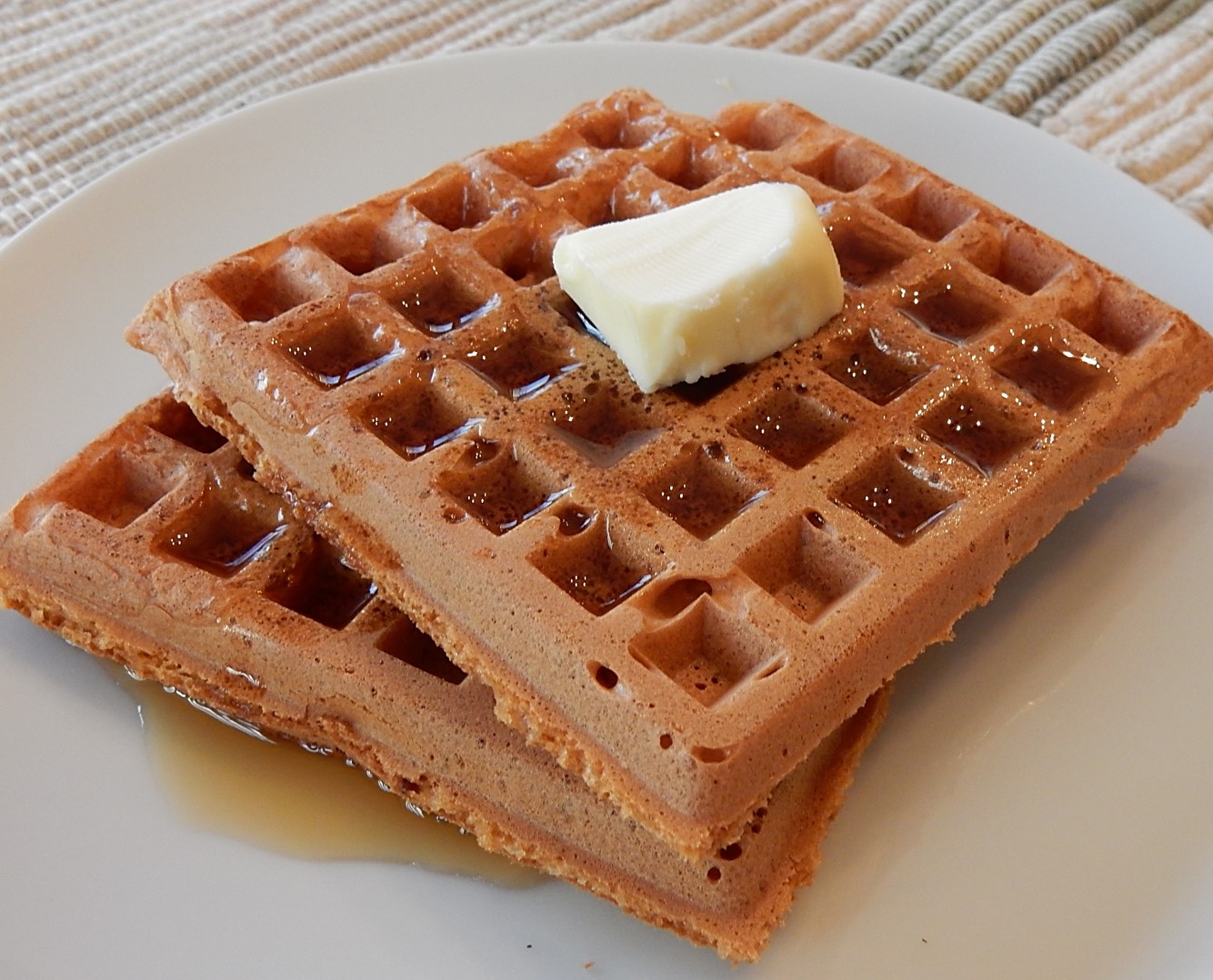
waffles on plate

When I make waffles, I’m sometimes surprised by how much the texture varies from one batch to the next. Sometimes they are nice and crisp; other times they limp and almost soggy. I recently was browsing through a hundred-year-old magazine and came across some advice that still is helpful and relevant:

Crisp Waffles

Several small points affect the crispness of the waffle. First, we would put a hot iron. The iron should be hot enough immediately to cook the batter, it should be sizzling and more than sizzling hot. Equally important is it that too much batter shall not be poured into the irons, for a thick waffle is never crisp. Most of the waffles served to us in restaurants are, we regret to say, too thick. A strong bread flour tends to toughness, so does too much egg, unless balanced by a good deal of butter. Pastry flour helps to make a tender waffle, and so does rich milk. If you use skimmed milk it inclines to toughness, while water and butter are aids to tenderness. Further, if you pile the waffles on a plate, while they are smoking hot, they will be sure to lose crispness from the absorption of moisture from the steam.

American Cookery (April, 1925)

Billy in Bunbury

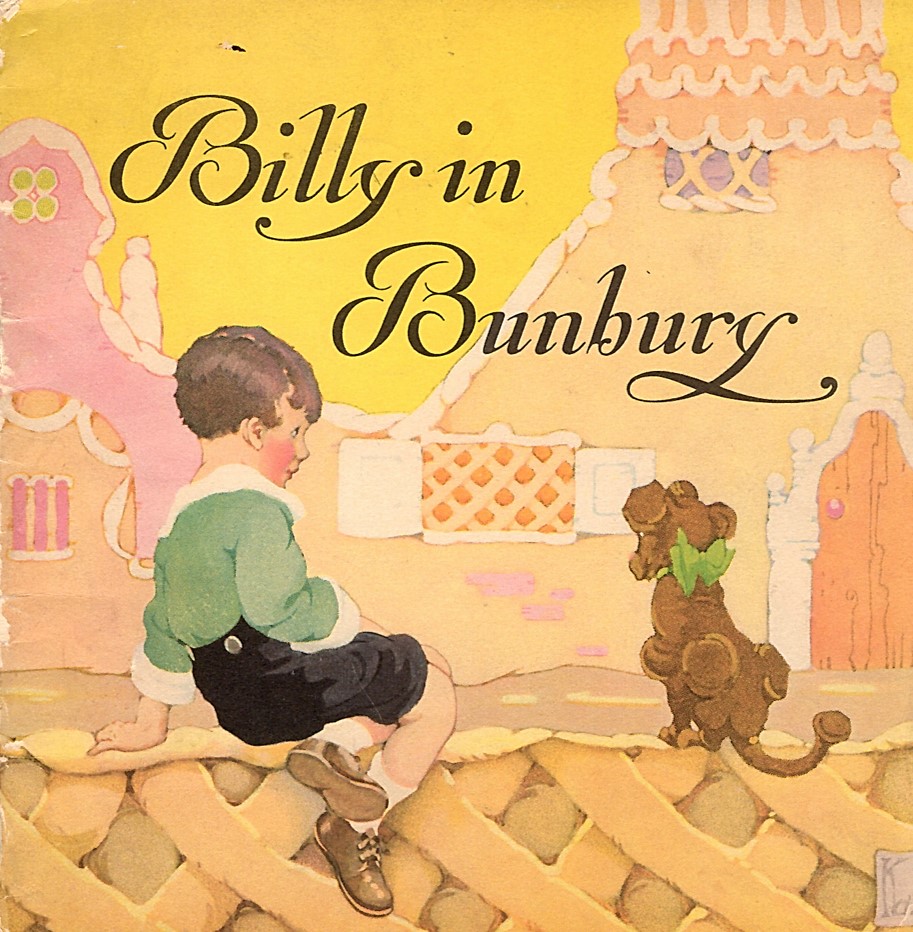
Cover of Billy in Bunbury
Cover of Billy in Bunbury (1925)

I am always energized when we ring in a new year. For my blog posts I use recipes from cookbooks that are exactly a hundred years old. I bought several 1925 cookbooks off eBay and am looking forward to exploring them. One of the books I purchased is unique. Billy in Bunbury was published by the Price Baking Powder Company. It is a combination children’s picture book and cookbook.

page from Billy in Bunbury
Source: Billy in Bunbury (1925)

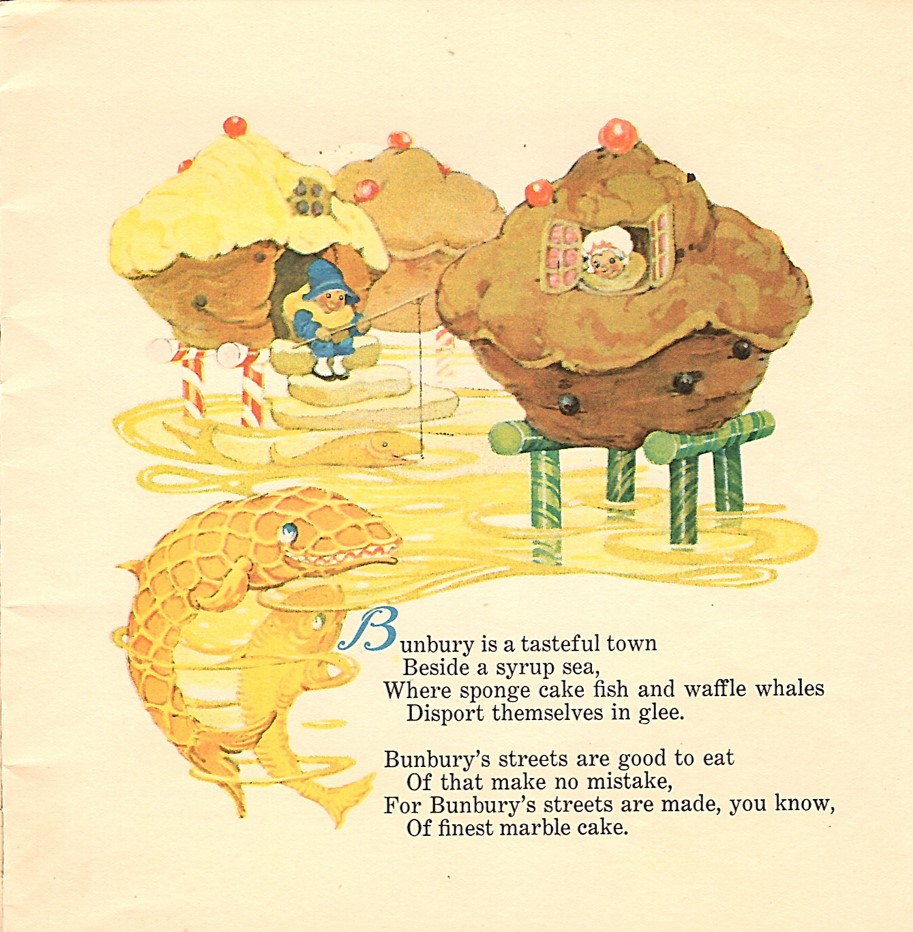
Billy in Bunbury is an enchanting and whimsical story about a town where everything is made of wonderful foods. The streets are made of marble cake and the fences of pie crust. King Hun Bun learns that there is a boy named Billy who lives nearby who is very skinny because he will not eat his meals. Hun Bun tells Billy’s mother to give him “cookies, buns, and cake. And the other things that mothers make.” He also gives her a book with recipes that use Dr. Price’s Baking Powder. He then takes Billy to Bunbury. Billy is awed by the town and the foods in it. Later they return to Billy’s home. Billy’s mother has read the book and will make sure that he gets a treat at each meal. Interspersed throughout the story are recipes for cookies, cakes, doughnuts, and other sweets.

The book is colorful and well written. I feel certain that children a hundred years ago begged their parents to read the story to them repeatedly. That said, I have mixed feelings about this book. I may be looking at it through a modern lens, but it concerns me that children are being encouraged to eat so many sweets. King Hun Bun tells Billy’s mother:

And Madam, ‘stead of coaxing
Boys and girls to eat, ’tis wiser
To add a cake or cooky
As a little appetizer.

The book concludes that Billy (now referred to as Bill) is strong after eating treats with meals, and that readers should also tell their mothers to make treats:

He eats his lunch and breakfast
Each meal he finds a treat
The other fellows watch their step
When Bill comes down the street.

Cakes like he met in Bunbury
His mother makes him now
And if YOU want some too, this book
Will tell YOUR MOTHER how!

If you would like to read this book, it is available online via the Project Gutenberg at Billy in Bunbury.

Hundred-Year-Old Rules for Candy Making

Rules for Candy Making
Source: Cook Book of the Susquehanna Valley Country Club, Sunbury, PA (1924)

I cook a lot and often the lack of detail in old cookbooks is not a problem. I just intuitively can figure out the how to make the recipe. However, when I make candy, it tends to be hit or miss whether it turns out exactly right.  These 1924 tips are helpful, but not very detailed. I also find some more recent tips very useful:

The Does and Don’t of Candy Making (Iowa State University Extension)

A Beginner’s Guide to Candy Making at Home (candymakingclub.com)

Candy Temperatures and Testing Your Candy Thermometer (The Spruce Eats)

What Are Canapes and Peek-a-Boo Sandwiches?


Salad Peek-a-Boo Sandwiches on plateCanapes and peek-a-boo sandwiches were popular a hundred years ago. Recipes for them, some of which seem very unusual today, are often found in old cookbooks.

A few weeks ago I posted a recipe for Mrs. Sigmund Weis’ Star Canapes which contained capers, hard-boiled egg yolk and white, chopped pickles and pimento, and anchovies on star shaped pieces of bread.  Shortly after I did that post I was at a party and friends had lots of comments and questions. “That recipe you posted was strange.”  “How do you pronounce “canape”? Did I say it right?” “Why was she called Mrs. Sigmund Weis? Didn’t she have a first name?”

Plate of Star Canapes

This blog is always slightly quirky, but I came to the conclusion that the Star Canape post was quirkier than usual. Then I recently started working on my December posts and flipped through the December, 1924 issue of Ladies Home Journal. Amazingly, there was an entire article on canapes and peek-a-boo sandwiches. Apparently canapes and peek-a-boo sandwiches were the trendy food to serve at holiday parties a hundred years ago.

In case you wondered, canapes are a small piece of bread (sometimes toasted) or a cracker with a topping. They are a  type of hors d’oeuvre. According to the Oxford Learner’s Dictionary, canape is pronounced “kænəˌpeɪ”, and if you struggle with that you can hear someone actually say the word on the Oxford site.

According to the 1924 Ladies Home Journal article, peek-a-boo sandwiches are a little larger than canapes and the bread is not toasted. Two slices of bread (which often is in a round shape) are used to make each sandwich. The bread slices are buttered. A filling is put on the bottom slice. Then a peephole is cut out of the top slice using a small cookie cutter. A garnish, which the old magazine article calls a “tempting morsal,” is put in the hole.

Here are some recipes for canapes and peek-a-boo sandwiches in the hundred-year-old issue of Ladies Home Journal:

Canapes

Canape recipes
Source: Ladies Home Journal (December, 1924)

Peek-a-Boo Sandwiches

Peek-a-boo sandwich recipes
Source: Ladies Home Journal (December, 1924)

(The photo at the top of the post is my interpretation of the Salad Peek-a-Boo recipe.)

1924 Directions for Trussing a Fowl

Directions for trussing a fowl
Source: The New Butterick Cook Book (1924)

There are so many things to think about when planning a Thanksgiving dinner. Worried that your turkey won’t  keep its shape or roast evenly? Maybe you should use string to truss it to pull the bird into a more compact shape that will help ensure that it roasts evenly. Here are the directions in a hundred-year-old cookbook.