Farmers Say, “Let the Women Vote.”

Source: Ladies Home Journal (March, 1914)

In 1915, times were a-changing.  Farm Journal asked readers to send in post cards telling them whether they supported women’s suffrage. A sample of the responses were then printed in the magazine (and every single response that was published supported women’s suffrage). Here are a few of them:

Yes, indeed, let the women vote.

J.C. Switzer (Carterville, Mo.)

I am strongly in favor of women voting. Hope the time will soon come when women will have the vote; and good-bye booze.

Morton R. Woodard (Dunsville, N.Y.)

You wish to know what I think about woman suffrage. Being a woman who naturally objects to being classed along with the rest of the farm’s livestock, I certainly shall vote when I get a chance.

Mrs. C. J. Colony (Lodi, N.Y.)

Yes, I am in favor of woman suffrage. I am sorry to say that I used to be an “anti,” but as a widow and breadwinner I have had my eyes opened. So I say, speed the day when this unjust discrimination shall cease to be.

Mrs. Ida L. Newton (Lakeport, Fla.)

Farm Journal (October, 1915)

This is how the magazine summarized the responses:

The straw vote called for in recent numbers of the Farm Journal is a revelation to us, for it shows a far wider and more earnest interest in this cause than we thought existed.

Of course the fact that our paper has always stood for this reform, as well as for all others that deserved and needed support, may have had an influence in bringing our millions of readers to the side of Fair Play and a Square Deal for women. But apart from such influence, it is astonishing how the demand for suffrage is sweeping over the country, promising a great victory for the cause in some, if not all, of the states that are to vote on the measure this year.

Farm Journal (October, 1915)
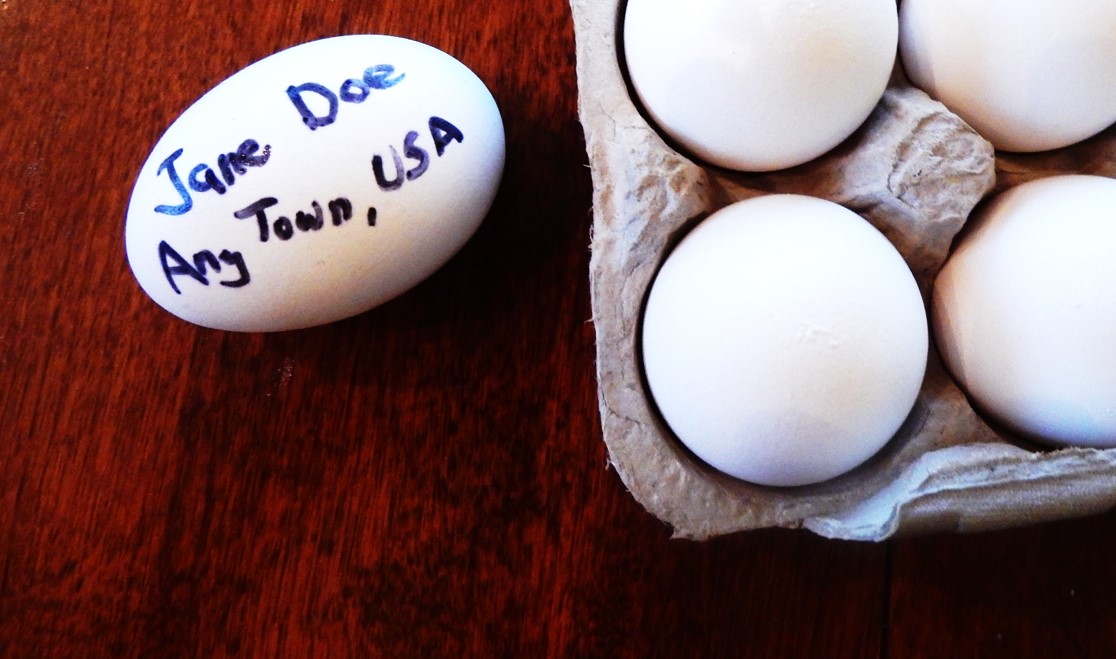
DO NOT Write Your Name and Address on Eggs

Eggs 2

I love to browse through hundred-year-old magazines. Sometimes I just need to smile. Today, is one of those days.

Here is an important “warning” in the March, 1915 issue of Farm Journal.

Warning Notice to Girls

It is time to put a stop to that silly, dangerous practice some girls have of writing their names and addresses upon eggs and packages of produce sent out from their home farms.

I once overheard a well-known man-about-town, whose character is not what it should be, boast to a circle of men friends that, in connection with the boiled eggs served him for breakfast, there was the name and address of a girl he hoped would prove a rustic beauty; and that he had already begun a correspondence with her.

Now is not this a situation to make all decent, respectable persons sit up and take notice?

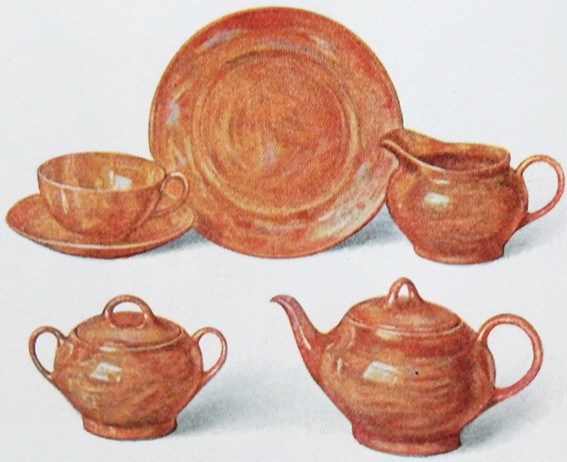
Two Stylish 1915 Tea Sets

Picture Caption: A new idea in China painting that is rich in color and luster (Source: Ladies Home Journal; June, 1915)

There’s nothing better than chit-chatting about everything and anything while having tea with a friend.

I wish that I could tell you that I serve the tea in lovely tea cups . . .but, I don’t.

We generally have tea (or coffee) at a nearby coffee shop. And, when I have friends over, I use mismatched, chipped mugs.

Sometimes I miss the matched tea sets that were used a hundred years ago.

Source: Ladies Home Journal (June, 1915)


Hundred-year-old Double Boiler Advertisement

Double Boiler Ad (LHJ, 1-1915)
Source: Ladies Home Journal (January, 1915)

Double boilers apparently were extremely popular a hundred years ago. I’m intrigued that the Quaker Oats Company apparently considered them so desirable that they were part of the company’s marketing initiative. Customers were given double boilers when they sent in a dollar plus several trademark pictures cut off the oatmeal packages.

When I made the Coffee Pudding recipe earlier this week, the hundred-year-old recipe stated that it should be cooked in a double boiler.

Since many people today don’t own double boiIers, I adjusted the recipe to say that it should be cooked “in a saucepan (use a double boiler if available)”.

Double boilers reduce the likelihood that food in contact with the bottom surface of a pan will be scorched. If a double boiler isn’t used when making puddings, and other easy-to-burn foods, it is important to stir constantly, and ensure the spoon goes to the very bottom of the pan and regularly touches every single millimeter of the bottom surface.

Hot off the Press—A Hundred Years Ago Returns!

SherylA new version of A Hundred Year Ago that focuses more on the foods and slower-paced lifestyle of the early 1900s will be rolled out later this week. I plan to do posts about twice a week.

Over the past few months, I’ve discovered that even when I’m not blogging, I still enjoy making hundred-year-old recipes that use seasonal, local foods. I also continue to be fascinated by the simpler way of life a hundred years ago.

And, I discovered how much I missed the blogging community. I met so many wonderful people during the four years that I did A Hundred Years Ago.

I finally realized that A Hundred Years Ago could continue without the diary. . . dah. . . I’m not sure why it’s taken me so long to figure that out.

Over the next few days, I plan to update the look of A Hundred Years Ago. There probably will be moments when this blog looks very strange as I make the transition to a new template. Keep your fingers crossed that it goes smoothly.

See you soon!

Since all of Grandma’s diary entries have been posted, this blog has ended; but you’re invited to linger for a minute or two to explore the site. You may enjoy reading (or rereading) some of the posts.

I’d like to thank my family, friends, and the blogging community for your support and assistance. It’s been a wonderful four years. You’re awesome.

Final Diary Entry

19-year-old Helena Muffly wrote exactly 100 years ago today: 

Tuesday, December 29, 1914: This diary is surely doomed to be a failure and I am terribly tired of writing in it. Christmas has come and gone and I am just the same except a little older. Got some nice presents of which none were misfits. Ma and Ruth seemed to be pleased with the presented I gave them, so then I am satisfied.

Took down the tree today. We never keep our tree long, because there isn’t much to trim it with.

The Conclusion

Good-bye old year, good-bye. Tis now Dec. 29, but I am really ready to say good-bye. I haven’t much faith in myself nor has this friend with me, so it is best that we should part.

Adieu

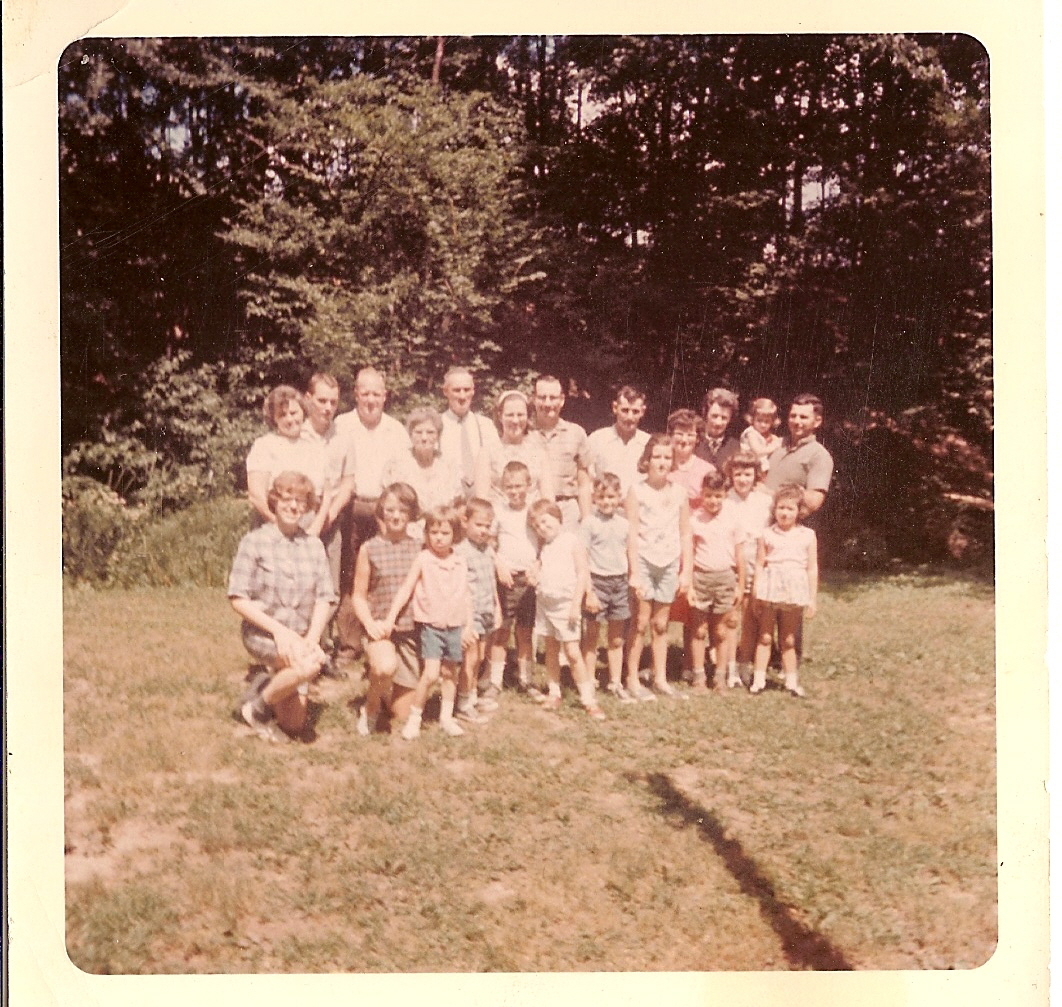
Helen(a) and Raymond Swartz and their descedants at the Swartz Reunion, White Deer Park, circa 1964
Helen(a) and Raymond Swartz and their descendants at the Swartz Reunion, White Deer Park, circa 1964

Her middle-aged granddaughter’s comments 100 years later:

Good grief, Grandma. . . I hate to disagree on the very last day of the diary, but you are wrong. The diary has done some wonderful things–both for you and for me.

Get your confidence back quickly. You’re going to need it. I looked into my crystal ball and know that you have a long, magnificent life ahead of you with a fantastic husband, and wonderful children and grandchildren.

Adieu for now—I’ll catch up with you when our paths cross again. Go live the rest of your life. You’ll be awesome.