Hundred-year-old Advice on How to Prepare Raw Vegetables for Storing and Eating

Here’s some hundred-year-old advice on how to clean and store raw vegetables:

Separate leaves or stalks into their natural divisions.

First. Examine them carefully, removing interior portions, insects, etc., that may be found on the vegetables.

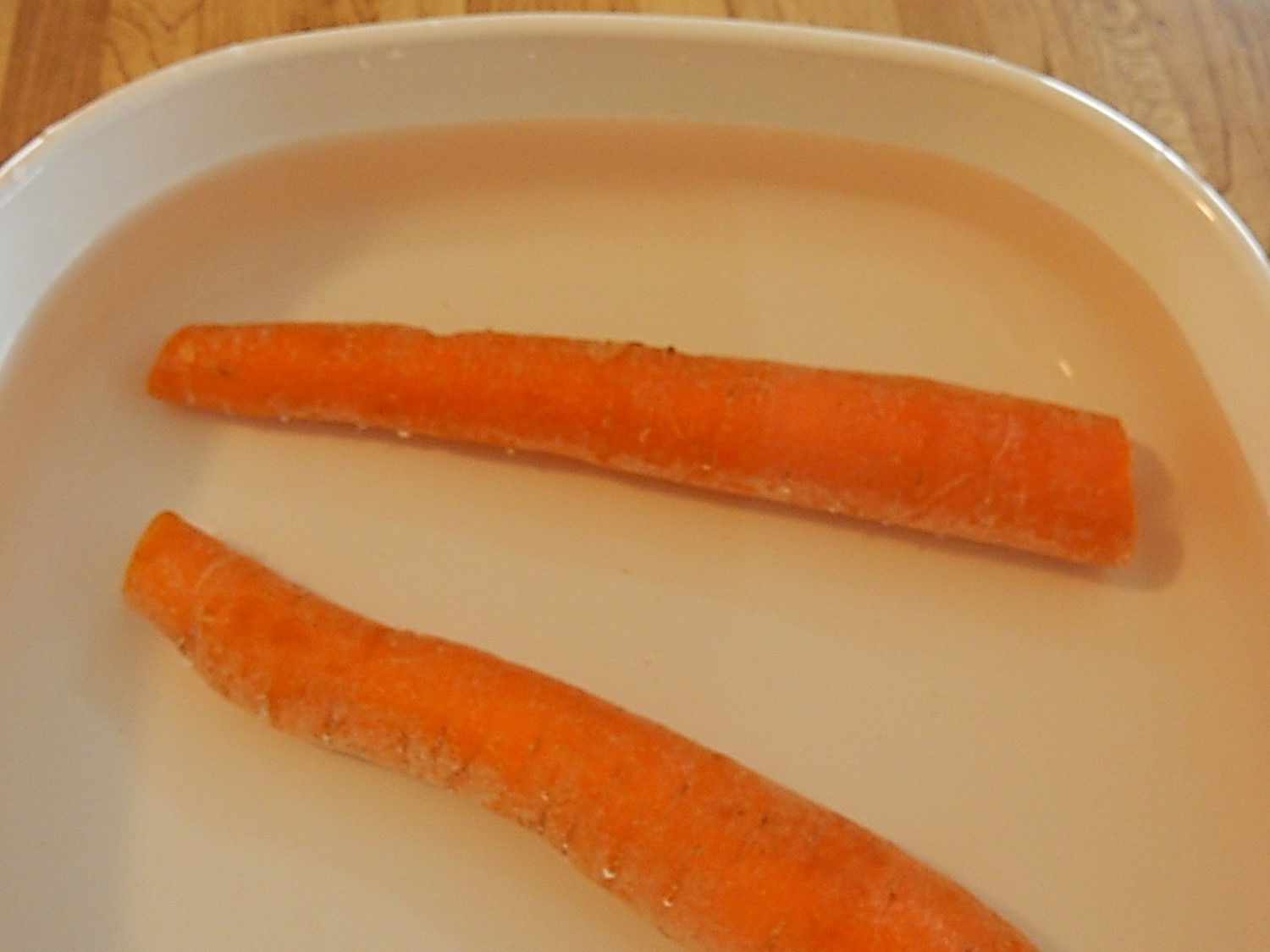
Second. Wash thoroughly in several waters. Running water is preferable. Salted water aids in removing parasites.

Third. Drain off the water and dry with cheese cloth.

Greens may be kept in a paper bag in the refrigerator until serving time.

Coarser portions may be utilized for soups or sauces while the tender portions may be served raw. Great care should be exercised in the selection and preparation of food which is not subjected to heat before serving, such as salad greens. Salad plants, carelessly cultivated or handled may carry dangerous bacteria, or they may have been sprinkled with poisonous compounds.

The Housewife’s Cook Book by Lilla Frich (1917)
An “Army” of Diet Experts Helped Ensure Victory in WWI

Source: Good Housekeeping (July, 1917)

During World War I food in the U.S. was very expensive, and people worried about food shortages. Here’s excerpts of what Harvey Wiley, a popular food expert who led the laboratories at the Good Housekeeping Institute, had to say:

The victory in this war will  be won by those nations which have the best and most abundant supply of food. Bread is more important than munitions. The nation that is hungry will first be ready to yield. We must see to it that none of the Allies is put in such a position. To this end everything that can be done to awaken the American people to their responsibility must be done.

We must stop wasting food in our kitchens and on our tables, and we must conserve the whole of the food product that is edible.

Our people must be taught how to eat in these times of stress. The teachers of home economics and domestic science throughout the country should be mobilized to carry messages to the people. The welfare of the nation is at stake. The success of our Allies is in the balance. It seems strange to speak of an army of diet experts, but such an army is just as important as one carrying modern rifles and sharp bayonets.

Good Housekeeping (July, 1917)

Hundred-Year-Old Food Advertisements Poem

Source: American Cookery (October, 1917)

When I saw this poem in a hundred-year-old issue of American Cookery Magazine, I had an immediate negative reaction. Did the magazine’s editors really think that they could convince consumers that everything in food advertisements was true? Didn’t cooks back then realize that the purpose of advertisements was to sell food, not to provide the most accurate information?

Then I thought –

Even though I’m cynical about advertising, I read food ads.  They must have value to me. Soon I was pondering,  “Why do I read food ads?”

Here’s the reasons, I came up with:

  • Food advertisements are fun to read.
  • I like to laugh at how over the top some ads are.
  • I read them to learn about new products.
  • I read them to find “good deals.”

Hmm . . . maybe the old magazine was  right, “food ads help me out so much.”

1917 Filene’s Department Store Employee Cafeteria Menu and Prices

Source: American Cookery (June/July, 1917)

There’s been a lot of inflation over the past hundred years. A century ago, you could get a meal of roast lamb, mashed potatoes, bread (2 slices), and butter for only $.20 at the employees’ cafeteria at Filene’s Department Store in Boston. What would a similar roast lamb meal cost today?

According to an online Inflation Calculator website, a dollar a hundred years ago is worth about $19 today.  That suggests that the lamb dinner should only cost about $3.80 today. Whew, that’s way too low. I can’t even buy a latte for $3.80. . . or has food increased in price much faster than overall inflation?

Old-fashioned Mashed Rutabagas

For years I’ve walked past rutabagas at the local grocery store and barely noticed them (and definitely never bought one).

But, that all changed when I saw a hundred-year-old recipe for Mashed Rutabagas, and decided to give them a try.

I was pleasantly surprised. The Mashed Rutabagas had a sweet, earthy, nutty  flavor; and they make a perfect winter side dish. Additionally, rutabagas are a good source of Vitamin C.

It took me many years to try rutabagas – but now that I’ve tried them, they’re sure to become one of the winter vegetables that I regularly serve.

Here’s the original recipe:

Source: The Housewife’s Cook Book by Lilla Frich (1917)
Here’s the recipe updated for modern cooks:

Mashed Rutabagas

  • Servings: 3 - 4
  • Difficulty: easy
  • Print

3 cups peeled and cubed rutabaga

water

1/2 teaspoon salt

1/8 teaspoon pepper

2 tablespoons butter

2 tablespoons milk

1 tablespoon sugar, optional

Place cubed rutabaga in a saucepan and cover with water. Using high heat bring to a boil, then reduce heat, and simmer until the rutabaga is tender (approximately 1/2 hour). Remove from heat and drain. Mash the cooked rutabaga, then stir in salt, pepper, butter, and milk. If desired, also stir in sugar.  Serve immediately.